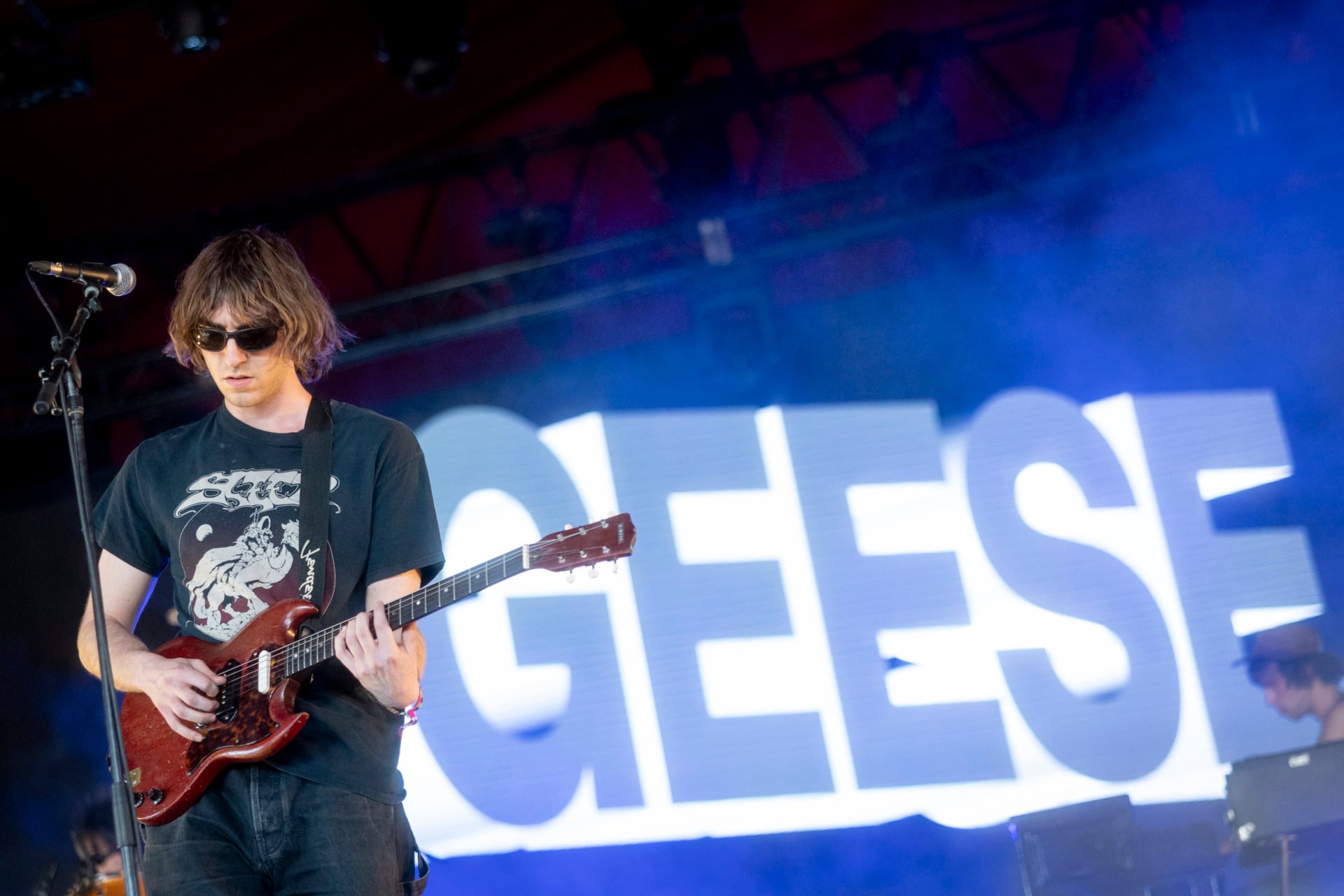
If you’re into rock, chances are you’ve heard of the band Geese.
The Brooklyn-based band has been receiving critical acclaim and mainstream attention for quite some time, with regular comparisons to legendary bands like The Strokes. But they had a meteoric rise in popularity over the past year. The band’s fourth studio album, Getting Killed, dropped in late September and was named the best of 2025 by the New Yorker in December. They made their musical guest debut on Saturday Night Live in January of this year and played Coachella this past weekend.
Now, a viral Substack article and a subsequent WIRED report have drawn attention to the fact that the social media buzz around Geese has not been totally organic.
At the center of the controversy is Chaotic Good Projects, a relatively new boutique digital marketing agency that creates user-generated content (UGC) and other marketing campaigns for musicians.
“We are kind of studying the internet and TikTok and seeing what’s working organically and trying to recreate it at scale inorganically,” Chaotic Good co-founder Andrew Spelman told Billboard in an interview last month. “TikTok is entirely based around trending audios…a big part of what we are doing is posting enough volume across enough accounts with enough impressions to try to simulate the idea that the song is trending or moving or whatever you want to call it.”
The accounts are run by “a large network of both employees and contractors,” co-founder Jesse Coren said in the same interview.
“Our office is overrun with iPhones,” Spelman said.
Another co-founder of the company, Adam Tarsia, confirmed to WIRED on Tuesday that they did indeed engineer a campaign for Geese on TikTok.
Geese are far from the only band that Chaotic Good works with. The agency has run marketing campaigns for artists like Alex Warren, Zara Larsson, and Sombr, all of whom have shot to global stardom recently, as well as artists who are already household names like Tame Impala, Coldplay, Justin Bieber, and Dua Lipa.
But Geese are getting a significant part of the online pushback for this, because they were already the subject of industry plant rumors. The band’s sudden rise in popularity had already led many online critics to speculate that the internet buzz they were getting was not totally organic, and perhaps instead driven by industry backers like labels or marketing agencies.
It would be wrong to single out Chaotic Good as the only company that pumps out fake fan content to boost the popularity of its clients. These social media tactics have become the name of the game in the music industry, which has had its fair share of controversy in the past year over numerous other arguably dishonest, alleged practices. For example, Spotify was hit with a class action lawsuit late last year, accusing the streamer of “deceptive business practices” for its Discovery Mode feature, which gives personalized recommendations to users based on their music taste, but lets artists pay their way in. Meanwhile, Drake was hit with a class action lawsuit in January for allegedly using bots to artificially inflate his streaming numbers.
UGC strategies are employed by labels and marketing agencies, big and small, to create buzz and the illusion of a fanbase for their clients in the hope that a real fanbase will follow. These teams often have fake fan accounts that “leak” new music, post fan edits of trending movies and TV shows set to the songs of their clients, or pay other influencers with sizable followings to use the songs in videos or ads.
The tactics might feel dishonest and make some fans and smaller artists feel cheated, perhaps. But their pervasiveness proves the power that the TikTok algorithm holds in our society, and in turn, the influence that the people who are skilled at playing social media algorithms can wield.
While UGC is booming in music, other industries are catching on. The 2024 presidential election was just one example of how UGC campaigns similar to those used by the music industry are becoming gradually more prevalent in political campaigns.
With AI-generated content coming on like a tsunami this year, expect the fanbase of your newest obsession to be less organic than ever.