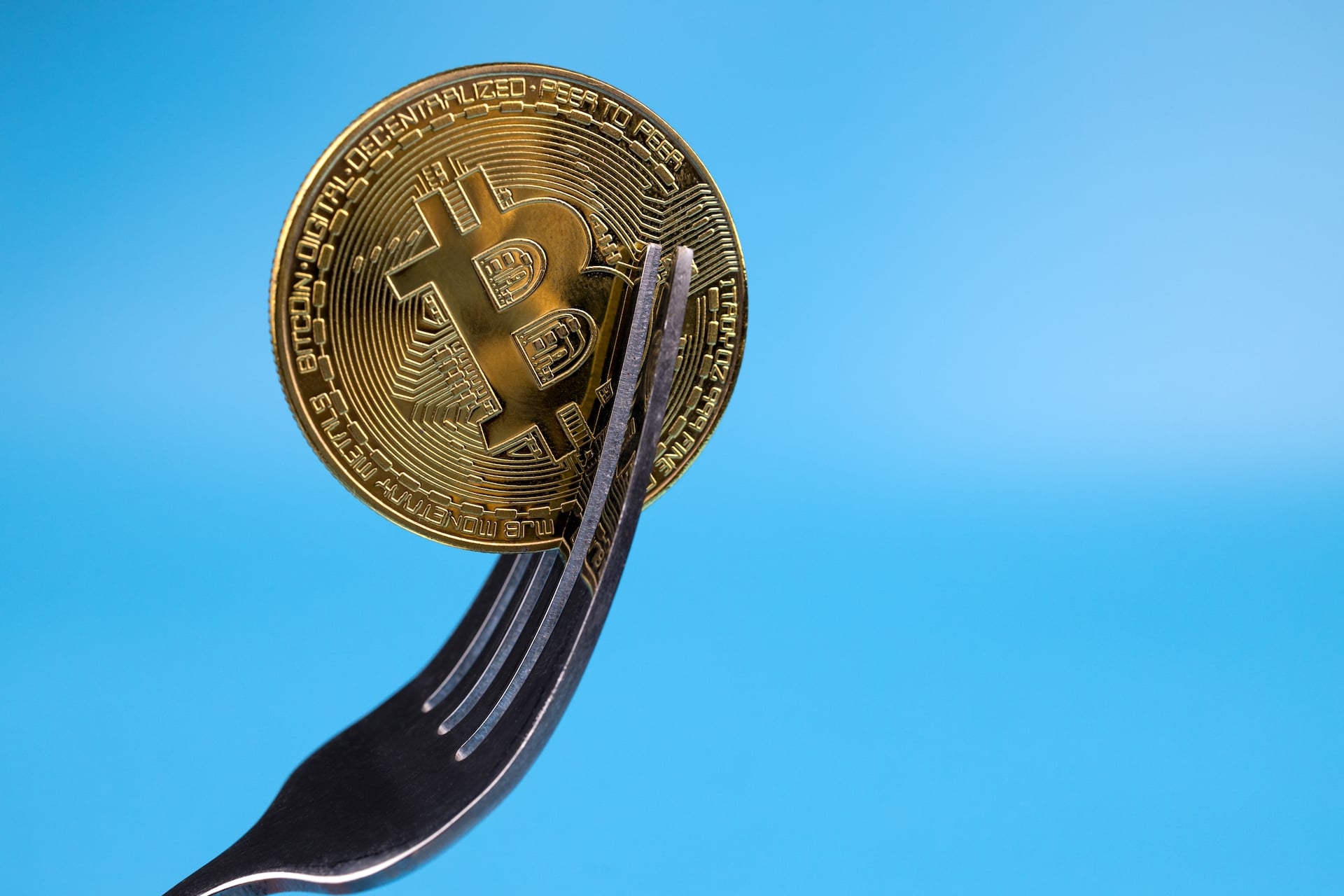
Bitcoin holders are scheduled to get at least one airdrop this summer, as one explicit hard fork will take place in early August and a separate soft fork attempt appears destined for failure. While not currently viewed as major forks of the Bitcoin network, these are among the most notable attempts in years to create new networks from Bitcoin’s existing ownership record.
When implemented without broad consensus, a Bitcoin fork can create a separate cryptocurrency that inherits bitcoin ownership as of the split and uses it as the initial distribution of the new asset. The idea is to continue what was already started with Bitcoin down a new path rather than bootstrap a separate set of network effects from scratch. However, in many cases, the airdropped coins are sold off for more bitcoin or simply ignored.
The most prominent wave of Bitcoin forks arrived near the end of the block size war. Bitcoin Cash split from Bitcoin in August 2017 after years of disagreement over whether the network should increase its block size limit via a hard fork. Other projects, such as Bitcoin Gold, followed as altcoins forked from Bitcoin became a bit of a meme in the crypto space. Bitcoin SV, which was effectively built around Craig Wright’s now judicially demolished claim to be Satoshi Nakamoto, later separated from Bitcoin Cash in November 2018 following another dispute over protocol rules and block capacity.
The two fork projects taking shape in 2026 are also products of disagreements over Bitcoin’s technical direction. This time, however, there is little evidence that users, businesses, developers, and miners are divided into anything resembling the rival camps that formed during the block size war.
eCash
The more straightforward of the two projects is eCash, a new cryptocurrency scheduled to launch through a Bitcoin hard fork on August 21. Nearly every bitcoin holder at the fork’s snapshot point is supposed to receive a corresponding eCash balance.
Created by longtime Bitcoin researcher and Drivechain architect Paul Sztorc, eCash is intended to activate the Drivechain proposal on a live cryptocurrency network. Sztorc first published the Drivechain concept in 2015, received Bitcoin Improvement Proposal (BIP) numbers (300 and 301) for it in 2017, and released test software in 2019. After more than a decade of advocacy, the proposal still has not obtained the broad agreement necessary for inclusion in Bitcoin. Reasons for the lack of support for Drivechain from the greater Bitcoin userbase include potential legal or regulatory risks for miners and perceived alterations to the game theory that holds Bitcoin together and makes it work as it already exists today.
Drivechain was originally designed as a specific type of Bitcoin sidechain to let people move bitcoin into separate blockchains that can operate under different rules. One sidechain could support larger blocks, while others could offer privacy tools, tokens, prediction markets, or Ethereum-like applications. Basically, all of the useful features found in non-Bitcoin crypto projects could be integrated into Bitcoin. The sidechains would be merge-mined, allowing Bitcoin miners to process their activity and collect additional transaction fees.
Drivechain was originally proposed as a soft fork to Bitcoin, which effectively means it would work in a backwards compatible manner. Because that soft fork has not gained consensus, eCash will instead create a separate blockchain with Drivechain activated from the beginning. The Bitcoin network will remain unaffected.
Notably, the eCash launch also includes a provocative promotional tactic that grabbed headlines in the crypto world. Rather than provide the full airdrop to addresses thought to belong to Bitcoin creator Satoshi Nakamoto, the project plans to reserve roughly half of those coins to fund development and reward early financial backers.
BIP 110
While eCash is off to create a new network with its own rules, BIP 110 is taking a more confrontational route. The proposal is attempting to impose temporary consensus restrictions on how Bitcoin transactions can store nonfinancial data.
BIP 110 grew out of a long-running fight over inscriptions, Ordinals, Runes, and other protocols that place images, tokens, and arbitrary data in Bitcoin transactions. Supporters describe this activity as spam that raises storage and bandwidth requirements for node operators focused on only using bitcoin as money. Opponents, many of whom also prefer bitcoin to only be used as money, argue that valid transactions paying market-rate fees should not be censored merely because some users dislike their purpose. They also argue that subjective spam filtering simply can’t work on a network that is inherently resistant to censorship.
The proposal includes an early activation route if 55% of mined blocks in a 2,016-block difficulty period signal support. However, BIP 110 nodes will begin rejecting non-signaling blocks at height 961,632, currently projected for early August.
Current miner support makes a smooth activation extremely unlikely. Public trackers place signaling below 1% in June, far short of the 55% threshold. When I examined miners’ likely response to the proposed fork for Protos in November, the industry showed little interest in either BIP 110 or the broader controversy over perceived spam. “Miners’ collective silence is effectively an endorsement of the technical decisions made by Bitcoin Core, at least from their end,” I wrote at the time.
Although BIP 110 is technically written as a soft fork, insufficient adoption would effectively turn it into a hard fork. Once BIP 110 nodes begin enforcing their narrower rules, they will reject any block permitted by Bitcoin’s preexisting rules that is newly-prohibited under BIP 110. The rest of the Bitcoin network would continue accepting those blocks like nothing happened.
BIP 110 users would have effectively removed themselves from Bitcoin and begun operating a smaller alternative cryptocurrency network, assuming the new fork attracts enough mining power to keep the blockchain moving forward at all. Other measures, such as altering the difficulty adjustment algorithm or changing the algorithm used for proof-of-work mining could be considered at that point.
Bitcoin Holders Should Pay Attention
Whether Bitcoin users are interested in what eCash or BIP 110 have to offer or not, it makes sense to track these projects as they develop because holders could end up having the keys to multiple other assets they didn’t ask for within the next few months.
There are also potential security risks involved in claiming or spending those assets. Because forked coins are controlled by the same cryptographic key pairs as real bitcoin, a transaction made on one network can sometimes be copied and rebroadcast on another. This is known as a replay attack, and it can occur if the developers of the new network do not implement proper protections for Bitcoin users. Users may want to avoid importing Bitcoin seed phrases or private keys into unfamiliar fork software while those keys still control bitcoin.