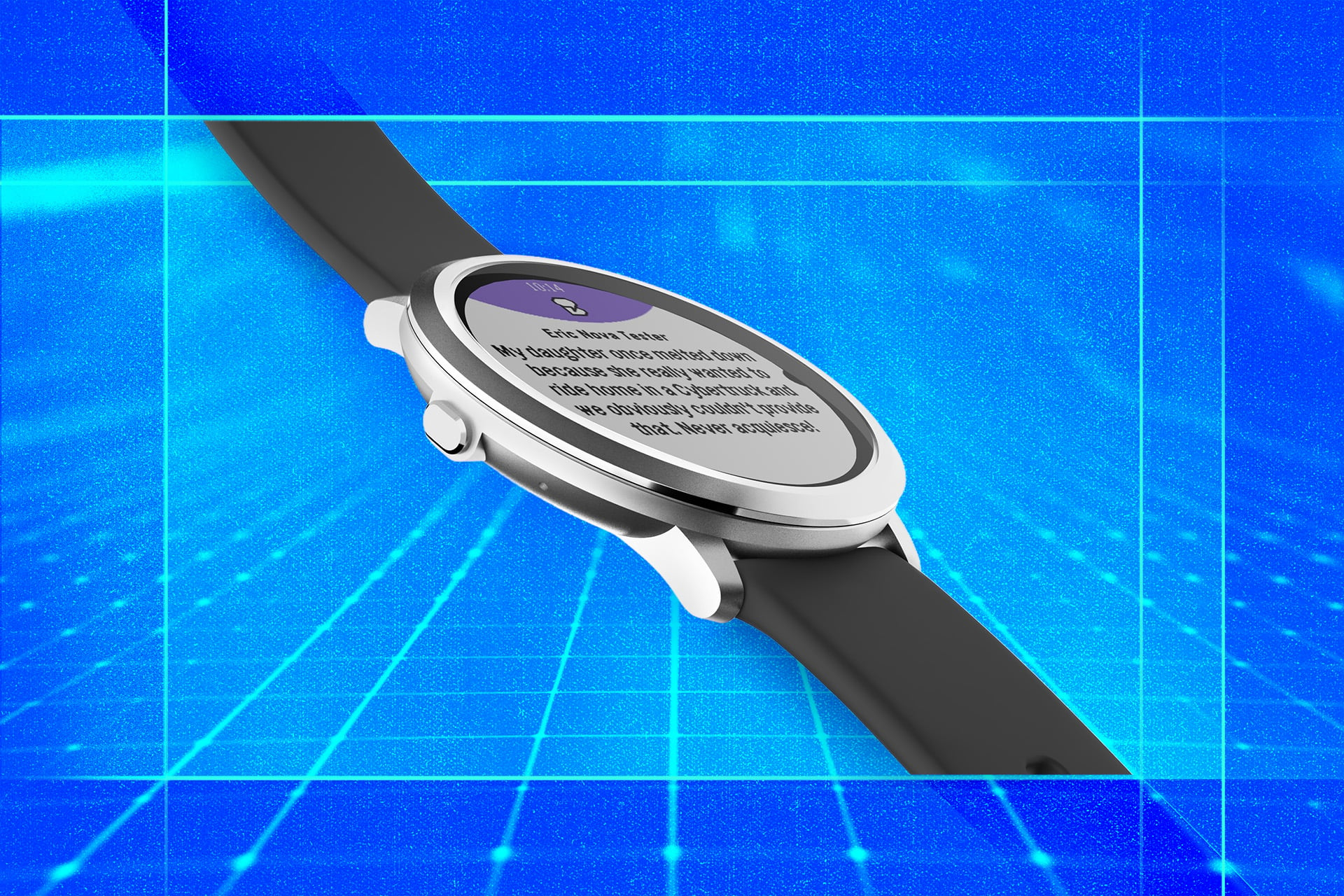
Eric Migicovsky, the founder of Pebble, the once-defunct and since revived wearables company (now called Core Devices), is making his low-fi, low-stakes smartwatches for Eric Migicovsky—or, at least, people who also just want anything but yet another Apple Watch.
“Apple makes it incredibly difficult for third-party devices to interact with things like iMessage or Siri or any of the built-in features on iOS,” Migicovsky told Gizmodo in a freewheeling video interview. “And that sucks. That sucks for competition. That sucks for innovation. That sucks for price.”
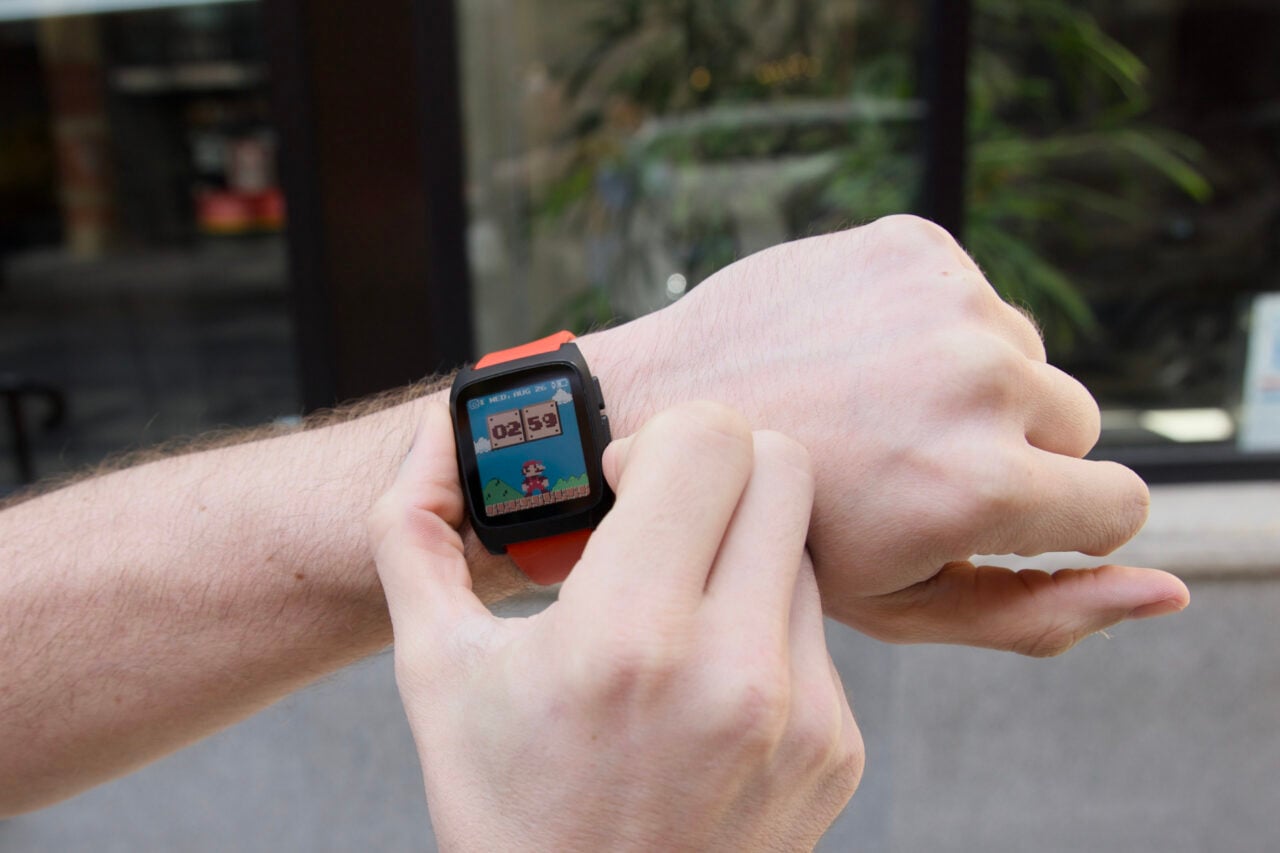
Pebble isn’t like the Apple Watch or Google Wear OS smartwatches you find today. Its hacker-friendly wearables aren’t trying to fix an industry; they’re just an alternative for people—like Migicovsky—who want a long-lasting phone-connected wrist computer. The company’s founder described the main tenets of the Pebble’s design. They feature e-paper screens with barebones software meant to handle the minimum of what you expect—checking messages and notifications, mostly (though the Pebble ecosystem is open enough that you can find or create your own use case). They have physical buttons and promise a long battery life. The reason being, Migicovsky personally hates having to routinely remove his smartwatch to charge it.

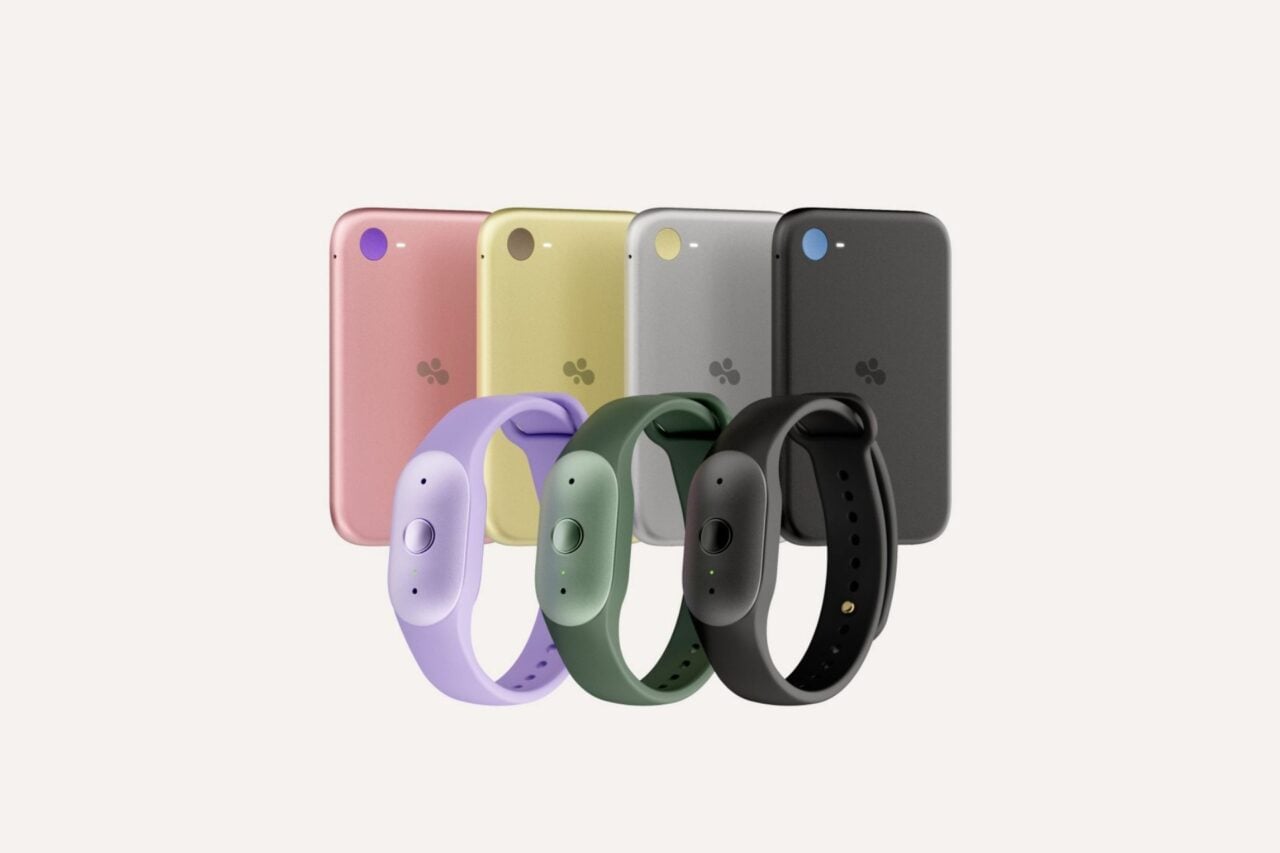
Back at its height in 2015, Migicovsky said the original Pebble had around 180 employees. Now his rebooted company, made up of six staff, has launched or is preparing to start shipping four products in a single year. The product lineup includes a black and white Pebble 2 Duo, a color e-paper Pebble Time 2, and an Index 01 smart ring that’s essentially an AI recording device you slip over your finger. The smart ring has a non-rechargeable battery that lasts for approximately two years because Migicovsky despises the idea of having to take it off to charge up. The fourth product is the Pebble Round 2, a sequel to the company’s original rounded smartwatch from a decade ago, which will begin shipping soon.
Migicovsky, with his laid-back Canadian attitude, said he’s really just making a device he would want to use. A “cool,” capital “G” gadget without a locked-down ecosystem to confine the user.
There are evidently enough people who smell what Pebble is cooking and want a taste. Migicovsky wrote in a recent blog post that Pebble has shipped 13,600 Time 2 smartwatches and has sold just 7,000 of its Index 01 smart ring so far, a bare fraction of the reported 11,000 preorders.
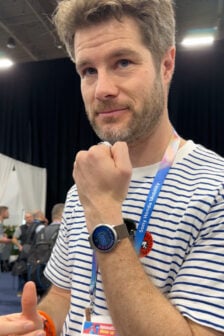
I strapped on the Pebble Round 2 at CES 2026, and it’s striking just how much it depends on minimalism. Unlike a Pebble Time 2, it doesn’t even have a heart rate sensor. It tells the time, vibrates when you get a notification, tracks your steps and sleep, and lets you skip calls with the help of physical buttons along the side. Migicovsky is more excited by how the wearable uses open-source software, meaning anyone can make their own watch faces for others to download.
To understand Migicovsky’s philosophy, we have to go over the company’s winding history. Pebble started as a small startup in 2008 and found success with a Kickstarter for its original Pebble smartwatch in 2012. Over the next few years, Pebble scaled up and pumped out several more models. Its biggest threat came in 2015 when Apple launched the Apple Watch, and Pebble decided to face the big tech monolith head-on with a rounded smartwatch.
“I went through the wringer with Pebble,” he said. “We did it all. We grew a big team. We hired people. We were in distribution. We were at Best Buy. We were in too many places.”
But by 2016, Pebble was getting squeezed out by Apple and Google’s smartwatch platforms. Fitbit acquired the company in November of that year. Pebble IP would change hands again in 2021 when Google bought Fitbit.
Migicovsky claims that he had reached out to former Fitbit CTO Eric Friedman, who at the time was Google’s VP of consumer health research, about open-sourcing the Pebble OS. Google actually followed through in early 2025, and by the end of the year, Migicovsky said that the Pebble software was “100% open source.”
Fast forward to today—Migicovsky said he built Core Devices with his own money, somewhere in the ballpark of $50,000 to $100,000 to get things started. (He admittedly is not exactly short on cash after selling his previous messaging app, Beeper, to Automattic.) What’s changed in the decade since the Pebble’s original conception is more the business and less the technology.
The low fidelity is what may be appealing about Pebble watches. You’ve heard of 30- or 20-year nostalgia cycles, but there seems to be a non-insignificant chunk of gadget users today yearning for gear that’s only a decade old. Migicovsky described the early 2010s as an age when tech was “CES-driven,” and designers threw anything at the wall to see what stuck. There are more people retrofitting old hardware, like iPods or Blackberry phones, now than in years past, and that’s down to the proliferation of gadget-obsessed people (like Migicovsky) who tend to be interested in watches like Pebble.
Today’s technology supply chain has ballooned to a point where Migicovsky can bootstrap a startup-sized company and ship boutique products to people who think like he does. He said it gives him a freedom to make gadgets that he enjoys in a way that eschews his least-favorite parts of the job as CEO—namely dealing with marketers.

That same supply chain is being squeezed by memory companies that have all shifted gears to supplying AI datacenter projects instead of consumer companies and startups. Migicovsky said that there is 32MB (that’s right, megabytes) of flash memory inside a Pebble smartwatch. The cost of that memory has increased by 6x, according to him. Even companies as large as Apple, which have master command over parts sourcing, are being told how much they have to pay, and there’s no room for negotiation. As a result, every gadget is now more expensive, and price hikes—in some cases multiple ones—have become a concerning norm.
Not to mention U.S. tariffs causing havoc with shipping prices. The Pebble founder seems to be taking it all in stride. Migicovsky hasn’t raised prices (at least not yet), as—in his own words—any device that costs $300 makes it harder to love that product. So in that vein, what’s next? Migicovsky said he and his team iterated on a fifth product but ultimately scrapped it. Whatever comes next, wearable or not, it’s probably going to be another open platform.
“I love the energy that comes from a community that’s hacking on something,” he said. “An open platform like Pebble just breeds creativity.”