Despite extensive records of Roman libraries, there is only one library preserved with the documents more or less intact: the Villa of the Papyri in Herculaneum. Sometimes, though, archaeologists get extremely lucky.
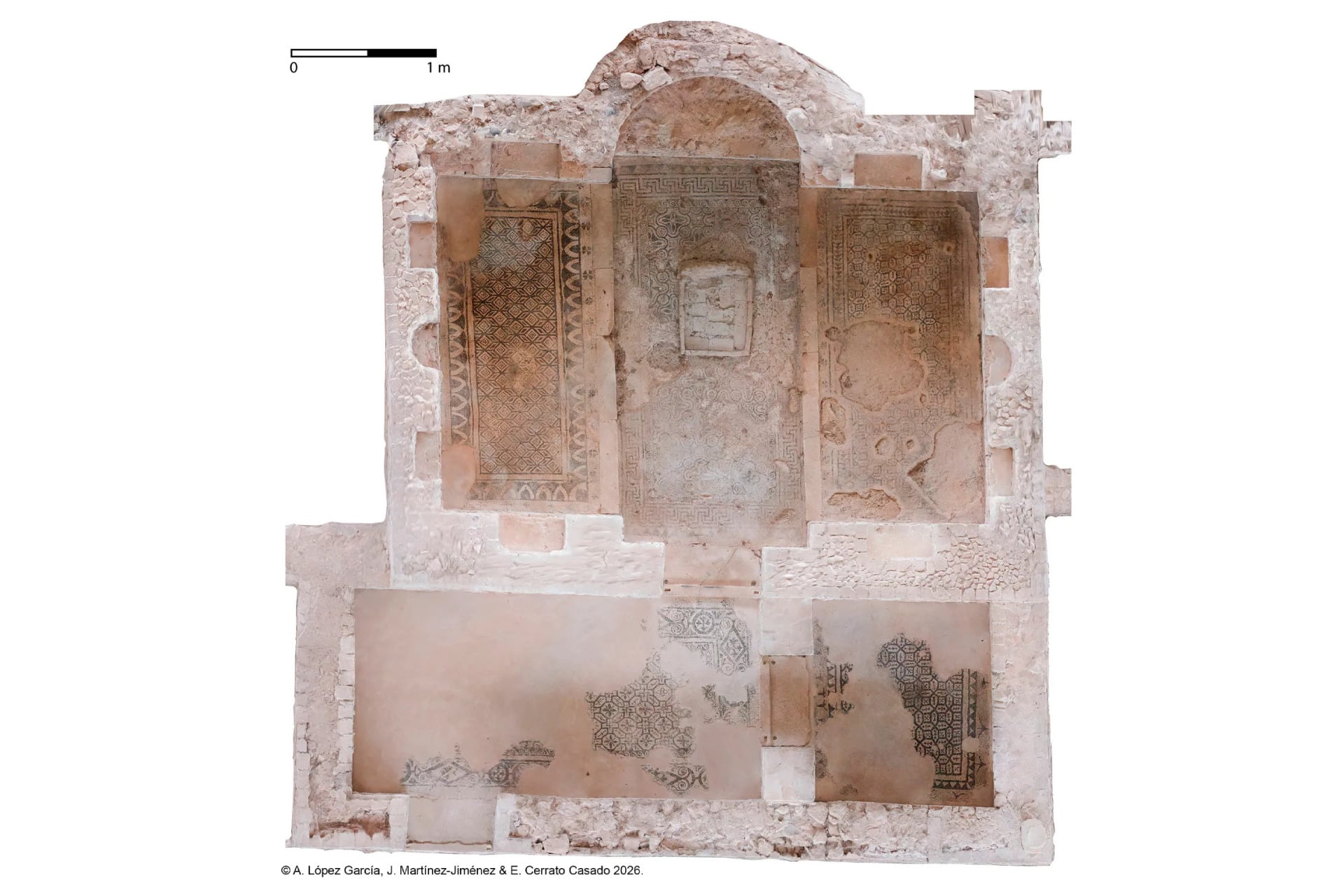
When archaeologists first discovered the Roman villa of Fuente Álamo in Spain, one particular room with depictions of Roman gods led them to believe that they were looking at a Mithraeum, a shrine to Mithras. Decades later, researchers revisited the site with upgraded technology—finding evidence that the chamber, dubbed Room 10, was more akin to a library. If the new analysis is correct, the library would be the oldest known on the Iberian Peninsula as well as one of the best-preserved libraries from the Roman era.
A team of Spanish archaeologists at the University of Granada in Spain conducted the research, publishing their results in a recent Journal of Mediterranean Archaeology paper. In a translated statement (via Google Translate) on the discovery, the university explained that the findings “not only allow for a reinterpretation of this key space within the Fuente Álamo villa but also provide new methodological criteria for archaeological identification.”
Lost to history
The Roman Empire built many of antiquity’s grandest, largest libraries. For instance, the Libraries of Alexandria and Pergamum served as primary hubs for learning, research, and philosophy at the time. But here’s the thing: we only know of these libraries thanks to detailed records, and, if we’re lucky, some old columns or a crumbling wall where the building reportedly once stood.
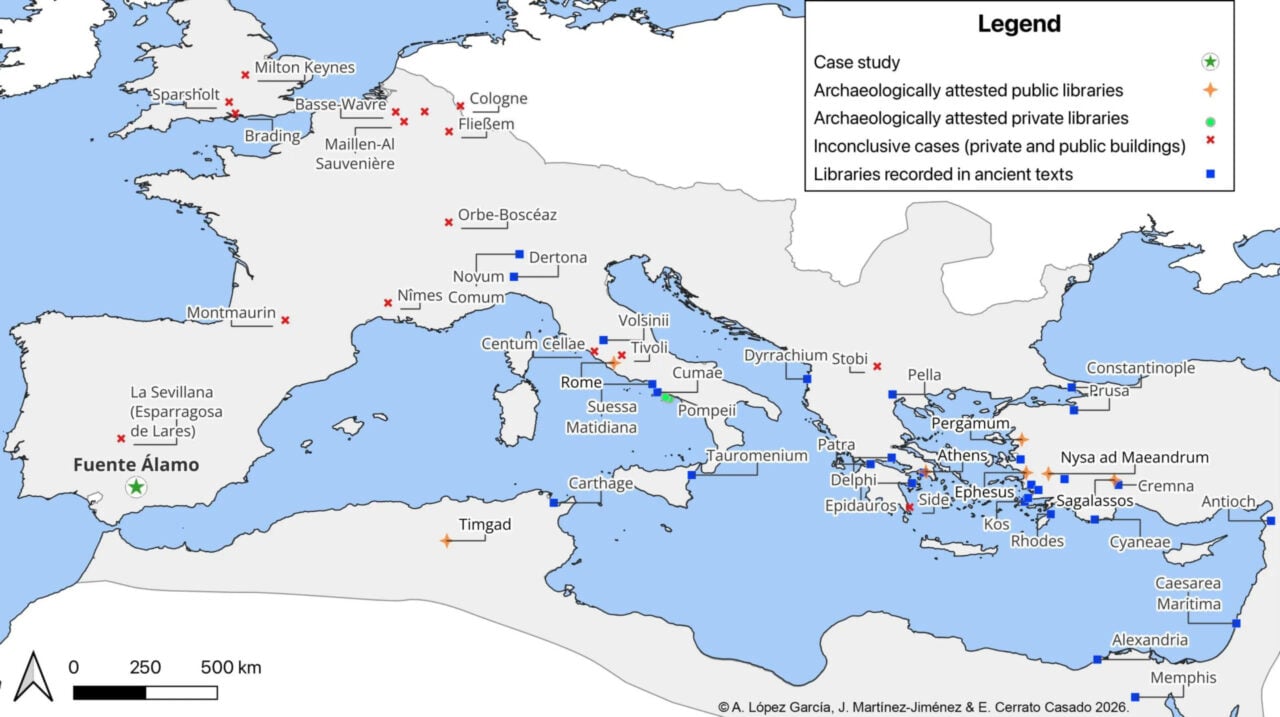
In other words, actual physical proof of whole library buildings from antiquity is scarce. What’s more, the single library we know of with its collections preserved, the Villa of the Papyri, was famously ravaged in the eruption of Mt. Vesuvius. (It was only thanks to advanced technology and Silicon Valley fundraisers that we’re now getting closer to unfurling these burnt scrolls.)
Finding a library
According to the statement, a major challenge in identifying Roman libraries is that, often, books and wooden shelves have completely gone missing, either from natural decay or human destruction. For the study, the team overcame these obstacles by using a computational technique called shape grammar, which considers the specific function of different architectural elements in a room. In addition to traditional archaeological methods, this approach helps to improve the consistency of how architectural elements are interpreted, according to the statement.
From this analysis, the team found that many elements of Room 10 were consistent with known layouts and construction styles of Roman libraries as opposed to a Mithraeum. For example, there is an apse, rectangular niches suited for bookshelves, a raised podium, and smaller rooms that could have served as workspaces or storage areas. The team added in the statement that mosaics found near the room depict scenes related to learning and teaching.
Although the findings are based on a more statistical analysis, future investigations will help to further support this interpretation. But if the latest conclusion is correct, this small chamber would be the oldest documented library on the Iberian Peninsula. Given the scarcity of Roman libraries that live on today, that would be quite exciting.