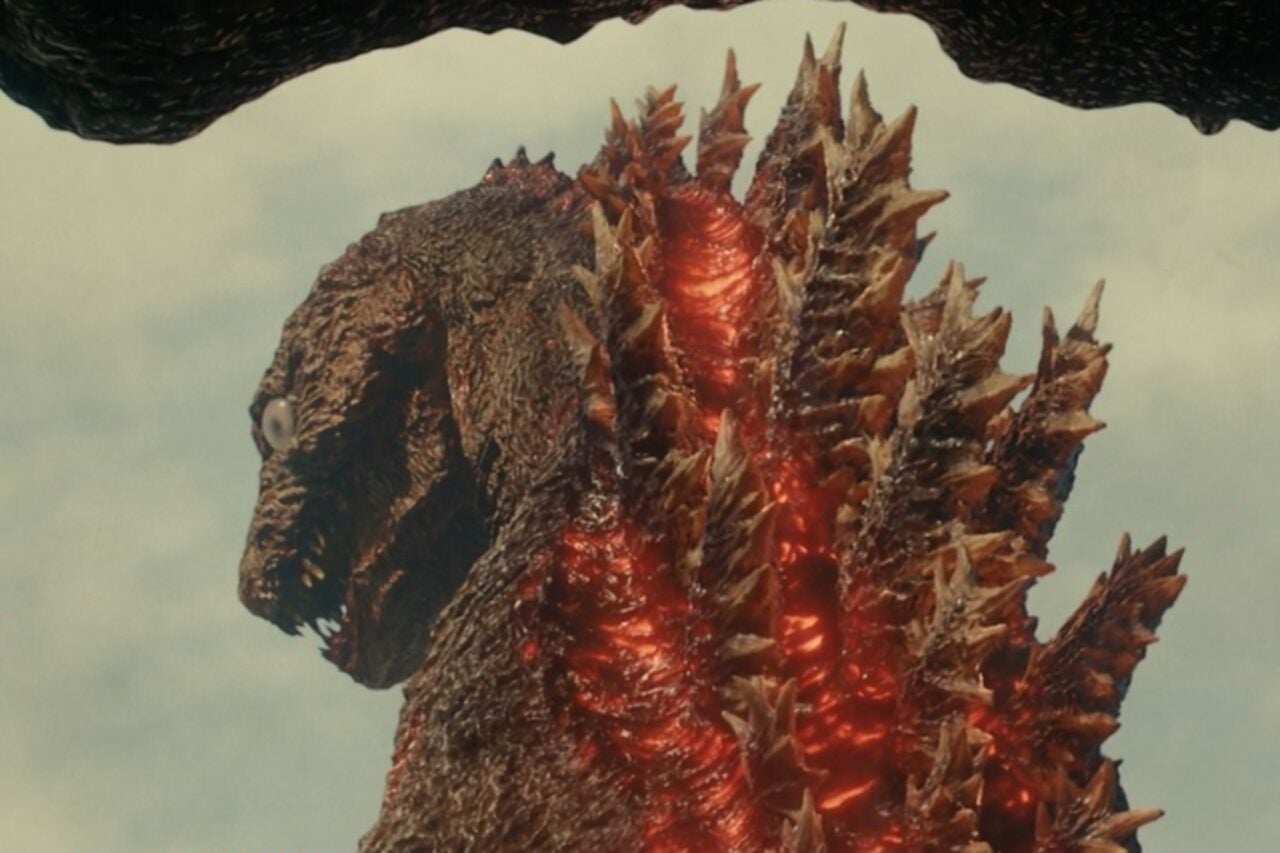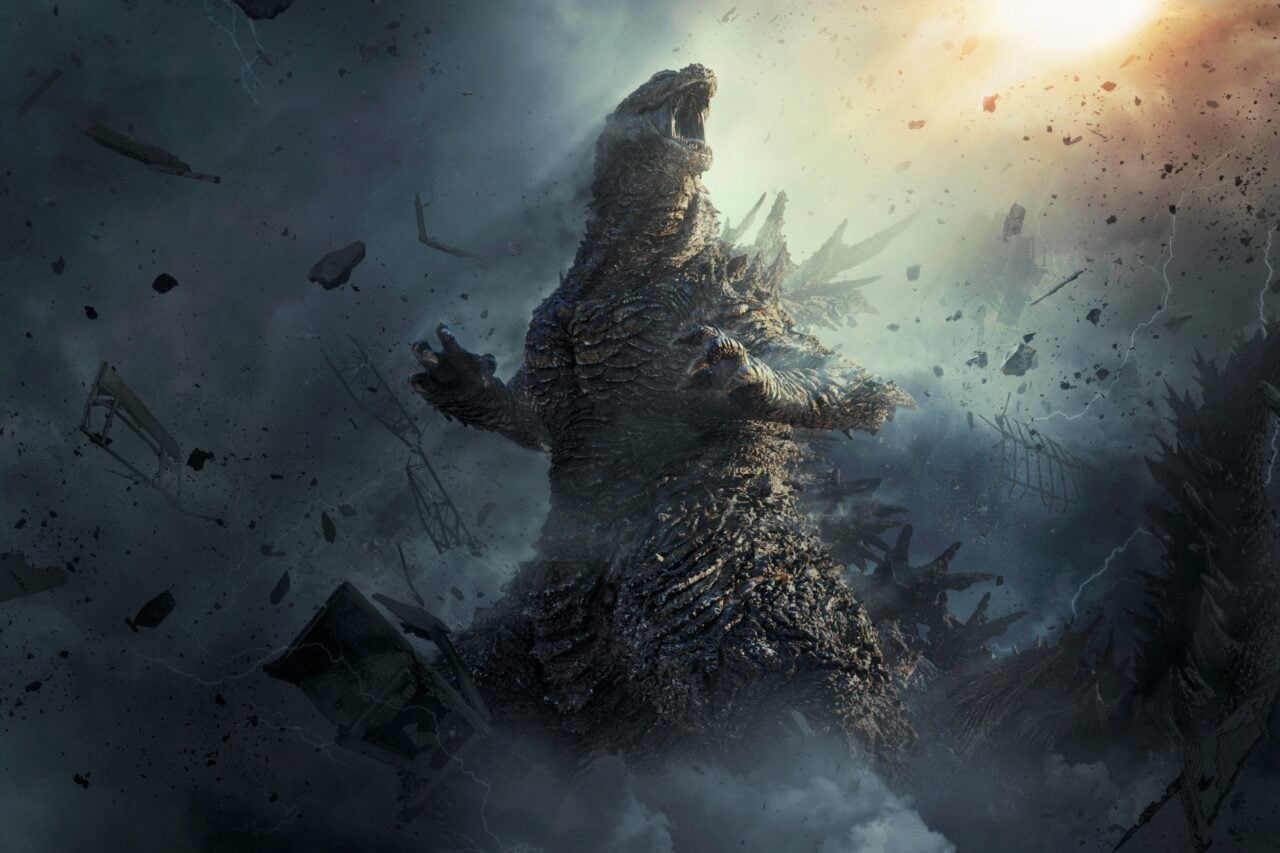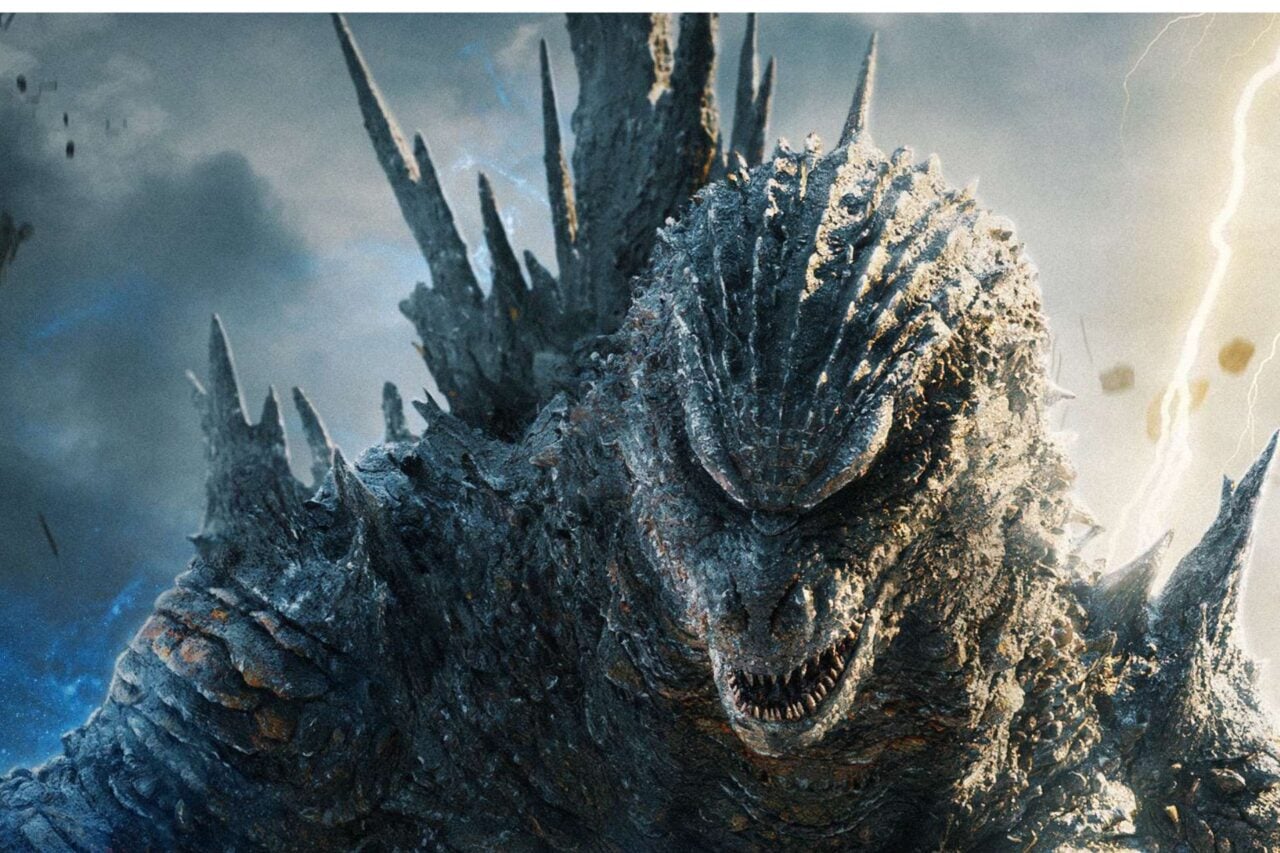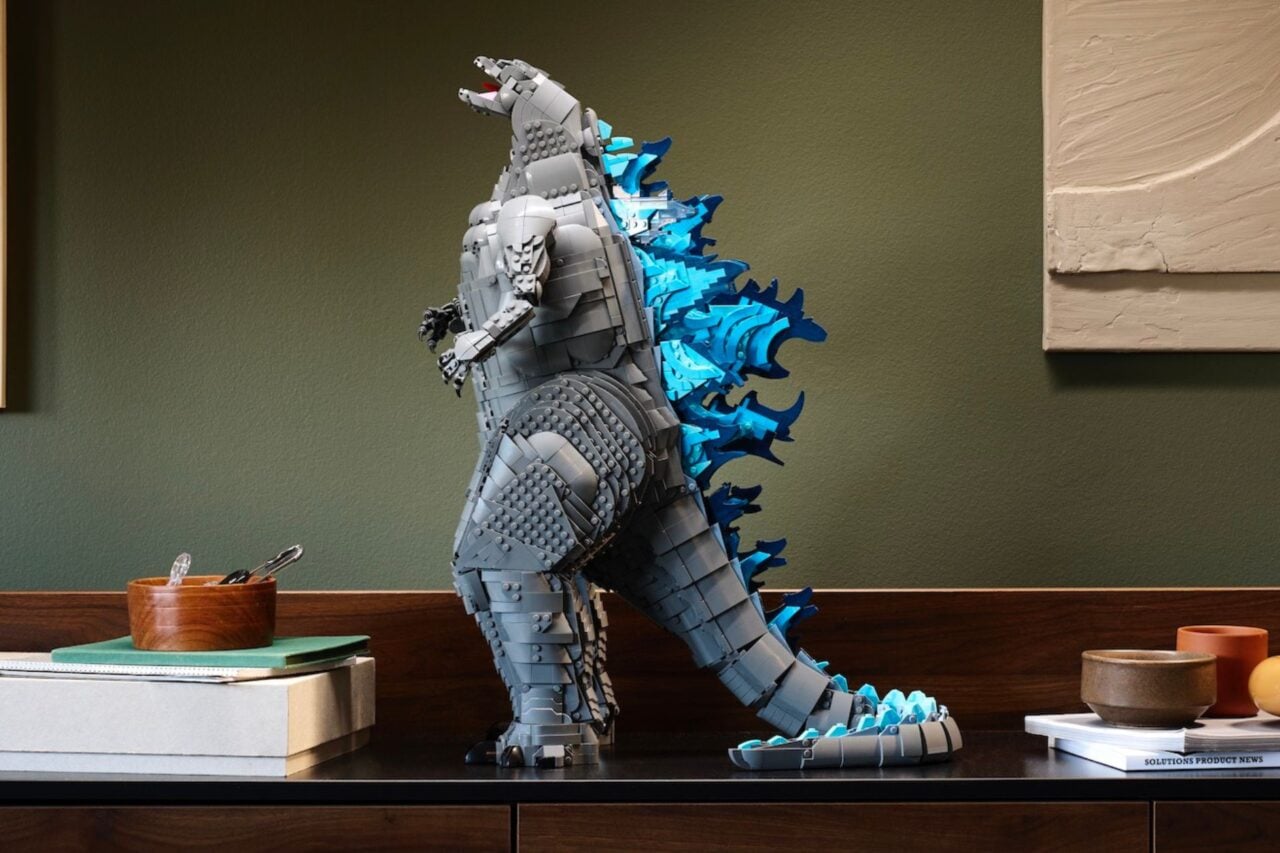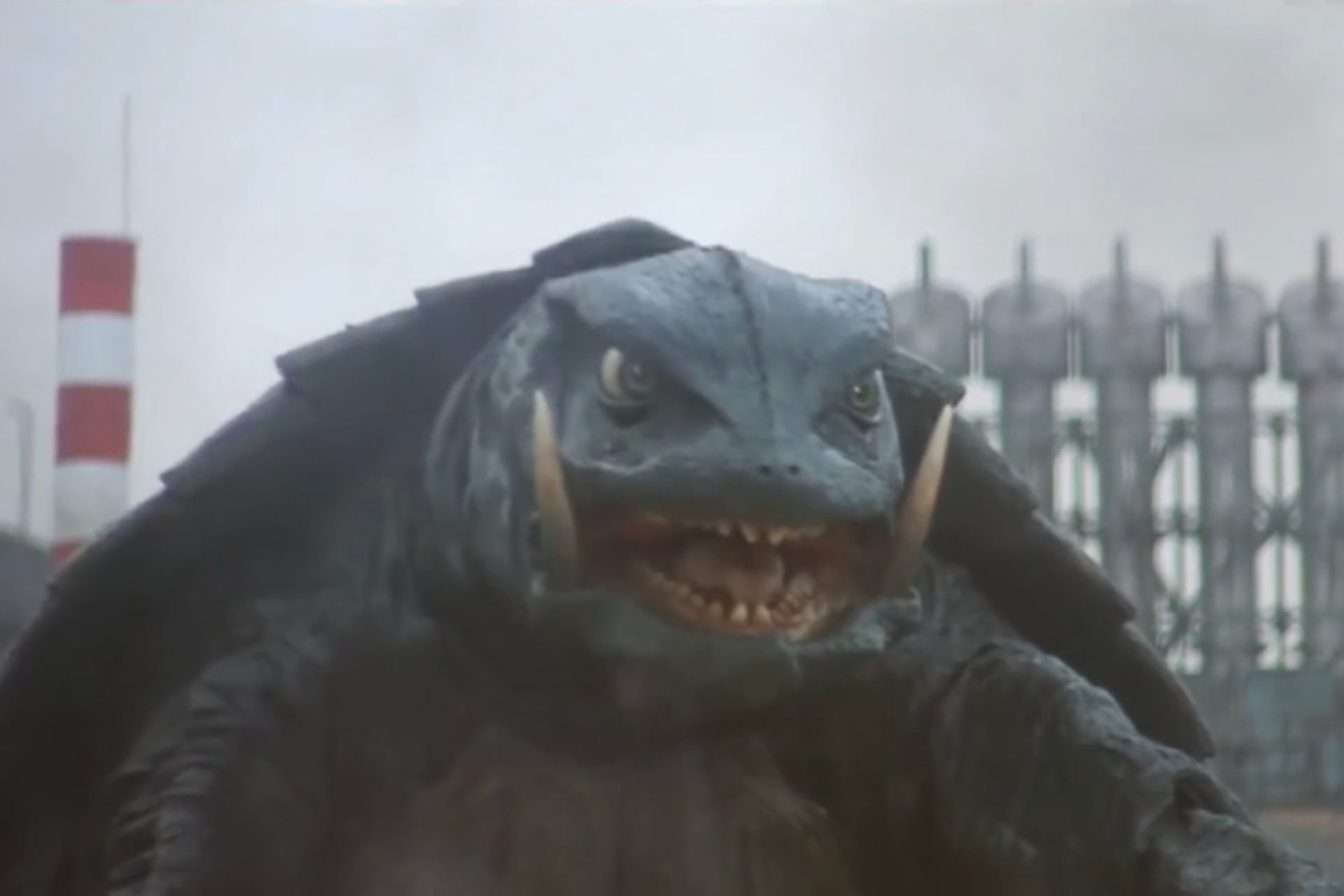
Ever since I could walk the carpeted aisles of Blockbuster and beg my mom to rent another VHS tape, I’ve been a fan of Godzilla. Not much has changed in the past 30 years. Thanks to the modern-day renaissance of movies from the U.S. and Japan (which run laps around the superhero cinematic universes), I’ve been well fed.
Having come off the high of introducing a friend to 1954’s Godzilla (which still holds up), Godzilla Minus One (which rules), and Godzilla Minus Zero (which I’m mixed on), I was suddenly struck by the urge to see whether the grass was greener on the other side. Like a Pokémon fan checking out what all the fuss was about with Digimon, I wanted to see what Japan’s other scaly kaiju, Gamera, was all about. And I’m glad I did. I am now as big a fan of the giant turtle as I am of the giant lizard.
Before watching Gamera, I figured the giant turtle was to Godzilla what Bruce Li was to Bruce Lee: a knockoff riding a giant’s coattails through his own kaiju-esque Bruceploitation filmography. To me, he was a kaiju that someone intending to check out a Godzilla film would fat-finger my mistake and think was basically the same thing.
In my defense, both kaiju do similar things to the untrained eye. They’re scaly bois, fire flames from their mouths, tussle with other, more fucked-up kaiju, and inadvertently save humanity from a worse fate. But that comparison couldn’t be further from the truth. In contrast to Big G, who, to borrow wrestling terminology, plays heel (bad guy) or face (good guy) as often as WWE’s the Big Show, Gamera is as a white-meat babyface as any kaiju. As he should, he’s the guardian of the universe. To get a proper measure of the kaiju, my first hurdle was picking the right movies for an earnest first impression.
In comparison to Godzilla‘s 39 films, Gamera has only 13 to his name. While Gamera requires less time than Godzilla’s entire cinematic history, 13 movies is still a lot to tackle if you want to get a handle on what Gamera’s deal is.
Since my own introduction to Godzilla was his Heisei-era escapades (the ’90s), I did the same with Gamera. Fortunately, Gamera’s Heisei filmography is a tight trilogy from director Shusuke Kaneko. So, after watching Gamera: Guardian of the Universe, Gamera 2: Attack of Legion, and Gamera 3: Revenge of Iris on Pluto, I walked away thinking Kaneko’s trilogy was the best introduction to Gamera I could’ve hoped for. It turned me into a born-again fan of the giant turtle hero because he was so different from Godzilla.
『ガメラリバース』はいいぞ pic.twitter.com/MgO4y6H1tn
— やしろ学/Manabu YASHIRO (@yashiro_manabu) November 19, 2026
Compared to Godzilla’s WWII-tied origin, Gamera’s backstory is a bit more fantastical. As far as I understand it, Atlantians created Gamera as a guardian to protect humanity from kaiju on Earth and beyond the stars. But he lay dormant for eons until environmental conditions on Earth (read: pollution and waste akin to what gave birth to Godzilla’s Hedora). On a technical level, the Gamera film trilogy’s compositing and practical and digital effects sit somewhere between Super Sentai and Kamen Rider in quality. That is to say, they pale in comparison to much of Godzilla’s own effects. That’s less of a demerit and more a charming quality. While I did have my quibbles about how confusing the sense of continuity was relative to the scale of Gamera’s first foes in Guardian of the Universe, that didn’t stop it from being a great ride.
Aside from occasionally breathtaking shots of kaiju slumped in front of a warm sunset, the cinematography in Kaneko’s trilogy scratches an itch I haven’t felt since I watched Mighty Morphin Power Rangers: The Movie and thought it was the best film ever as a kid. At the end of the day, special effects are less about their efficacy and more about how they enhance the believability of the storytelling. It’s kayfabe, if you will. And Gamera has that in spades, especially in how shockingly gory and horror-esque its tone is compared to the bulk of Godzilla’s filmography.
Gamera bleeds a lot in this trilogy, especially in Attack of Legion. Although he bleeds green ooze, that didn’t stop me from getting up in my feelings about how mean Japan’s military and his foes were to him by dropping bombs and all sorts of kaiju nonsense on him and having him wail in pain. All he wants to do is help people. You see him do this by shielding his human ensemble from getting put on a t-shirt by heat rays and the like. He even takes a beat to make sure they’re safe with his kind, beady eyes. If Godzilla were Batman of Kaiju, Gamera is Superman.
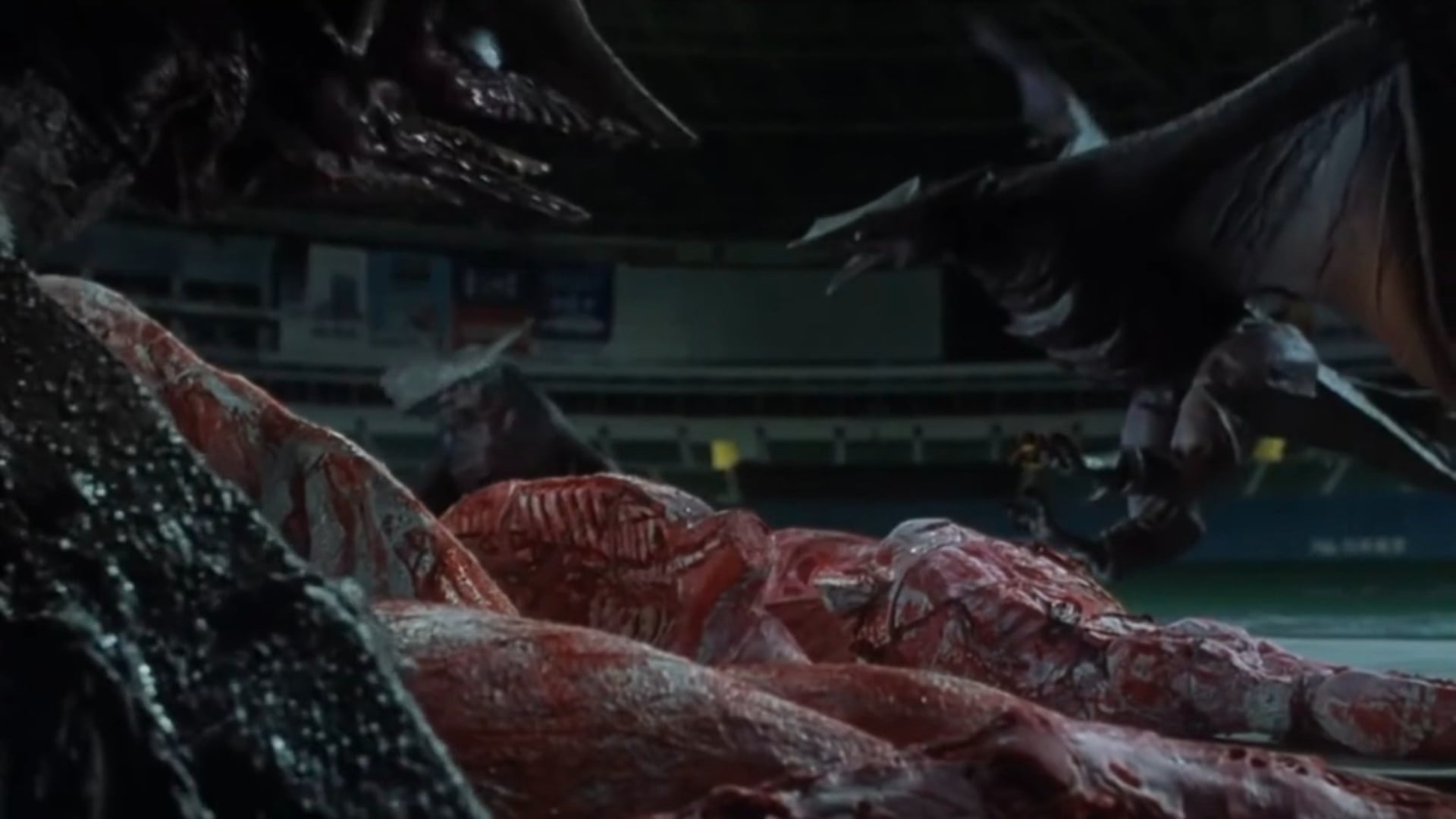
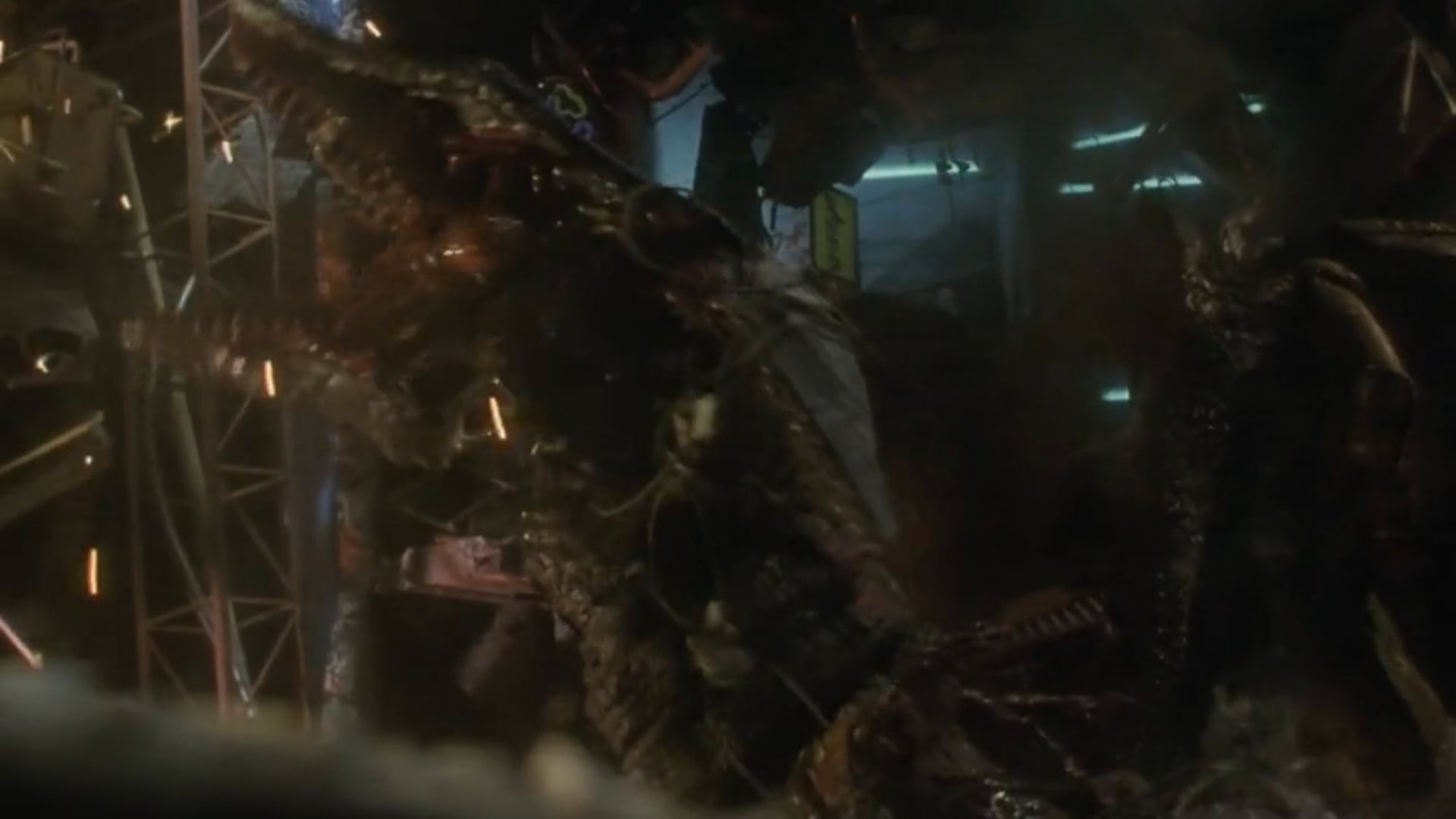
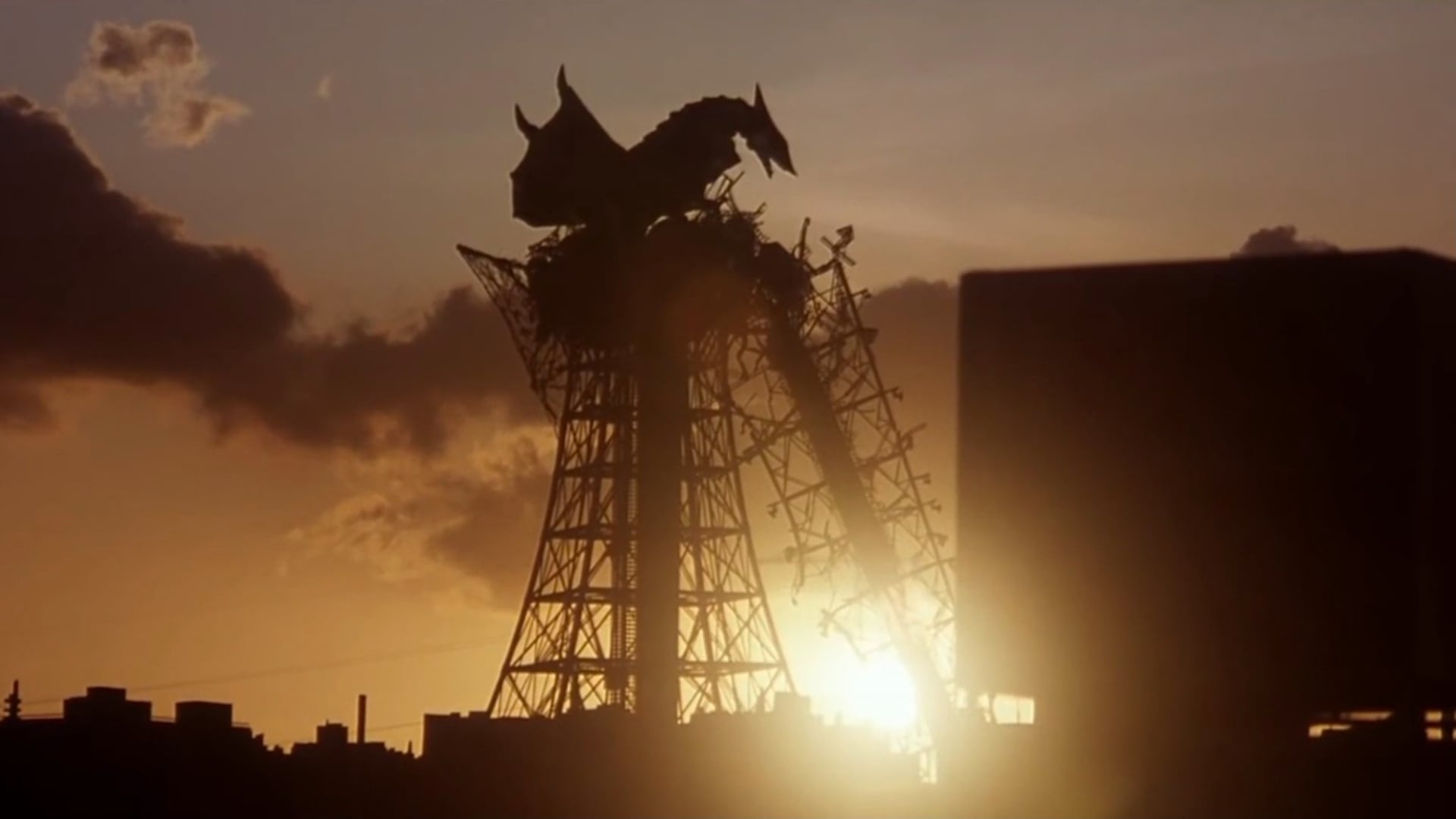
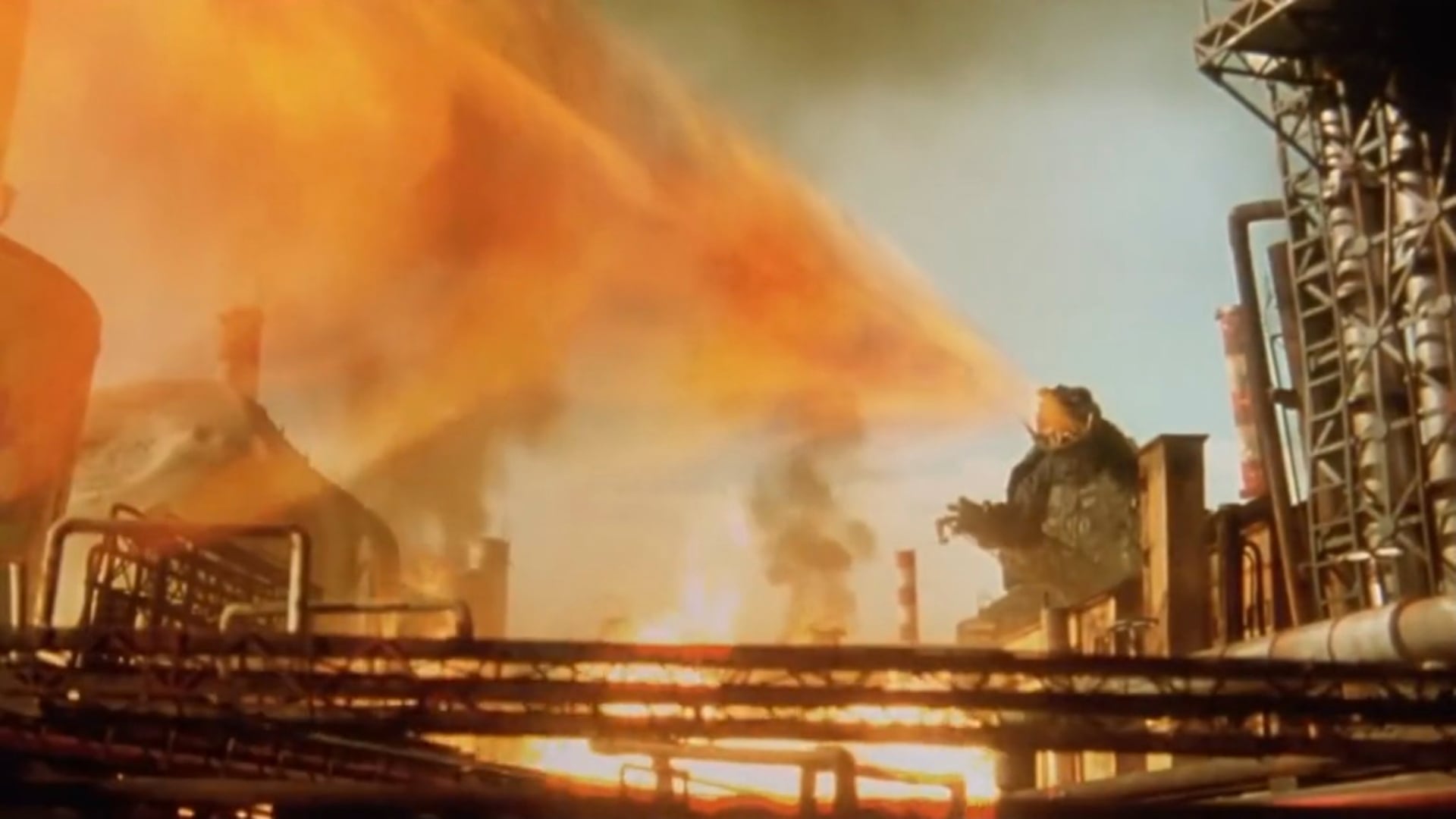
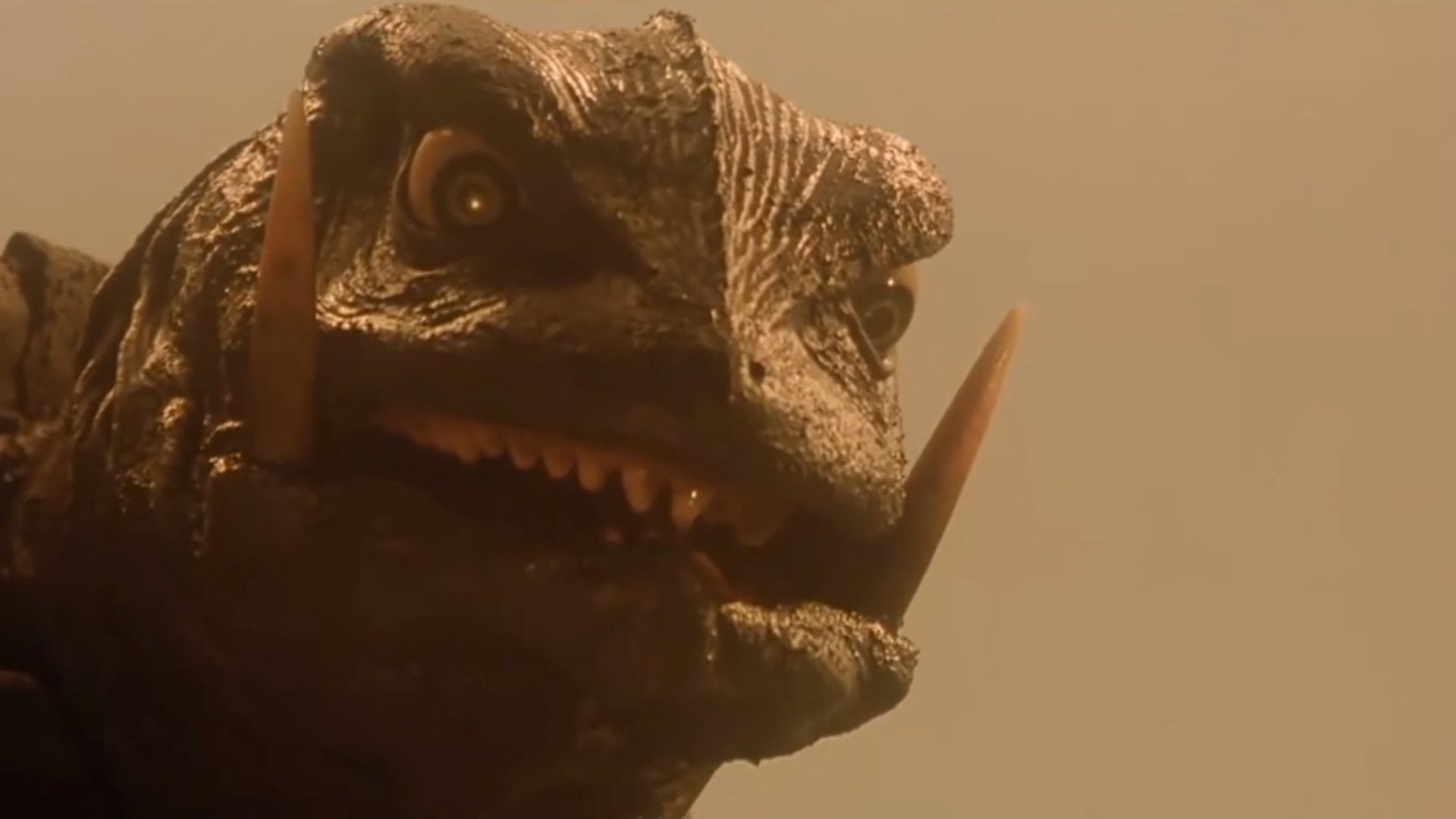
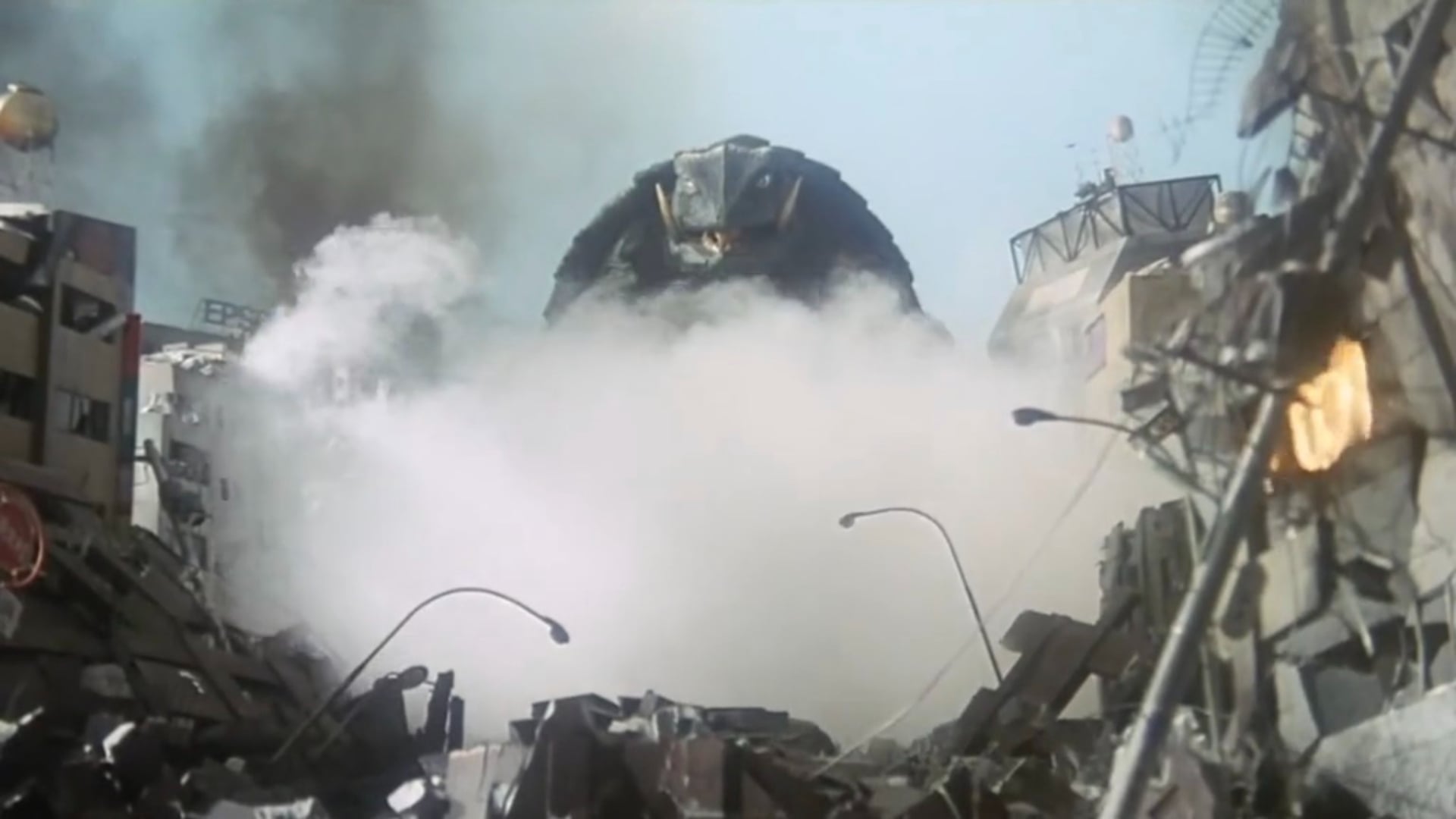
What I liked most about this film trilogy as my on-ramp to what Gamera had to offer is how the films’ rhythm makes the human element—something many a kaiju fan rolls their eyes at—integral to the crux of the kaiju fighting. As the guardian of the universe, Gamera’s power set is less about what he can do as an individual and more tied to his spiritual connection to humanity. Gamera’s essentially a kaiju Jesus, with his power set running on a mix of human collaboration, à la Goku’s Spirit Bomb and Captain Planet. The trilogy’s refreshingly female-centric human characters come into contact with these talismans. Through them, they can fuel Gamera while also feeling the pain he endures to keep them safe. We love a symbol of collective moral burden.
Although Gamera commits a similar phenomenon to Godzilla by having less screen time than his human counterparts, when he does show up, it’s the most euphoric, buzzer-beater, come-from-behind victory I’ve felt watching a kaiju movie. Let alone a trilogy of them back-to-back. Basically, the last 20 minutes of each film are like watching a basketball team you’ve seen get trounced by 40 points for the first three quarters, then win the whole thing in the fourth quarter.
That’s not to say Gamera is a pushover. Far from it. Compared to Godzilla, Gamera doesn’t waste time aura-farming when he pulls up on his opps. Gamera gets paid by the minute (he doesn’t), not by the hour. Whenever he hits the scene, he’s already got his beam loaded and ready to mag dump on his foes. Or he’s spinning out like a Beyblade, tearing them into pieces. I popped off every time a foe exploded with the pulpy gravitas of a pumpkin with a firecracker inside its hollow guts.
Thanks to the practical effects of his costuming, you always see Gamera shield the diminutive humans from rays hurled by the 15-meter-tall Kaiju. Again, I can’t stress enough how much Gamera bleeds in this trilogy. That’s my friend, dammit. He’s trying to help you. Don’t hurt him.
Of the trilogy, Revenge of Iris is, far and away, my favorite because of how it adds lore and intrigue to his character-building through a one-sided beef the kaiju garnered from a little girl. The movie is from 1999, but just in case…

Despite Gamera’s affinity for humanity, as a kaiju, he’s wont to cause infrastructural damage. Revenge of Iris uses that occupational hazard of kaiju cinema as the bedrock of its tale. Iris’ deal is that it’s a kaiju egg that a girl, whose parents were inadvertently crushed by Gamera in the first movie, groomed to hate Gamera. So her hatred leads a cute little critter to evolve into the sickest, most biblically accurate kaiju design I’ve seen, absorbing the little girl into its chest and attacking Gamera as a vengeful spirit.
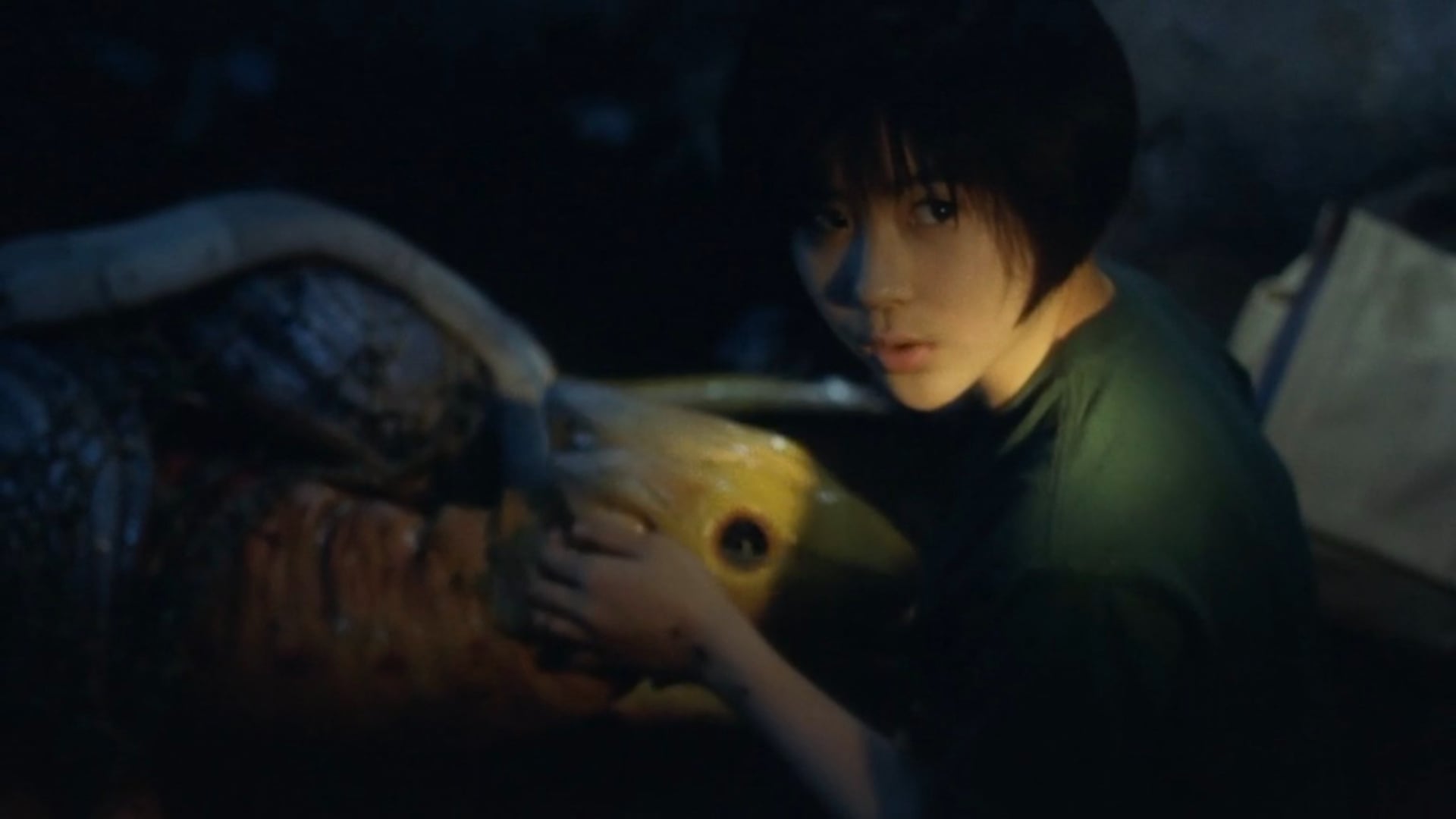
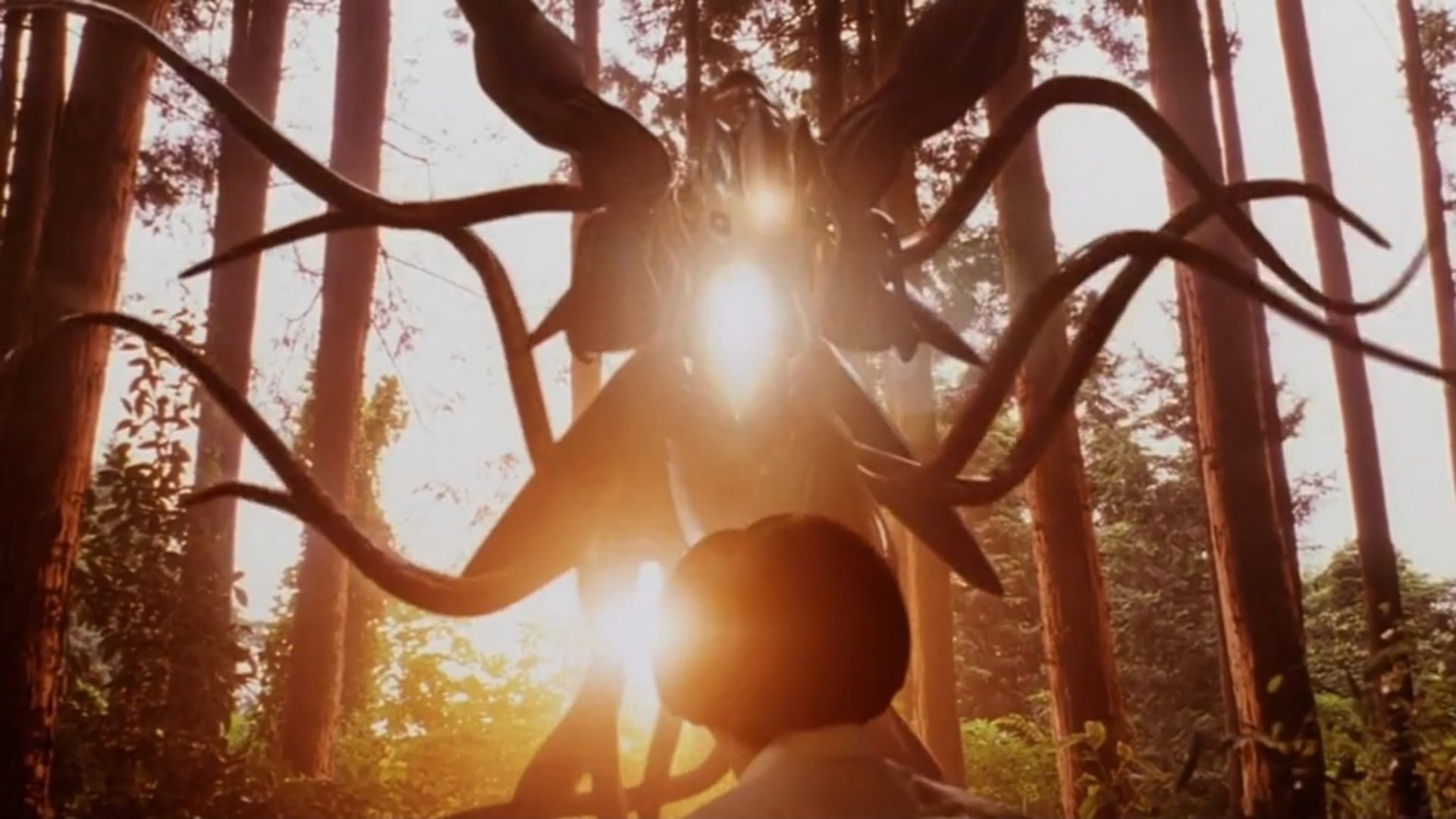
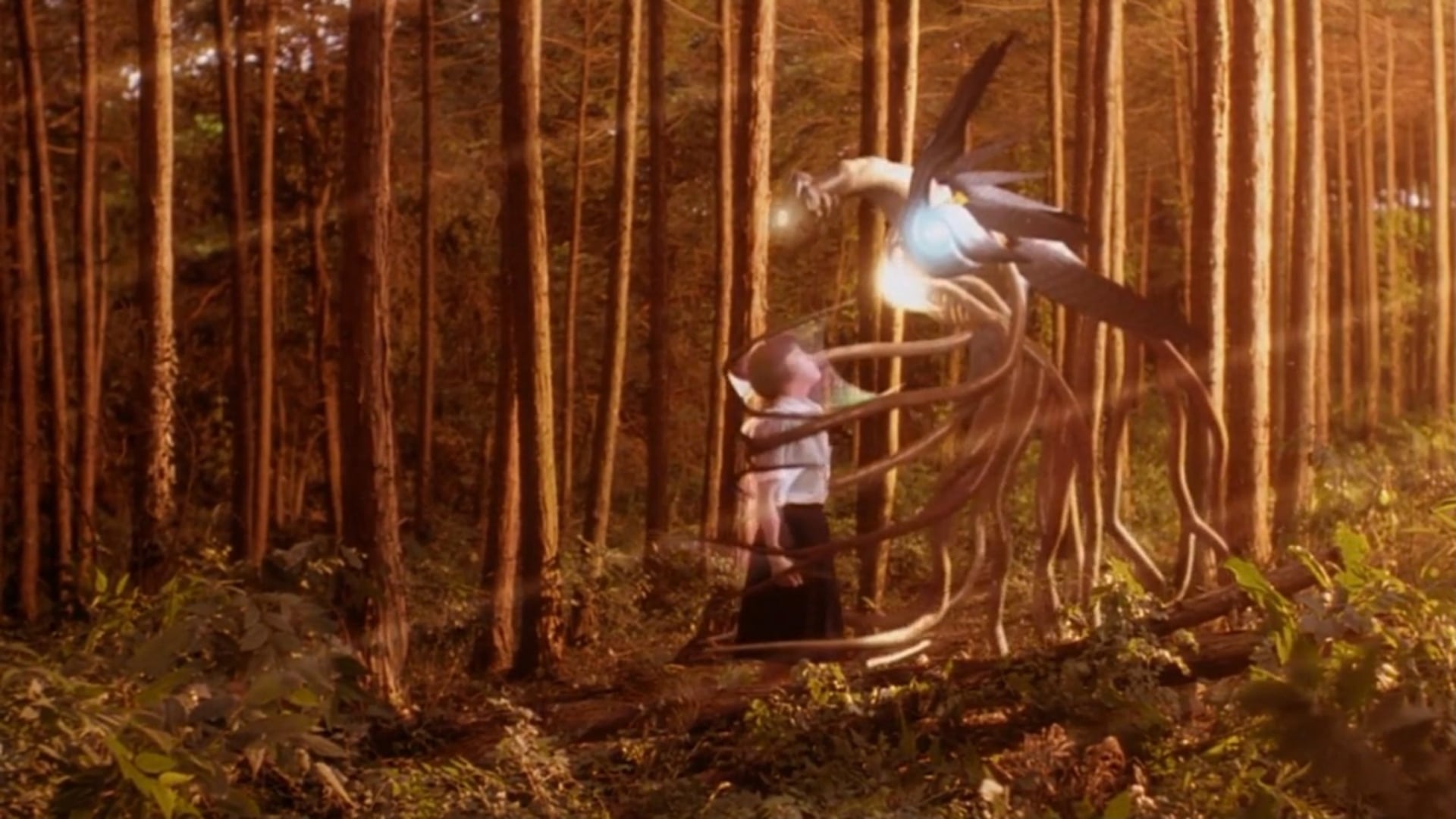
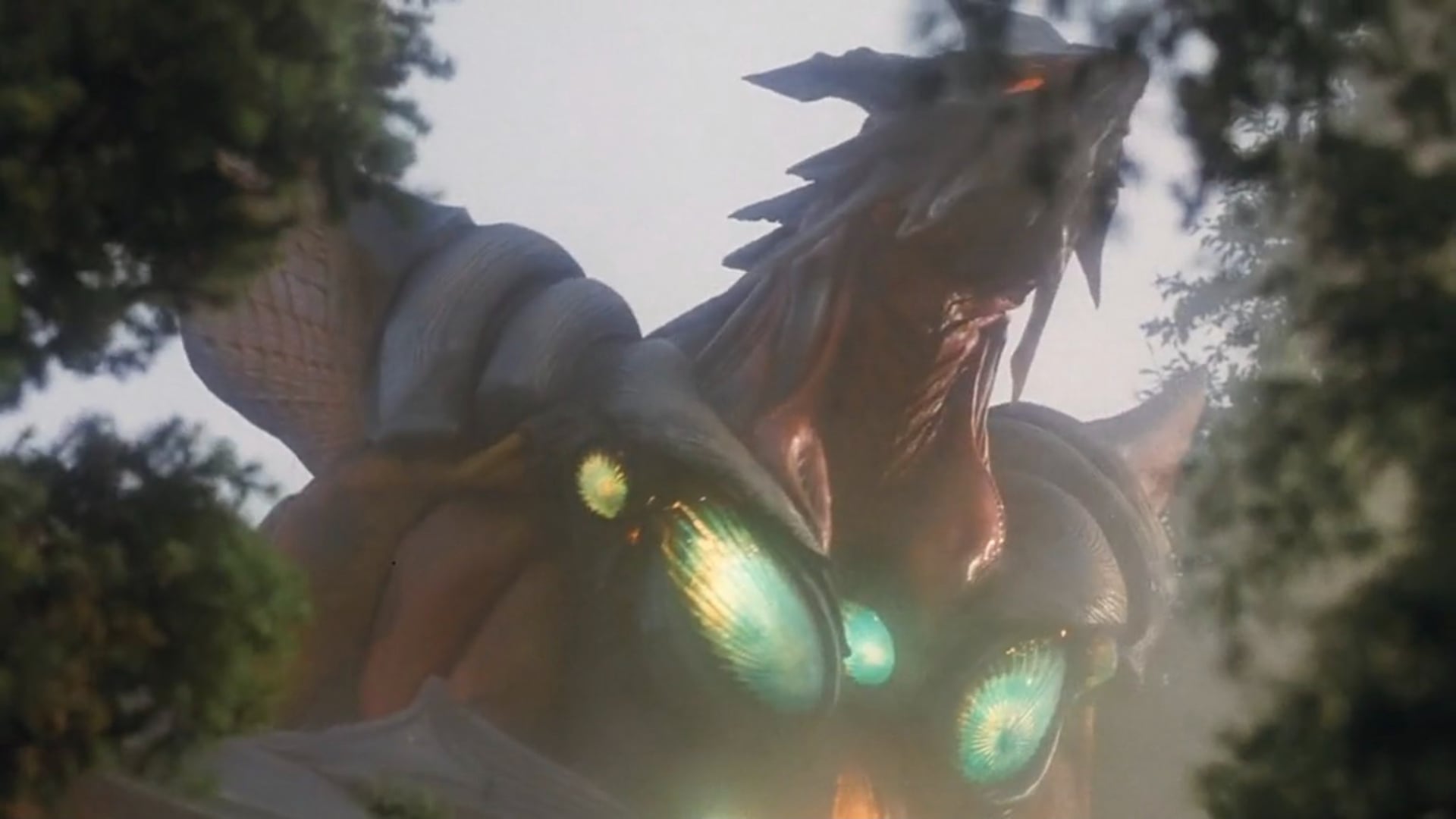
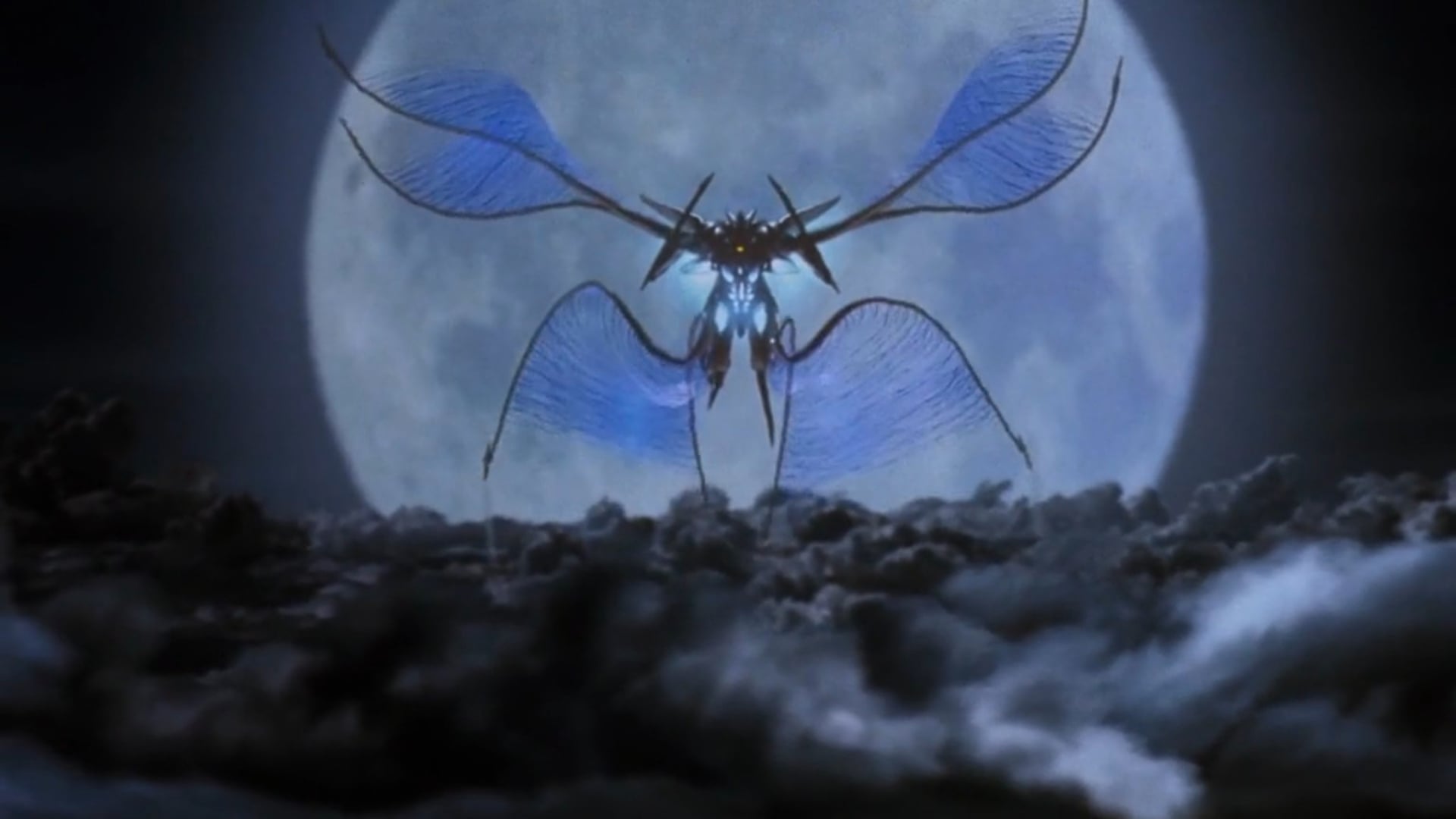
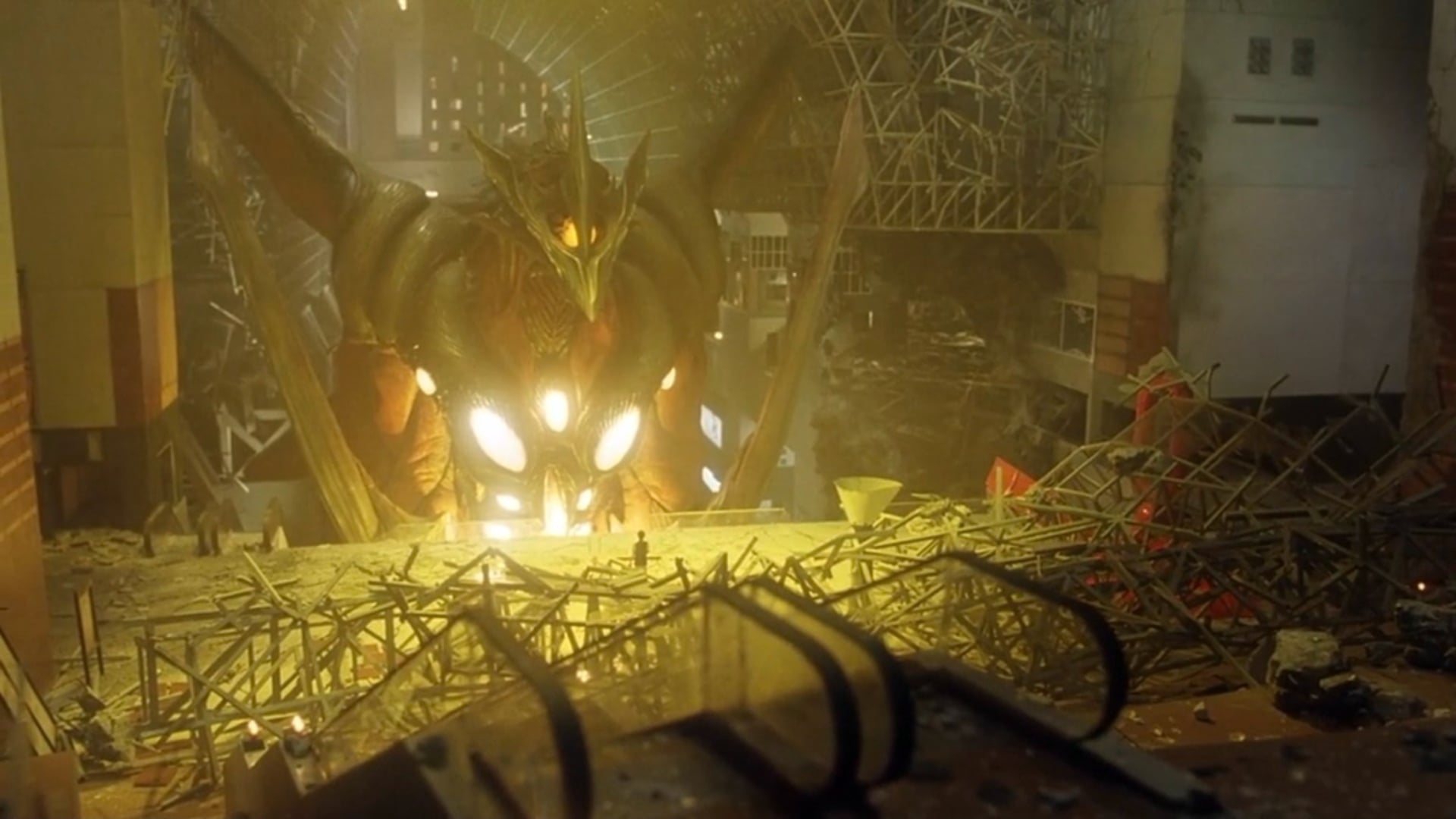
Although Gamera looks as cool as he ever has in this trilogy, Iris absolutely rinses him. But Gamera’s indomitable spirit keeps him getting back up. That’s my goat.
While I was already warming up to Gamera’s power set and moniker as the defender of life on the planet, my affinity for him was cemented by the climax of Revenge of Iris, where he did the most metal thing I’ve ever seen in a kaiju movie.
On the back foot, half his arm is buried in Iris’s chest (containing the girl Iris is parasitically absorbing), while his other arm is impaled in a concrete column. Gamera is fucked. Iris is charging a multi-pronged beam at him that he can either dodge and lose his grip on the girl who hates him that he’s trying to save—or take the hit and die. What does Gamera do? He looks down at his arm, hits it with his own beam to sever it and free himself, removes his other arm from Iris’s chest, keeping the girl secure, and regenerates his severed arm (at this point he hadn’t displayed that as a power he has).
The villain is defeated, his biggest human detractor is healed and converted into a fan, and the day is saved. That’s what legendary players do.
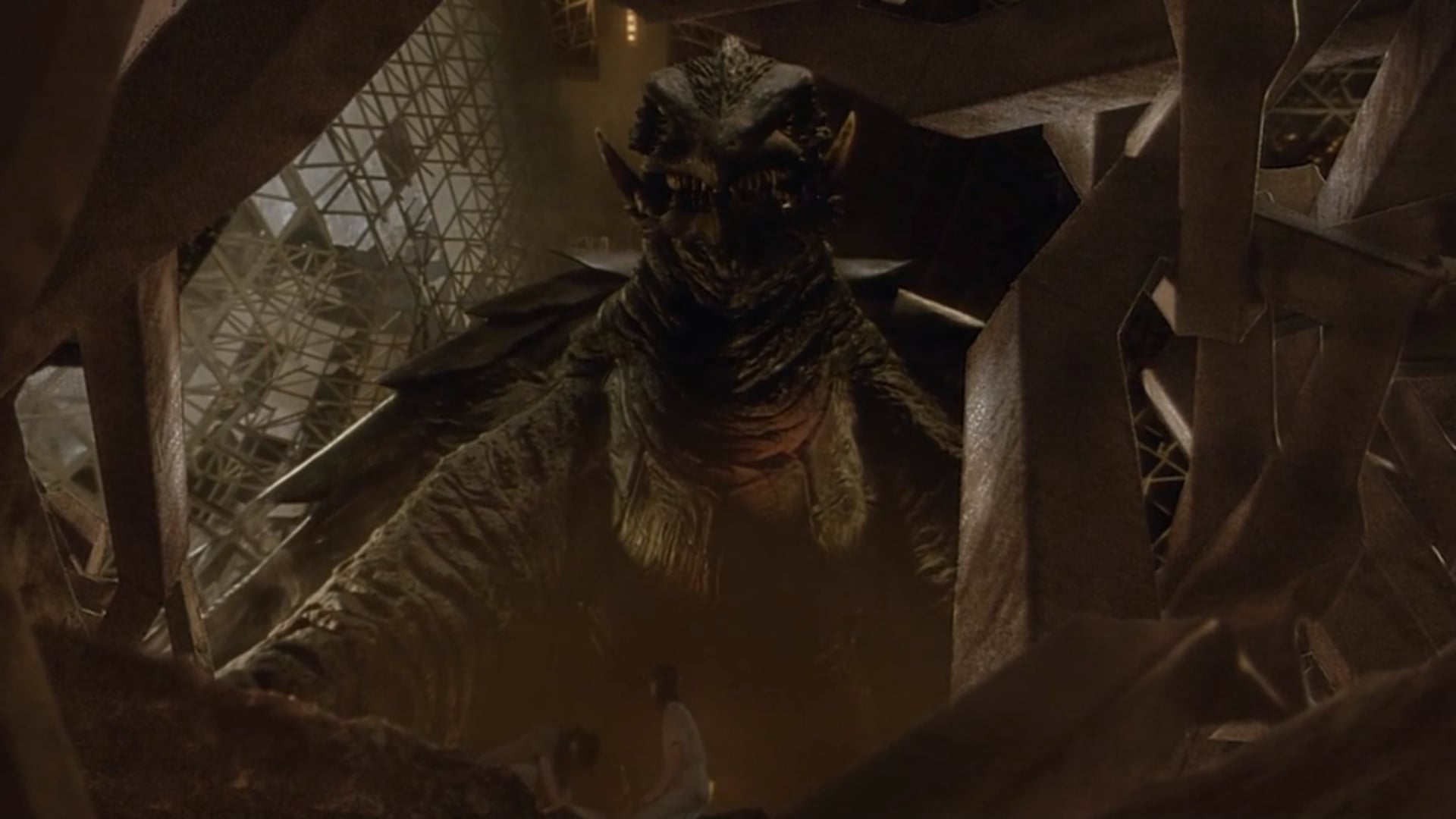
As Gamera walks away from the fight, the humans hype him up as the defender of the galaxy: Gamera will fight to the end, forever. Even if he’s alone. Only, Gamera’s not alone this time. In that moment, I said aloud, “Gamera is my guy.”
What makes getting into Gamera so exciting is that, like Godzilla, he also has different eras with different bits of lore to draw from. Having only watched what is the equivalent of Godzilla’s Millennium era, my brain was swimming with questions from this trilogy that I’m geeked to discover for myself. Does Gamera have his own King Ghidorah-level rival outside of Iris? Does he have kaiju-sized allies? Has he ever turned heel, as his second film teased in its climax, if the humans he swore to protect also harmed other lifeforms with our rampant pollution and disrespect for the Earth? Does the ceiling for villain designs in his rogues’ gallery get even better than Iris?
Hopefully that big lummox will see his own renaissance of films similar to what Godzilla’s been getting his lion’s share of lately. Lord knows Gamera deserves it.
Want more io9 news? Check out the best movies and TV shows to stream this month and all the upcoming sci-fi, fantasy, and horror books that should be on your radar.