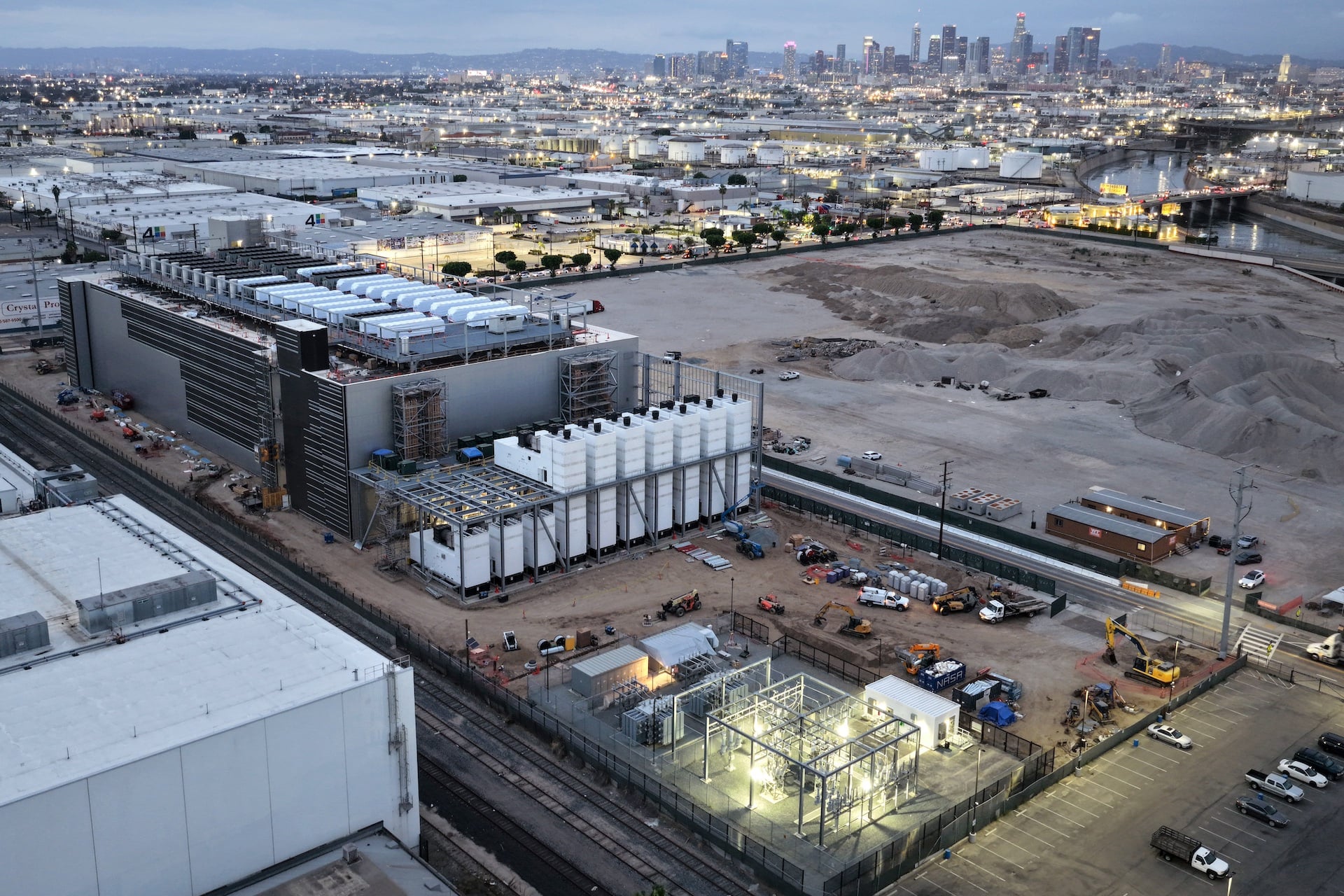
On Tuesday, cities and townships across the United States will decide whether or not they want to live alongside data centers, the sprawling facilities fueling the AI boom.
Supporters—including President Trump—say data centers can supercharge job growth, tax revenue, and local economies generally. Opponents argue that they’re noisy polluters that drive up electricity and housing costs. The majority of American voters seem to fall into the latter camp: A Gallup poll conducted in March found that over 70% of U.S. adults oppose the construction of data centers in their area, while a September report from the Pew Research Center showed that the public’s distaste toward the complexes has grown over the course of the year.
A total of forty-one data center-related ballot measures will be determined in this year’s midterm elections, according to the nonprofit BallotPedia. More than half of those are being floated by towns in Ohio; communities in Maine, New Hampshire, New Jersey, Florida, Michigan, Wisconsin, Illinois, Arkansas, Kansas, North Dakota, Nevada, and North Dakota will also vote on data-center-related measures. While they vary in objective and scope, each of the initiatives would either make it easier for tech companies to move ahead with the development of new facilities, or add legal guardrails preventing future construction. And though the votes will, for the most part, be playing out in small communities you’ve probably never heard of, the results will be a collective bellwether of Americans’ enthusiasm (or lack thereof) towards AI itself.
Here are the four big legislative categories we’ll be keeping an eye on:
Moratoriums (i.e., short-term bans)
In July, New York became the first state to enact a one-year moratorium on the construction of data centers (specifically hyperscale facilities requiring 50 megawatts of power or more to run). Legions of towns, counties, and other jurisdictions across the country have also approved similar short-term bans on the facilities. Four new moratoriums are on the ballot for Tuesday’s midterms: in Bloomington, Illinois; Peru, Maine; Wells, Maine; and Wiscasset, Maine.
Pro-data center initiatives
Residents of Wilmington, OH will vote on four separate initiatives regarding the city’s zoning laws; a “Yes” would redesignate 545 acres within city limits from “rural residential” to “light industrial,” allowing for the construction of a single new proposed data center facility. And though it has a data center moratorium in place until March, the town of Monroeville, Ohio, is voting on an “advisory measure,” which is intended to gauge public attitudes toward the development of new data centers in the future without, for the time being, actually changing any laws.
Bans on some data centers
Many communities are weighing outright bans on the construction of new data centers—but only those that cross a certain threshold. El Dorado, Kansas, for example, will vote on an initiative to outlaw “high impact” data centers, which the city defines as “computing facilities requiring a peak electrical load exceeding ten megawatts, or a daily water draw exceeding one hundred thousand (100,000) gallons.” (That would likely apply to all hyperscale data centers, whose electricity intake is in the 100-100 megawatt range.) A measure in Sunbury, Ohio would ban the development of new data centers whose monthly aggregate energy usage exceeds 25 megawatts.
Bans on all data centers

Some ballot initiatives, if passed, would establish a flat-out ban on the construction of new data centers.
A proposed measure in Edgewater, Florida—a small coastal community just northeast of Orlando—would amend the city’s charter to outlaw the facilities within city limits. The Southern California town of Alhambra, which only receives around eighteen inches of rain annually, would likewise ban data centers. “Data centers can use millions of gallons of water to keep their computers cool,” the Alhambra City Council wrote in the measure. “Our precious water should be used for homes, schools, and parks instead.” That document also pushed back on the idea that new data centers would promote job growth: “They pay minimal taxes and create few local jobs as they require few onsite workers at the facilities.” Recent data from the Brookings Institute found that while many data centers do create new jobs, the effect is smaller than advocates tend to claim, and offset by an average increase in home prices of between 2% and 5%.