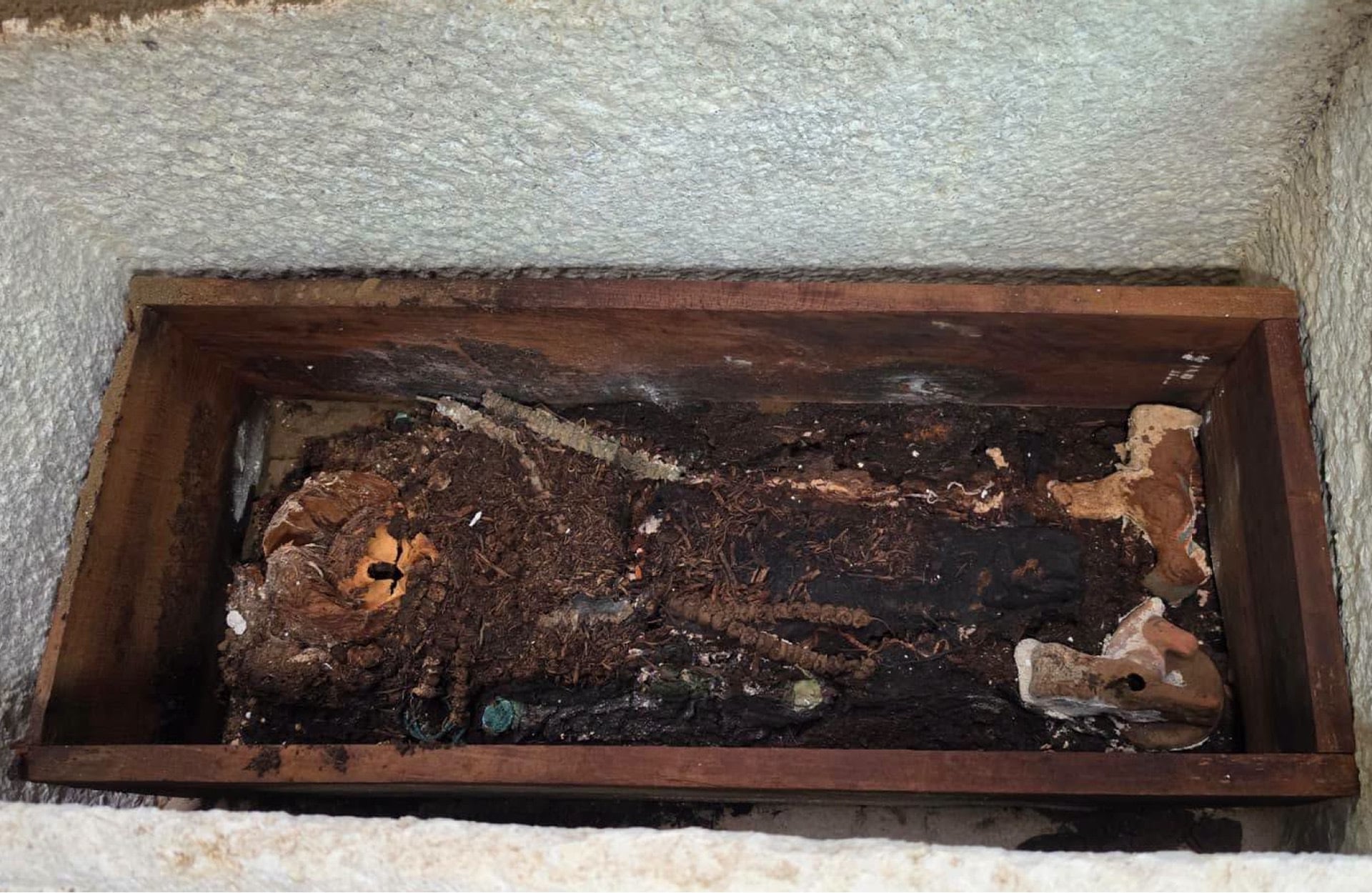
In a rare find, archaeologists lifted a Roman-era sarcophagus out of the ground. When they opened the wooden coffin inside it, they encountered what may have been a heartbreaking moment from thousands of years ago.
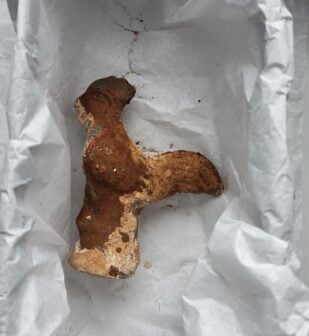
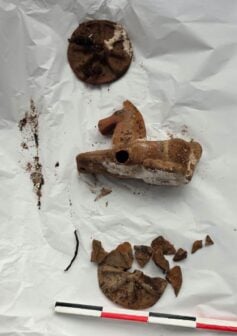
Inside the coffin were grave goods archaeologists don’t find too often in ancient graves: clay toys, including a rooster-shaped rattle; flower garlands; and two bullae—amulets given to male Roman children for good luck and protection. Although a statement on the discovery does not clarify whether the child’s remains survived, evidence collected thus far points to a child’s burial near the Graeco-Roman city of Tomis between the 2nd and 3rd centuries CE (translated via Google).
Constantin Băjenaru and Cătălin Nopcea, archaeologists with the Museum of National History and Archaeology Constanța, Romania, were part of the excavation team.
“Although we are still at the beginning of the documentation, we consider this discovery to be important, primarily due to the intact preservation of the sarcophagus,” said the museum. The “untouched preservation of the funerary inventory [provides] precious information regarding Roman-era funerary practices in Tomis,” it added.
Timeless tragedies
The evidence is mixed on the degree to which Romans valued the youngest members of their society. Maureen Carroll, an archaeologist at the University of York, U.K., wrote in a blog post earlier this year that legal sources from ancient Rome suggested a child’s “social value” increased with age, and this was reflected in the length of the mourning period. For instance, mourning was allowed to a limited extent for children younger than three years, whereas babies who died before turning one weren’t supposed to be mourned at all.
That may sound harsh, but as Carroll explained, this likely applied only to visible mourning in the public sphere and had “no bearing on sentiments such as grief or the sense of loss felt and expressed by the surviving family in private.” In other words, no, the Romans weren’t heartless, and archaeological evidence also shows that infants received expensive, attentive funerary treatments comparable to those given to adults, she added.
A fleeting memory
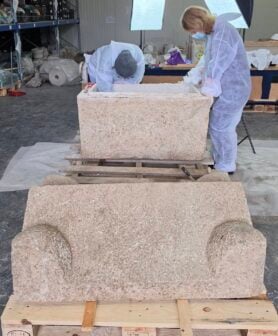
The latest discovery may be another striking example of this apparent disconnect between records and evidence. According to the museum’s statement, the team was conducting preventive archaeological research—investigating sites due for land development work—at Constanța in southeastern Romania. The sarcophagus was discovered about a mile (1.5 kilometers) away from where Tomis once stood.
The museum recently held a press conference on the discovery, sharing a summary of the event in a social media post. According to the post (translated via Google), the discovery site lay along an important route that connected Tomis to another important ancient city, Histria. The positioning of the discovery, along with other remains from the area, “may bring new information about the evolution of the city and the community that lived here during the Roman period.”
Again, the museum didn’t clarify whether any of the child’s remains survived. To be fair, the team only opened the sarcophagus on October 27. So further details may become clearer as the researchers continue to analyze their findings.
That said, the distinctive grave goods do make it seem highly likely that the careful arrangement was dedicated to a child whose life was cut too short—a heartbreaking thought, regardless of the era.