Small businesses and start-ups face a long journey, and the right web host can keep them on track. In 2026, building a strong online presence takes more than a website, because customers also expect a professional email address, a fast site and a secure checkout. A good web host hosting your website and your email under one roof saves money and time.
As a small business owner in 2026, you also should not overpay for features you do not need. That is why we picked hosting services with plans that start at about $3 a month, and that grow with you, from a first site to a busy store or a VPS. We compared the options on price, speed, security, email, support and room to scale, so you can find the best web hosting for small business needs without reading every plan page.
Best Hosting for Small Business: A Quick Recap
- Hostinger: the best small business hosting overall
- SiteGround: the best for email and performance
- InMotion Hosting: the best for growing businesses
- DreamHost: the best for hosting multiple sites
- Bluehost: the best for WordPress and online stores
- Hosting.com (formerly A2 Hosting): the best for speed
Best Small Business Web Hosting Services Reviewed
The recap gives you the names, and the reviews below explain the choices. For each host, we cover the plans, the business email, the speed, the security and the support, and we say who it suits best. Five of the six hosts also have a full Gizmodo review, where we run speed and uptime tests, and we link them below.
1. Hostinger: Best Small Business Hosting Overall
Pros
- Daily backups from the Unlimited plan
- AI website builder
- Fast NVMe storage and LiteSpeed servers
- Free domain for the first year on terms of 12 months or longer
- DDoS protection and a malware scanner
- Low-priced standalone business email
Cons
- No unlimited storage
- Free email lasts one year and covers 2 mailboxes per site
- Renewal prices are much higher than launch prices
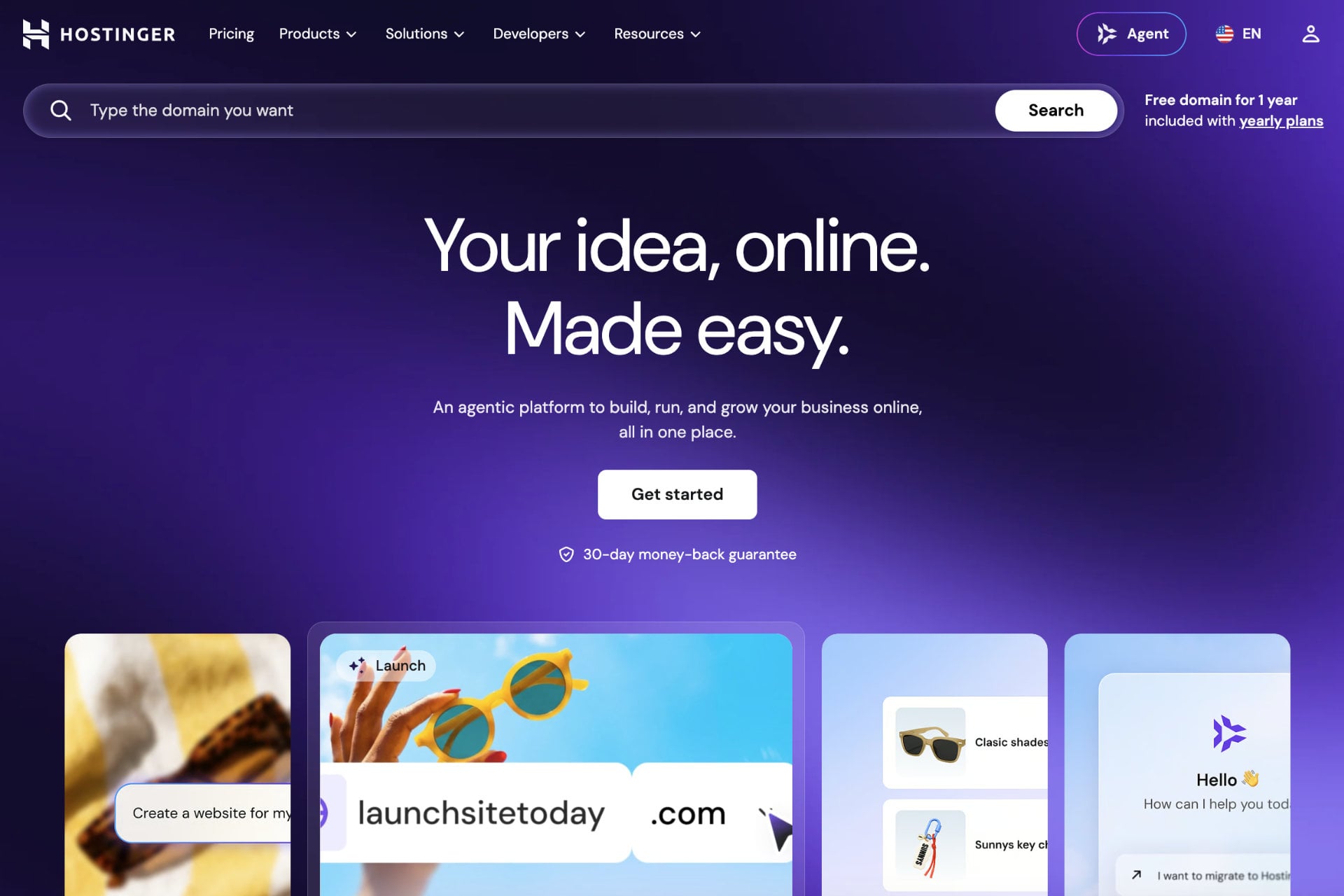
Hostinger is the best small business hosting overall because it combines a low price with fast servers, a simple dashboard and a wide range of products. Our Hostinger review explains how it performs in detail.
Our favorite plan is Unlimited, which costs $3.99/mo on a 48-month term billed upfront. It allows unlimited websites under fair use, with 50 GB of NVMe storage, a CDN, staging and daily backups, and it comes with a free domain for the first year and free SSL. Code GIZMODO takes another 10% off, which brings Unlimited to $3.59/mo. The plan renews at $16.99/mo, so check that figure before you pick a term. Premium costs $2.99/mo for 3 websites and 20 GB, and it is enough for a single small site.
Business email comes in two forms. Each website gets two free mailboxes for the first year, which is enough for an owner and one employee, and Hostinger also sells standalone email plans from $0.39/mo, which we cover in the email section below. Hostinger’s AI Builder, which merged the classic Website Builder and Horizons in August 2026, generates a site from a prompt, and the plans run from $6.99/mo.
Selling online is easy too. You can install WooCommerce in one click on Hostinger’s WordPress plans, and its separate Ecommerce store builder costs $5.99/mo on a 12-month term, with 0% transaction fees, more than 100 payment methods and the option to sell through checkout links.
In our review, an optimized test site reached a full load of 733 ms, thanks to LiteSpeed servers and caching. Security includes a web application firewall, DDoS protection and a malware scanner, and support runs through live chat 24/7. If you need more resources later, Hostinger sells VPS hosting and cloud plans, and every plan has a 30-day money-back guarantee.
Get Hostinger With Code GIZMODO
2. SiteGround: Best for Email and Performance
Pros
- Unlimited email accounts on every plan
- Managed WordPress with automatic updates
- Daily backups on every plan
- Staging on GrowBig and above
- Data centers on several continents
- Free CDN and built-in caching
Cons
- Not the cheapest pick
- Renewals cost about 6 times the launch price
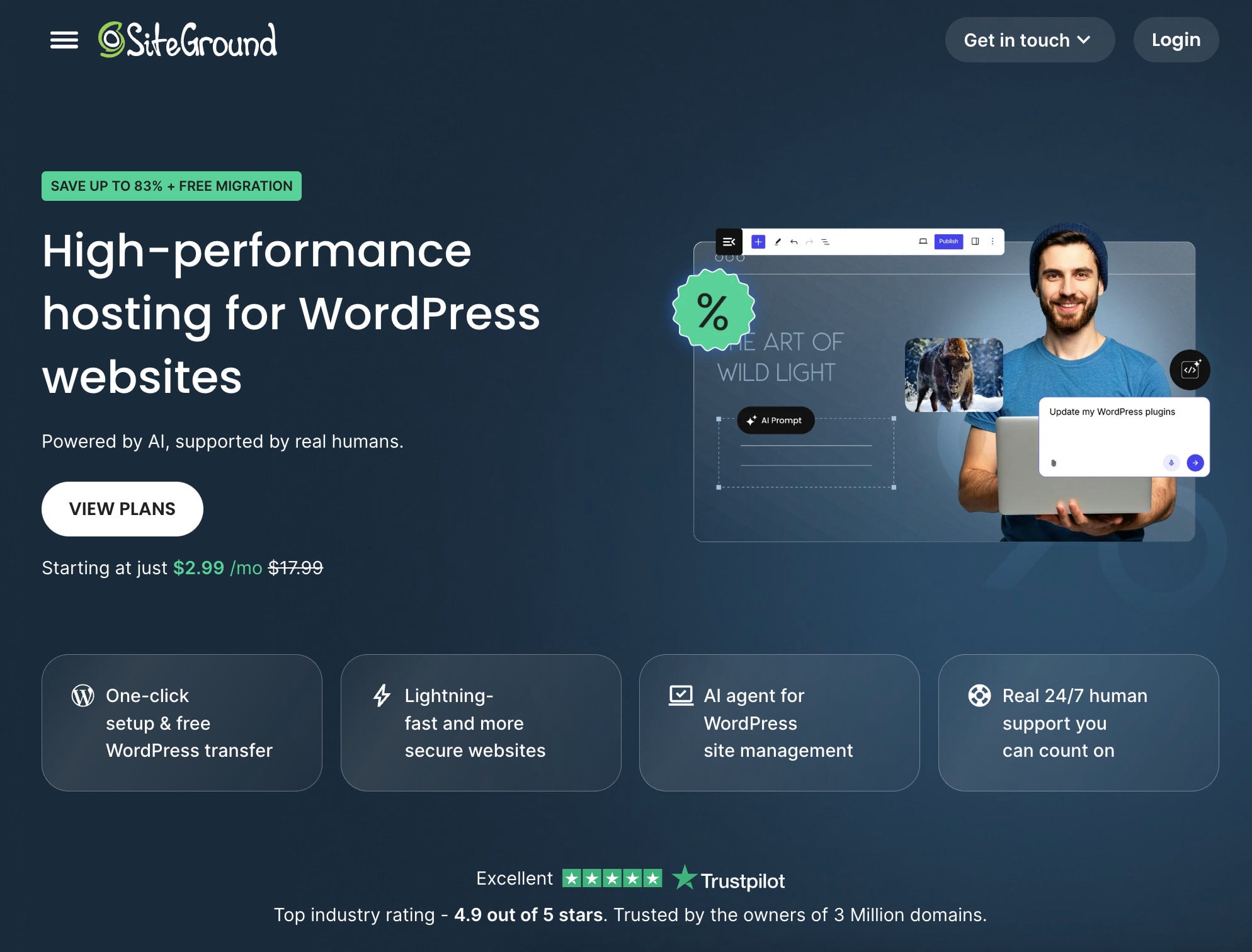
SiteGround is an all-in-one hosting solution for small businesses, and our SiteGround review covers it in full. It runs on Google Cloud infrastructure, and its data centers use 100% renewable energy. It was faster than Hostinger in our tests, with a time to first byte of 40 ms and a fully built site that loaded in 683 ms. Uptime was 99.95% over a 7-day test.
Our favorite plan is GrowBig, which costs $4.99/mo on a 12-month term and renews at $29.99. It allows unlimited websites and 20 GB of storage, and it adds on-demand backups and staging, which is a copy of your site where you can test new designs and features before they go live. StartUp costs $2.99/mo for one website and 10 GB.
Managed WordPress comes with every plan, with automated updates and speed and security optimization. SiteGround also includes free email accounts with no cap on the number, spam protection and a webmail interface, plus an email migrator, which makes it our pick for business email on shared hosting. Daily backups, a free SSL certificate and a free CDN are included in all plans.
The data center network covers North America, Europe, Asia and Australia, and Site Tools, SiteGround’s own dashboard, allows one-click WordPress installs. If your business outgrows shared hosting, SiteGround sells cloud hosting from $80/mo, with 4 CPU cores and 8 GB of memory. Support covers chat, phone and tickets around the clock.
3. InMotion Hosting: Best for Growing Businesses
Pros
- Phone and chat support 24/7 from a US-based team
- 90-day money-back guarantee on terms of 6 months or longer
- Free site migration
- Shared, WordPress, VPS and dedicated hosting
- Free domain and SSL
- cPanel included
Cons
- Backup Manager is a paid add-on on shared plans
- Prices vary by term and plan
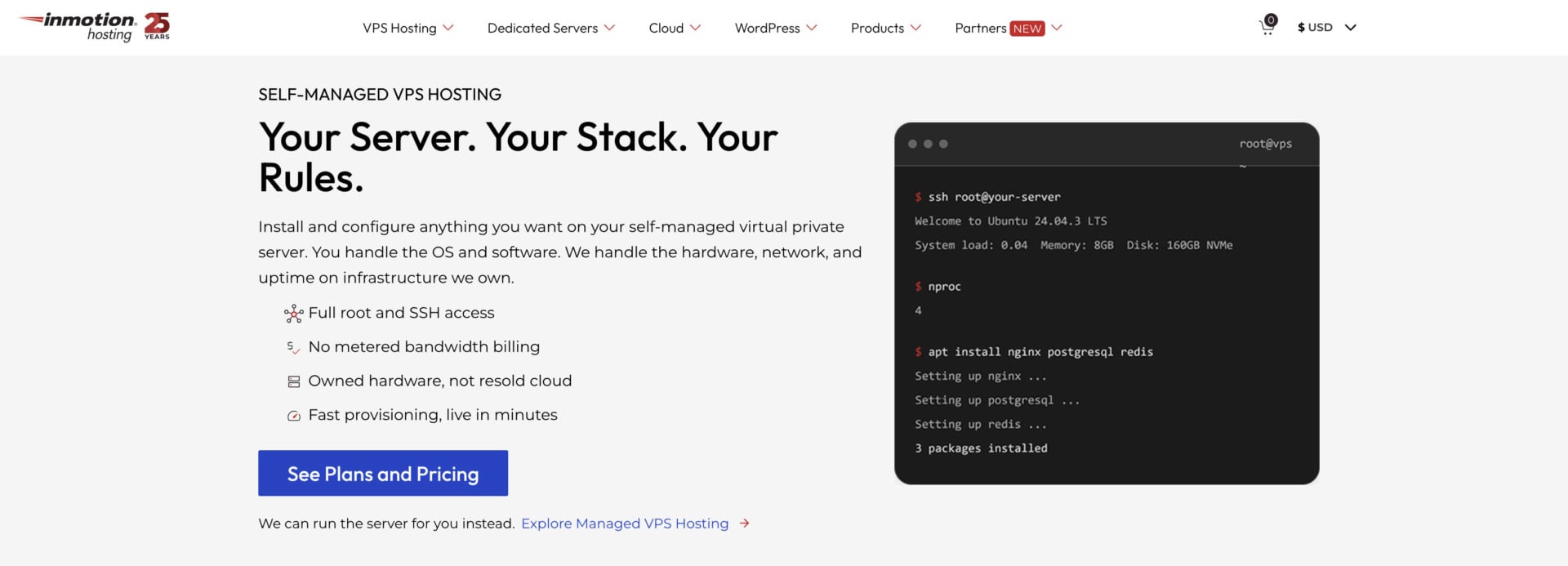
If scalability is your main concern, InMotion Hosting is the answer. It sells shared, WordPress, VPS and dedicated hosting, so a small business can move from a first site to a dedicated server without changing provider. Our InMotion review covers the plans.
InMotion’s shared plans are Core, Launch, Power and Pro, and the prices change with the term you choose, so compare the figure on the plan page. The plans include a free domain, free SSL, unlimited bandwidth, free site migration and business email, with limits that grow as you move up. cPanel is included, which makes the dashboard familiar and easy for beginners.
In our InMotion review, the host recorded 99.96% uptime over one week, close to its 99.99% promise, and a time to first byte of 191 ms. Security includes Monarx malware protection, a web application firewall and DDoS prevention. Backup Manager lets you schedule backups and restore them in one click, although it is a paid add-on on shared plans, so budget for it.
Support is the strongest point. InMotion offers phone, chat and ticket support around the clock, and it won the 2025 Best Customer Service award from HostingAdvice.com. The 90-day money-back guarantee applies to terms of six months or longer. If you outgrow shared hosting, the self-managed VPS with 4 vCPUs and 8 GB of RAM costs $13.99/mo on a 24-month term and renews at $26.99, and the managed version costs $43.49/mo.
4. DreamHost: Best for Hosting Multiple Sites

Pros
- 25 websites on the Launch plan
- Free domain with WHOIS privacy
- NVMe storage and free SSL
- Free site migration
- One-click WordPress installer
- 30-day money-back guarantee
Cons
- Free email lasts only 3 months on shared hosting
- No phone support
- Renewal costs 3.8 times the first-year price
DreamHost is budget-friendly and easy to navigate. Our DreamHost review has the full story. Founded in 1997, it has almost three decades of experience, and its Launch plan allows 25 websites, which suits a business that runs several sites, such as a main site, a blog and a store.
Launch costs $2.89/mo for the first year, or $1.99/mo on a four-year term, and it renews at $10.99, or $7.99 after the four-year term. Growth costs $3.99/mo and renews at $12.99. Each plan includes a free domain with WHOIS privacy, NVMe storage, free SSL and free site migration, and the WordPress installer helps you get set up quickly. Email is free for only three months on shared plans, so plan for a paid email service afterward.
In our DreamHost review, the host recorded a time to first byte of 199 ms, a largest contentful paint of 444 ms and an A grade on GTmetrix, and a live chat agent answered in less than a minute. Support runs by chat and email, with no phone line. DreamHost lost its place on the WordPress.org recommended list in December 2024, so check the WordPress features you need. If your business grows, its Stack VPS plans start at $5.99/mo on a two-year term, and it also sells dedicated servers.
5. Bluehost: Best for WordPress and Online Stores
Pros
- Recommended by WordPress.org since 2005
- Staging on every WordPress plan
- Free domain for the first year
- Chat support 24/7 and phone support on higher plans
- WooCommerce hosting with 16 plugins pre-installed
Cons
- WordPress hosting runs on US data centers
- Business email is a separate purchase
- Renewal prices are higher than launch prices
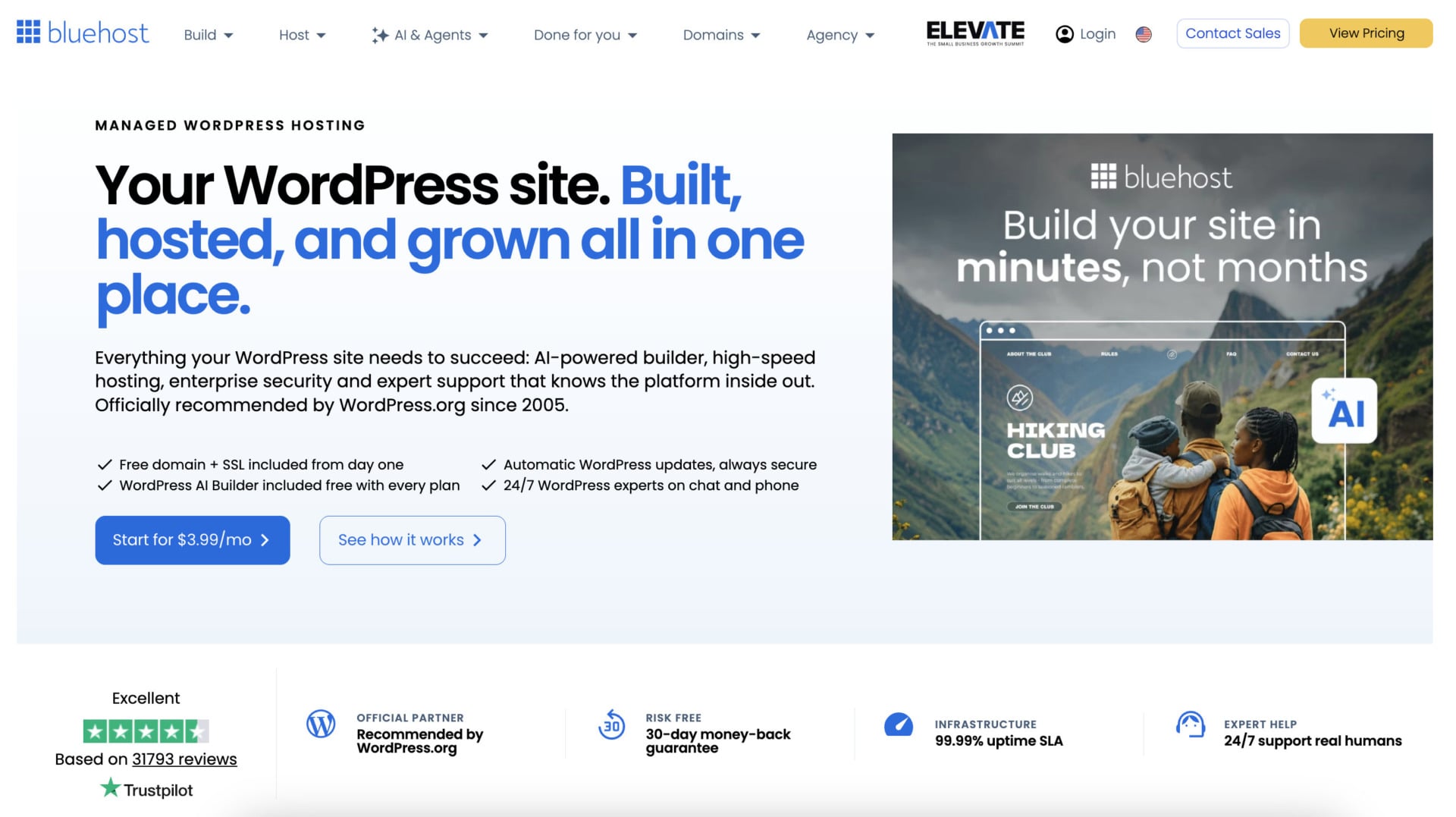
Bluehost is the best pick for WordPress sites and online stores, and WordPress.org has recommended it since 2005. Our Bluehost review covers every product. Managed WordPress plans start at $3.99/mo, and they include a free domain for the first year, free SSL, automatic updates, a free CDN, a one-click staging tool and Yoast SEO.
See Bluehost’s WordPress Plans
For stores, Bluehost sells a dedicated WooCommerce plan. eCommerce Essentials costs $14.99/mo on a 36-month term and renews at $21.99, and it comes with 16 premium WooCommerce plugins pre-installed, including subscriptions, memberships and paid courses. eCommerce Premium costs $21.99/mo and adds gift cards, bookings and rewards. Our WooCommerce hosting guide compares more options.
In our test, Bluehost’s shared hosting showed a time to first byte of 463 to 550 ms and a fully loaded time of 2.3 to 2.5 seconds, with 99.9% uptime over three months. Bluehost offers chat support 24/7, and phone support comes with higher plans. Business email is a separate purchase, so budget for it, and the managed WordPress plans run on US data centers, which matters if most of your customers are elsewhere.
If your business grows, Bluehost also sells self-managed and managed VPS plans and Bluehost Cloud for agencies and busy sites.
6. Hosting.com (Formerly A2 Hosting): Best for Speed

Pros
- LiteSpeed web servers with caching
- Staging tool and Plugin Optimized for WordPress
- Imunify360 security
- Support 24/7/365 by chat, email, tickets and phone
- 30-day money-back guarantee
Cons
- The lowest prices need a long term
- Managed VPS plans cost much more than unmanaged ones
Hosting.com is the company that used to be A2 Hosting, and it is a strong small business host for speed and ease of use. World Host Group bought A2 Hosting in January 2025, and the brand became Hosting.com in spring 2025. Our Hosting.com review covers the history and the plans.
The shared plans, now Starter, Pro and Max, start at about $2.99/mo on a long term, and the lowest prices need a long commitment, so compare the launch and renewal price for your term. Managed WordPress plans start at $11.99/mo, and unmanaged VPS plans start at $6.49/mo on a three-year term, while managed VPS plans start at $23.20/mo for 4 GB of RAM.
Hosting.com runs LiteSpeed web servers, which handle traffic better than Apache. In our review, it recorded a time to first byte of 244 ms, a first and largest contentful paint of 481 ms and an average response time of 645 ms. Uptime was 100% over three days, which is a short window. Security includes Imunify360, a hosting firewall, brute-force defense and virus scanning, and support runs 24/7/365 by chat, email, tickets and phone.
Hosting.com sells shared, managed WordPress and VPS hosting, so the highest tier for a small business is a VPS. A 30-day money-back guarantee lets you test the service, and if it does not suit you, Hostinger or SiteGround are good alternatives.
Business Email Hosting: Which Provider Is Best?
A business email address on your own domain is not a luxury. Imagine a serious company that answers customers from a Gmail address: it looks less credible. A proper business email hosting service lets you use addresses such as [email protected], and each member of your team can have one.
The best option depends on how many mailboxes you need and how much you want to pay. Some hosts bundle business email and web hosting in one plan, which is web hosting with email included, while others sell email separately, and there are standalone services too. A good email hosting service for business gives you custom addresses, spam protection and enough storage for your team.
Email Included With Your Web Hosting
Email included with hosting is the cheapest way to start, since you pay nothing extra. The table shows what each host in this guide includes.
| Host | Email with shared hosting | Good to know |
|---|---|---|
| Hostinger | 2 free mailboxes per site for the first year | Standalone email plans start at $0.39/mo |
| SiteGround | Unlimited email accounts on every plan | Includes spam protection, webmail and an email migrator |
| InMotion Hosting | Email accounts included, with limits by plan | Check the limit for your plan |
| DreamHost | Free for the first 3 months | Paid email afterward |
| Bluehost | Sold separately | Budget for a separate email plan |
| Hosting.com | Email included, with limits by plan | Check the limit for your plan |
If you need more than a couple of mailboxes, our favorite is SiteGround for a simple reason: it includes unlimited email accounts in every plan. It is not a free trial. It is a full email hosting service with an email migrator, and you can add it to an existing site without moving your website.
See SiteGround’s Email Hosting
Standalone Business Email Hosting
Standalone email suits you if your website is on another host, or if you want more storage and tools. Hostinger sells three plans, priced on a 48-month term. Starter costs $0.39/mo with 5 GB of storage, and Standard costs $0.99/mo with 20 GB and an AI-assisted inbox that summarizes messages and suggests replies. Premium costs $1.99/mo with 50 GB and a free domain for the first year. They renew at $1.59, $2.79 and $3.99 per month.
All three plans include end-to-end encryption, spam and virus protection, automatic replies and forwarding, which makes them a very low-priced way to look professional. They work whether or not you host your website at Hostinger.
Get Business Email With Hostinger
Google Workspace Through Hostinger
If your team already uses Gmail, Google Docs and Google Meet, you can buy Google Workspace through Hostinger as an authorized reseller. On a 12-month term, Starter costs $6.99/user a month with 30 GB of shared storage, Standard costs $13.99 with 2 TB per user and Plus costs $20.99 with 5 TB per user. It costs more than a standard mailbox, and it gives you Google’s apps and meeting tools.
Which Email Hosting Service for Business Fits You?
For one to three people, the free mailboxes that come with Hostinger or a similar plan are enough. For a team that needs many mailboxes, SiteGround’s unlimited accounts or Hostinger’s standalone plans are the better value. For teams that live in Google’s apps, Google Workspace is the right choice. Bought separately, business email usually costs from under $2 a month to $10 a month, depending on the mailboxes and the storage, so a hosting plan with email included is often the best deal.
Do You Need a Domain for Business Email?
Yes. A professional address needs a domain name, such as yourcompany.com. Most hosts in this guide give you a free domain for the first year, and our page on free domain names explains the conditions. After the first year, the domain renews at its normal price.
Web Hosting vs Website Builder for Small Business
Which one should you choose? We made a list of the best small business website builders, too, and they can also be a good choice. Website builders focus on front-end design, and they include hosting, although it is often less flexible than a dedicated host.

A website builder is nice if you do not want WordPress or do not know how to code. You can create a site quickly, add elements and use built-in SEO, marketing and e-commerce tools. The catch is that web hosting services often include website builders as well. Hostinger has an AI Builder, and SiteGround and Bluehost have AI tools for WordPress too.
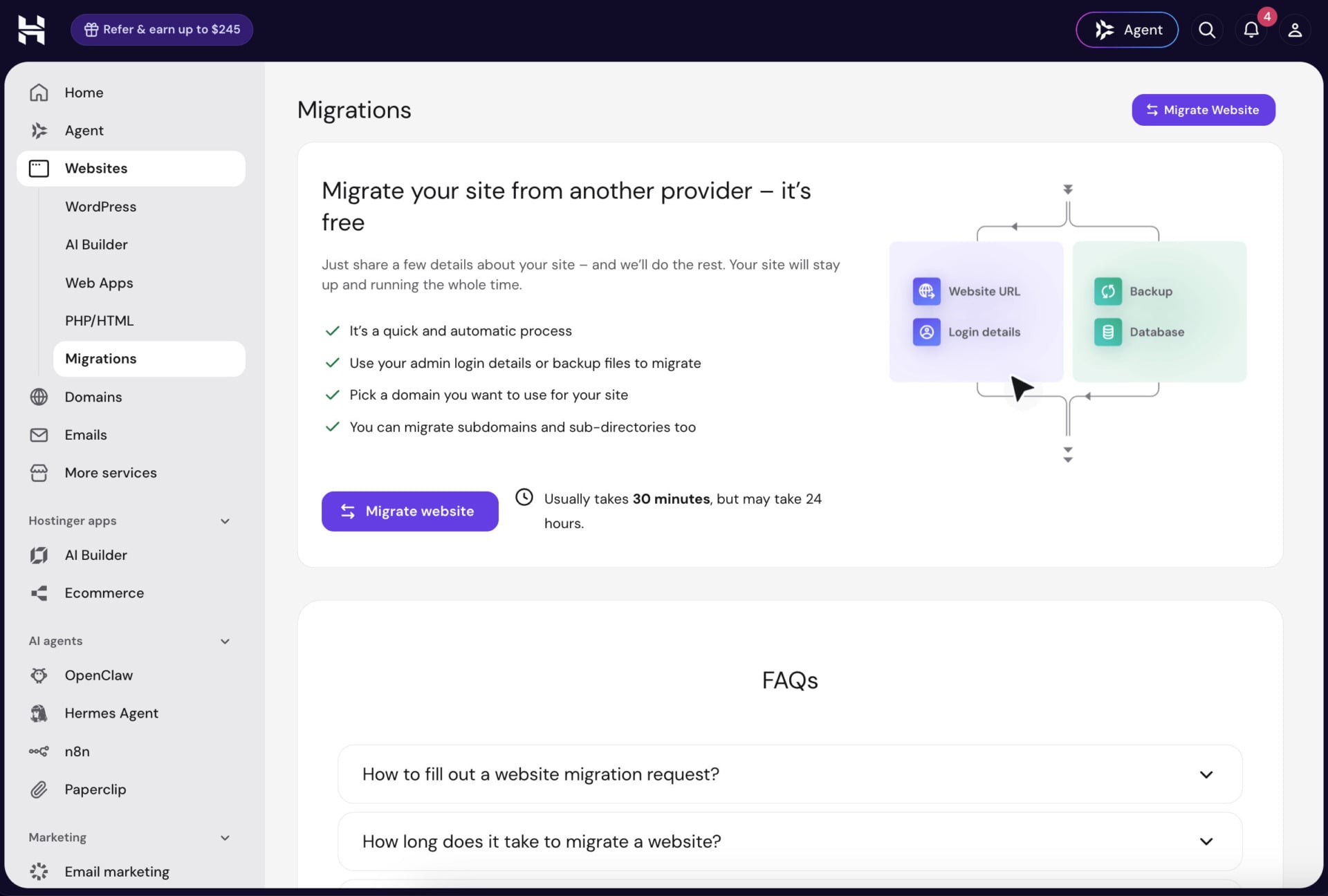
Web hosting is a different service. It publishes your website on the internet, and while site building is often included, the focus is on security, backups, traffic management and email. If you use WordPress to build your website, you need a web host. If you are happy with a builder and its built-in hosting, that route is fine.
How We Chose the Best Small Business Web Hosting
Choosing web hosting comes down to your needs and preferences, and needs should always come first. A single entrepreneur does not need dozens of mailboxes and collaborators, while a growing team does.
We compared the hosts on the points that matter most to a small business.
Hosting Limits
We looked at the number of websites, the storage, the bandwidth and the room to grow, since generous limits give a business space to expand.
Professional Email
We checked whether email is included, for how long, and how many mailboxes you get, since good email saves you from buying a separate service.
Free Domain
A free domain lowers the cost at the start, and our guide to getting a free domain name explains the details.
Speed, Uptime and Security
We used our own tests and reviews for speed and uptime where we have them, and we looked at caching, DDoS protection, malware scanning and backups. Where a figure comes from a host, we say so.
Flexibility and Support
We checked whether each host offers more plans and hosting types, such as VPS, and whether support is available by chat or phone.
Small Business Web Hosting Compared
The table below sums up the six hosts, with the entry plan, the launch price and its term, the price after that term, the email and the support. Prices change often and depend on the term you choose, so check the plan page before you pay.
| Host | Best for | Entry plan and launch price | Renews at | Money-back guarantee | Support | |
|---|---|---|---|---|---|---|
| Hostinger | Overall | Premium, $2.99/mo on 48 months | $10.99/mo | 2 free mailboxes per site for a year | 30 days | Live chat 24/7 |
| SiteGround | Email and performance | StartUp, $2.99/mo on 12 months | $17.99/mo | Unlimited accounts | 30 days | Chat, phone and tickets 24/7 |
| InMotion Hosting | Growing businesses | Varies by term | Varies by term | Included, with limits by plan | 90 days on terms of 6 months or longer | Phone and chat 24/7 |
| DreamHost | Multiple sites | Launch, $2.89/mo for the first year | $10.99/mo | Free for 3 months | 30 days | Chat and email |
| Bluehost | WordPress and stores | WordPress plans from $3.99/mo | Varies by plan | Sold separately | 30 days | Chat 24/7, phone on higher plans |
| Hosting.com | Speed | Starter, about $2.99/mo on a long term | Varies by term | Included, with limits by plan | 30 days | Chat, email, tickets and phone 24/7 |
Conclusion
Every small business needs web hosting, and a good place to start is our ranking of six providers that will not break the bank. Check the renewal price before you pick a term, because the launch price applies only to the first term.
Hostinger is our top pick for most small businesses, because it pairs a low price with fast servers, a simple dashboard and standalone email from $0.39/mo, and code GIZMODO takes another 10% off. SiteGround is the best for email and performance, InMotion suits growing businesses that want phone support and a long refund window, and DreamHost fits a business that runs several sites. Bluehost is the best for WordPress and online stores, and Hosting.com stands out for speed.
Your choice should reflect your needs and goals. Our guide to the best web hosting services compares more providers, and our pages on shared hosting, cheap web hosting and WordPress hosting go deeper on each type.
Frequently Asked Questions
If you are still unsure, these questions and answers should help you decide.
What Is the Cheapest Small Business Web Hosting?
Among the six hosts, DreamHost’s Launch plan has the lowest first-year price at $2.89/mo, and Hostinger’s Premium plan costs $2.99/mo on a 48-month term. Over several years, Hostinger and DreamHost renew at about $10.99/mo, while SiteGround renews at $17.99/mo, so compare renewal prices as well.
How Much Does Business Email Cost?
It can be included in your hosting at no extra cost, as at SiteGround, or sold separately. Hostinger’s standalone plans cost from $0.39/mo to $1.99/mo on a 48-month term, and Google Workspace through Hostinger costs from $6.99/user a month. Bought separately, business email usually costs from under $2 a month to $10 a month.
Which Hosting Includes Email?
SiteGround includes unlimited email accounts on every plan, and Hostinger includes two free mailboxes per site for the first year. DreamHost’s email is free for three months, and Bluehost sells email separately, so check each plan before you buy.
Which Type of Hosting Is Best for Small Businesses?
Shared hosting is the most cost-effective and efficient option for most small businesses. VPS hosting suits businesses that need more computing resources, and cloud and dedicated options suit larger companies. Our guide to cloud hosting covers the higher tiers.
Do I Need a Domain Name for Business Email?
Yes. Business email needs a domain name, and most hosts in this guide include a free domain for the first year. After that, you pay the normal domain renewal price.
Should I Choose Web Hosting or a Website Builder?
Choose web hosting if you use WordPress or want more control over your site, email and growth. Choose a website builder if you want to design a site quickly without coding, and it includes the hosting.