io9’s Summer of Horror is a celebration of the genre’s mid-year renaissance in all its gory glory. News, analysis, reviews, and more.
Earlier this year, we looked back at Channel Zero’s first season, Candle Cove, an especially unsettling entry in the “kids’ TV gone very wrong” horror subgenre. But we’ve had season two, No-End House, on the brain lately—and with the thematically similar Backrooms arriving on digital this week, it feels like the right moment to revisit the Syfy series’ 2017 entry.
Like Backrooms, Channel Zero drew from the eerie well of creepypasta; “No-End House” expands on the 2011 story by Brian Russell. While Channel Zero was very much an anthology series, with new characters and frights each season, all four shared a fascination with alternate realities, or parallel worlds that exist just adjacent to ours. Stranger Things popularized the idea more recently with the Upside Down, but it’s an idea with near-endless potential that horror has long loved to explore.
In Channel Zero’s case, these realms included a fantasy world unlocked by a malevolent broadcast signal, the suspended-in-time mansion of a vengeful cannibal family accessed by an ephemeral staircase, and a door that awakens a long-forgotten and alarmingly protective imaginary friend. In No-End House, it’s a pop-up haunt that’s actually a passageway to a mirror universe—a simulacrum of a suburban neighborhood created and fueled by the memories of those who stumble past its borders.
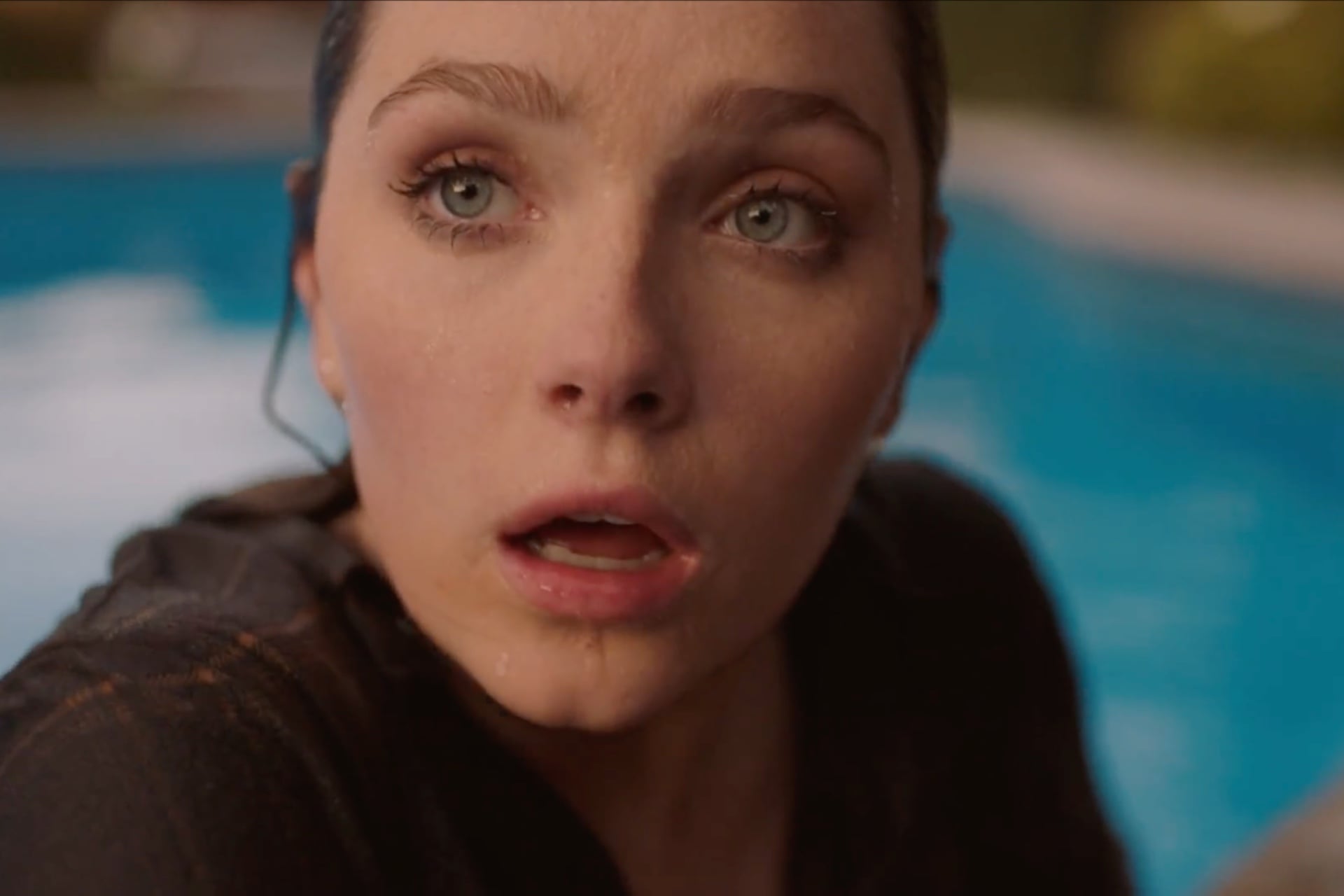
Across six episodes, all directed by Steven Piet (The Act), we dig deep into the trauma that’s been swallowing main character Margot (Amy Forsyth) since her father, John (John Carroll Lynch), died a year prior. Losing a beloved parent would be rough even without the many awful layers surrounding John’s passing, which came after an allergic reaction to prescription medication. Margot discovered his body and has been carrying major guilt over arriving home past curfew that night: what if she’d been home when she was supposed to be? Would she have been able to save him?
Making a sad situation even more bitter, Margot’s best friend, Jules (Aisha Dee), suddenly became distant after John’s death. We learn that it’s because Jules felt ill-equipped to provide the support her friend desperately needed; we also learn how terrible she felt (and still feels) about letting Margot down.
So there’s a lot of emotional baggage stacked up between Margot and Jules when they reunite as No-End House begins. Jules is home on a college break; Margot is passing her time as “a recluse,” according to her mother. The girls head to a bar and meet up with another former high-school pal, J.T. (Seamus Patterson), and befriend an ingratiating stranger, Seth (Jeff Ward).
No-End House came out before influencer culture exploded in popularity, but there’s a nugget of that viral allure as J.T. urges the group to check out the “No-End House,” a mysterious attraction that announces its presence through videos that suddenly materialize on phones and TV screens. He’s super hyped on it: it’s a global phenomenon, but nobody knows who’s behind it. A visit to the No-End House is said to be a life-changing experience; it uses subliminal messages and sounds and maybe even hallucinogens to make visitors as vulnerable and freaked-out as possible, at least according to JT.
Jules says it just sounds like “a super-bougie haunted house,” and everyone laughs about it—but they can’t resist piling into Margot’s car and going to check it out for themselves.
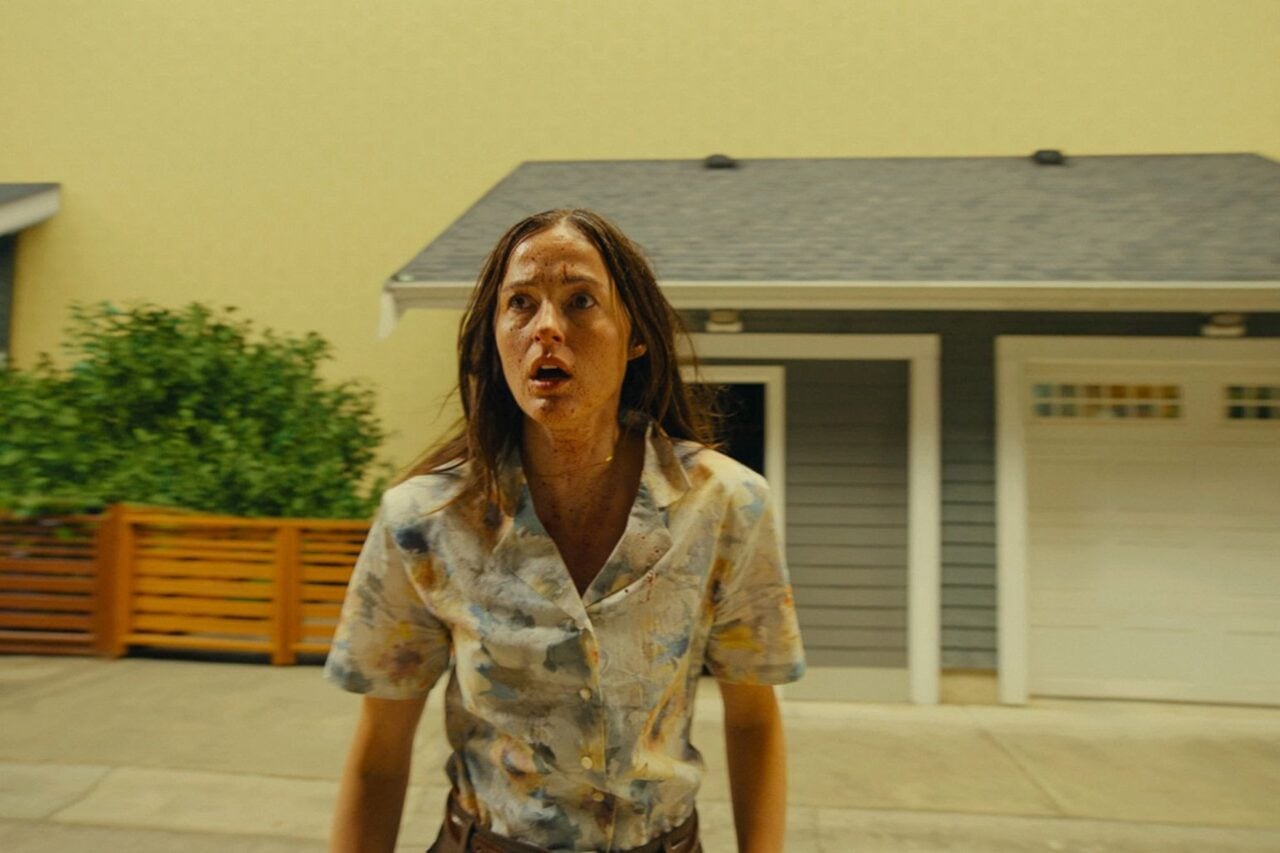
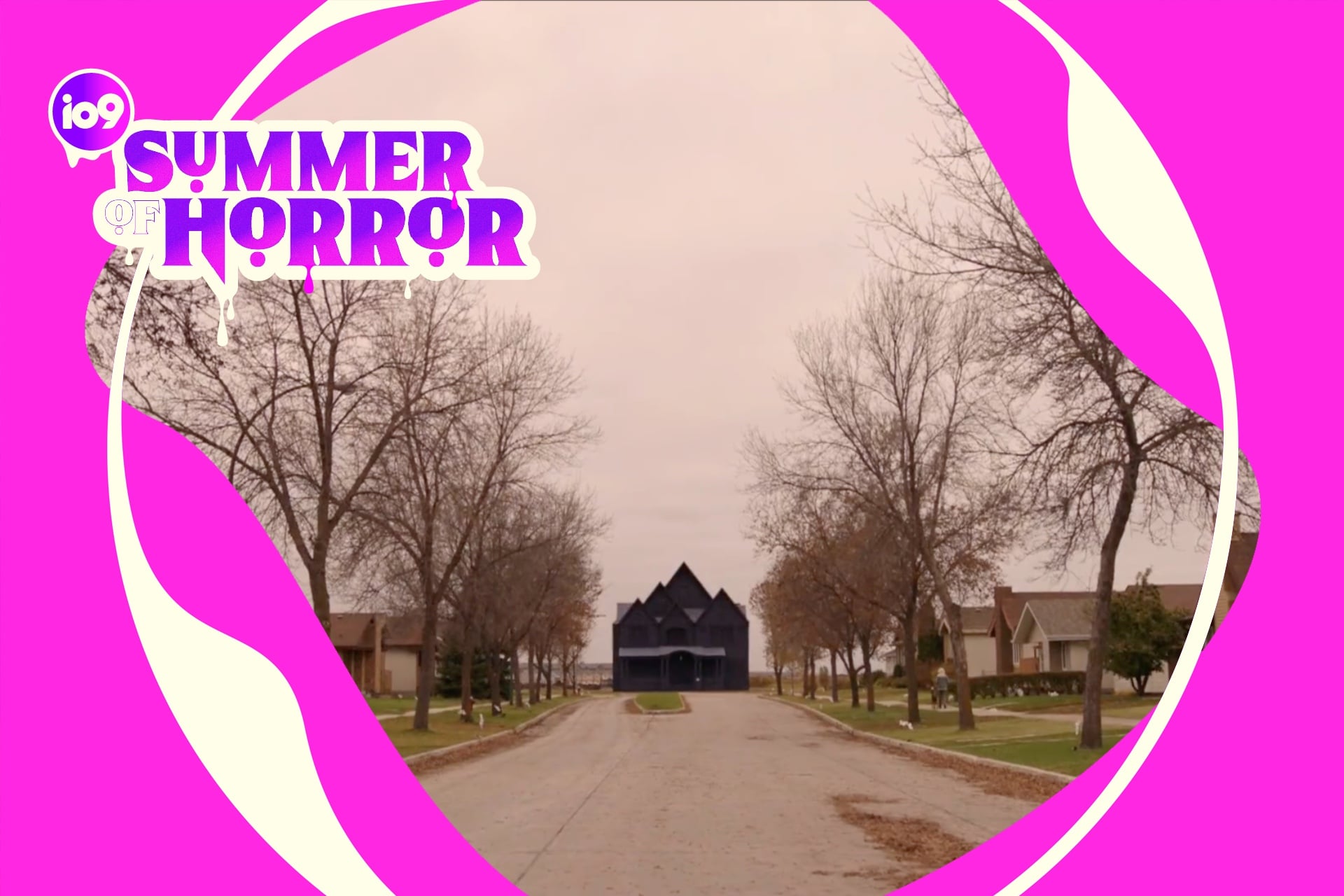
We’ve already glimpsed the house thanks to No-End House‘s opening scene, in which a terrified woman (Jess Salguerio, playing a character we later learn is named Lacey) races through an eerily quiet, oppressively beige neighborhood toward the dark, hulking, noticeably out-of-place house perched at the edge of the block. It’s not an inviting destination. A man chases after her and roughly stops her from entering, and we notice “This Isn’t Real” is carved into her arm.
Before we can learn more, our young quartet must make their way through all the numbered rooms. There are others in their group, including Dylan (Sebastian Pigott), whose connection to Lacey becomes apparent as the season goes on. At first, the rooms are an exercise in “Wow, how’d they do that?” Margot and her friends are dazzled by the special effects, including perfectly crafted models of each of their faces, somehow put on display mere moments after they passed through the front door.
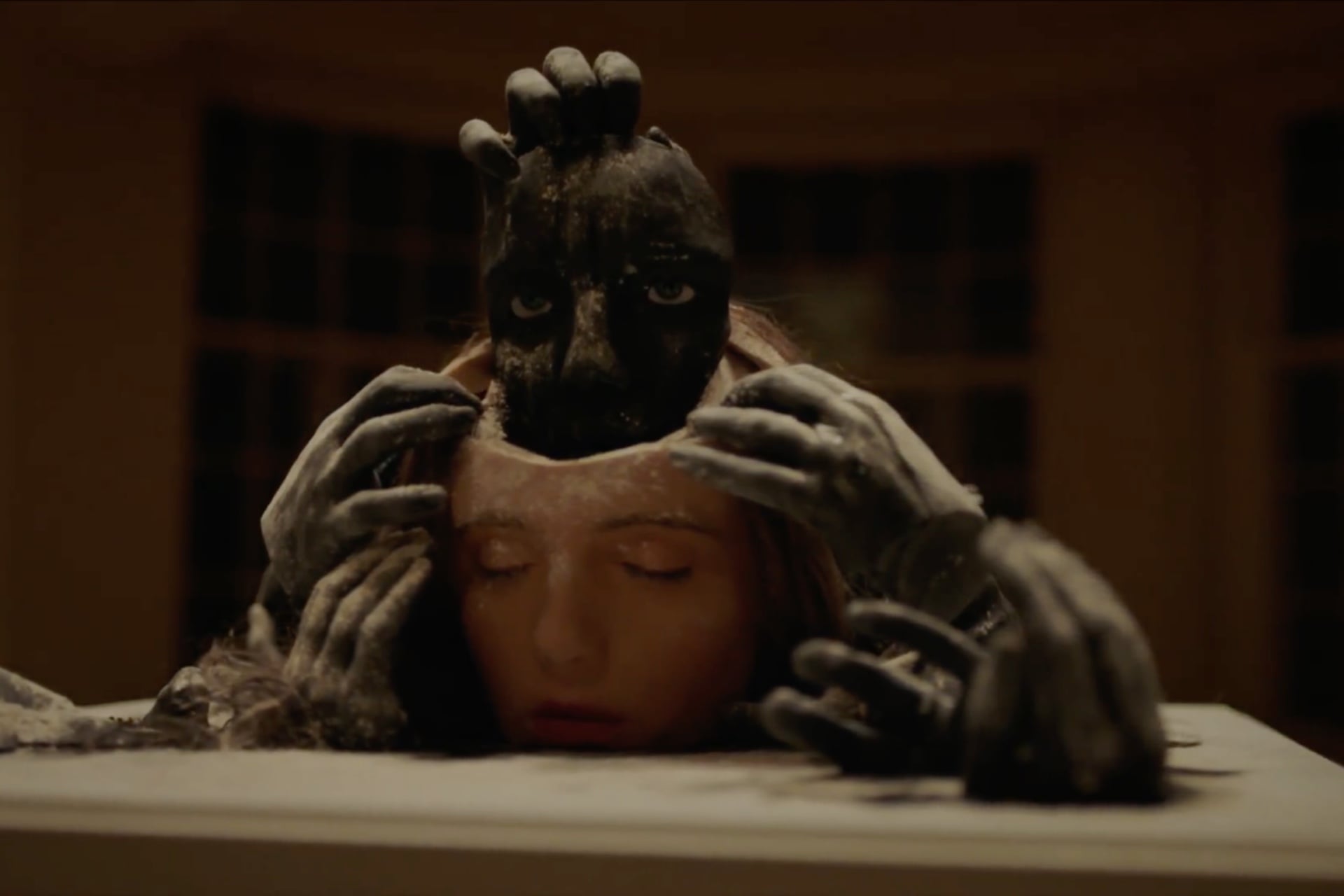
But the wonderment soon turns to alarm when the house starts showing off in ways that are too fantastical. Then it shifts to the outright impossible, as when a masked figure whispers to Margot using the pet name her father had for her (“Martian”). Then she finds herself alone in a room where she’s forced to relive the painful memory of finding her father’s lifeless body, his face agonizingly swollen from his allergic reaction. Then, even worse, this puffy dad-thing is alive and wants to hug her. “You have to go through to go home,” he calls after her as she flees through the exit in near-hysterics.
But was it the exit? No-End House soon deploys the twist from Russell’s story, which is that the final room is no room at all; it’s the alt-reality neighborhood glimpsed in the opening. Margot’s house is perfectly replicated, so much so that she thinks she’s really arrived home—except John is somehow alive and cheerfully preparing breakfast when she arrives.
Jules wisely realizes that this is not a place where they should not linger, but once the initial shock wears off, Margot is thrilled for the opportunity to spend more time with her dad. We’ve seen thanks to home movie flashbacks that they had a loving, playful relationship, but she’s got some nagging questions, especially regarding what she’s come to realize was his choice to end his life.
Jules is right, though. The No-End House isn’t a benevolent place where longed-for second chances are granted. It’s a place that should not exist, full of menace and dread and violence, and manipulated by the memories it literally feeds on for survival.
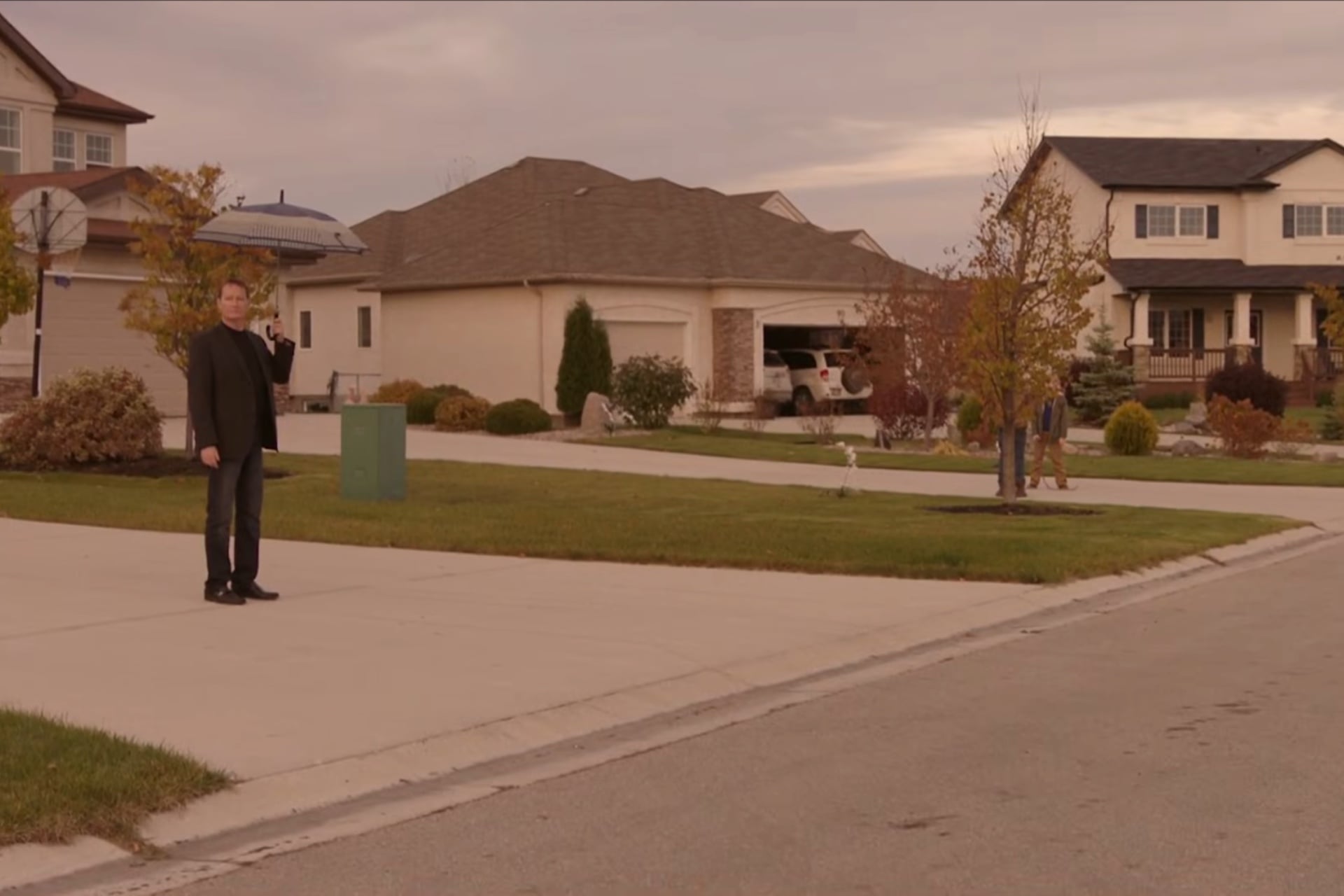
Jules, JT, Dylan and Lacey, and Seth all fight their own battles within the No-End House’s artificial suburbia, especially Seth, whose dark motivations soon emerge. And while we do learn more about this strange world they’re stuck in, it never coughs up any details about what greater force might have created it or what its purpose is other than devouring the remembrances of every new mind that’s lured inside.
In truth, it’s a stronger story without them. We don’t need concrete answers or explanations for the No-End House; as Backrooms also demonstrates, the enigmas swirling around are a big part of the enjoyment and an even bigger part of the horror. These places exist if you happen to find them; once you’re within them, they open up planes of existence that can’t and shouldn’t be explained. And if you find yourself there, you should start planning your escape ASAP.
For Margot, the No-End House offers an opportunity to confront her guilt and grief head-on. It’s something she’s desperately needed, and you get a sense that maybe the house sought her out because of that. But as far as closure goes, the therapy it offers is deeply, chillingly insidious.
You can stream Channel Zero: No-End House on Shudder. Backrooms is now available for rent or purchase on digital platforms.
Want more io9 news? Check out the best movies and TV shows to stream this month and all the upcoming sci-fi, fantasy, and horror books that should be on your radar.