Three Meta executives have been identified by name—reportedly by mistake—in a California federal lawsuit brought by adult entertainers alleging bribery and abuse of internet databases meant to flag, among other things, terrorism related content.
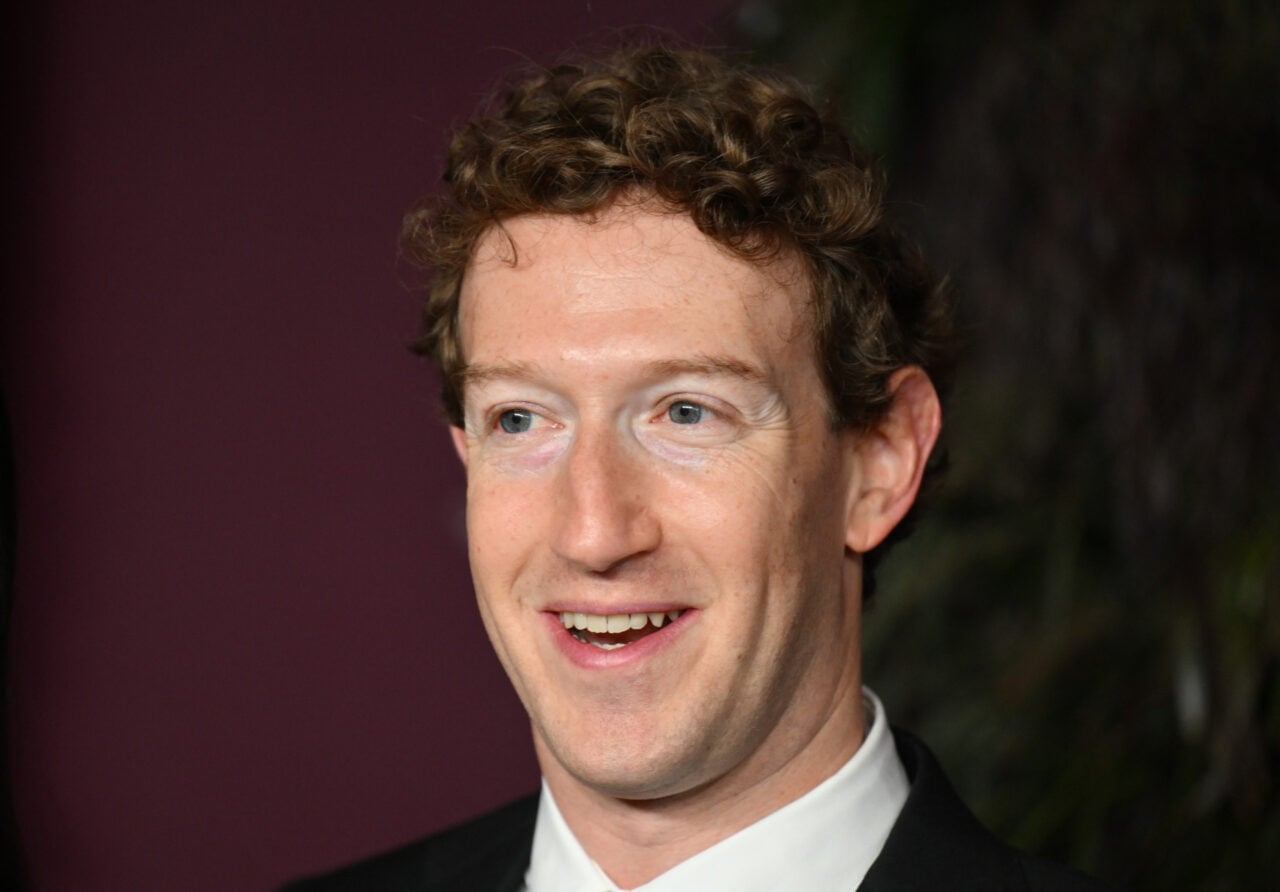
In a court filing Tuesday, Nick Clegg, Meta’s vice president of global policy, and Nicola Mendelsohn, vice president of the global business team, were identified as the former “John Does” in a suit accusing them of accepting bribes on behalf of OnlyFans as part of a scheme to help the adult platform dominate its industry rivals.
The origins of the OnlyFans and Meta Lawsuit
Unnamed Meta employees were accused this February in an ongoing lawsuit of working under the table to secretly aid OnlyFans by getting its competitors “blacklisted” online. The suit, filed in San Francisco federal court by a group of online adult entertainers, claims that Meta employees used databases meant to warn companies about safety and security threats to instead limit the visibility, and thus click rate, of entertainers working almost everywhere but OnlyFans.
Last week, an attorney for the entertainers introduced what they claimed were copies of wire transfers provided by an anonymous tipster. The alleged transfers — which Gizmodo has not seen and remain under seal — were used in court to support previously made claims that three Meta executives had taken payments from an OnlyFans intermediary, which shared a physical address with another OnlyFans-affiliated entity.
In addition to Clegg and Mendelsohn, a third employee, Cristian Perrella, was identified in Tuesday’s filing. (A Meta employee with the same name is currently employed as a Facebook trust and safety director, according to a LinkedIn page.)
Facebook denies the allegations
Meta denied the claims, broadly speaking, in response to a press inquiry. In court, however, its lawyers are less focused on proving the allegations false than arguing that, even if true, Meta itself would be shielded from liability. OnlyFans, meanwhile, has repeatedly called the allegations “meritless,” a legal term of art referring to claims that aren’t actionable in court—which is not to say untrue.
“As we make clear in our motion to dismiss, we deny these allegations as they lack facts, merit, or anything that would make them plausible. The allegations are baseless,” a Meta spokesperson said.
How the company executives names were uncovered in the OnlyFans Case
Lawyers representing OnlyFans’ parent company, Fenix Internet, LLC, said in a subsequent filing Wednesday that it had exposed the identities of Meta’s executives by mistake. The names of the employees were “inadvertently unredacted,” it said while asking the court to delete the document. (In its own motion, Meta referred to the executives as the “John Does” and redacted several whole paragraphs referencing the execs.)
The lawsuit, brought by three adult entertainers—Dawn Dangaard, Kelly Gilbert, and Jennifer Allbaugh—was filed specifically against Meta and its subsidiaries Facebook and Instagram; OnlyFans parent company Fenix Internet; and OnlyFans owner Leonid Radvinsky, whose financial history Forensic News has deeply investigated.
Another company, Fenix International, is also named and is alleged by the plaintiffs to have served as an intermediary for the bribes.
The wire transfer documents, according to the plaintiffs, point to funds going to two trust accounts in the Philippines under Meta executives’ names. A third account, the documents say, was opened in the name of a “high-ranking Facebook executive’s young son.”
Caroline Nolan, Meta’s vice president of public affairs, responded to an email sent to Clegg’s email address, saying, “The claims are false.” Attempts to directly contact Perrella and Mendelsohn, both apparently working out of the U.K., were unsuccessful.
Facebook seeks to dismiss the case with the help of 2 recent US Supreme Court rulings
Meta argued in a motion on Tuesday that an amended complaint filed by the plaintiffs had not met requirements for standing under what’s known as the Twiqbal test — a reference to two recent U.S. Supreme Court decisions that imposed stricter “plausibility” requirements, ostensibly making it harder to sue in federal court.
“It used to be you come into court and if the thing that you said could be a claim, that’s good enough, because it’s possible,” said Dan Novack, a media and First Amendment attorney. “Plausible requires judges to use some level of reasoning to decide whether or not it’s realistic, that this thing could really have legs.”
“It’s not as though it’s supposed to be dramatically harder to get a case into federal court than it used to be,” said Novack, who, not read in on the case, said he could only speak generally. “There is flexibility because obviously any plaintiff coming into court doesn’t have the benefit of going through discovery and subpoenas and getting depositions. It would put them in a Catch-22 if they had to have a smoking gun because sometimes the point of the lawsuit is to gather information and be able to move forward. But they have to have something, some evidence, even if circumstantial, that shows the defendant did the thing they are alleging.”
Meta’s motion to dismiss also focused over several pages on whether the company could even be held liable if the allegations turned out to be true. The allegations, it said, are “flatly inconsistent with any argument that the employees were acting with actual authority.”
To demonstrate precedent, Meta attorneys cited a 1995 case involving a woman who sued a hospital after being molested by a hospital employee during a medical procedure. The California Supreme Court ruled at the time that the hospital was not itself “vicariously” liable for the assault, as it had served only the employee’s “personal interest,” and was not “engendered by” or “incidental to” their employment.
“If anything, plaintiffs allege that these John Does went rogue by manipulating and corrupting automated processes and databases that Meta had established for purposes of combating terrorism, deploying those methods to attack competitors of an adult-entertainment company, and then ‘attempt[ing] to cover their tracks’ to ensure Meta could not learn of their aberrant behavior,” Meta’s motion says.
Meta further argued that, even if true, any decisions to penalize OnlyFans’ competitors would have been protected by the company’s First Amendment rights, and the limited liability protections offered by Section 320 of the Communications Decency Act.
According to transcript obtained by Gizmodo, the federal judge hearing the case, William Alsup, asked an OnlyFans attorney outright whether the bribery claims were true during a Sept. 8 hearing: “Do you deny that that’s what happened?” he asked. The attorney said their client hadn’t been required to answer that question yet, adding: “We will.”
“Well, you ought to know whether you’ve been bribing people all over the world,” said Alsup. “Yes, we would know that,” the lawyer said. “And we’re good lawyers, so we’ve certainly asked our clients.”