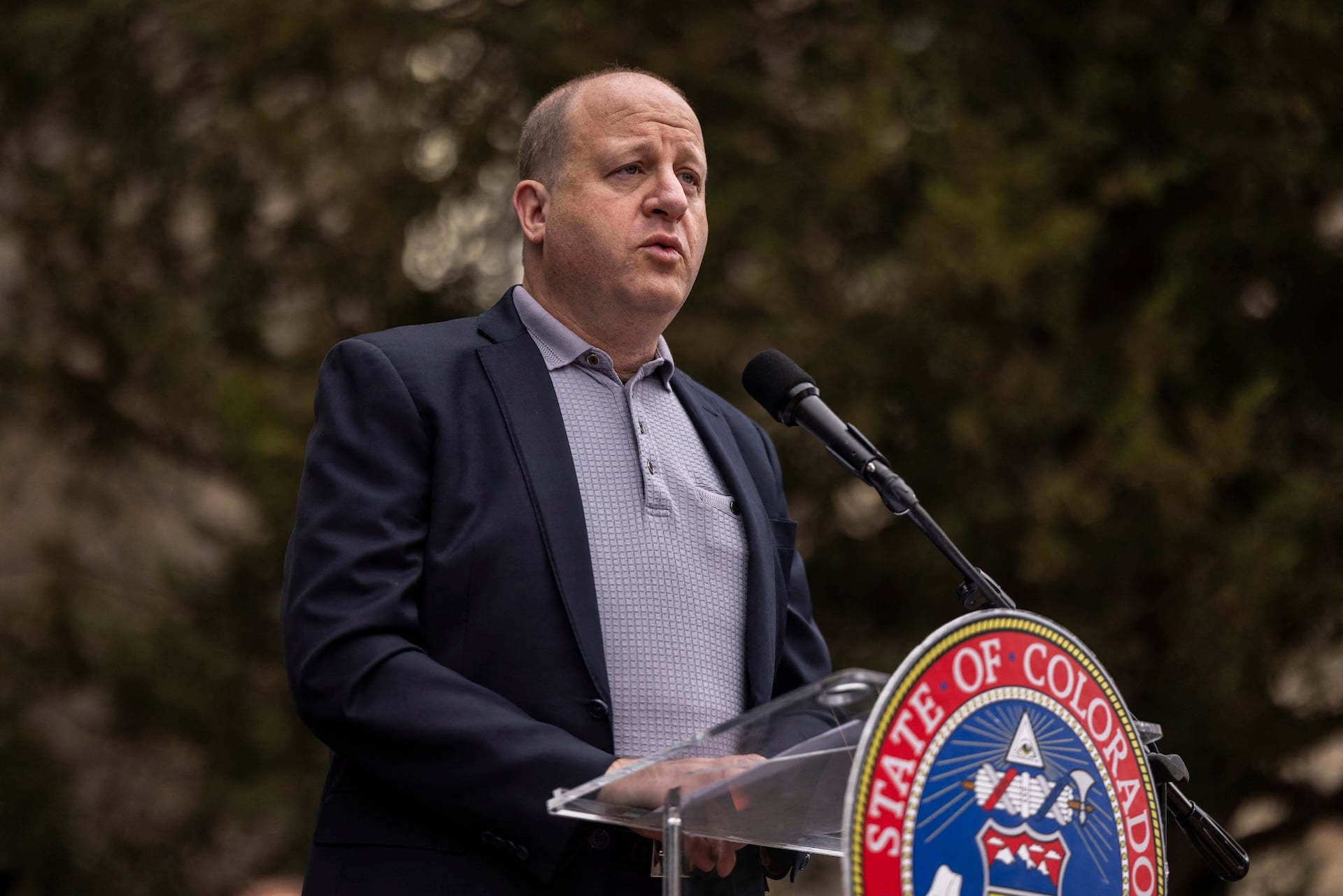
Gov. Jared Polis, the Democratic governor of Colorado, vetoed a bill Tuesday intended to crack down on surveillance pricing, the controversial practice of charging individuals customized prices based on personal data gleaned by retailers.
The bill, known as House Bill 26-1210, was introduced by Javier Mabrey and Jennifer Bacon, both Democratic lawmakers in the state. But Polis, who recently made headlines by freeing election denier Tina Peters under pressure from President Donald Trump, argued that the bill would prohibit retailers from offering discounted prices.
In a letter explaining his veto, Polis said that he could “appreciate the intention” behind the bill, but he had concerns about the scope of what it regulated.
“Instead of specifically defining and targeting unethical conduct and practices, the bill takes a broader approach to capture any technology that incidentally influences a price or wage amount,” Polis wrote. “Because of the broad sweep, the bill would punish differentially lower prices, not just higher prices.”
The governor went on to write that he worried the bill would “inadvertently capture innocuous uses of technology that in no way harms—and indeed benefits—consumers and workers.”
‘This is a good bill’
Some experts disagree with Polis, who is currently serving his second term as governor and will leave office in January 2027, about what the bill would do. George Slover, Senior Counsel for Competition Policy at the Center for Democracy & Technology, told Gizmodo that his group was disappointed to see the legislation vetoed.
“It would have prohibited use of algorithms to profile and target individual consumers and workers based on their personal data, sizing up how susceptible they are to paying higher prices and accepting lower wages,” said Slover.
Slover said that the bill contained carefully crafted exceptions for loyalty programs and discounts, “so long as they are transparent and offered uniformly to all who qualify,” which is often the concern whenever states take up this kind of legislation.
“This is a good bill that addresses abusive and discriminatory setting of prices and wages, a problem that threatens to become widespread in the marketplace and cause significant harm to vulnerable consumers and workers,” said Slover.
“Given the strength of the bill’s protections, we hope the Assembly will pass the bill again in the next session,” Slover continued. “People should not be paying more for products or earning less for their work because of opaque algorithms using their private personal information.”
Surveillance pricing has supporters, too
Others think that Polis vetoing the bill was the right move. Paul Singer, who worked in consumer protection at the Texas Attorney General’s office under Ken Paxton for over 20 years and is now a partner in private practice at Kelley Drye & Warren, told Gizmodo it actually hurts consumers if you put restrictions on algorithms.
“The Governor’s veto and his justification are consistent with a lot of the messaging you have heard from industry around proposed surveillance pricing legislation—it makes sense to put safeguards in place based on conduct but not necessarily the underlying technology, because you run the risk of overly broad restrictions that actually harm consumers by impacting the ability to offer price reductions or ensure greater pricing accuracy in stores,” said Singer.
Singer argues that legislatures are trying to balance the desire for innovation with protection against the abuse of technology. He said that retailers and other industry players need to have a voice when states take up this kind of legislation in order to, “find the right balance and ensure appropriate consumer protection measures are put in place.”
Resistance to surveillance pricing continues to grow
Surveillance pricing, sometimes called personalized pricing or bespoke pricing, has become more and more controversial in recent years as consumers worry about how algorithms are being used to set prices in ways seen as unfair. It’s become easier over the past two decades for businesses to charge different prices to different consumers based on demographic information but just about every corporate experiment that’s become public knowledge has received tremendous backlash.
Delta was forced to walk back statements it made about implementing surveillance pricing last year and Instacart got heat after a study found it was charging different prices for the same goods. In April, Maryland became the first state in the nation to ban surveillance pricing on groceries, but consumer activists think the bill is pretty toothless, with far too many loopholes.
A solid majority of Americans, 68%, say they’re worried about surveillance pricing increasing the cost of goods, according to new polling from GBAO Strategies and the United Food and Commercial Workers International Union. Just 5% believe that surveillance pricing is used to make prices lower.