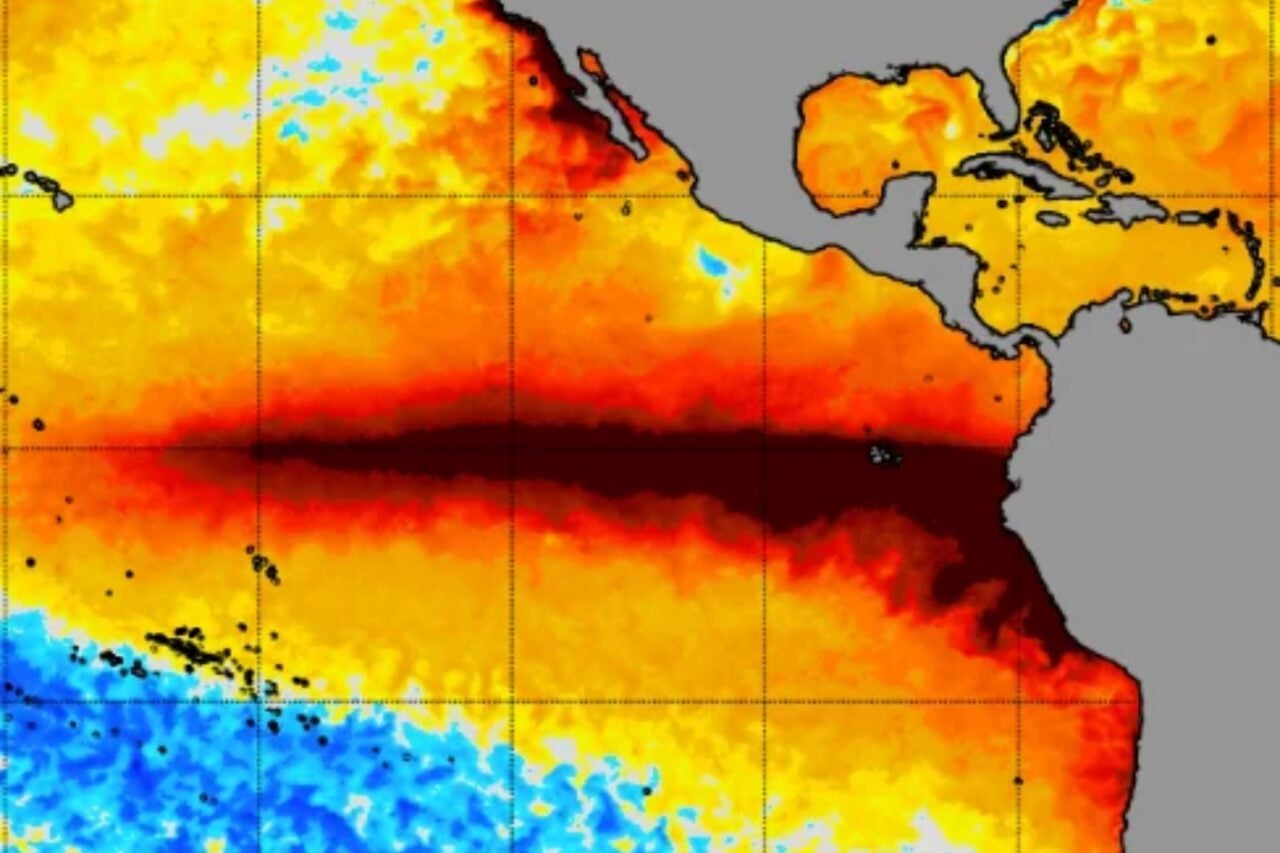
The ancient societies that once inhabited Peru’s desert coast faced a formidable enemy: the weather. Periodic El Niño events brought torrential rains and catastrophic flooding to the otherwise arid landscape, wreaking havoc on communities in the Lambayeque Valley. Some prehistoric cultures responded with large-scale human sacrifices, perhaps in an attempt to appease the gods. A new study suggests these rituals did not reflect a broader culture of violence despite centuries of environmental upheaval.
In ancient northern Peru, ritual killings have been linked to catastrophic flooding brought on by El Niño. This has raised the question of whether climate stress also fueled violence in everyday life as communities competed for scarce resources.
In an effort to understand how societies might respond to climate change, a team of researchers surveyed evidence for violent trauma over thousands of years in Peru’s Lambayeque Valley. The results revealed that everyday violence among these societies was remarkably rare even during times of ecological upheaval.
The findings, published in Frontiers in Environmental Archaeology, suggest that climate stress does not inevitably lead to increased violence in human societies.
No need for violence
The Lambayeque Valley was typically arid, but its communities depended on rivers and a productive marine ecosystem for food and livelihoods. During El Niño events, however, warming ocean waters decimated fish populations while torrential rainfall inundated the valley, disrupting local food systems and placing enormous pressure on communities.
Previous excavations have suggested that large-scale human sacrifices may have been performed during and just before the collapse of the Moche and Sicán societies, in an effort to appease supernatural forces and restore balance. It’s around these periods that archaeologists have found the most extensive evidence of violence in the Lambayeque Valley.
“If these big ritual sacrifices were indicative of some underlying crisis, we hypothesized that these events might have been extending into people’s everyday experience of the world,” Thomas Snyder, an archaeologist at New York University and co-author of the study, said in a statement.
The researchers behind the new study analyzed the skeletal remains of 1,633 people from the Lambayeque Valley who lived over a span of more than 3,000 years, from the Cupisnique culture to the Spanish colonial era. They found that only 25 of the skeletons showed evidence of violence while 77 exhibited signs of accidental trauma.
“The main thing that jumped out at us was just how few cases of interpersonal violence we observed outside ritualized contexts,” Snyder said.
Peaceful societies
By examining how ancient societies navigated periods of severe environmental stress, researchers hope to gain a better understanding of how communities might respond to climate change today and in the future. The findings suggest that even when faced with devastating ecological upheaval and threats to their livelihoods, societies do not necessarily descend into widespread violence.
“In Lambayeque there’s 6,000 years of creative adaptations to El Niño and longer-term changes in climate, and widespread violence wasn’t one of them,” Haagen Klaus, an archaeologist at George Mason University and co-author of the study, said in a statement. “Violence and social unraveling are not destined outcomes, ever.”
Snyder agrees, adding that the findings highlight how widespread violence “isn’t a predetermined response to climate change.” “As a society, we both get to and have to choose how we respond to our own climate crisis,” he said.