How does a plant eat an animal?
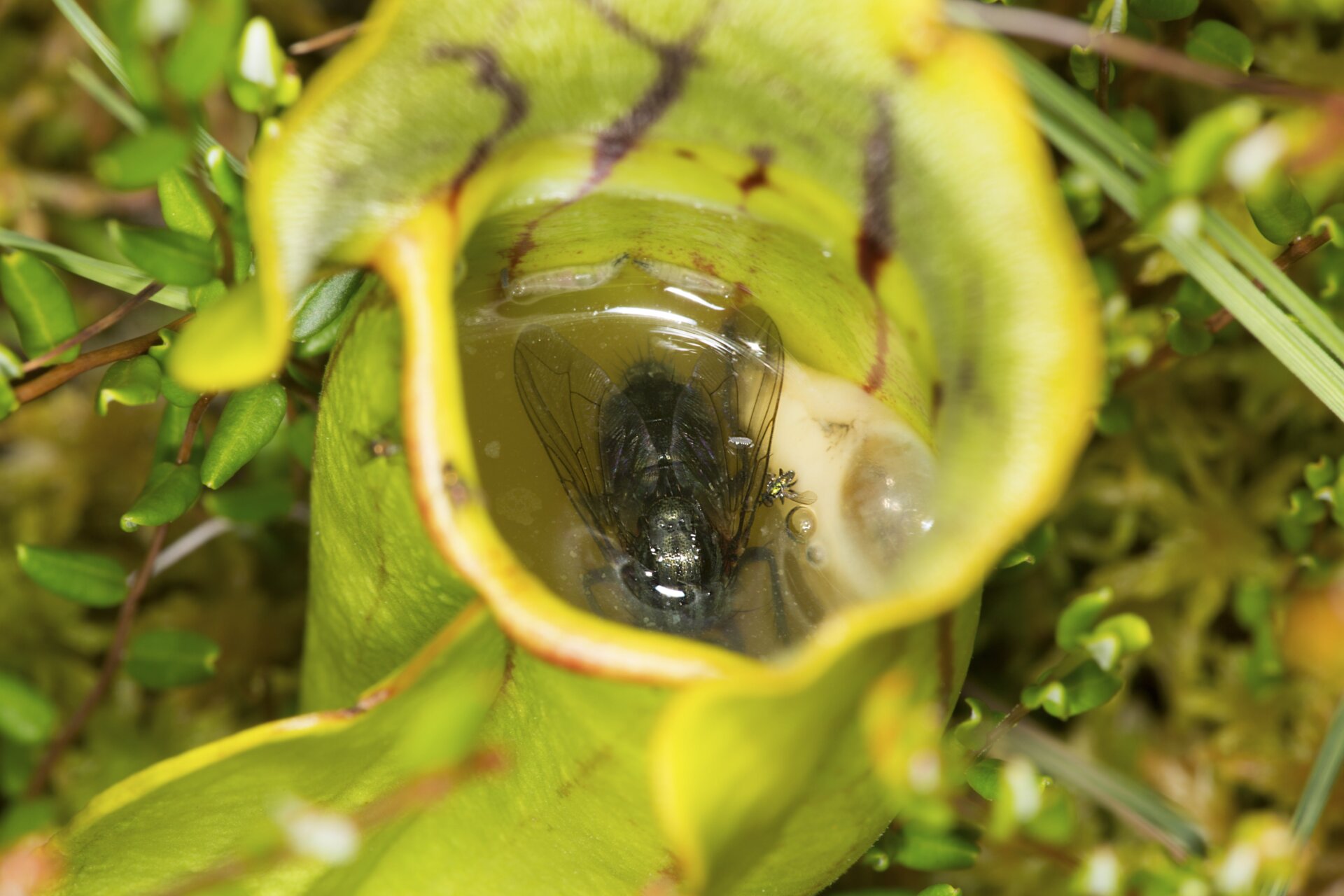
“Imagine, for a minute, that you could turn your stomach inside out,” Aaron Ellison, a Harvard University carnivorous plant ecologist, told me. He explained that that’s basically what most of these plants do: invert their stomachs.
Be it via sundew glue, pitcher plant pit, or the quick-close response of a Venus fly trap, carnivorous plants snag their prey on what amounts to an external stomach. Then, they secrete some of the same enzymes that animals use to digest meals. Carnivorous plants have protein disassembling proteases, fat-melting lipases, plus other enzymes specialized for breaking down insects’ exoskeletons.
Together, these excreted compounds “go to work and turn the insect into soup,” said Ellison. That nutrient-rich slurry gets absorbed by specialized cells, similar to those that line your intestine.
Across nearly all known carnivorous plants, “it’s basically the same process,” he added. Some outliers work more like a cow’s stomach than our own, and a few pitcher plants excrete very little enzyme, instead relying on colonies of bacteria and protozoa to do the disassembly work for them.