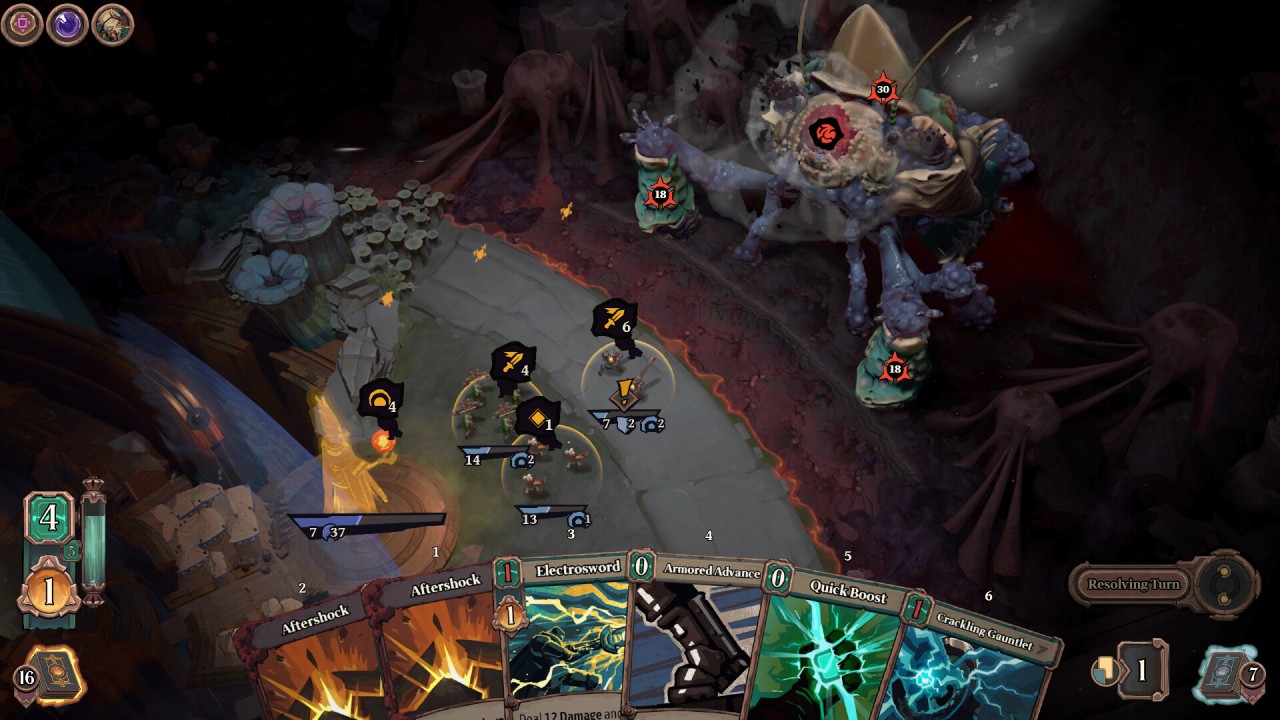
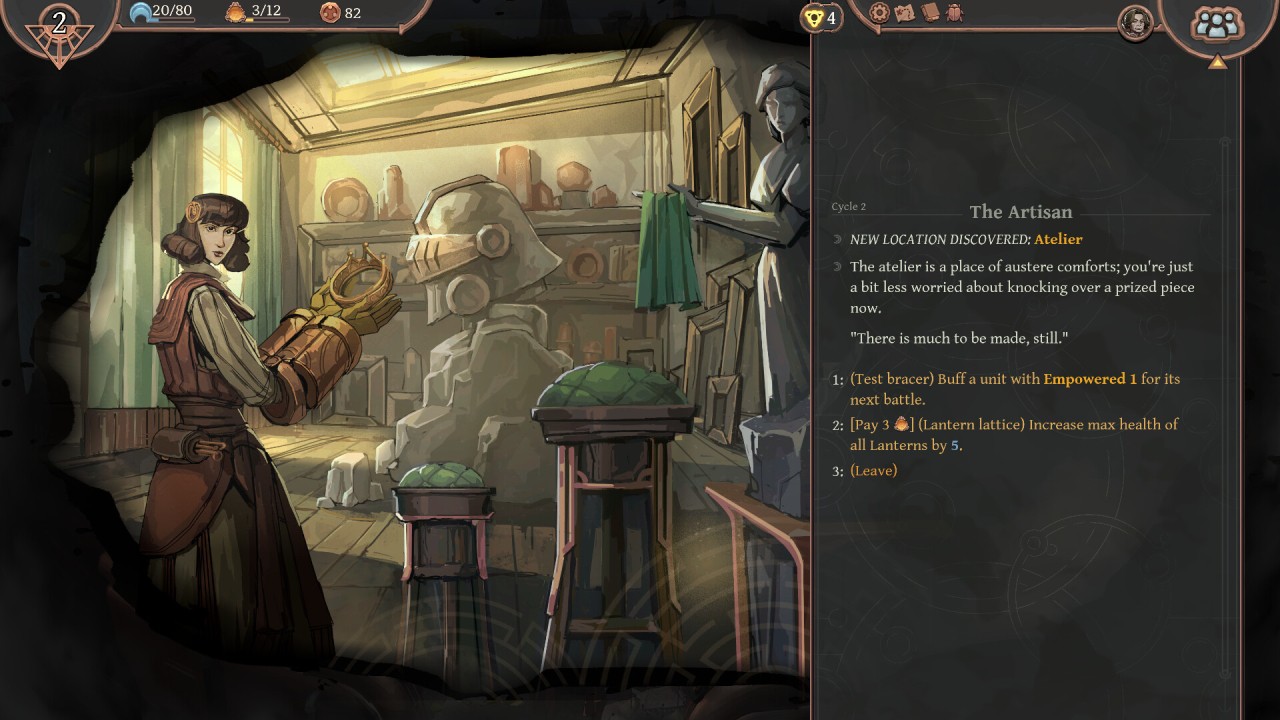
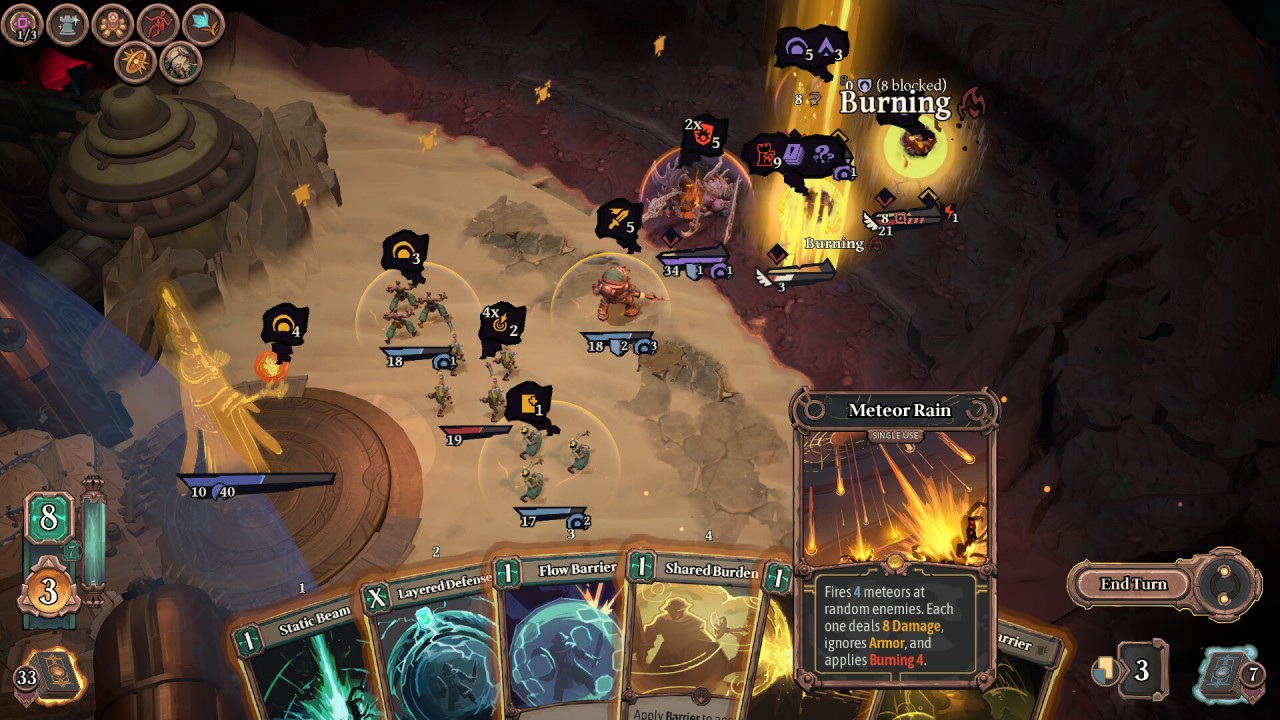
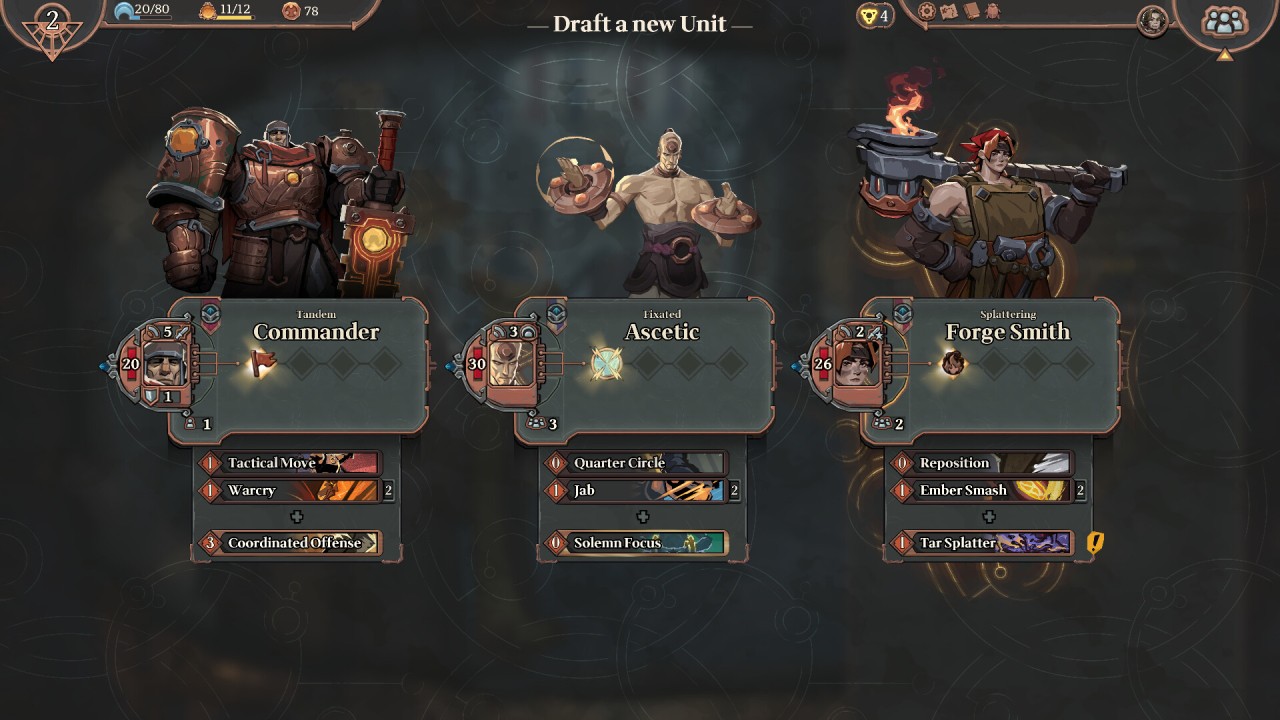
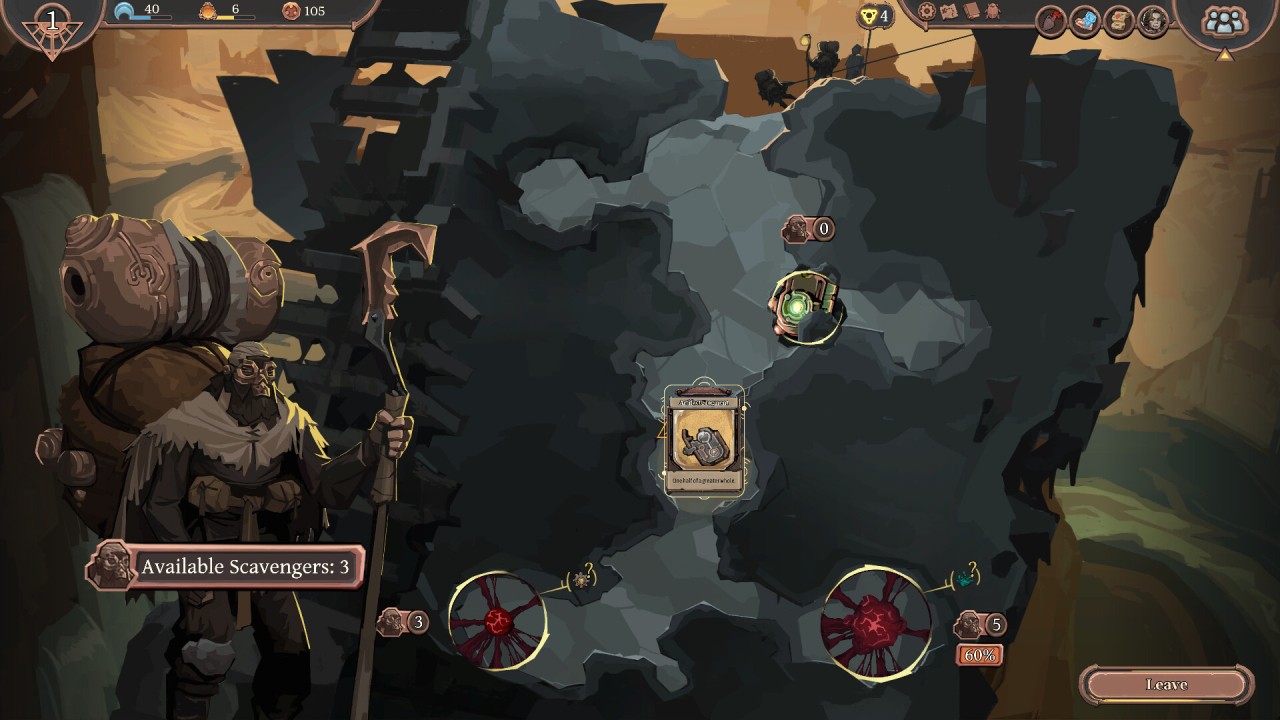
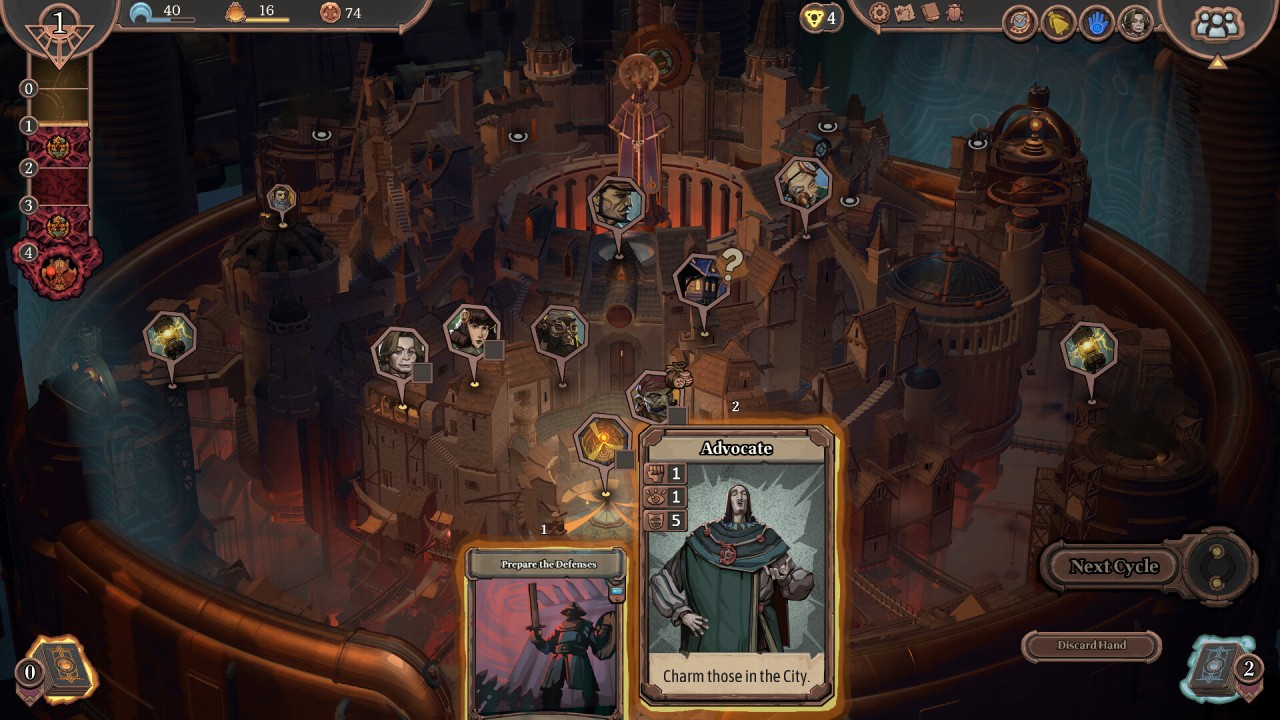
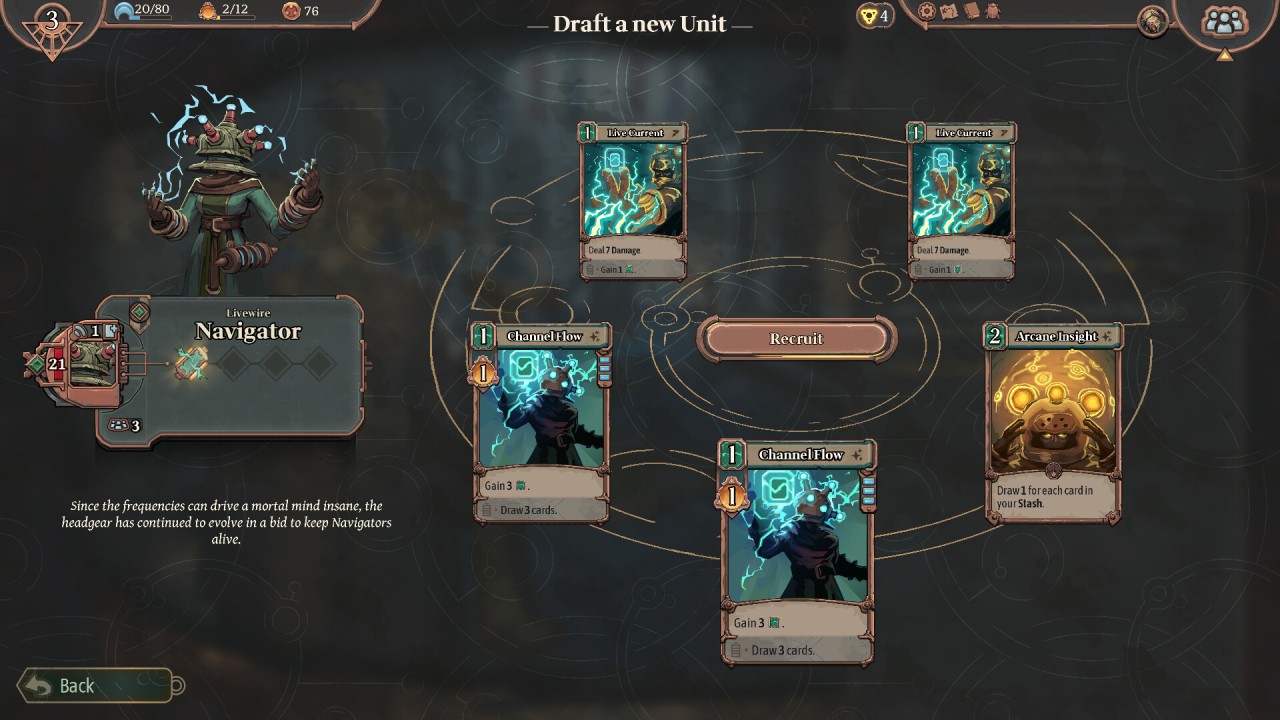
As We Descend is an indie roguelike strategy game that puts you in the middle of a tense, grid-based descent into unknown depths. Unlike action-heavy titles where reflexes rule, this game is about slowing down, planning carefully, and understanding that each move could either save you or seal your fate. It takes the roguelike formula of unpredictable runs and mixes it with tactical, turn-based gameplay where success relies more on your decisions than on luck.
The game drops you into a world that feels dark yet strangely inviting. There’s no sprawling narrative delivered through endless dialogue; instead, the atmosphere and mechanics tell the story. Every step downward is a commitment. You don’t know what challenges, enemies, or obstacles lie ahead, but that uncertainty is the very thing that keeps you engaged.
What makes As We Descend stand out is its simplicity. It doesn’t flood you with dozens of systems to track. The rules are clear and easy to learn, but the difficulty comes from applying those rules under pressure. Each descent feels like a puzzle where the pieces are always shifting, and you’re the one trying to fit them together before everything collapses around you.
Why should I download As We Descend?
One of the best reasons to try As We Descend is that it respects your time. You don’t have to sink hours into a single session to feel progress. Each run is compact but impactful, meaning you can play in short bursts and still come away with that satisfying sense of achievement. It’s the kind of game you can play on a coffee break or after a long day, but it can also keep you hooked for hours if you fall into the “just one more run” mindset.
Another reason is the strategy. Games like this thrive on decision-making, and As We Descend doesn’t let you coast on autopilot. You’re always balancing risk and reward. Do you take a dangerous path for the chance at a better outcome, or stick with something safer? Do you spend resources now to survive, or hold onto them in case something tougher shows up later? These small but constant decisions give the game an addictive quality, because you’re never just going through the motions.
Replayability is also a big factor. The roguelike structure means no two runs are ever the same. Even if you’ve played dozens of times, the randomization ensures you’ll always face fresh challenges. Losing doesn’t feel like failure—it feels like an opportunity to learn, adapt, and come back stronger on your next descent. That loop of trying, failing, and improving is what makes roguelikes so compelling, and As We Descend nails it.
Lastly, there’s the indie charm. You can tell this game isn’t trying to compete with massive AAA titles. It’s focused, intentional, and crafted with care. That sense of personality is often missing in big-budget games, but it shines through here. If you enjoy supporting smaller studios that take risks and create unique experiences, downloading As We Descend is a no-brainer.
Is As We Descend free?
No, As We Descend isn’t a free-to-play game. It’s a premium indie title available for purchase on Steam. The price is modest compared to most big releases, which makes it an affordable choice if you’re looking for something fresh without breaking the bank.
The important thing is that when you pay for As We Descend, you’re getting the full game. There are no microtransactions, no in-game shops, and no hidden costs waiting for you later. You don’t have to worry about pay-to-win mechanics or content being locked behind extra purchases. That straightforward model is refreshing in today’s gaming world, where so many titles lean heavily on monetization.
For indie fans, buying the game is also a way of supporting the developer directly. Smaller projects like this often rely on players who are willing to take a chance on something new. When you purchase As We Descend, you’re not just buying entertainment—you’re helping ensure that games like this continue to get made.
What operating systems are compatible with As We Descend?
As We Descend is now available for Windows and can be bought on Steam. This is easily accessible since Windows is the most used platform for gaming. The game is not that heavyweight and therefore, it does not require high-end hardware to play comfortably. Although you might not already have a computer that is loaded with a graphics card or processor that is the latest model, you should still be able to enjoy the experience.
Its accessibility to players who may not be able to afford high-end PCs, because it can be used on a wide variety of systems, is also a strength. It is a big deal, particularly for an indie game, since it reduces the entry barrier. To enter into its world, you do not require some costly extravagance, just a Windows computer and a desire to plan.
What are the alternatives to As We Descend?
If you liked As We Descend, there are a few other games that you might want to explore, which have some of the same qualities that the described one has, but with their own set of twists.
One of them is Master of Piece: Prologue. Similar to As We Descend, it is based on roguelike unpredictability and strategy. Every run is unique, and with a strong focus on a tactical approach, it is an easy game to pick up by players who like grid-based or turn-based games. The show is varied, and the emotion of tension and reward is identical.
Inkshade is another available option. This is not similar to other ones due to its artistic touch that involves drawing the players to a world that seems to be a moving piece of art. Its mechanics are not quite the same, but its tone and ingenuity are reminiscent of what makes As We Descend interesting. Unless you disliked the mix of minimalism and atmosphere in As We Descend, you are likely to find the style of Inkshade equally engaging.
And lastly, there is Shogun Showdown. This is a grid-based roguelike tactical game, but with a Japanese theme. It is a little more action-oriented in its pacing than As We Descend, although the strategic layer is definitely present. You are rewarded by planning, and punished by thoughtless actions, which will be very familiar to anyone who likes well-considered, turn-based roguelikes.