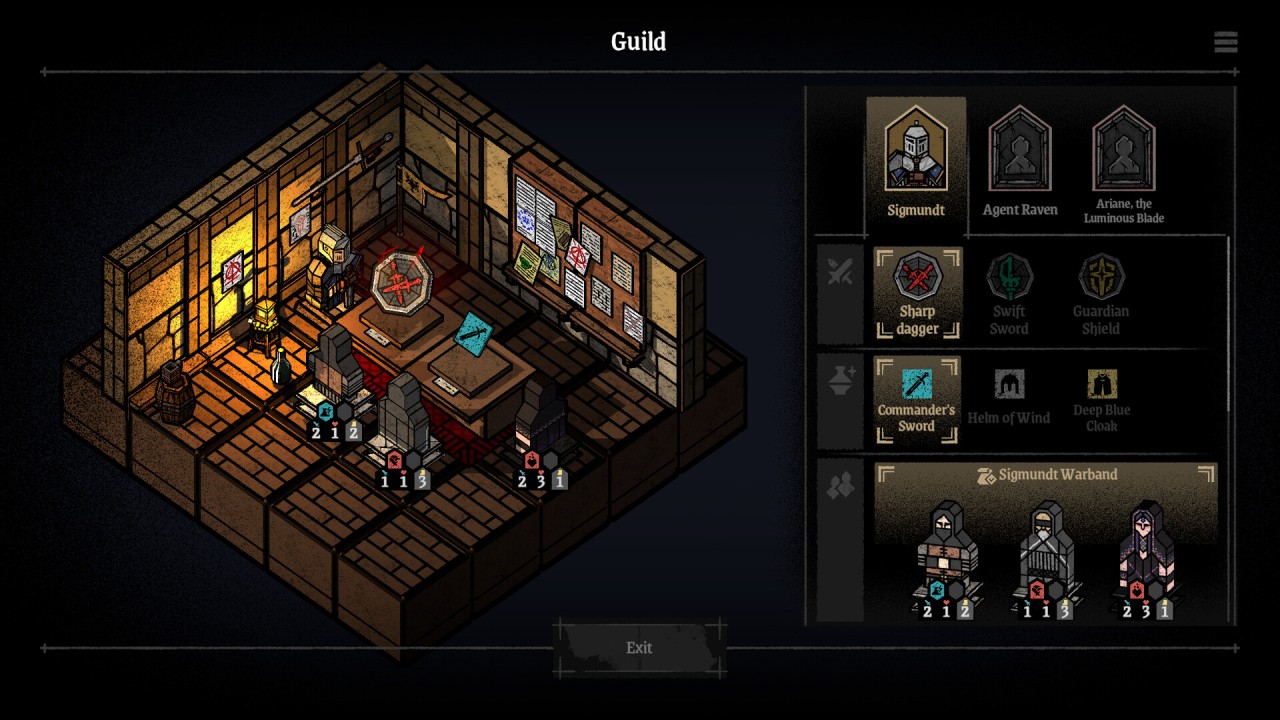
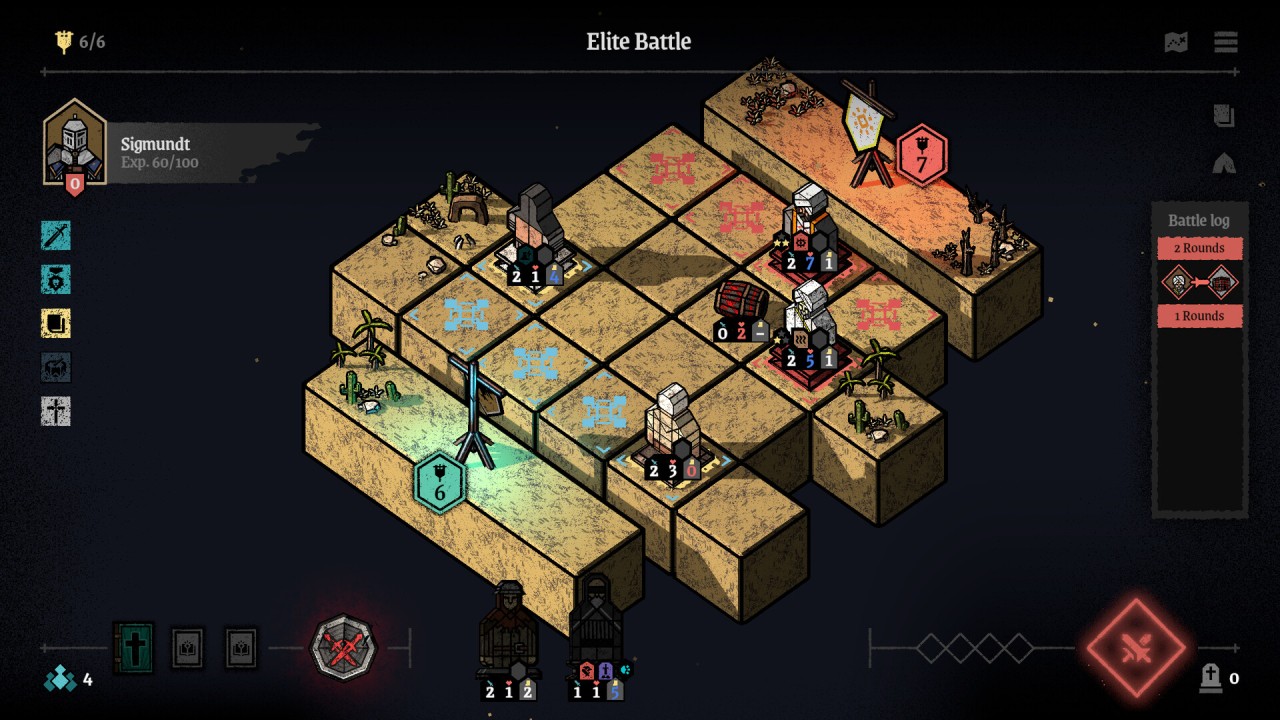
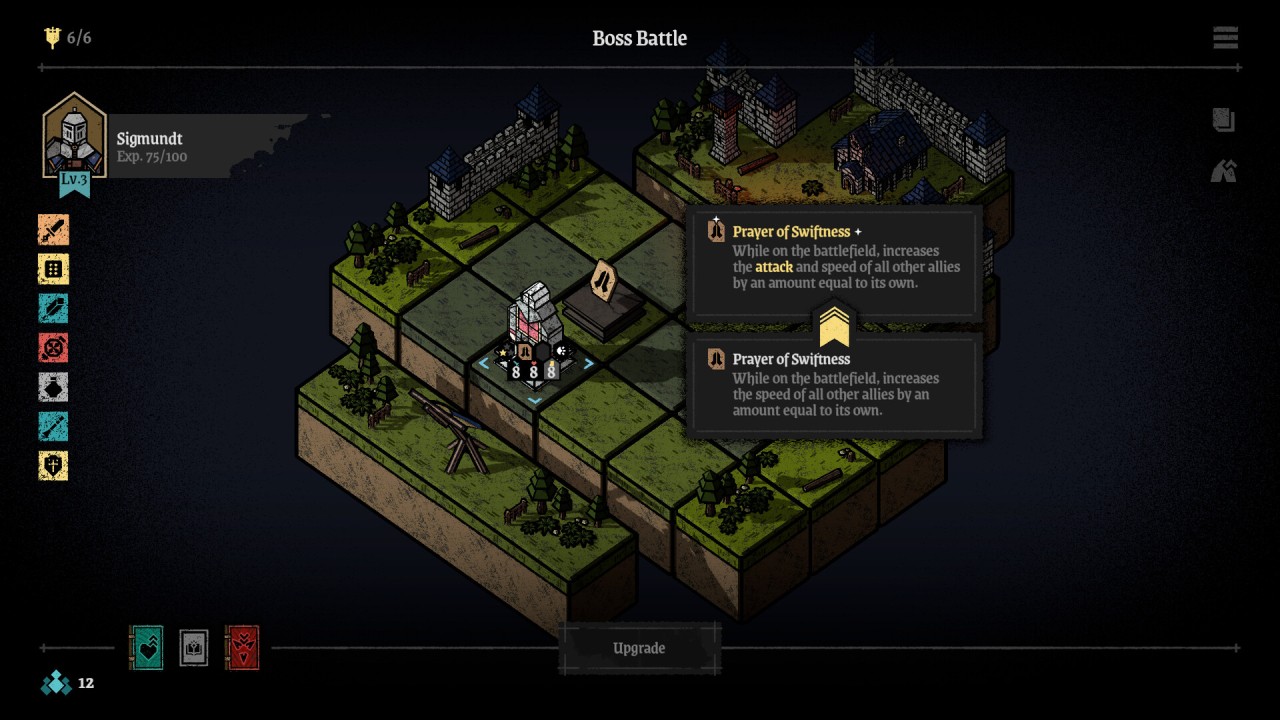
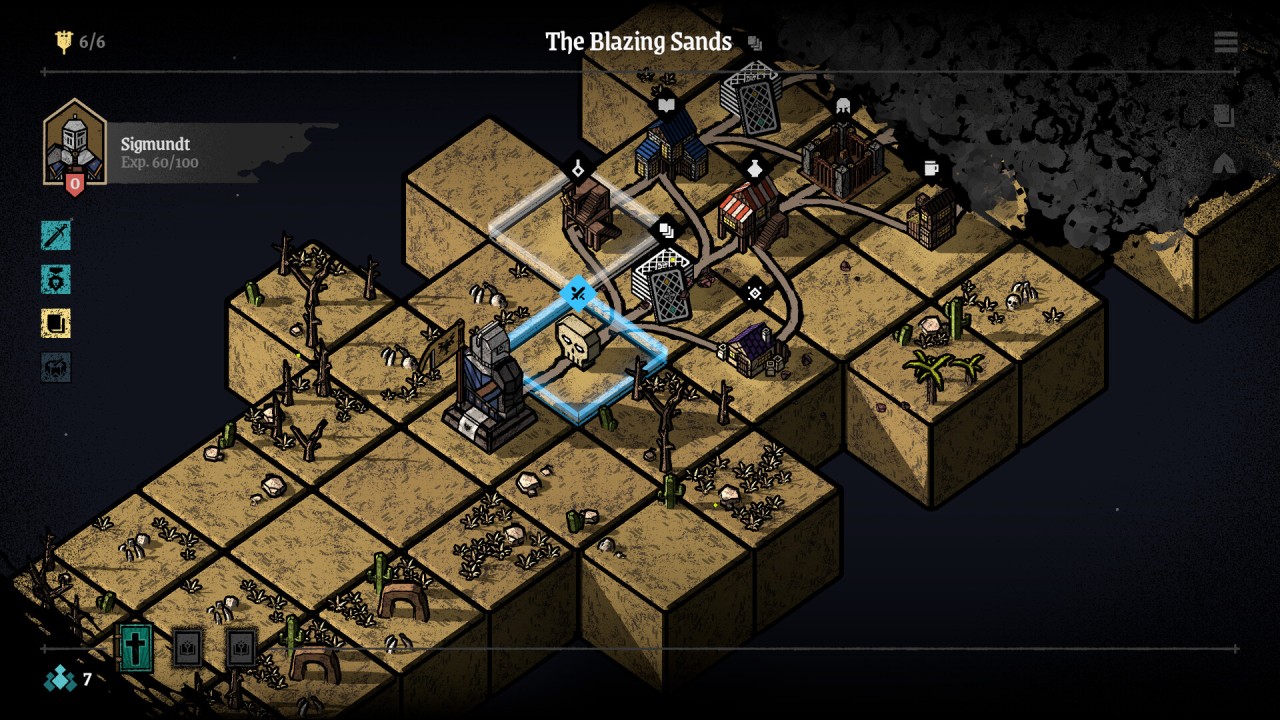
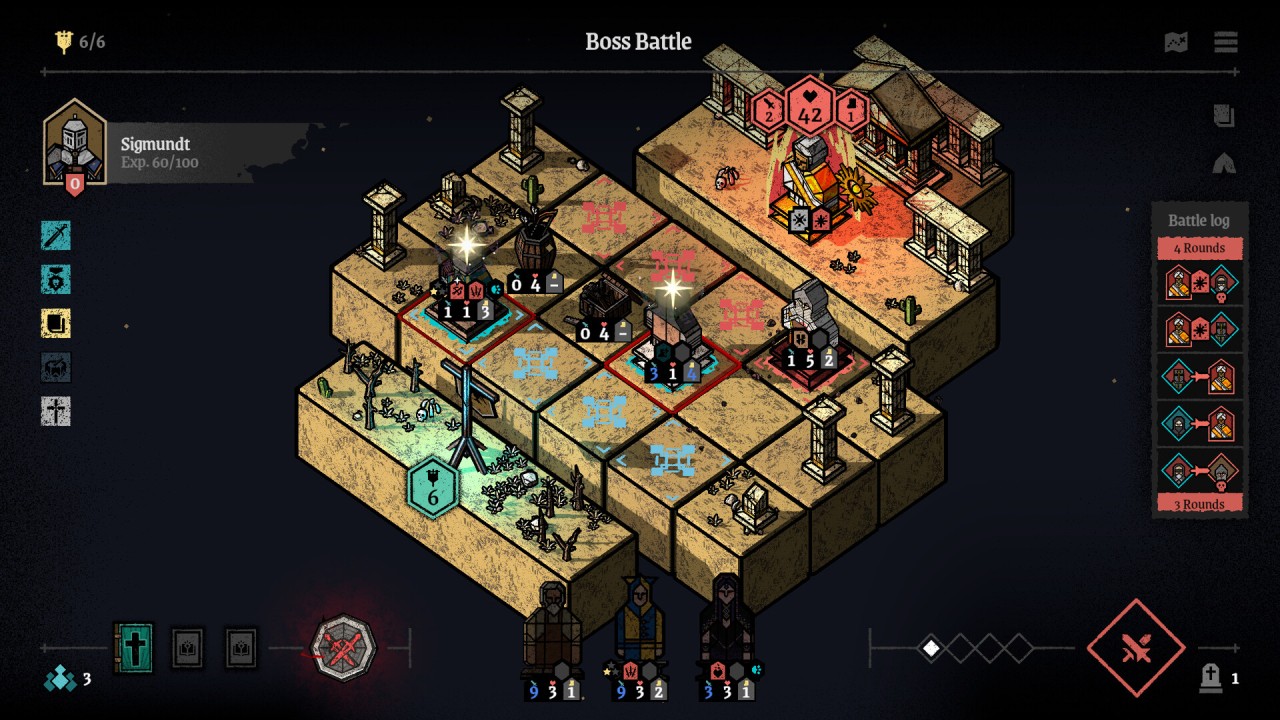
Master of Piece: Prologue is a tactical roguelike built around squad and deck-building, like what you can find in some strategic board games. Your goal is to recruit mercenaries, assign them traits, pick a relic, and step onto a route that changes with every run thanks to card events. You deploy one mercenary each round, and actions resolve by speed, so turn order is part of the puzzle you read and use.
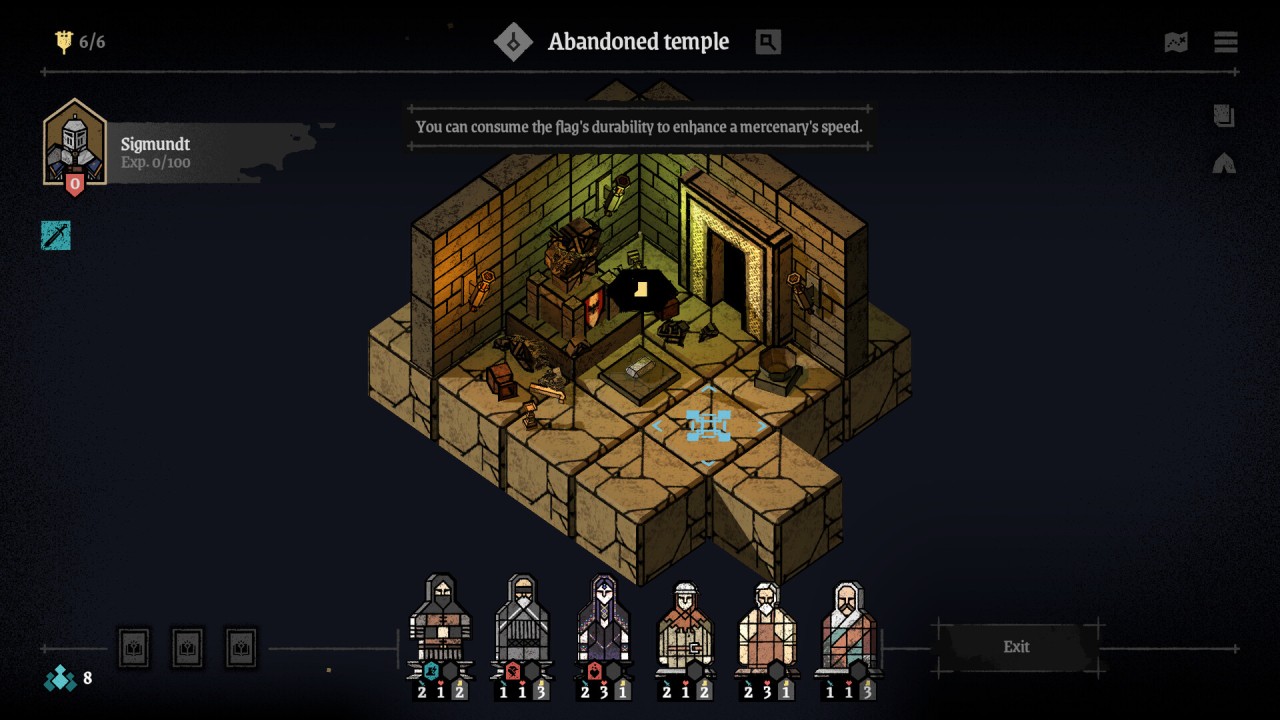
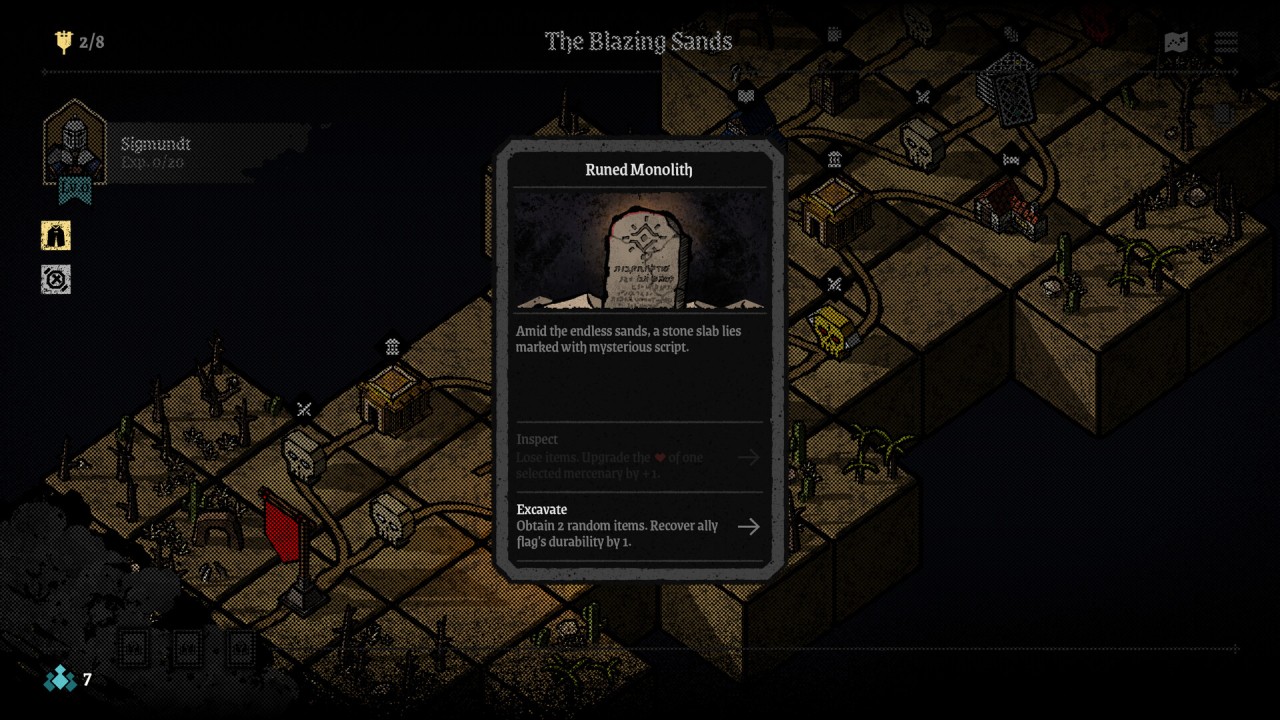
The rules stay simple on purpose, so the board remains clear and decisions stay sharp. Buildings and campsites on the map give you choices that shape the whole run: recruit a fresh unit, enhance or dismiss someone who no longer fits, shift a trait to unlock a cleaner curve.
Relics layer passive effects that tilt outcomes without adding clutter, and commander ability adds another axis for long-term planning. The goal is not to juggle a large hand; the goal is to tune a small roster that acts in the right order and hits the right thresholds. Variety comes from the structure, from the combination of mercenaries and their traits, from relics that push a plan forward, and from short card events that introduce a choice with clear consequences. You learn the rhythm fast, then you keep finding better ways to turn a close fight into a win.
Why Should I Download Master of Piece: Prologue?
You should download it if you like strategy games where clean decisions pay off quickly. One unit per round keeps noise down and keeps attention on timing, placement, and synergy.
You can try a burst plan that hinges on a specific mercenary’s trait plus a matching relic, or lean into a control plan that plays around speed breaks and disables, and you see the result within a few turns because the round structure is tight. Map stops matter; there is no empty movement. Each building, campsite, or event is a fork that can move a run from shaky to stable. Upgrading a trait can hit a threshold, removing a unit can improve consistency, and swapping a relic can open a new route.
If you care about long-term hooks, commander level, and customizable presets give you targets that sit above a single attempt and still leave room to experiment. If you care about clarity, the deploy-per-round flow makes intent visible before you commit. It rewards careful planning, steady risk assessment, and the habit of keeping a plan simple and strong. You download it to practice that style and to see how far a tuned squad can go when the map and the order of actions are read the right way.
Is Master of Piece: Prologue Free?
For the moment, Master of Piece: Prologue is available only as a demo version, entirely free. The game allows you to enter a new region with its own enemies, facilities, events, and bosses. You can use a new main lobby that gets you running with less friction. You can upgrade traits to push a core idea past its first tier, and you can level the commander to unlock more options across multiple runs. You can set presets, so a session starts with the ability, the starting relic, and the party you want.
The scope is not a thin slice; it supports real runs that stand on their own. You can play to learn the pace and the order bar, or you can push a precise route that hits a boss with a plan laid out several stops earlier. It is a self-contained space to test synergies, read turn order, and build comfort with how traits and relics multiply one another. You can finish runs, reset, and try a different idea without any barrier other than your own choices.
The full game is planned to be released in the first part of 2026; at that time, it is possible that the demo version will remain, but the full game may require payment.
What Operating Systems Are Compatible with Master of Piece: Prologue?
Master of Piece: Prologue is compatible with Windows and macOS. You can install it on a Windows machine and play with the same rules and the same feature set. You can install it on a Mac and follow the same flow. The interface is direct, inputs are simple, and the logic lives in the board rather than in long command chains, so moving between systems does not change how you think about a turn. Because the design limits action to one unit per round, the screen stays easy to read and the pacing stays steady across platforms.
The core habits you build carry over cleanly: read the order bar, place a unit, watch the result, adjust the plan, and keep the roster aligned with the relic and the commander ability you chose. If you want to keep progress over multiple attempts, the same structure serves you on either platform, and the learning you gain on one setup applies the moment you switch to the other.
What Are the Alternatives to Master of Piece: Prologue?
Inkshade prefers narrow paths and twists. It compensates for a clear build identity that is an identity in which some parts constitute a direct plan that hits hard because those parts were tuned with each other. The beat is short battles, constant upgrades, and a disbursement that is achieved by providing the appropriate piece at the appropriate time. Provided you prefer to experiment with ideas in a clean frame and have a quick read on whether a course works, this is in the same spirit and assists you to contrast approaches among run times.
Shogun Showdown gives turn sequence and transparency. It trains you to interpret initiative, will, and to take the board as a strong foundation of truth. Results are an outcome of decisions in a rigid and just manner. When you want to see the effect of a decision being propagated through the next few steps, and you want systems visible before you make any step, then this is the right way to go. It develops habits that are relevant to any turn-based game where timing and order are the determining factors.
The value of replay in 9 Kings is driven by different interactions and numerous possible configurations. It is appropriate for players who pursue the times when a new piece fits the existing plan and a path is created. It is of that click, and of going back and finding another one with another sort of parts. Should you have a favorite loop to build, test, fail, and reroute into a plan that comes alive, this should be on your list. All three are seated about the same taste, and retain their own character, and they afford you still more opportunities of practicing turns at reading, of handling simple systems satisfactorily, and of remaining cool when a board endeavors to move you out of your rut.