Japan’s H3
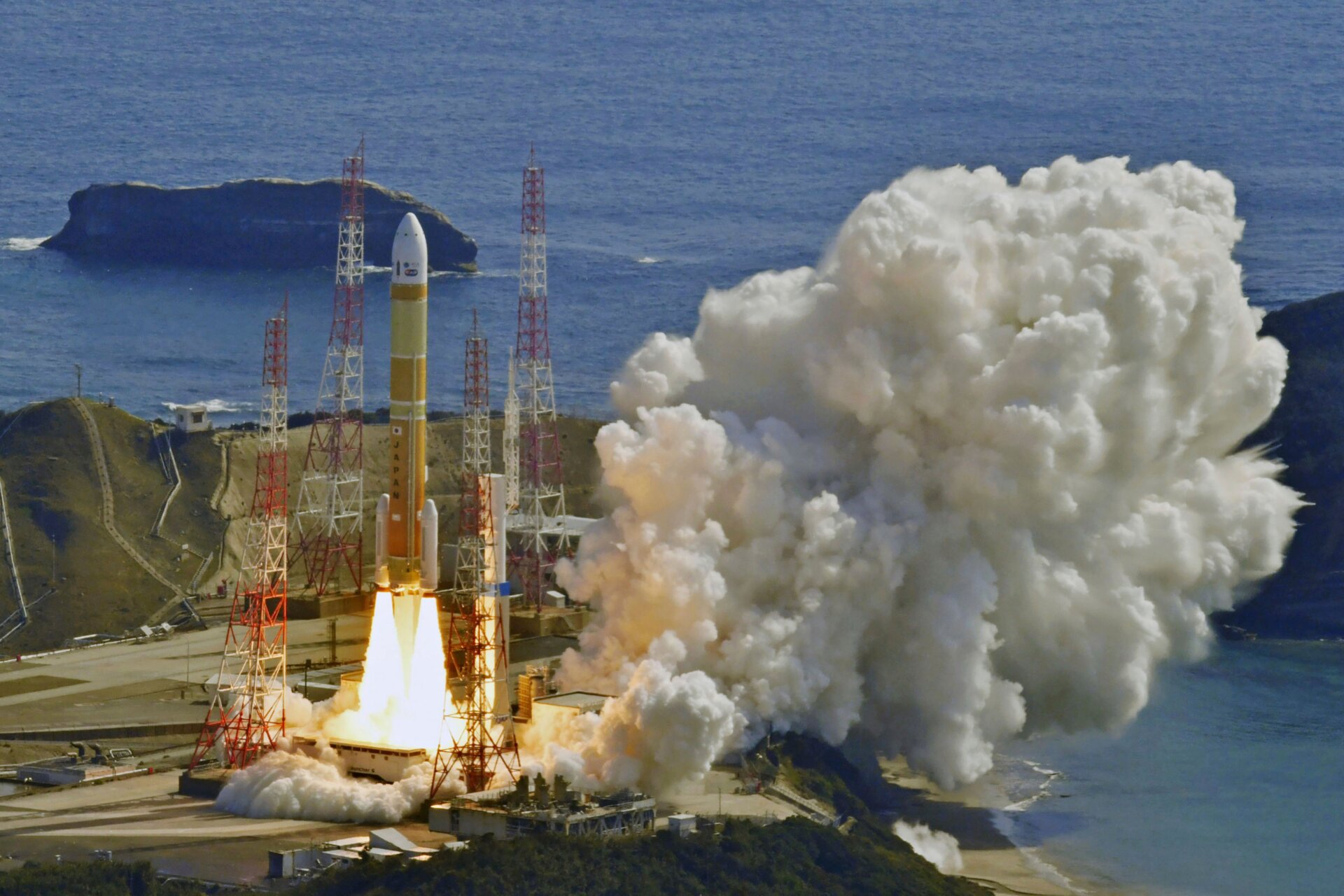
Technically speaking, the two-stage H3 rocket has already launched, but its second stage engine failed to ignite during its inaugural flight on March 6. Ground controllers were forced to issue a self-destruct command, in what’s a major setback for Japan’s space plans. The nation’s next flagship rocket, a collaboration between Japan Aerospace Exploration Agency and Mitsubishi Heavy Industries, is set to replace Japan’s H-IIA and H-IIB rockets, but H3 won’t fly for the foreseeable future as investigators try to figure out what went wrong. JAXA had plans to use H3 to launch its Martian Moons eXploration mission next year, but that’s now in jeopardy, as are plans to use it to shuttle supplies to the ISS.
Related story: What to Know About the H3 Rocket, Japan’s Ticket to the Moon
The standard H3 configuration is almost 207 feet (63 meters) tall and with a core stage diameter of 17 feet (5.2 meters). It has the capacity to lift 4 metric tons (8,818 pounds) to Sun-synchronous orbit and between 4 and 7.9 metric tons (8,818 – 17,417 pounds) to geostationary transfer orbit (GTO). In the future, upgrades could enable the rocket to transport cargo to the Moon, with specially configured H3s capable of lifting 28.3 metric tons (62.390 pounds) to low Earth orbit and 14.9 metric tons (32,848 pounds) to GTO. The liquid hydrogen-fueled first stage features brand new LE-9 engines, which appeared to work properly during the failed first launch.