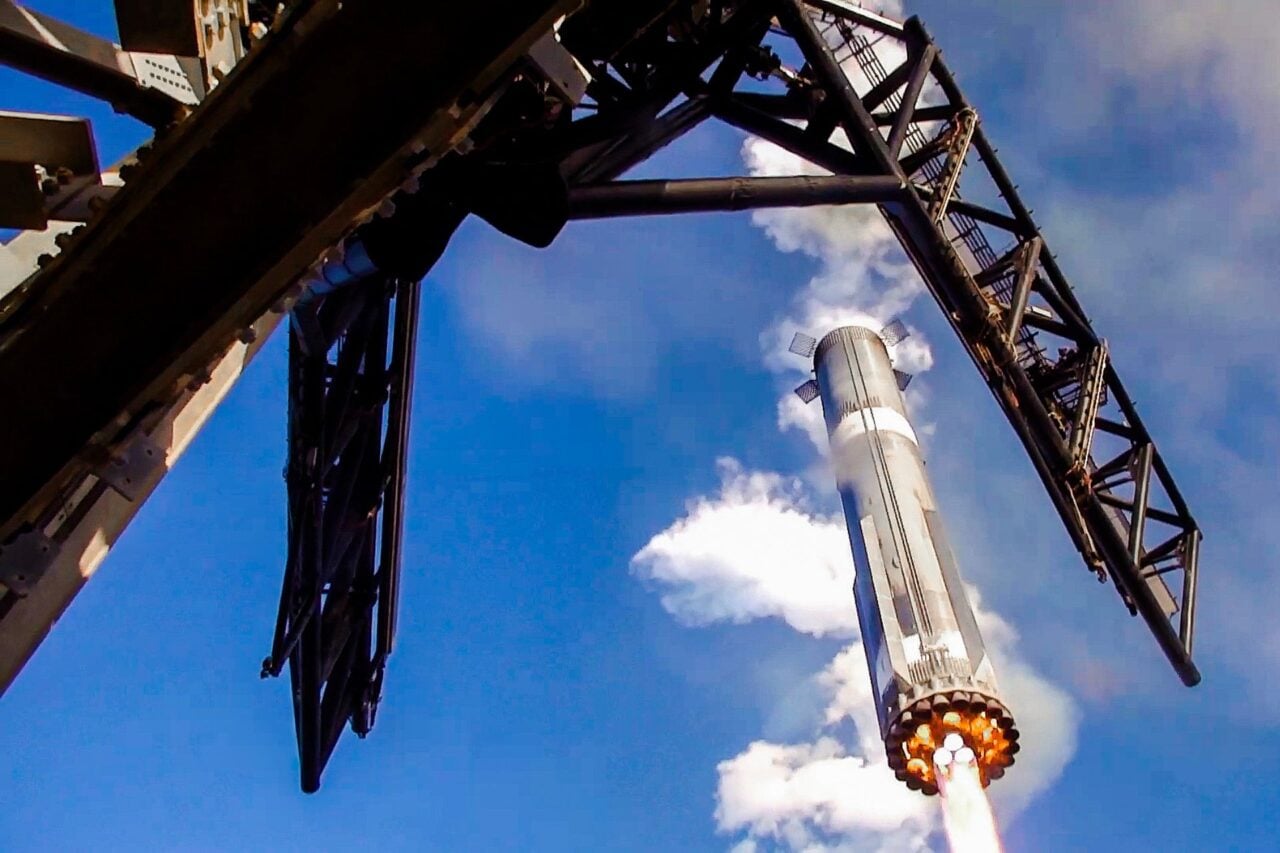
SpaceX is preparing the first flight of Starfall, a reentry vehicle the company could use to manufacture pharmaceuticals and other products in space.
The Starfall Demo mission is scheduled for launch on Tuesday, June 23, on board a Falcon 9 rocket. The launch window for the mission opens at 6:43 a.m. ET, with a backup window at the same time on Wednesday, from Cape Canaveral Space Force Station in Florida.
The launch will be broadcast live on SpaceX’s website, as well as the company’s account on X. The live stream will begin around 10 minutes before liftoff. We’ve also included some third-party streams below.
Testing, testing
Prior to sharing launch details for Starfall’s debut mission, SpaceX had provided no other information about its newly developed reentry capsules. Details about Starfall became public through regulatory filings.
Earlier this month, the Federal Aviation Administration (FAA) approved Starfall’s upcoming test flights, revealing some information on SpaceX’s ongoing project. According to the FAA documents, the Starfall capsules are shaped like a disk measuring 10.2 feet (3.1 meters) wide and 2.5 feet (0.75 meters) tall.
The capsules are designed to reenter through Earth’s atmosphere and perform a splashdown using a single main parachute, along with pilot and drogue parachutes. Starfall is made of an aluminum top plate and a carbon-fiber heat shield to protect the payload during reentry.
The FAA has so far approved two reentries of the Starfall capsules into the Pacific Ocean off the coast of California. It’s not clear when the capsule will reenter following this week’s launch.
The uncrewed capsules will enable research and development in the microgravity environment, as well as provide point-to-point cargo delivery. The capsules will be able to carry up to 2,205 pounds (1,000 kilograms) worth of payloads each within a volume of 8.2 by 4.9 by 1.6 feet (2.5 by 1.5 by 0.5 meters).
For its demo mission, SpaceX will use a Falcon 9 rocket to deploy the capsules in orbit. The company also plans on using its Starship rocket for future launches.
Made in space
With the upcoming launch of Starfall, SpaceX is hoping to enter into a potentially lucrative market of in-orbit manufacturing. The idea is to use the microgravity environment to manufacture materials that would otherwise be impossible to produce on Earth.
By overcoming gravity-related limitations on purity and crystalline perfection, in-orbit manufacturing could potentially revolutionize products in industries such as pharmaceuticals. SpaceX’s Starfall could compete with Varda Space Industries, a California-based startup that’s currently pioneering the industry.
Varda has flown six of its W-series in-space manufacturing capsules to Earth orbit and recently signed a deal with a pharmaceutical company to explore developing new, improved versions of its drugs in space.
To launch its capsules, Varda has to rely on SpaceX’s Falcon 9 rocket to reach orbit. SpaceX, on the other hand, has the advantage of having a fleet of launch vehicles at its disposal. Starfall is also designed for mass production, according to the FAA documents.
Tuesday’s launch could be the start of a new revenue-generating vehicle for SpaceX as the company ventures into a new, exciting market.