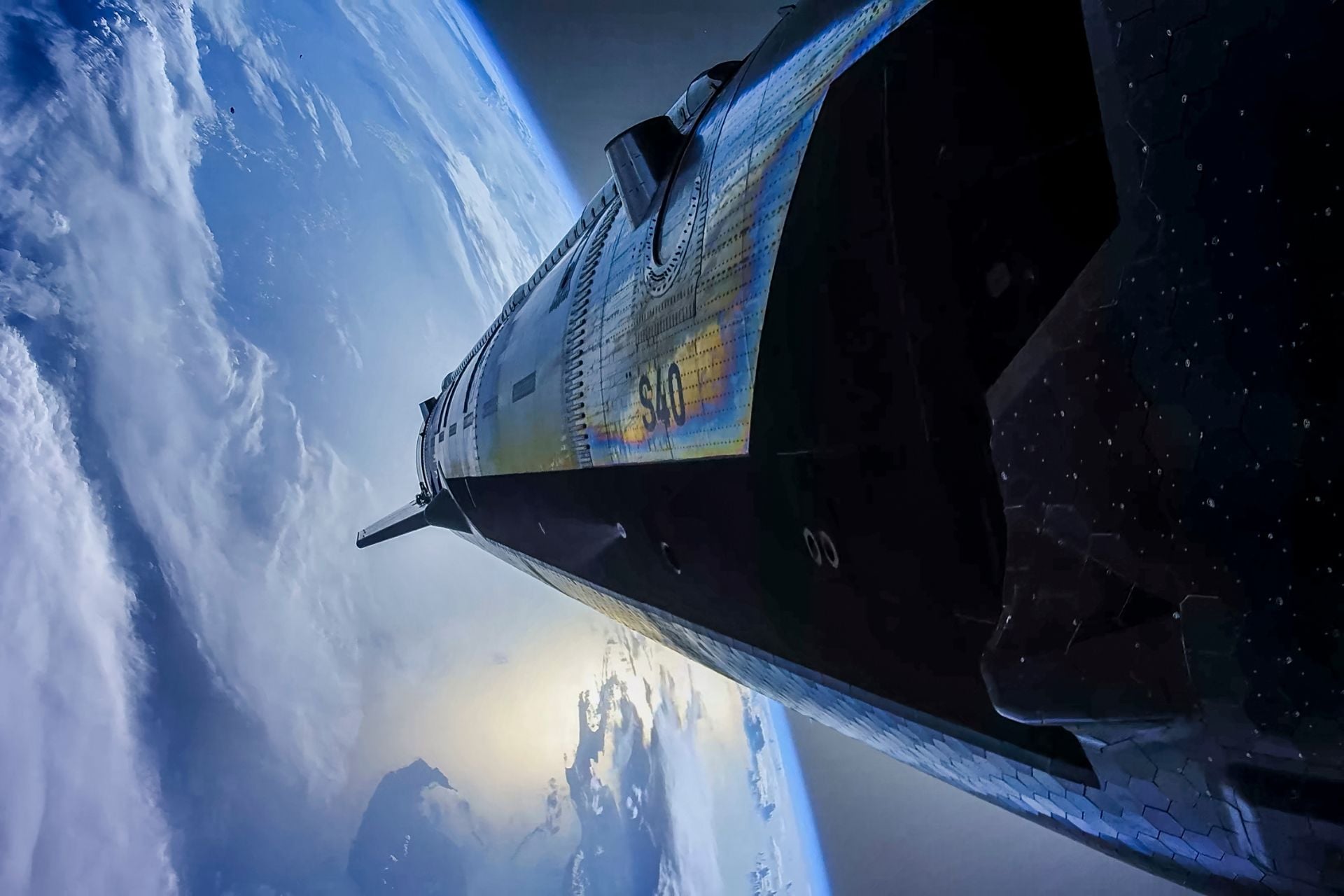
Starship Version 3, the biggest and most powerful rocket ever built, had an overall successful second test flight on Friday. Both the rocket and its booster demonstrated key capabilities, including the first deployment of SpaceX’s next-generation Starlink satellites, but experts say one thing still stands in the way of achieving Starship’s ultimate goal.
“Starship’s current thermal protection system is a dead-end for all missions that require full and rapid reusability,” Dan Rasky, a former NASA engineer who studied heat shield materials for nearly four decades at the agency’s Ames Research Center, told Ars Technica.
He and two other spaceflight industry experts—former NASA astronaut Charles Camarda and the head of the Trump administration’s NASA transition team, Charles Miller—reportedly analyzed images of Starship after it splashed down in the Indian Ocean on Friday. They didn’t love what they saw.
Credit where credit is due
Before we dive into the issues, let’s get a few things straight. Firstly, the heat shield absolutely did its job during Flight 13. Starship successfully reentered Earth’s atmosphere, and SpaceX reported that the heat shield was intact after splashdown.
Secondly, it’s undeniable that Starship’s heat shield performance has improved markedly over the last several flights. The proof is in the pictures. In the images below, you can clearly see how much more uniform the shield appeared after flights 12 and 13 compared to 10 and 11, with minimal tile loss and damage.
SpaceX Starship Heat Shield Comparison Between Flights 10-13.
It’s getting better every time. This is what progress looks like. 🦾 pic.twitter.com/2BzANY9BoL
— Nic Cruz Patane (@niccruzpatane) July 25, 2026
The difference between flights 11 and 12 is particularly encouraging. Flight 12 was the first mission to launch Starship V3, and in this spaceflight reporter’s opinion, the heat shield stole the show. One of the biggest differences between Starship V3 and its predecessor, Starship V2, is the heat shield tile array, according to New Space Tracker. The improved tile geometry and attachment clips that SpaceX used for this new rocket have certainly made a difference, and it appears these upgrades are progressing the shield’s design toward rapid reusability.
It’s also worth noting that SpaceX is very aware that creating a fully durable, reusable thermal protection system is the biggest technical hurdle for the rapid reusability of Starship. That’s why the company experiments with different tile placements and attachments and performs intentional stress tests during these flights. On Flight 13, six of the Starlinks that Starship deployed also gathered imagery of the heat shield prior to reentry.
With all of that said, when Rasky, Carmada, and Miller examined drone footage of Starship’s heat shield after the Flight 13 splashdown, their trained eyes picked up an important detail.
A long road still lies ahead
According to the experts, white streaks that appeared to originate at the boundaries between some of the heat shield tiles suggest that hot gas may have penetrated those boundaries. You can see the same streaks in the image of the Flight 12 heat shield above as well. What’s more, there were indications of cracked tiles and broken edges, according to the experts.
That doesn’t mean the shield wouldn’t be reusable, but it may require a significant amount of inspection and refurbishment before it’s ready to fly again. SpaceX’s ultimate goal is to be able to launch the same Starship and booster within hours of a previous flight. Right now, the company can’t even turn them around in days or weeks.
Rasky, Carmada, and Miller believe SpaceX needs to pursue a different approach. They told Ars Technica that Starship’s heat shield design is a good “incremental” step forward from that of NASA’s Space Shuttle, but that it relies on the same fundamental solution.
Miller previously recommended that NASA create a new initiative to invest in heat shield research, development, and demonstrations, but nothing has come of that yet. For SpaceX’s part, the company has shown no intention of investigating new approaches to thermal protection this late in the game. Whether they can improve what they’re already working with and achieve their highly ambitious objectives remains to be seen.