Update: July 16, 7:15 p.m. ET: SpaceX was forced to scrub today’s launch, with CEO Elon Musk tweeting: “Some of the engines didn’t start, triggering an automatic launch abort,” adding that the next launch attempt will hopefully happen in a “few days.”
Original article follows.
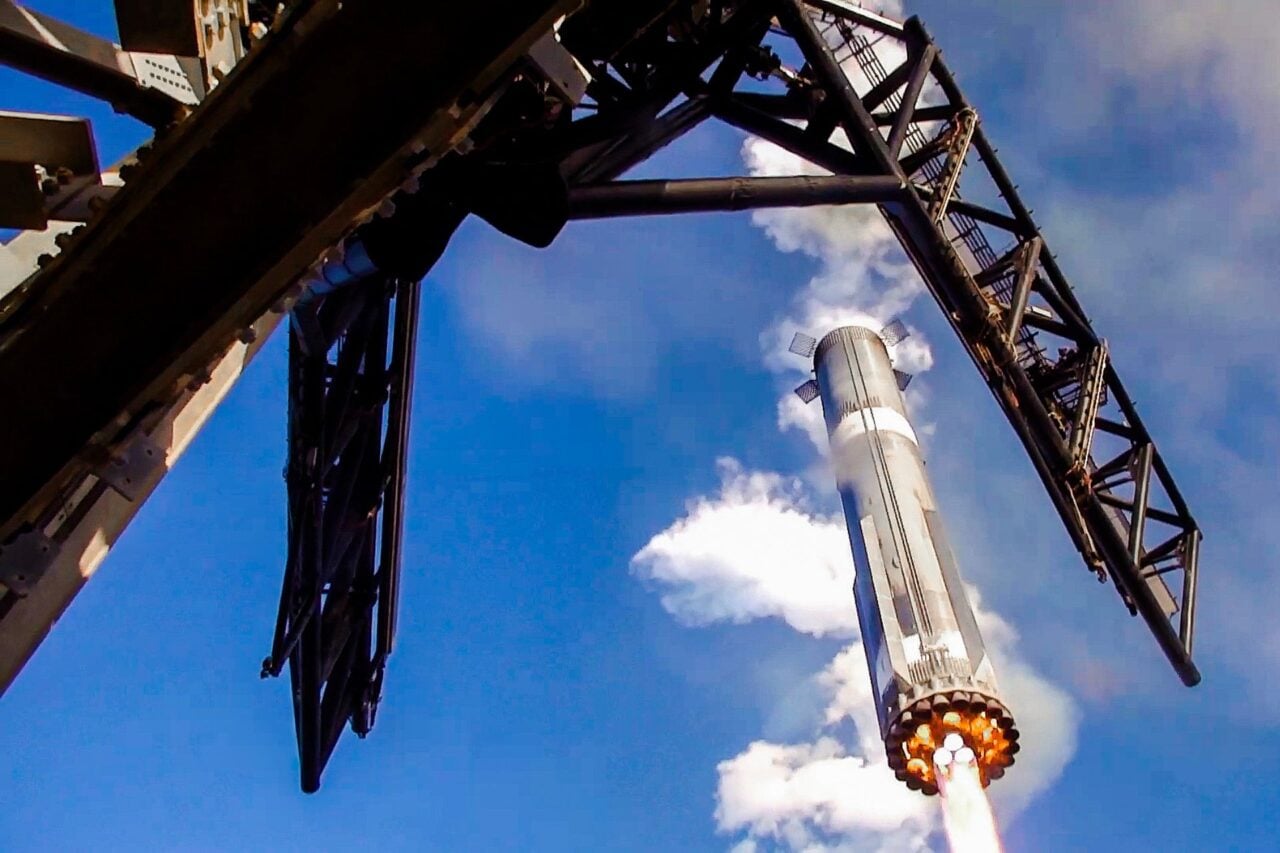
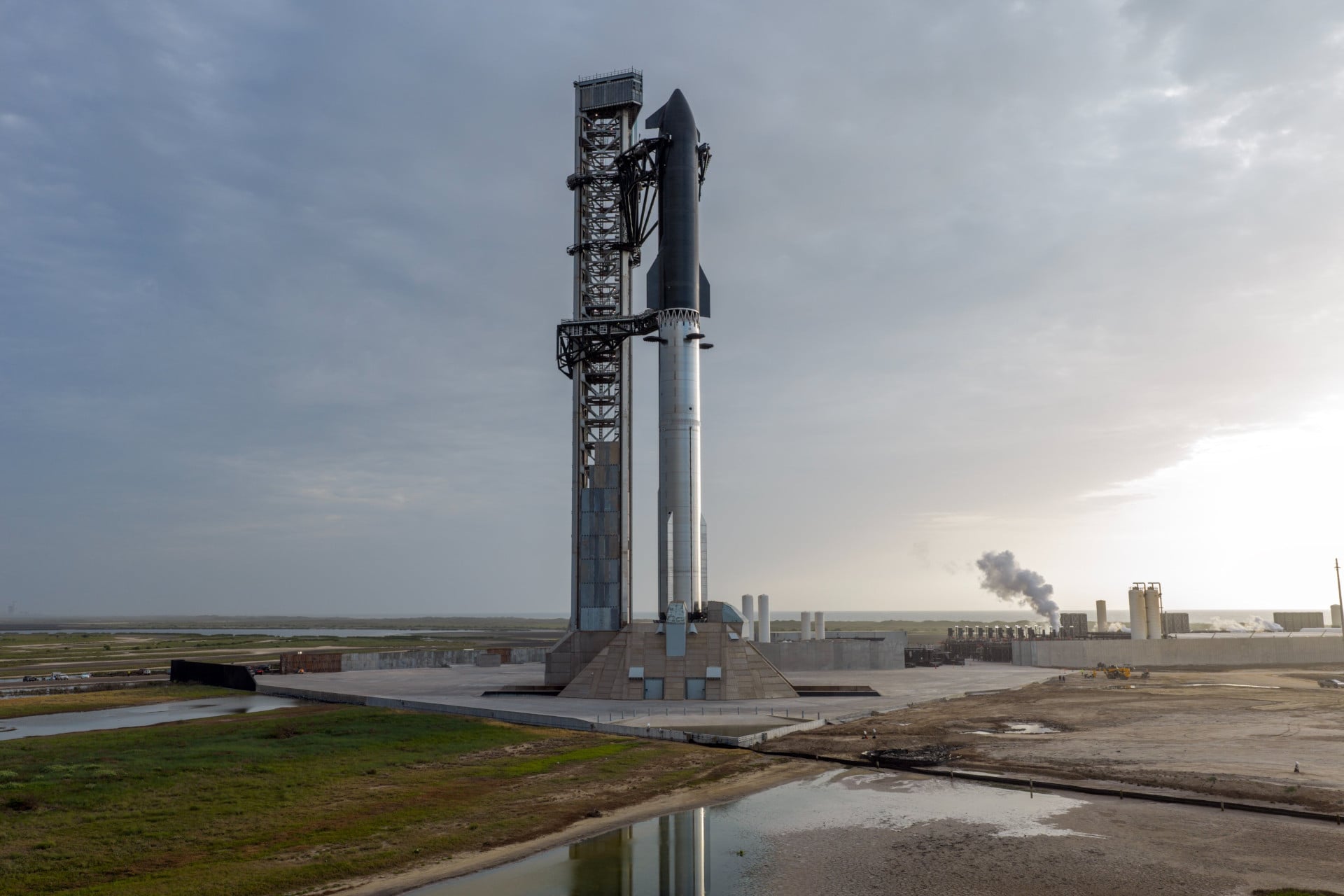
In May, SpaceX launched the biggest, most powerful rocket ever built for the first time. Now, Starship V3 is heading back to the pad for its second test flight, and it could blast off as soon as Thursday.
SpaceX will attempt to launch the rocket from Starbase, Texas, during a 90-minute launch window that opens at 6:45 p.m. ET on Thursday. You can watch the flight from liftoff to landing via the company’s website, its X account, or any of the third-party livestreams below. This will be Starship’s thirteenth full-scale test flight and the second to use the newest iteration of the megarocket, designed to enable future missions to the Moon and Mars.
Watch Starship's thirteenth flight test https://t.co/wYoNPiNMz8
— SpaceX (@SpaceX) July 16, 2026
What to expect during Flight 13
Starship V3’s inaugural test flight was an overall success. After lift off, the rocket separated from its booster, ascended to space, reached its planned trajectory, deployed 20 dummy Starlinks, and made a controlled splashdown in the Indian Ocean.
There were several hiccups, however. At T-0, the Super Heavy booster successfully ignited all 33 of its Raptor 3 engines, but one unexpectedly shut down during ascent. After stage separation, the booster performed a flip maneuver and attempted a boostback burn, but it failed to light all the necessary engines and made a hard splashdown in the Gulf of Mexico. The upper stage also lost an engine during its ascent burn to space.
This time, SpaceX will aim to achieve similar objectives to Flight 12 and correct the issues that occurred during that mission. Engineers modified Super Heavy to improve engine re-light reliability and made updates to engine alarms and aborts to better match the conditions of the multi-engine flight environment. During Flight 12, the booster flip maneuver was also off by about 90 degrees, so engineers changed the engine startup sequence. They also took steps to address the underlying causes of the upper-stage engine failure.
In addition to testing these fixes, SpaceX will attempt several technical demonstrations. Flight 13 will carry real, functional Starlink V3 satellites to space for the first time. Once deployed, these 20 satellites will extend their solar arrays and antennas and attempt to connect with the larger Starlink constellation, but they won’t actually become a part of the operational network. Instead, they will remain on the same suborbital trajectory as Starship and burn up upon reentry about 20 minutes after deployment.
Six of the satellites will be equipped with a suite of cameras to scan Starship’s heat shield and transmit imagery to operators on the ground prior to reentry. Engineers painted several heat shield tiles white to simulate missing tiles and serve as imaging targets for the satellites. The data they gather will help SpaceX develop ways to check whether the heat shield is ready for future returns to the launch site. Two of the dummy Starlinks deployed during Flight 12 also carried cameras for external imaging of Starship.
Finally, SpaceX intends to experiment with Starship’s heat shield “to continue iteration towards a fully and rapidly reusable design,” a post on the company’s website states. Flight 13 will test new ways of attaching some of the heat shield tiles and place a few in different locations to see how they hold up. It will also test special sensor-equipped tiles that measure the forces acting on the heat shield as Starship experiences higher dynamic pressure during ascent than in previous flights. This added stress on the tiles will simulate increased payload-to-orbit capacity.
Starship’s heat shield performed remarkably well during Flight 12, so here’s hoping SpaceX can replicate that success. Shield durability is absolutely critical to the company’s goal of achieving rapid reusability. It will also be interesting to see how the Raptor 3 engines fare this time around, particularly on Super Heavy. If all goes according to plan, the booster will make a controlled splashdown in the Gulf of Mexico, followed by a controlled splashdown for the upper stage in the Indian Ocean, and we’ll get to see the first functional Starlink V3 satellites enter space.