Buried beneath a stack of stones in northwest Scotland, a woman’s skeleton was found with scratches on the inside of her cranium and her bones whittled down to a sharp point. The unusual scarring may have been part of an ancient funerary ritual meant to honor the death of a loved one.
Archaeologists examined two human skeletons found in a low stone burial cairn, finding evidence for a previously unknown funerary tradition during the Iron Age that may have involved removing the brain of the deceased. In a new study published in Antiquity, researchers offer new insight into the ancient burial practices of prehistoric Britain and a rare glimpse of cultural practices from that time.
Laid to rest
The team behind the recent study spent years examining partial remains that were excavated near Loch Borralie, which is a few miles inland from the Norwegian Sea. Using DNA and isotopic analysis, the archaeologists determined that the skeletons belonged to an adult female and a juvenile male.
The DNA analysis also revealed that the pair were closely related to each other, most likely being maternal second cousins. The results also indicated that they both likely grew up southeast of Loch Borralie and were buried sometime between 50 BCE and 70 CE.
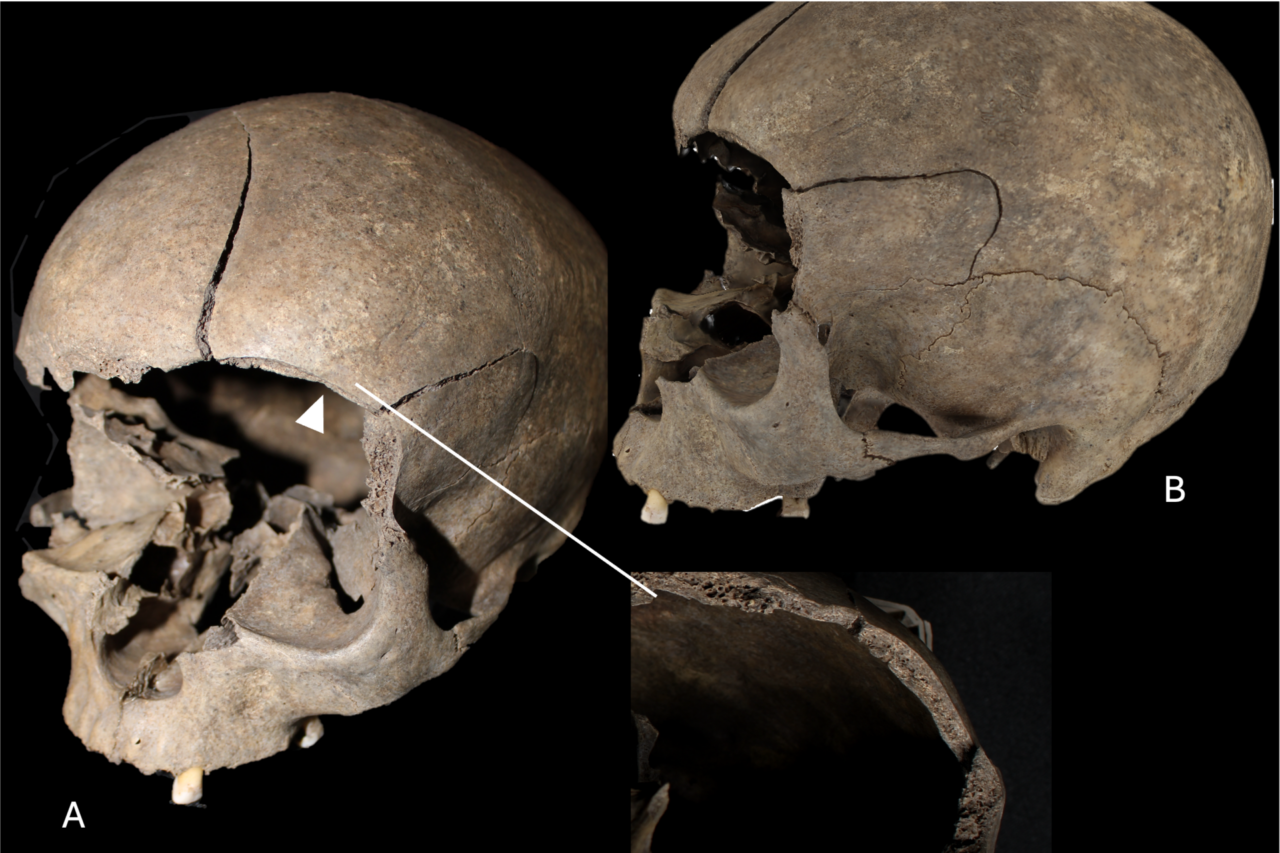
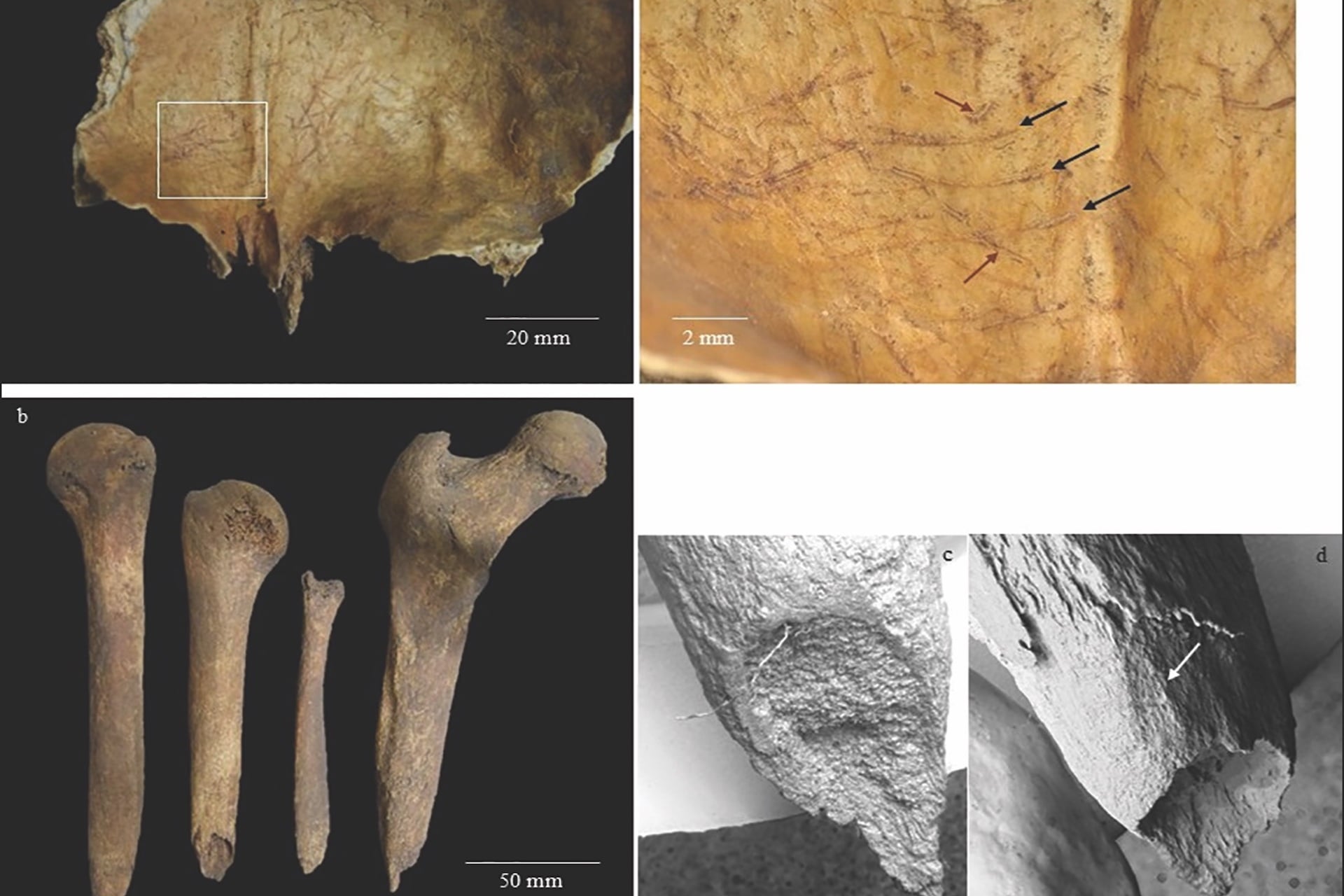
The woman was around 30 years old when she died, and the researchers found an unusual fracture at the base of her skull, along with markings of incisions made by a sharp tool. The markings suggest that her brain was scooped out after she died. This may have been done to preserve the skull for display, the researchers noted in the study.
Four of the woman’s bones, the humeri, ulna, and femur, were also sharpened down to a singular pointed end and placed back in her grave in the correct anatomical positions. The researchers aren’t sure why her remains had been altered following her death, but it may have been part of a funerary ritual at the time.
“The motivation behind the extensive manipulation of the skeletal remains of Individual 1 is very difficult to interpret,” Laura Castells Navarro, an archeologist at the University of York and lead author of the study, said in a statement. “However, the care with which she was reassembled and deposited in the cairn possibly suggests she commanded a level of reverence and respect by her community.”
The skull and bones of the second buried individual, who was around 15 years old when he died, had not been altered in any way. “While we will never really know their motivations, the treatment of Individual 1 is indicative of a high level of care and attention by the living community and a continued interaction between the living and the dead,” Navarro added.
Mysteries of the Iron Age
Prior to this discovery, researchers knew very little about the burial practices of prehistoric Britain. The remains of the people that lived during that time rarely survive the region’s moist environmental conditions.
In Northwest Scotland, however, the environment does support the long-term preservation of bones. Burial inside stone cairns also helps safeguard human remains. “We knew that in the north-west of Scotland, including the Northern and Western Isles, the circulation and deposition of human remains were particularly prominent,” Navarro said. “We tried to answer who these individuals were and where they came from, as well as if there was any relationship between them and/or with other individuals.”
The DNA analysis also revealed that the two individuals shared genetic connections to others found buried at distant prehistoric sites in Scotland, including the Orkney Islands. This suggests that the family groups were highly mobile.
“Our research shows that prehistoric maritime communities periodically moved around the north coast and Northern Isles of Scotland, possibly in small groups,” Navarro said. “This movement allowed for the spread and maintenance of cultural practices and traditions.”