Many people have called what we’re living through an epistemological crisis, and the most famous of them is probably Barack Obama, who told the Atlantic in 2020, “If we do not have the capacity to distinguish what’s true from what’s false, then by definition the marketplace of ideas doesn’t work. And by definition our democracy doesn’t work. We are entering into an epistemological crisis.”
Maybe Obama is overstating things a tad when it comes to the implied centrality of the truth to American democracy in the past. Still, if you were to do something wrong and you wanted to get away with it, at one time you might have needed creativity and attention to detail to come up with a counter-narrative, along with the manufacture of enough exonerating evidence to convince people of that narrative. But what if there were an information environment where the truth value of statements simply didn’t matter?
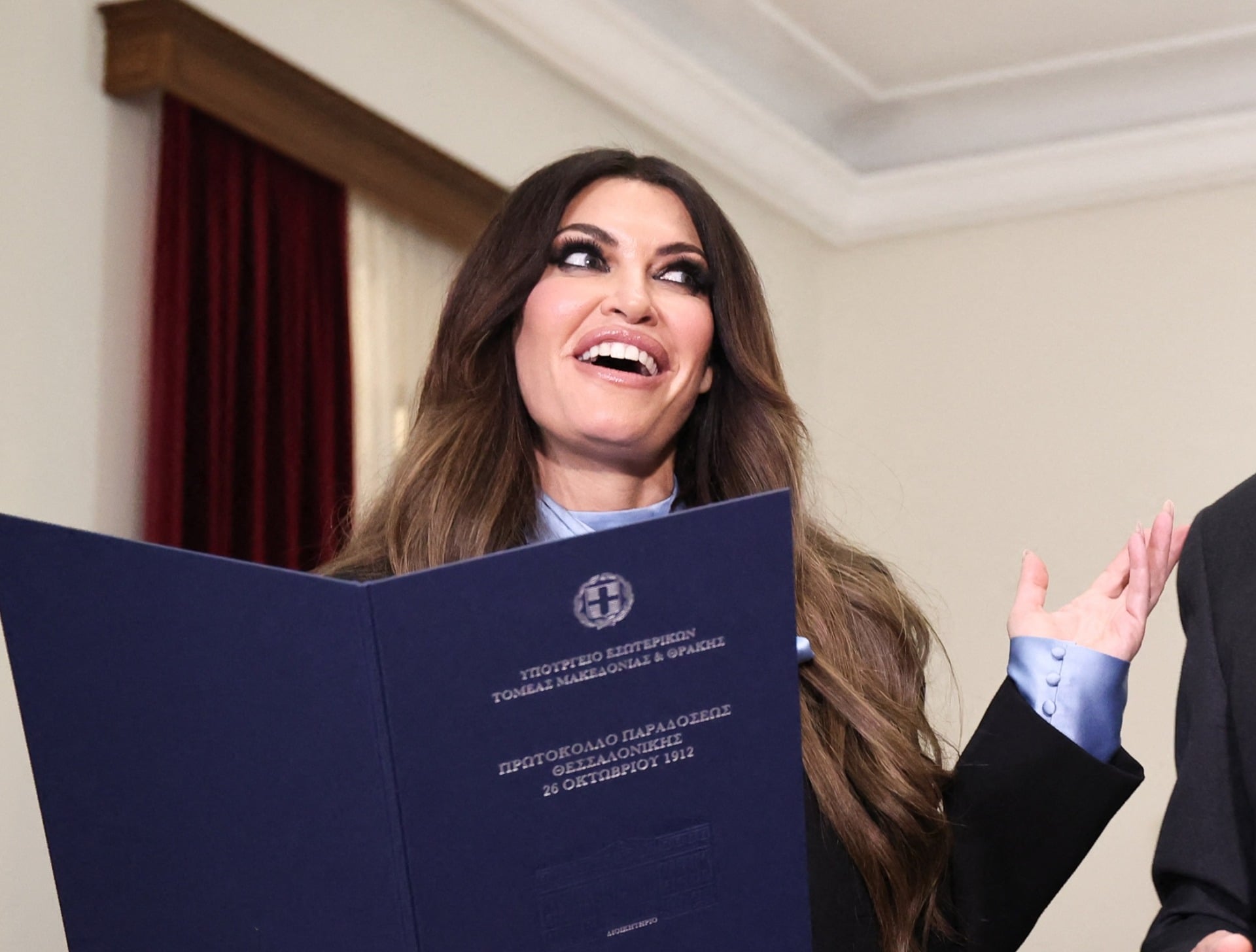
I’m asking because an account in the Wall Street Journal makes it sound as if former U.S. Ambassador to Greece Kimberly Guilfoyle was kinda hoping we were all the way down in that nothing-matters epistemological abyss. We may not be quite there, but we’re hanging on by a thread.
Guilfoyle, you’ll recall, allegedly texted a rich Trump donor on Signal, asking him to pay off her $100,000 American Express bill ahead of her confirmation hearing last year. It was the most damning of several reports that came out around the same time. She resigned as Ambassador on Tuesday. President Trump had apparently called for her to step down.
But the WSJ says that just after its report about the texts to the rich Trump donor, “Guilfoyle reached out to White House officials to say the text messages were AI generated.”
That’s not much information, but what Guilfoyle was allegedly claiming makes more sense when you consider that, according to Newsweek, the donor himself, a guy named Eric Deters, had been the one who distributed the now-famous texts to various members of the media. So if there’s any actual thought going into this claim, it’s unlikely Guilfoyle would have been saying that, say, a chatbot was used to generate the texts, or that a rogue AI agent had decided to defame Kimberly Guilfoyle. She would have been saying something closer to Someone—possibly Deters—used AI to create fake screenshots of the texts.
But the WSJ says White House officials, “didn’t believe her claims,” according to its anonymous sources.
If the WSJ’s reporting is accurate here, it would show Guilfoyle being unimaginative and lazy with her excuse-making, and it would leave countless questions—chiefly why Deters would fake such a thing. But at epistemological rock bottom, the idea would be that the mere invocation of AI is a perfectly comprehensive hand-wave, particularly if the person you’re presenting the excuse to wants to play along.
Trump called for Guilfoyle’s resignation explaining to reporters, “We didn’t like what we were reading.” But according to anonymous GOP strategists who talked to the Hill, it’s the looming midterm elections that may have made it impossible for the Trump Administration to play along with Guilfoyle’s AI narrative. “When Trump says, ‘I didn’t want to continue reading about this,’ he’s telling the truth; it had become too big a distraction when it’s an all-hands-on-deck moment for the GOP,” one of the sources told the Hill.
So as rough as things may be, it’s nice to be told that every once in a while, during a particularly high-pressure election season, the old “AI did it” excuse still isn’t enough.