
In a gold rush, the people who get rich aren’t the grubby prospectors digging for those nuggets in the muck; it’s the men who sell the shovels. In that vein, Google, with generative tools like Genie, Veo, and Gemini, is competing to become the biggest provider of AI for the gaming industry. I talked to the man at Google who’s in charge of selling the shovels.
Jack Buser has spent his entire career chasing tech that inevitably changes the gaming scene—often in unexpected ways. He’s currently the director of gaming for Google Cloud, but he began by pushing Dolby sound product support for consoles like the PlayStation 2 and Xbox. He moved on to PlayStation, where he worked on crafting PlayStation Home—the company’s Second Life clone and early metaverse—and later Sony’s nascent PlayStation Plus subscription. Then, he would move on to Google to work on Stadia, the company’s early adventure in cloud-based gaming, before the company decided to pull the plug in 2022.
You can argue whether metaverse, subscriptions, and cloud gaming have had an overall positive impact on the games industry. AI, however, may still have an even larger impact on how we develop and play video games. Google has execs who are trying to pitch the company’s cloud servers and AI models to various industries—like health care or financial services. Buser is the gaming guy.
He may have an easier job selling it to developers and publishers than audiences who have lambasted any use of the tech in development. The devs behind 1666: Amsterdam found themselves in hot water after players discovered AI assets in preview trailers. Call of Duty: Black Ops 7 was littered with AI images that only helped to cheapen the experience. Even indie darling Clair Obscur: Expedition 33 was raked over the coals for leaving AI assets in their game.
Buser’s been singing this pro-AI tune for a while, but beyond all that, the Google exec is a gamer. He started our conversation by asking me what his best option was for building his own Steam Machine and whether to go with SteamOS or Bazzite. He’s currently playing Donkey Kong Bananza on Swtich 2 during his global travels. He’s been a part of the industry for a while, and he agrees it’s not going well. He simply thinks AI is the answer to most—but not all—the industry’s woes. Do I agree with him? Not necessarily, but the situation with AI and game development is not nearly as clear cut as it seems.
During my interview with Buser, I referenced a separate Q&A with Luke Dicken, the former head of AI at Take Two Interactive—you know, the publisher of Rockstar Games and GTA VI. Dicken told Side Quest that the lingering question of AI in games is whether the cost of these models—i.e., how much publishers pay Google—creates a marked difference in development time, development cost, or end sales. It’s a question we may not know the answer to for years, especially when development timelines can be as long as four or five years, or even longer.
Below, read more about Bauer’s AI gaming dreams. This Q&A has been edited for length and style.
Gizmodo: What is your role now as you define it?
Jack Buser, Global Director for Games at Google Cloud: If I were to sort of sum it up, I’m going around Google, and I’m finding the best stuff that we’ve built on our own platforms. And then I’m making that available to the games industry. So if you think about what the games industry has become, it’s largely transitioned from a consumer packaged goods industry to an industry of live services. I’m using a very broad definition of the term “live service.” I don’t mean just specifically free-to-play microtransactions. I mean anything that connects online and collects telemetry or otherwise has some sort of player network built in.
When you think about what the games industry has become, it’s become an industry of live platforms that are increasingly built and operated using AI. The transition we’re in now is probably even bigger than that. Part of that’s a function of the scale of the industry today. But I also believe just the fundamentals of how games are being built and the types of player experiences that are on the horizon are going to be so transformative. We’ll look back at this era and go, “That was a massive transformation.”

Gizmodo: Right now the games industry is looking pretty grim, too. I just wrote an article that said game console sales are 29% down overall compared to last year. And that’s because all the consoles now cost more than they did last year.
Buser: There are two things going on right now that are driving the turmoil in the industry. Number one, the vast majority of playtime globally is in games that are over six years old, and this was data that Newzoo uncovered back in 2024, and it’s held true to this day. So if you’re trying to create a new game and convince players to not play the game that they’ve been playing for several years and try something new, good luck.
On top of that, the cost to build a new game has nearly doubled since 2017. So you’re spending twice as much to build a game to compete for far less than half the audience. That is a brutal situation for this industry to be in. And that is why you see the game cancellations. So game companies are looking for ways to get out of this quagmire. How do you actually return the industry to a healthy state? And that is why we’re doing what we’re doing at Google Cloud.
Gizmodo: So when you’re talking to companies, how are you pitching them on AI? What are you trying to show them that they don’t have right now?
Buser:If you look at our business, it has historically been around the live infrastructure of a game. Game servers, game services, analytics, databases.The stuff that makes your game connect online and operate the way it should.
This technology was built for over a billion users. It’s not going to break a sweat with a video game. That area of the business has largely been solved. In the last couple years, the topic of conversation has really been focused around AI. First up, how do you reduce the iteration time in a game development pipeline? Iteration time is the time from when you have an idea to when it’s in a live environment, and then you get to test it.
What we’ll do is we’ll go in and break down the development pipeline and say, okay, where are the points of friction in this development pipeline? One of the best examples in recent memory is Capcom. They worked with us to build a multi-agent system that handles a lot of the heavy debugging.
These agents will sit there and just try to break the game. And then, once they’ve figured out what’s going on, these agents will propose solutions. The development team’s the exact same size, but they’ve bolted on this agent system that’s basically adding an extra 30,000 human hours of toil that humans don’t have to do. So their team is now focused on creativity and building a great game.
Gizmodo: Does that also leave room still for QA testers?
Buser: Absolutely. In fact, what we’ve seen is that the play testers are able to focus again on higher-order creative aspects of play testing.
For instance, I read the game design document, and the sword I got on level three is a little bit more overpowered than I thought it would be, so let’s balance it. And meanwhile, the AI is sitting there trying to break the geometry or something like that.
Pillar two is the rest of the company: the publishing organization, the marketing department, the live ops department, and the business development department. All of those departments can also be accelerated by handling a lot of the high-toil, low-creative-value work so they can keep up with the newly accelerated development team. And then finally, the third thing we talk about—and this is the stuff that gets me out of bed in the morning because I love this stuff—is the player experience.
What are the breakthrough new game designs that we can now create because we have this new technology that can simply enable games to do new things they’ve never been able to do before? What’s happening now is the AI can actually understand context. And that opens up a whole new realm of possibilities. But it is still part of this continuum of game design.
Gizmodo: When it comes to the AI for the gameplay experience, are you ever pitching developers on tools like Genie or VEO? What is it exactly that you’re trying to tell these companies you can use these tools for?
Buser: If you look in game development or you look in your publishing organization, your ability to measure the ROI of an AI implementation is pretty straightforward. You look at your current automation, and you say, how can we make that automation better by adding AI?
The first place where AI’s landed is something you might not realize, which is anti-toxicity. This is where you’re seeing the broadest adoption of real-time AI in-game. And oftentimes that’s Gemini. With Gemini, you can train it up on how to look for, for instance, harmful image detection. And from an ROI perspective, you can measure this much more directly. Because toxicity leads to churn.
Gizmodo: But what about using LLMs inside games themselves?
Buser: There are characters in the game that no longer follow a dialogue tree but can have a natural language conversation with you and can understand context.
Gizmodo: I’ve seen tests like Nvidia’s Ace. They’re not exactly great.
Buser: You saw Darth Vader in Fortnite? And they have the whole conversation system now.
Gizmodo: I’ve seen some very funny conversations from Darth Vader in Fortnite. You could get him to say some pretty wild stuff.
Square Enix announced plans to integrate Google’s generative AI model “Gemini” into Dragon Quest X!
– They have developed a companion character called "Oshaberi Slimey" (Chatty Slimey)
– Players can chat to Slimey and it will respond using AI generated text and voice
– It can… pic.twitter.com/8EesyOCWOC— Genki✨ (@Genki_JPN) March 22, 2026
Buser: You actually see quite a lot of the stuff in games in [Asia-Pacific regions, called APAC in business circles] as well. It’s quite common. A flavor of that is the in-game coach or friend or buddy. So we made a big announcement with Square Enix on their Dragon Quest X online game in Japan. Now there’s a little buddy. Looks like the blue slime, if you know. But he’s wearing a little cloak that has the Google colors. It’s so cool. Very cute.
You show up and you’re in this MMO that’s been out for a while, but you’re a new player. You have no idea how to get started. But now you have a buddy, a companion that’s teaching you the ropes of the game and cheering you on and encouraging you. And over time, as you get better and better at the game, it goes from being your friend to like your best friend.
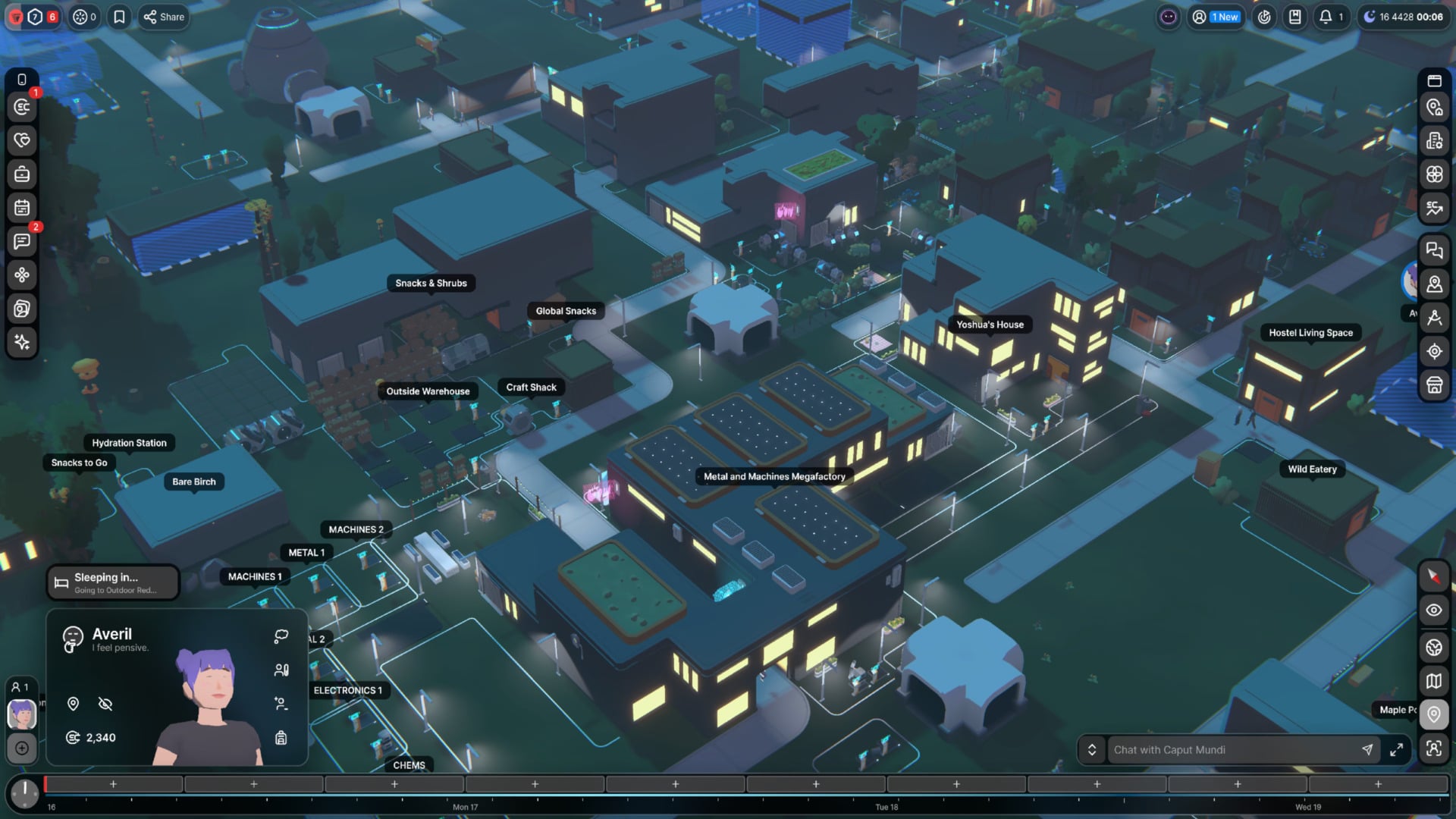
We’re already seeing early games that have AI at the core of the design. There’s a brand new game just coming out from a company called Klang Games. It’s called Seed. It’s a life simulator. They’ve got a lot of these AI-based systems under the hood. It’s not traditional game design. This is brand-new, cutting-edge stuff.
If you play it out, you could imagine entire genres being potentially transformed. You can imagine entirely new genres of games we can’t even think about right now because you have AI operating in real time during gameplay.
Gizmodo: When players hear this game was made using AI, they usually have a very negative reaction to it, but I think they’ll have a more negative reaction if you say, “I created this character with AI.” How do you see the conversation between the game industry itself and the players on the topic of AI?
Buser: To many developers, their ability to use AI in their development pipeline to create a sustainable business model is not just a nice-to-have; it’s existential. If we want a healthy industry where we can have games being created in a way that’s sustainable, you have to use the tools that are available to you.
In the West, there’s been a very deep conversation around what players want to see in terms of AI in their games and what they don’t. And if you go back a year ago, that conversation was very binary. Did you use AI or did you not? That conversation over the past six months has shifted. Now, you’ll see a much more nuanced conversation, which is, “Did you use AI in the stuff in the game, specifically the art and the music and the assets? Are those AI-generated?”
You’ll see more and more companies come out and issue a statement saying, “Look, we’re using AI for the toil, the automation. It’s not the creative player-facing stuff you’re seeing. That stuff’s all handcrafted, but our pipelines are being accelerated, this sort of heavy lifting, the scaffolding, if you will. A lot of that is now AI.”
I’ll say one more thing. This conversation is largely happening in the West. We have a global business. I deal with the biggest game companies all over the world. It’s very eye-opening to go to Japan or the rest of [the Asia-Pacific] and see the conversation around AI there. It is very, very different.
Gizmodo: Why do you think there is such a difference of opinion in these two hemispheres?
Buser: I don’t know if I could hazard a guess. But what I have observed is when we visit our customers in Japan and Asia, they are almost, as a rule, very advanced with AI. I can’t tell you why that is.
I’m not passing judgment one way or the other. Payers have the right to tell developers what kinds of entertainment experiences they want. They’re the players. This whole industry is about the player experience.
Gizmodo: With Google, they’ll say Google AI Plus exists. It costs $8 a month. Then this year they say, “Okay, it actually costs $5,” because they want to get more people on the service. At what point is also Google, in a business sense, also subsidizing some of these tools so the developers use them? And at what point then, if costs increase, does that mindset then have to change?

Buser: On the B2B front, you have a very similar conversation going on, which is, you know, if you’re a development team, you’ve got so many different models to choose from. And then surrounding those models, you have so many different ways of deploying those models. Like the tooling around the model, it turns out, is very, very important as well. How do you train up the model?
We’re looking at individual use cases, and we’re saying, okay, for this use case, you want to use this particular version of Gemini. For this use case, let’s look at Gemma, which is our open-source software. For this use case, you might want to look at one of our partners.
Gizmodo: How are you pitching AI a way that enables developers to keep the same number of people while still also buying these models from Google?
Buser: In the games industry, almost to a rule, my metaphor has held true, which is AI is like the Iron Man suit. It doesn’t do a whole heck of a lot without a human inside. And depending on how deep you go into the Marvel universe, that may not be true, but stick with the basics of the metaphor.
You don’t have to put it on, but if you do put it on, you have superpowers. But without you putting it on, it’s just going to kind of sit there. And the same is true for AI. You don’t necessarily want to just let this stuff loose on your development pipeline.
I cannot for the life of me think of a single example of where a team size has gotten smaller. What I’ve seen time and time and time again is this stuff is just bolted on to the existing team, and they’re getting much closer to a sustainable business model.
Gizmodo: As somebody who’s worked in the video game industry for a while now, do you think another part of the reason why game costs have ballooned so much is because there’s such a focus on these AAA games? Clair Obscur: Expedition 33 is an example that people bring up a lot, with a small development team that made a huge splash when it came out. Do you think that there are other things that the video game industry should be doing to also reduce the overhead that they’re experiencing right now?
Buser: I know game developers are looking for ways to create sustainable business models. And AI is not the only path to that. I’m sure there are many other paths. Our conversations happen to be centered around AI, which is why I know so much about it.
I don’t have a crystal ball. And in 30 years in the games industry, I know predictions don’t always come true. In fact, it’s quite the opposite. But we live in an age where game development costs regularly balloon to hundreds of millions of dollars. And that’s before marketing costs.

Gizmodo: Which is sometimes double the cost of the game itself.
Buser: Those numbers are mind-boggling. It wasn’t that long ago that we had development costs that were in the tens of millions of dollars. Games now are easily taking 5, 7, even 10, or 10-plus years to create. It’s not unusual to hear this game’s been in development for a decade now.
Gizmodo: I mean, that’s literally Grand Theft Auto VI we’re talking about right now.
Buser: We’re talking about a huge swath of the industry right now. You know, one bad game and you’re in trouble because they’re investing so much time, which again is correlated linearly to cost, that these games have to be these cultural phenomenons. Otherwise, the team is in deep trouble. That is not sustainable for an entire industry.
My hope—could we return to an industry where games, again, cost tens of millions of dollars to make? And instead of one shot on goal, you could have three shots on goal or four shots on goal. When in our history did the industry look like that? In my favorite time, which was the PS2 era. Big publishers could release three or four games. They could experiment with new genres. They could invent new IPs. It was still a hits-driven business. But it wasn’t a make-or-break, all-or-nothing bet on a single title.
I’ll give you a second prediction. I think that we will start to see forms of interactive entertainment, games specifically, that are unrecognizable to us right now. Entirely new genres, entirely new platforms, new takes on existing genres that we can’t even imagine right now.