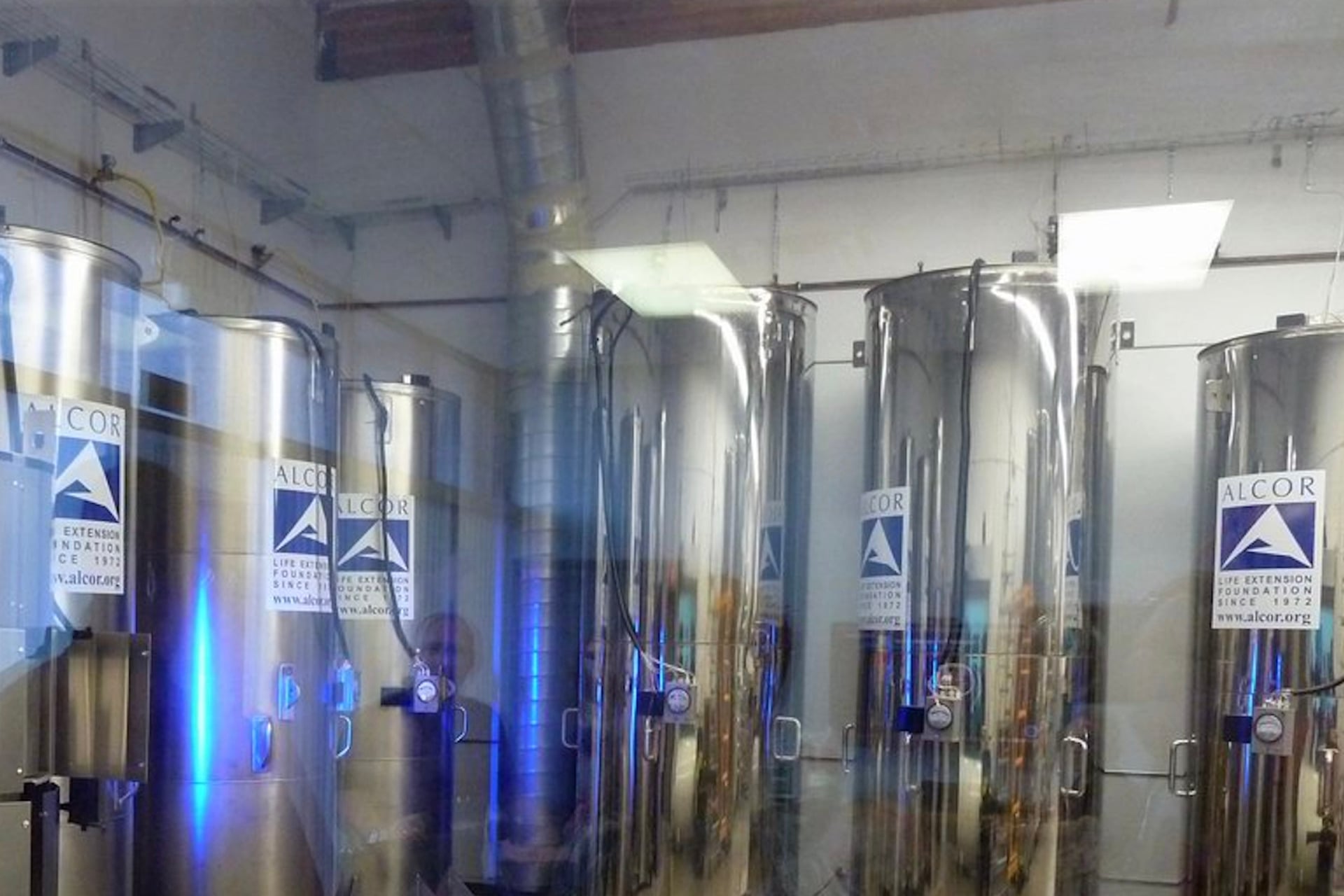
The gamble of cryonically preserving one’s own body for reanimation somewhere off in the future (or, more frugally, just one’s brain) is ultimately a big bet on the increasing ingenuity and benevolence of the human race. It’s the kind of question we often put to science fiction writers, but what do medical professionals think about the state of this technology?
Neuroscientist Ariel Zeleznikow-Johnston at Monash University in Australia wanted to find out, surveying over 300 physicians—including primary care doctors, intensive care providers, neurologists, anesthesiologists, and other specialists. While a little over one in four of these physicians (27.9%) reported that they believed it was “plausible,” or even “very plausible,” that cryonic preservation could potentially lead to some form of revival for patients one day, the data got really interesting when sliced by medical specialty.
When asked to weigh the probability that “critical psychological information” could be adequately preserved by whole brain preservation and revival, neurosurgeons were much more bullish on average, collectively giving the procedure a 72% median estimated probability of success. Zeleznikow-Johnston and his colleague’s entire pool of 334 physicians, by contrast, only granted this futuristic medical intervention a 25.5% median estimated probability of success.
And there’s a reason for this discrepancy, according to Zeleznikow-Johnston, who also serves as an advisor to the nonprofit Brain Preservation Foundation. The foundation has been exploring a wide variety of techniques beyond the more commonly known strategies like cryogenic freezing, including room-temperature preservation methods via chemical fixation.
“A lot of physician hesitancy may come from simple unfamiliarity with the scientific basis of modern preservation methods,” Zeleznikow-Johnston explained in a press statement. “The doctors who have actually thought about this—and who regularly sit with dying patients—tend to be more receptive, not less.”
Improving really long-term memory
Respondents from most other medical specialties appeared to be more skeptical that a person’s mind could actually be revived sometime after cryonic preservation—with just under half (47%) opining that they thought the notion was unlikely, either “somewhat” or “very implausible.” But Zeleznikow-Johnston’s team also wanted to know how these doctors might feel about their role in the process of preparing a patient for something like suspended animation.
“The clinical community lacks consensus on these procedures, creating challenges for physicians whose patients inquire about preservation as an end-of-life option,” the researchers wrote in their new study, published Wednesday in the open-access journal PLOS One.
Zeleznikow-Johnston’s team quizzed its respondent-doctors on their medical opinions regarding critical treatment issues that commonly come up in cryonic preservation, whether of a whole human body or just a human brain.
First, these doctors were asked about the administration of anticoagulants, like heparin, which helps prevent the kinds of blood clots that can form following death by heart attack or cardiac arrest. These clots, perhaps obviously, can clog blood vessels in a patient’s body and especially their brains in ways that would make revival years later particularly dangerous. A clear majority of physicians approved of the idea of prescribing heparin to a patient on the verge of death to better facilitate preservation: 70.7% of respondents said this “probably or definitely should be allowed.” Only 11.7% of the doctors surveyed reportedly disagreed.
Second, the doctors were probed for their reaction to the legally thorny issues around initiating preservation procedures on a consenting patient while they were still alive. Currently—even for terminally ill patients who have expressly chosen to be preserved—this kind of medical intervention is technically barred by law. Over two in five of the study’s respondents (44.3%) said this sort of procedure should “probably” or “definitely” be legal, but opposition was significant. Over one in four of the doctors surveyed (28.8%) opposed.
Brain Trust
Notably, all three of the new survey’s authors work in cryonics. Beyond Zeleznikow-Johnston’s affiliation with the Brain Preservation Foundation, his coauthor Andrew McKenzie works for the Oregon-based nonprofit Sparks Brain Preservation. The study’s third author, Emil Kendziorra, is similarly a shareholder and CEO of Tomorrow Bio, a biostasis provider whose longevity work includes cryonics as well.
Nevertheless, the researchers noted that their respondents’ “relatively low probability estimate of 25.5% revival success” likely means their work was not biased in favor of their clear interest in the procedure.