They’re falling like dominoes now. New Jersey became the latest state to pass a bipartisan law banning surveillance pricing in grocery stores on Tuesday, following the lead of Maryland and Connecticut. New Jersey’s bill, which also places a moratorium on electronic shelf labels, won’t become law until it’s signed by Governor Mikie Sherrill, who’s previously indicated she supports legislation banning surveillance pricing, which she called “outrageous.”
The legislation, known as the Fair Price Protection Act, bans the use of AI or algorithms to adjust the price of goods at grocery stores, both online and in person, to charge people different prices for the same goods. The law also bans so-called surveillance pricing, which involves using a customer’s personal data to set the price of goods individually.
Surveillance pricing has become a hot-button issue in recent years as retailers are now able to set different prices for consumers based on their characteristics or shopping patterns. In just one recent example, Instacart was caught charging almost 25% more for identical items in an experiment the company says it stopped doing. At least a dozen states are considering legislation to regulate surveillance pricing, with New Jersey becoming the latest to actually pass a law.
George Slover, Senior Counsel for Competition Policy at the Center for Democracy & Technology, told Gizmodo that New Jersey’s bill only applies to grocery stores and his organization would like to see the surveillance pricing ban expanded to other types of retailers. But Slover says the bill is a good piece of legislation that carves out exemptions for loyalty programs and things like military or senior discounts, one of the concerns that people often raise whenever this kind of law is considered.
“They’re written appropriately in this bill to require that they be widely disclosed, clear, and uniformly applied,” Slover said of the discount exemptions. “We’d like to see it applied more widely to other kinds of Internet sales. But this is good for where it’s aimed.”
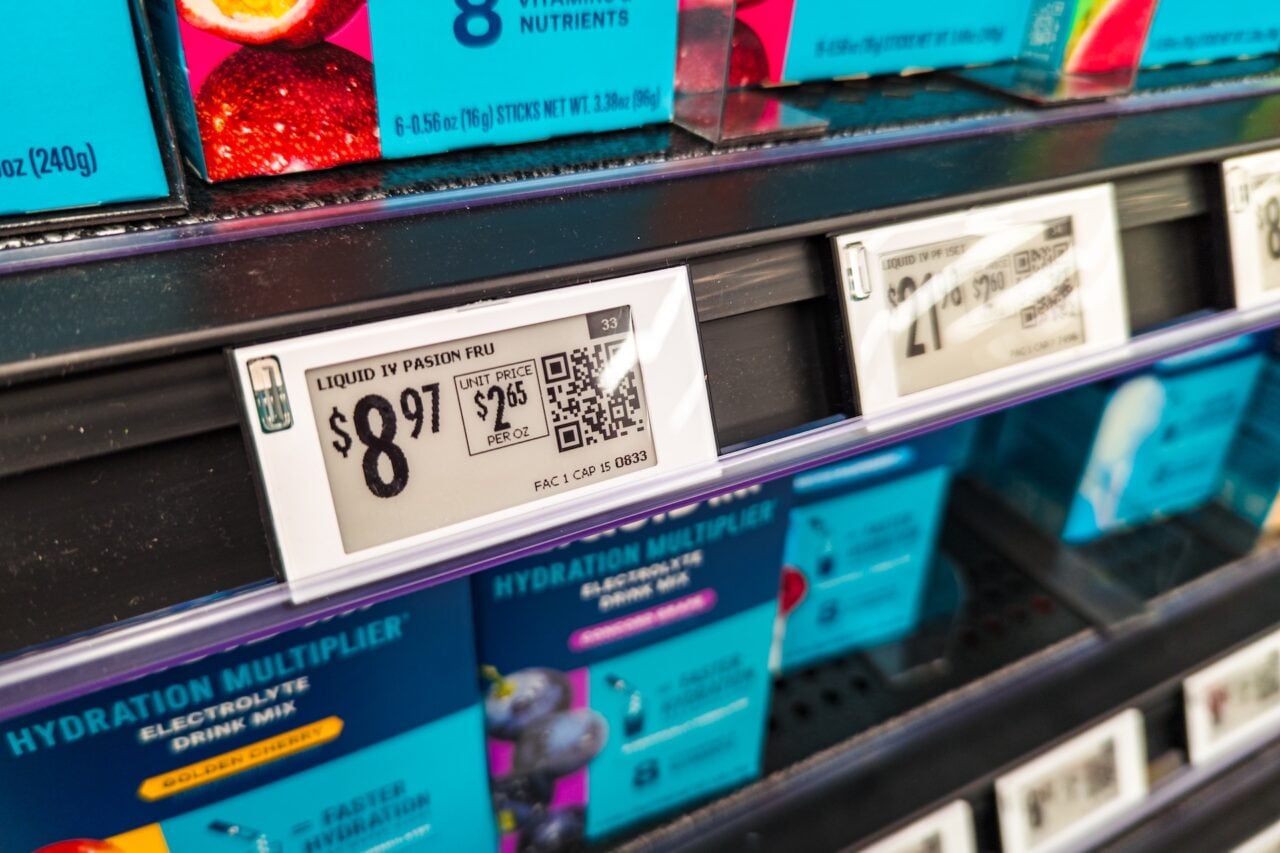
The bill also bans electronic shelf labels (ESLs) for at least one year, something consumers often fear can lead to fast-moving price changes in stores from a central location. Walmart has been rolling out ESLs nationwide and expects to install them in all North American stores by the end of the year. Every Walmart in New Jersey already has ESLs. The company denies that the technology will be used to centralize price changes in ways that harm consumers.
The United Food and Commercial Workers (UFCW) International Union, which has campaigned against surveillance pricing and electronic shelf labels at least in part because ESLs require the hiring of fewer workers, released a statement that celebrated the New Jersey law, stating, “We look forward to Governor Sherrill signing this bill into law.”
“With costs continuing to rise, the last thing consumers need is price gouging at the grocery store. This legislation will protect families across New Jersey from having their personal data used against them to squeeze every cent they have. Our state has taken a stand and made history with this legislation,” the statement reads.
Surveillance pricing, sometimes called personalized pricing, has become a surprisingly bipartisan issue, with both Democrats and Republicans alike responding to concerns over the rising price of food nationally. Inflation is rising faster than wages, putting the squeeze on working-class and middle-class families just trying to get by. In May, wages rose just 3.7% while inflation was 4.2%.
The legislation in New Jersey was sponsored by state senators Britnee Timberlake, a Republican, and Vincent Polistina, a Democrat, according to NorthJersey.com. The New Jersey Senate passed the law 22-14 while the Assembly passed it 51-20, according to Politico.
Opposition to bills that are trying to regulate AI-based changes to prices can also be bipartisan. Colorado Gov. Jared Polis, a Democrat, vetoed a surveillance pricing ban last month that was introduced by Democrats. Polis wrote a letter explaining the veto, where he said he could “appreciate the intention” of the bill but worried that it would also stop retailers from lowering prices with things like loyalty programs, not just jacking them up.
“Instead of specifically defining and targeting unethical conduct and practices, the bill takes a broader approach to capture any technology that incidentally influences a price or wage amount,” wrote Polis. “Because of the broad sweep, the bill would punish differentially lower prices, not just higher prices.”
Maryland became the first state to ban surveillance pricing at grocery stores in April, but experts warned at the time that it contained loopholes that would make it hard to enforce. Connecticut passed similar legislation in June, becoming the second state in the nation with such a ban. New York has a law that requires consumers to be notified when a price has been set with an algorithm, but it doesn’t have a ban.
New York’s 2025 notification law did, however, help expose the Washington Post’s surveillance pricing for newspaper subscriptions. The paper, owned by Amazon founder Jeff Bezos, was sued last month in Washington, D.C., for surveillance pricing under an existing law that prohibits unfair and deceptive prices. That suit is seeking class action status.
Last month, New York passed an anti-surveillance pricing law called the One Fair Price Act that’s similar to New Jersey’s bill, but it hasn’t been signed by Gov. Kathy Hochul, who has until the end of the year to do so. It’s unclear if Hochul will sign New York’s legislation, but she proudly signed the notification bill.
A large majority of Americans, 68%, say they worry about surveillance pricing increasing the cost of goods, according to recent polling. Roughly 66% of Americans in the same survey say they’re worried about the cost of groceries.