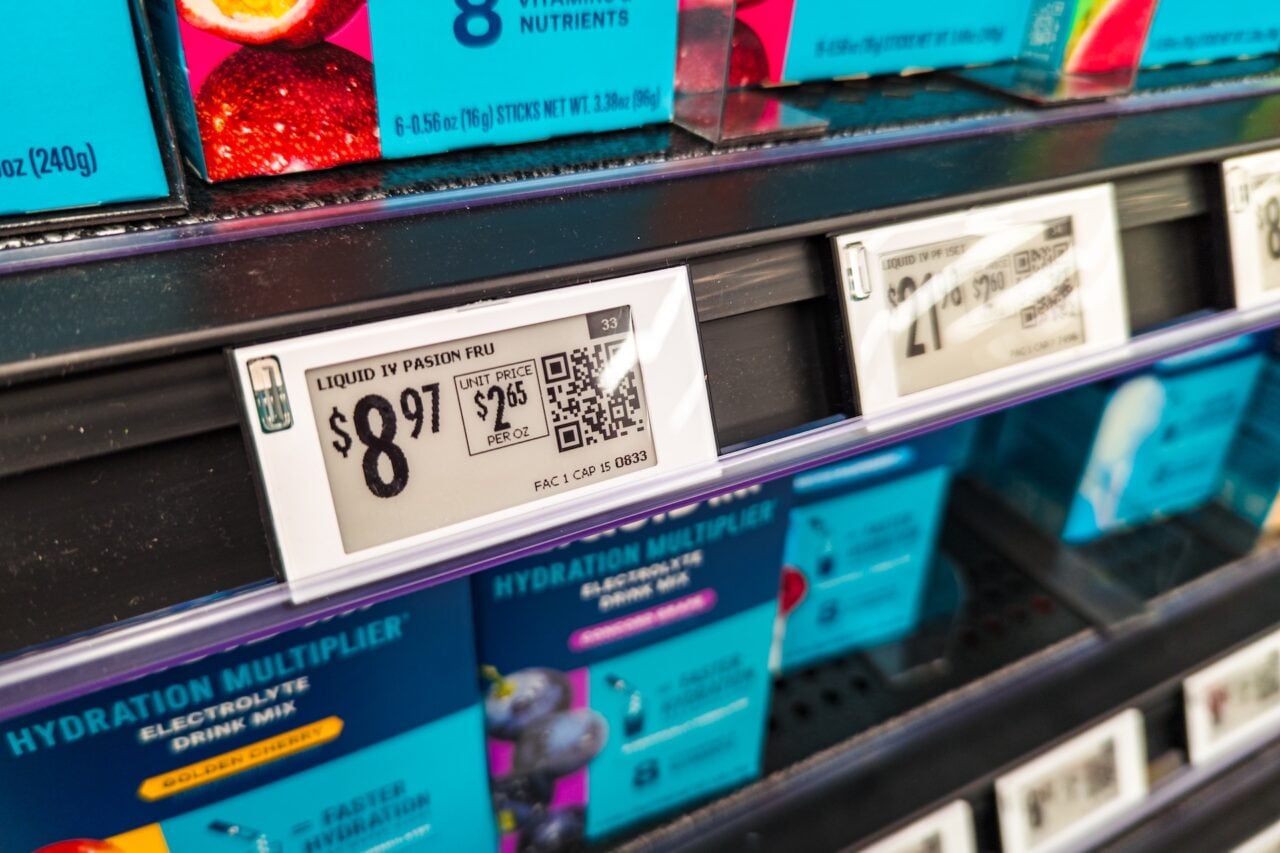
This month, Maryland became the first state in the country to pass a bill placing restrictions on surveillance pricing, the practice of setting a customized price for a consumer based on data collected about that person. The bill, which still needs to be signed by Maryland’s governor to take effect later this year, is being celebrated as a step in the right direction, as at least a dozen other states consider similar legislation.
The Maryland bill, known as the Protection From Predatory Pricing Act, will ban food retailers like grocery stores and third-party food delivery services from using the personal data they collect to set a price for consumer goods or services.
But the bill isn’t perfect, according to George Slover, competition policy counsel for the Center for Democracy and Technology. Slover testified before the Maryland Senate Finance Committee in February as the legislature was considering the bill, and he thinks legislators missed some things in the effort to better protect consumers.
“On the one hand, when you read the first part of [the bill], it does prohibit the kind of surveillance pricing, or what we call bespoke pricing, albeit in a very narrow sector of the economy,” Slover told Gizmodo.
That narrow sector is food retailers, of course, leaving other businesses, whether it’s clothing stores, airlines, or anything else, free to use surveillance pricing. Slover prefers the term bespoke pricing, though terms like surveillance pricing, dynamic pricing, or personalized pricing are more common as the national lexicon expands to talk about these tactics.
Dynamic pricing involves retailers changing prices based on broad criteria like the time of day or the weather. Think about a store slightly raising the price of cold water as the temperature outside increases, and there’s theoretically more demand. Surveillance pricing can be thought of as a cousin of dynamic pricing, focusing more on tailoring the price for a given consumer based on factors such as demographics, income, or browsing history.
“The exceptions in the bill aren’t carefully written,” Slover told Gizmodo. “So they are going to expose loopholes that can be taken advantage of to get around the intent of the law. Or at least the intent of the bill that we have been proposing.”
The bill exempts loyalty programs, which don’t have to be publicized widely and don’t have to be uniform. And it exempts subscription services. Slover believes that it’s fine to make exemptions, but he says they’re written so broadly in the new law that there’s no way to ensure they’re administered fairly.
“Those are the kind of exceptions that belong in a bill as long as they’re clearly written,” said Slover, but he worries they’re not clear.
Slover is also concerned that part of the bill exempts anything where a customer consents to sharing their data in exchange for getting a new price, even if it’s higher. He believes that part is written too “openly” and also allows retailers to take advantage of vague wording.
“Another problem is that there’s this 45-day grace period,” said Slover, meaning that any grocery store or food delivery service can’t be held accountable for 45 days after a given violation of the law. The law says the store can “cure” the violation, but Slover warns, “it’s not clear what curing it means.”
The law also only allows the Maryland Attorney General to bring lawsuits to enforce it. “We wanted to see a private right of action. The way it’s set up now, the Attorney General has to be the enforcer,” said Slover.
“The Attorney General has a lot of responsibilities; putting this solely on the Attorney General to bring the cases, particularly with that 45-day grace period, is going to be an administrative nightmare,” Slover told Gizmodo. “We just wish there would have been a little bit more attention to detail.”
Slover isn’t the only one worried about loopholes. Consumer Reports released a statement last week saying that Maryland’s law wasn’t good enough.
“While it’s encouraging to see the Maryland legislature take up this issue, this bill has loopholes that will limit its real-world impact,” Grace Gedye, senior policy analyst at Consumer Reports, said in a statement. “We urge other state legislatures considering personalized pricing legislation to build in stronger consumer protections and avoid loopholes that weakened this bill.”
Maryland Gov. Wes Moore still needs to sign the Protection From Predatory Pricing Act for it to become law, but he was a vocal supporter of the idea back in January.
“Marylanders deserve to know that the price they see on the shelf is the price they will pay at the register,” Gov. Moore said in a statement published online.
“Our Administration is laser-focused on protecting Marylanders from skyrocketing costs,” continued Moore. “At a time when Marylanders are already stretched by the rising cost of groceries, housing, and everyday necessities, we must ensure that new technologies are not used to drive up the bill for working families.”
Whatever particular flavor of variable pricing you want to examine, it’s all getting much easier to accomplish thanks to artificial intelligence, which can make price changes faster, even without direct human intervention.
There are at least a dozen other states considering bans on surveillance pricing at the moment, with bills also being considered in the U.S. House and Senate. Federal legislation is unlikely to go anywhere with Democrats in the minority. But that could change after the midterm elections in November.
And while Maryland was the first to take action, it will be interesting to see whether other states pass laws to confront the rise of surveillance pricing, as retailers collect enormous amounts of data on us and charge wildly different prices for the same goods.