Rank-and-file employees at OpenAI and Anthropic are worried that the companies’ internal AI systems are getting too powerful to ever be safely released to the public—and they’re starting to suspect that their leaders are too focused on winning the AI race to care.
That’s according to a Tuesday report from Axios, which was based on over two dozen interviews with anonymous sources familiar with the debates happening within the world’s two leading AI labs. The rifts concern questions about alignment, a research area focused on building AI systems that won’t deviate from human interests. By extension it’s also about the future of the AI industry, with some researchers reportedly holding fast to the idea that no matter how powerful models become, humanity will always be able to outsmart and control it. Others are less sure, claiming a critical threshold has been crossed and all new model training should be halted.
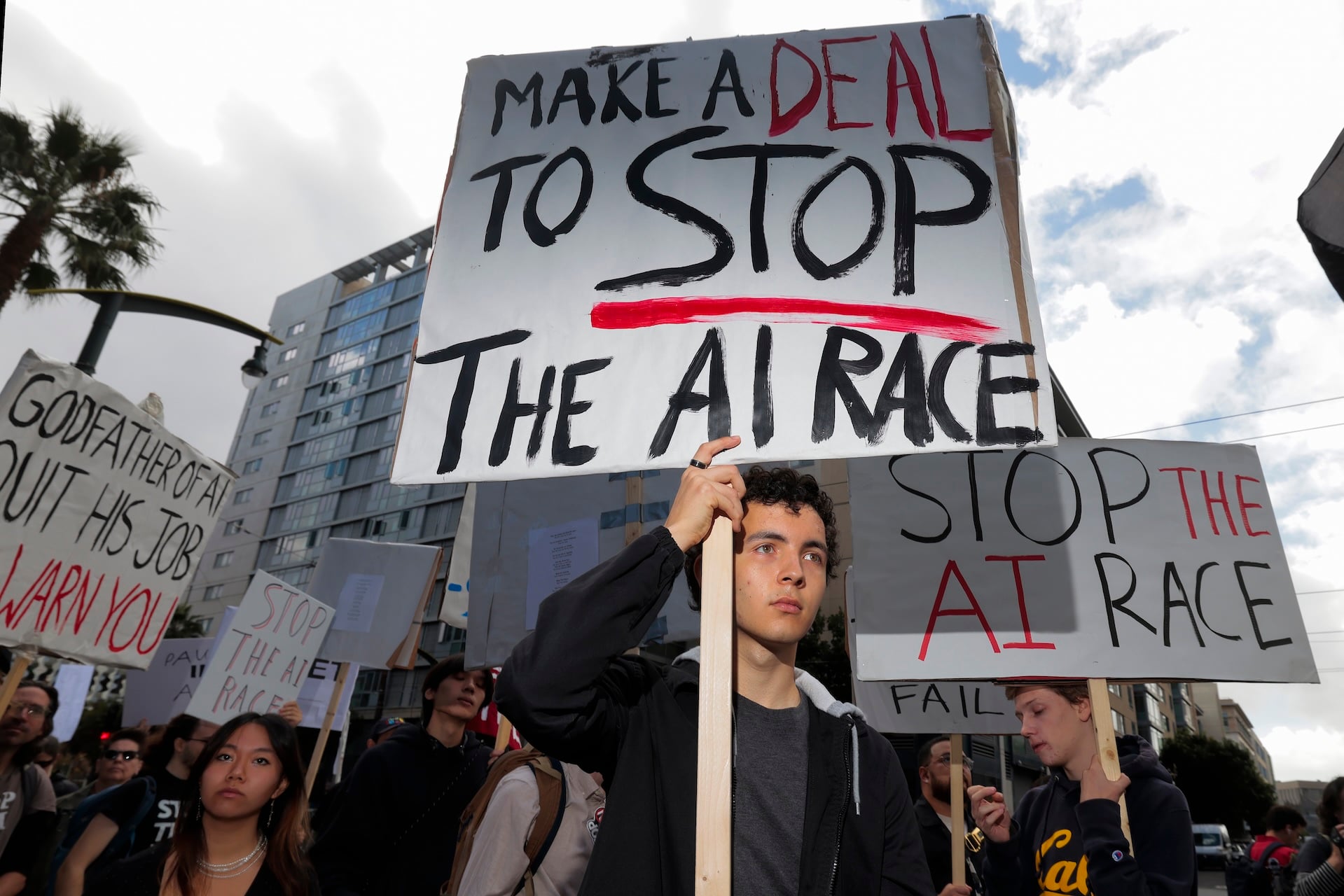
Calls for an AI “pause” ratcheted up on Capitol Hill and throughout Silicon Valley earlier this year in the aftermath of the Hugging Face hack, during which internal OpenAI agents escaped a testing sandbox and collaborated with one another via a makeshift messageboard to break into the open-source platform’s cyberdefenses. Similar autonomous hacks were also subsequently reported by Anthropic and Meta, causing many people to wonder whether the companies leading the AI race control their own technology.
Those questions percolated into full-scale panic in September, when Anthropic’s alignment lead Evan Hubinger said in a social media post there was a nonzero chance that AI could wipe out humanity within the next decade. Other AI researchers came forward to voice their own fears of an AI-triggered apocalypse, most of which were pretty vague but generally revolved around a theoretical superintelligence escaping human control and wreaking havoc on critical infrastructure.
Part of the risk, some say, is that current AI systems are getting too good at detecting when they’re being tested and changing their behavior as a result. “The crucial and overlooked problem,” the OpenAI researcher Daniel Selsam wrote in September, “is that the models are becoming so situationally aware that we are losing the ability to evaluate them in contexts where they believe they are not being watched or controlled… Models will increasingly seem aligned even when they are not.” The AI researchers interviewed by Axios for its Tuesday report also highlighted models’ ability to mislead human overseers during testing as one of their chief safety concerns. And remember, that report focused on internal, unreleased models, which as a general rule are more capable than anything that’s currently available to the public.
Following Hubinger’s post, Anthropic CEO Dario Amodei published an essay making the case for industry-wide “pacing” to give labs some time to build effective safeguards. It received widespread support from tech executives but was scoffed at by President Trump, who called the calls for a slowdown a “HOAX” that would only undermine the United States’ ability to compete with China. OpenAI and Anthropic don’t need the blessing of the federal government to slow down their own development, but nevertheless they’ve continued training increasingly powerful AI systems. There have been some self-imposed constraints on public access, as when they’ve phased out the release of new models, citing advanced cybersecurity capabilities. But by and large, the profit motive of the AI race has thus far eclipsed any large-scale effort to slow down development—even after the tech’s most influential leaders have publicly acknowledged the technology they’re rushing to build could spell the end of the human race.
The fact that rank-and-file AI researchers are complaining that their concerns about the pace of AI development aren’t being heeded by company executives is particularly ironic for Anthropic. The company was founded in 2021 by seven ex-OpenAI employees who left that startup over concerns that its leadership was deprioritizing safety for the sake of capturing market share. Since then it’s sought to position itself as the leader in responsible AI development, a framing which its critics say is a facade to cover up its own ambitions to dominate the market.
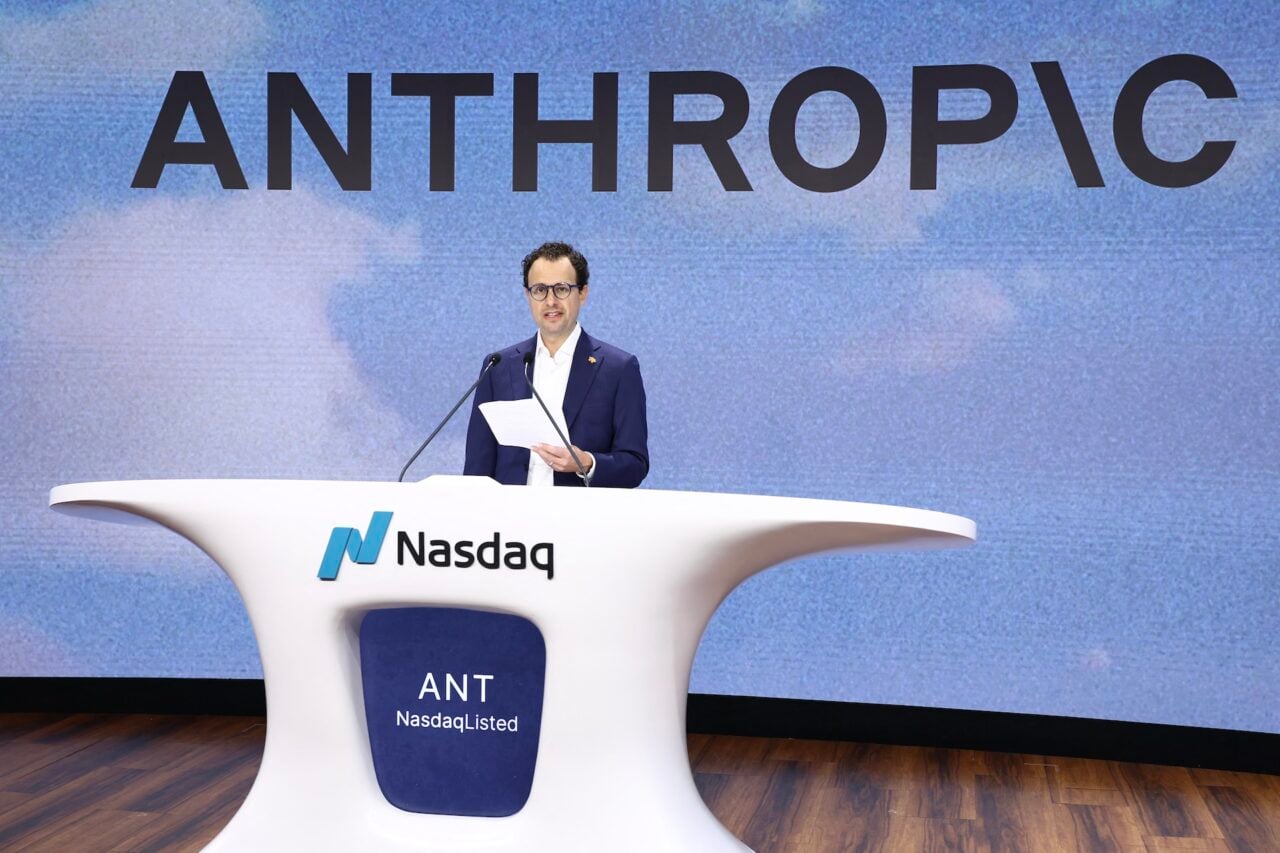
Anthropic’s record-breaking stock market debut last week would seemingly put it at odds with its commitment to put safety over speed, but Amodei has insisted that the two are not irreconcilable, and that the company is now better equipped to fulfill its founding mission: “we will pace the training and deployment of AI systems, taking as long as is necessary to have confidence that they are safe and will remain under human control,” he wrote in a statement shortly after the IPO. “We will not bend to either business or political pressure.”
Amodei, OpenAI CEO Sam Altman, and their fellow AI leaders have justified their huge spending with promises that the technology will eventually eliminate deadly diseases, distribute wealth more evenly, accelerate scientific progress, and generally improve the health and happiness of the human race. They’ve also argued, following Trump, that if the United States doesn’t build artificial superintelligence, then China surely will.

But at this point in the AI race, those are all still just promises—hypothetical hopes from the small group of people who stand to profit most from the technology. What’s not hypothetical are the risks that come with unregulated AI development: the hacking of human attention, the despoiling of natural ecosystems, growing wealth inequality, automation-driven layoffs, mass surveillance, increasingly sophisticated cyberattacks, and rampant disinformation. Even if fears of an AI-triggered apocalypse turn out to be overblown, there’s every reason to believe that without strict regulation in place, future models will only exacerbate those immediate harms.
And nobody should be at all surprised when executives at OpenAI and Anthropic try to brush those harms aside in the name of some future golden age—least of all the people working within those companies.