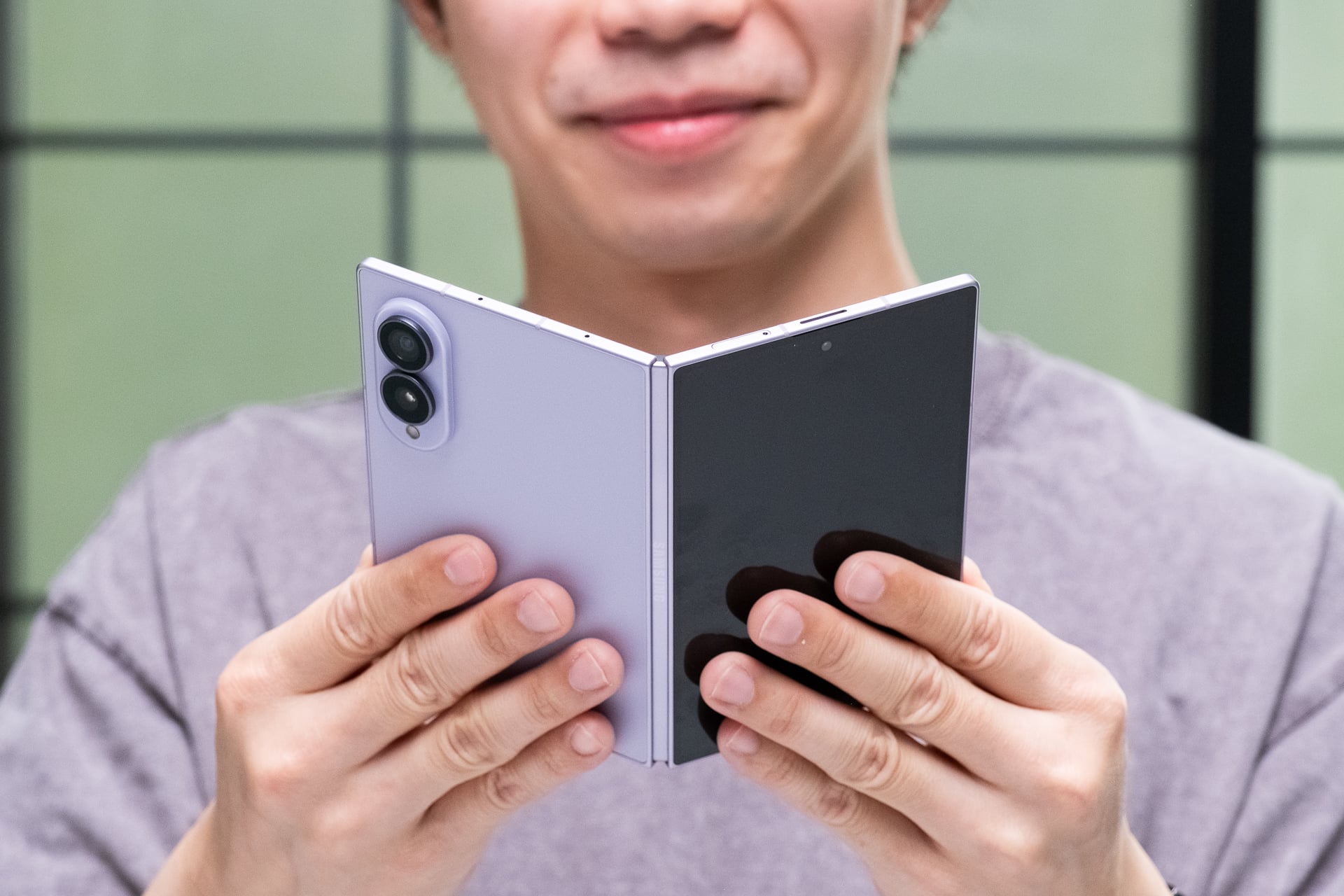
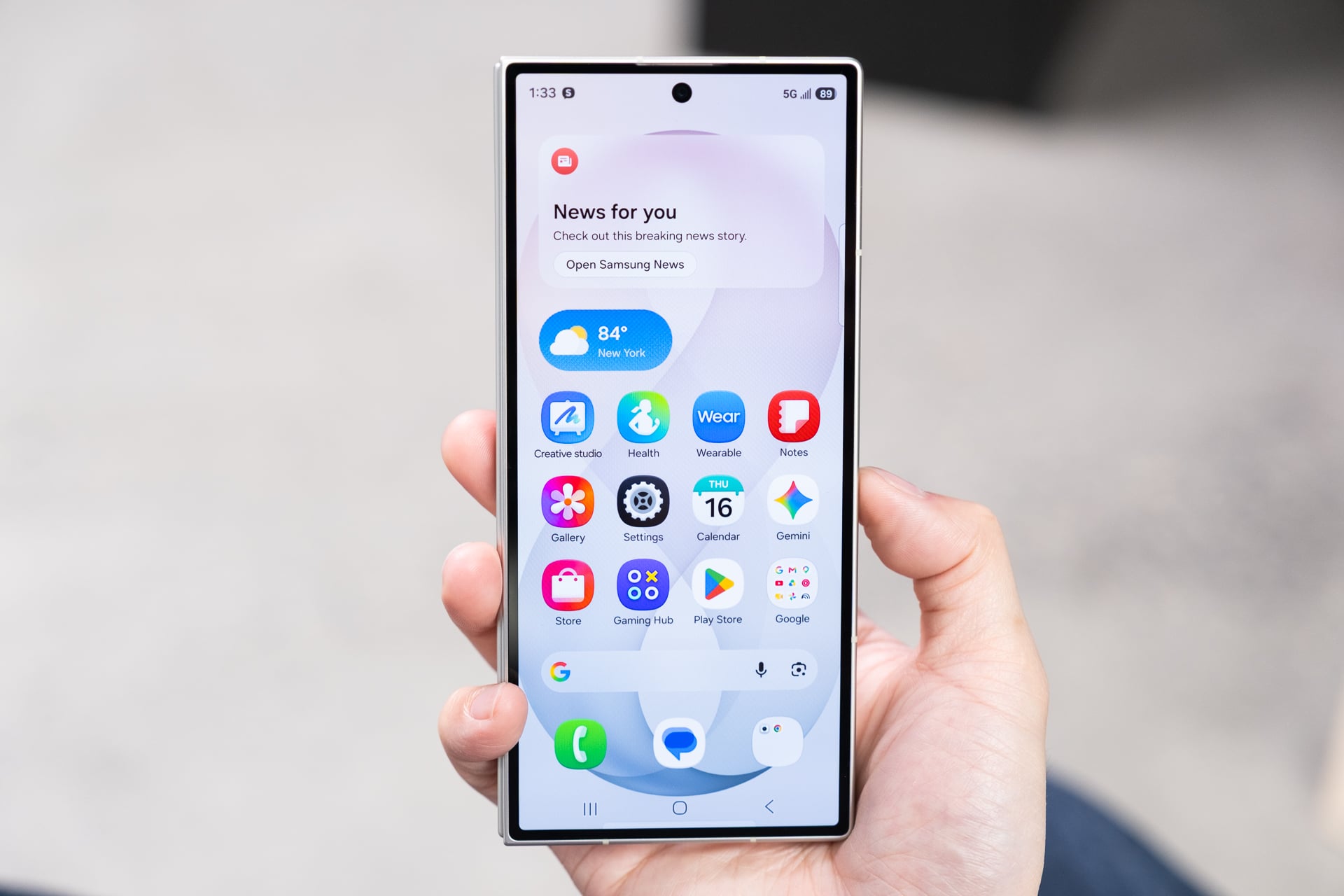
I had my doubts about whether a shorter and wider foldable phone would feel good in the hand and in my pocket. All my worries faded once I unfolded Samsung’s new Galaxy Z Fold 8.
At Samsung’s July Galaxy Unpacked event, the company announced the Z Fold 8 alongside the Z Fold 8 Ultra. There’s also a Galaxy Z Flip 8, which you can read all about here. This hands-on will focus on the Z Fold 8 because it feels so correct as a form factor. It’s also a glimpse of what’s to come for Apple’s first foldable iPhone, which is supposed to have nearly identical dimensions, if all of the leaks are to be believed.
Since Samsung’s original Galaxy Fold released in 2019, Samsung has steadily widened its book-style foldables so that they feel more like standard bar phones than a tall and skinny TV remote. The Z Fold 8 is the first time Samsung is switching up the aspect ratio so that the device is shorter and wider when closed, which also means it’s equally so when unfolded into a mini-tablet.
See Galaxy Z Fold 8 at Samsung
See Galaxy Z Fold 8 Ultra at Samsung
See Galaxy Z Fold 8 Ultra at Amazon
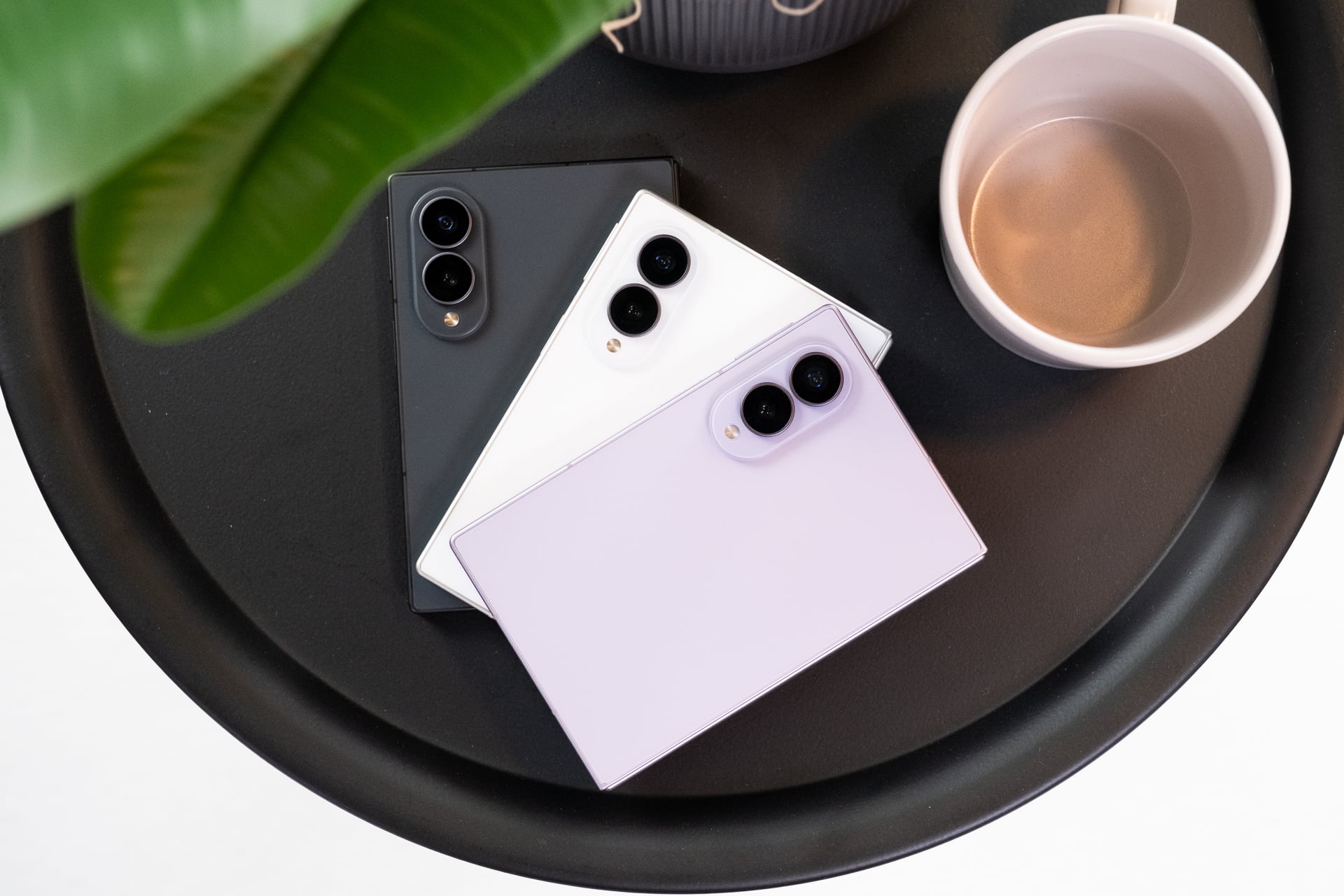
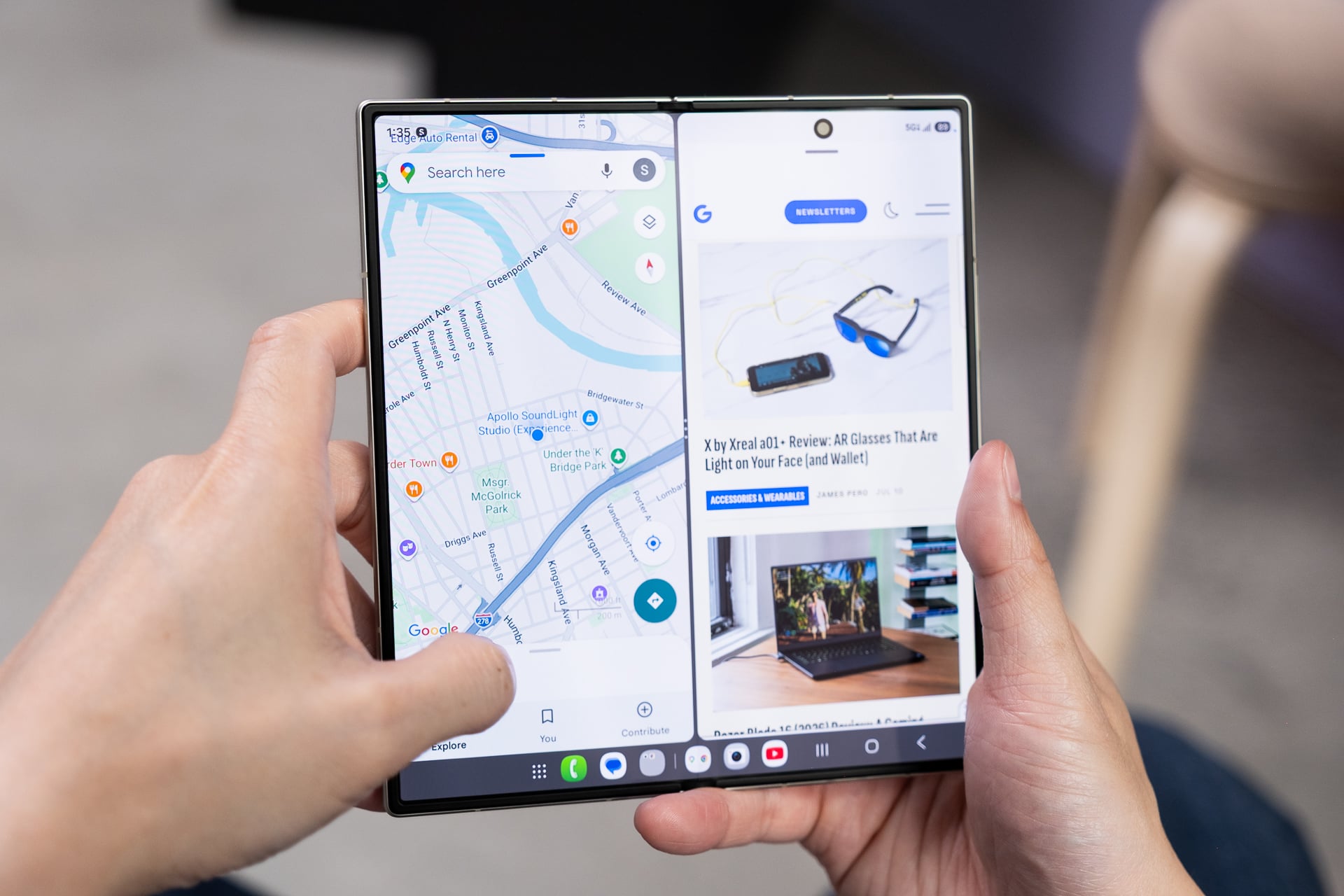
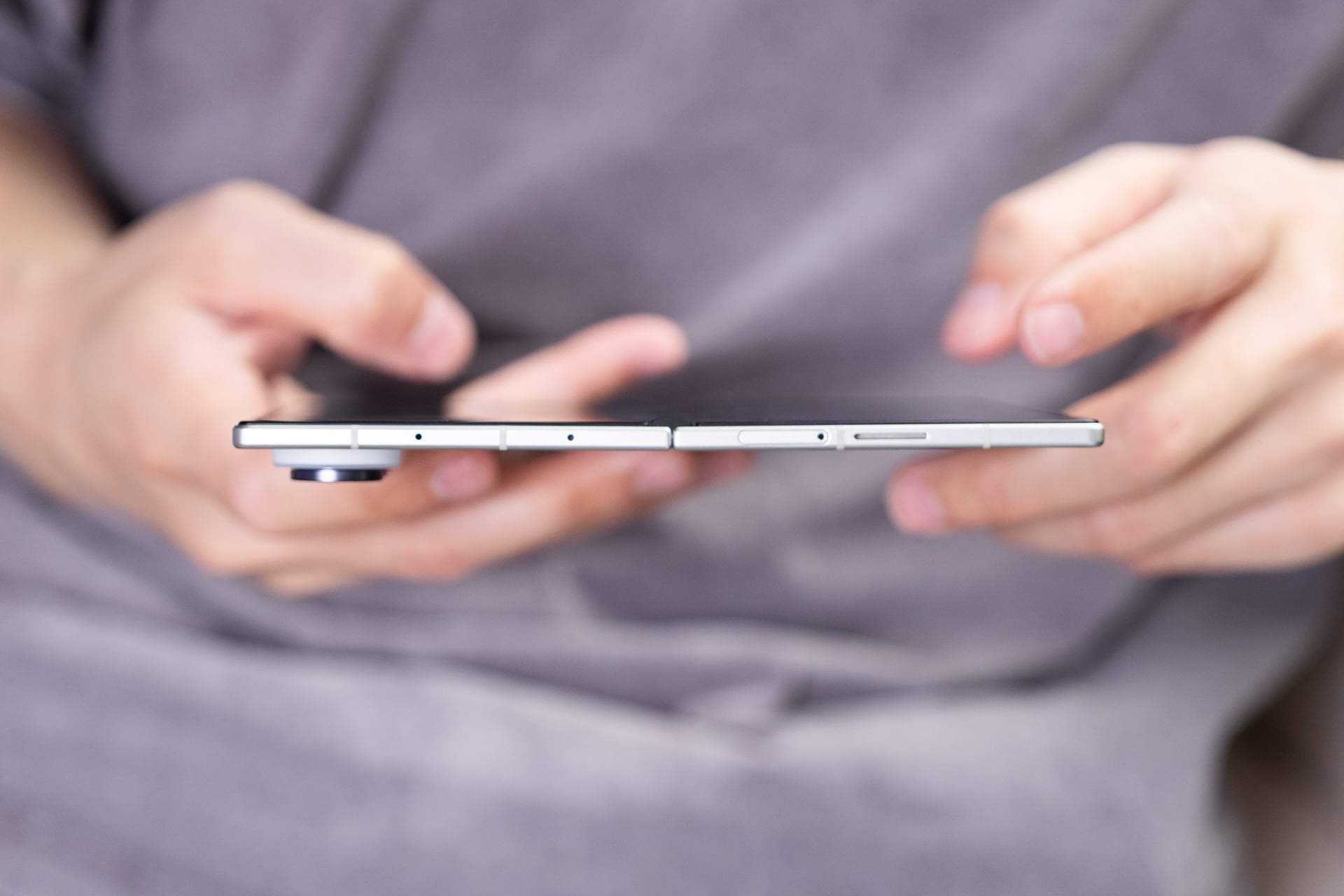
Closed up, the Z Fold 8 has a 5.5-inch AMOLED display with a 10:16 aspect ratio that measures 9.8mm thick. It’s a squat phone, but, boy, have I missed being able to reach from corner to corner with my thumb. I love that it’s so comfortable to use a single hand, and if your palm is large enough, you don’t need to use your pinky to support the bottom. Unfolded, the Z Fold 8 reveals a 7.6-inch AMOLED screen with a 4:3 aspect ratio, making it a landscape tablet. It’s crazy thin at 4.5mm, which is barely thicker than the 4.2mm Z Fold 7 unfolded.
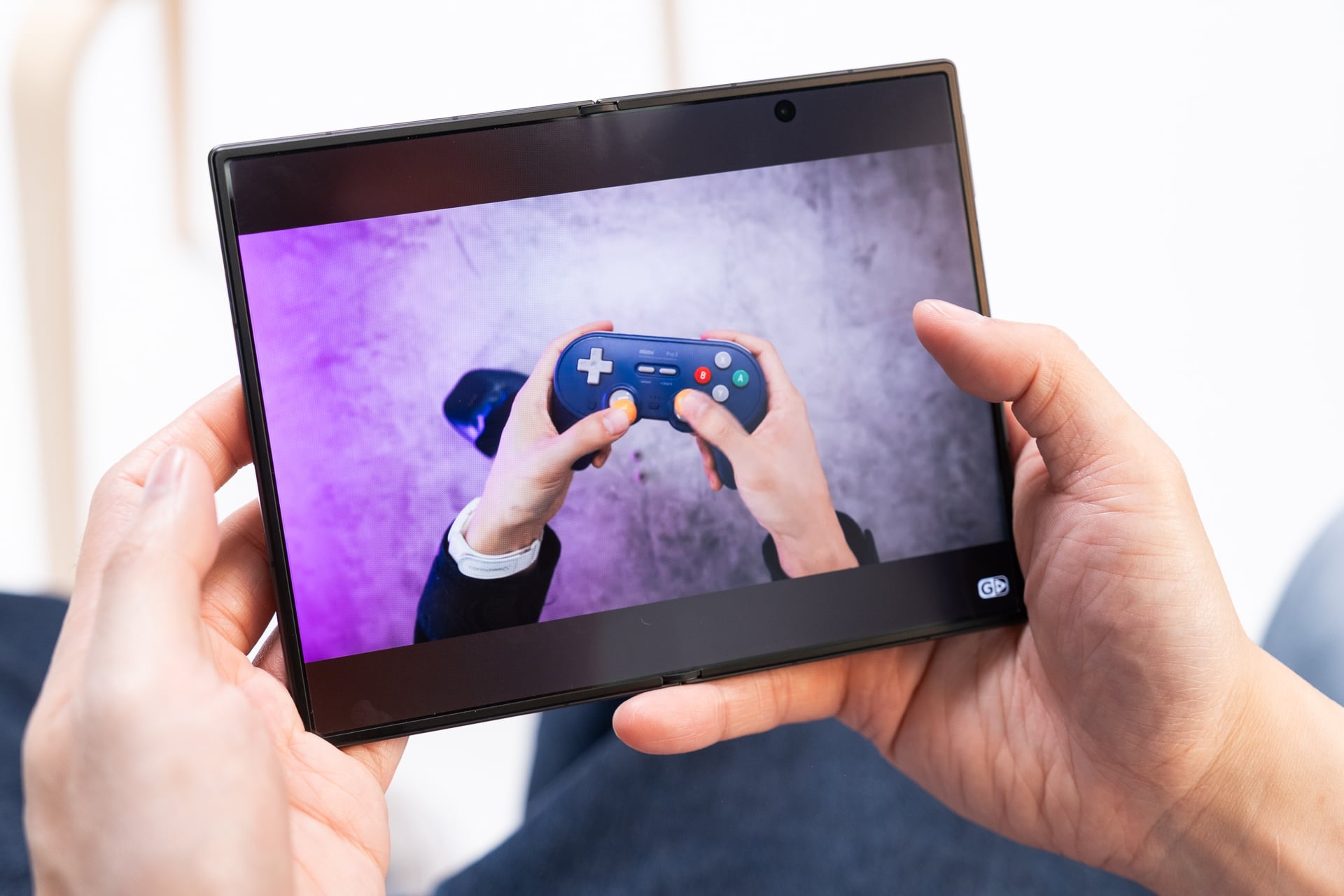
When watching videos that have aspect ratios of 16:9 or 16:10, you get less letterboxing (the black bars above and below a picture). If your content is natively 4:3, it displays in full screen with no letterboxing. It’s really great and gives you a larger picture (diagonally) than even on huge phones like the iPhone 17 Pro Max, Galaxy S26 Ultra, and Pixel 11 Pro XL. Oh, and both AMOLED screens have an anti-reflective coating that reduces reflections for better visibility.
That’s really where Samsung sees the Z Fold 8 fitting in—for people who want to mostly consume content on a more immersive screen. While there weren’t any for me to try out, I can already picture mobile games looking and playing really well on the Z Fold 8’s foldable display. There are more pixels for graphics and more room for on-screen controls.
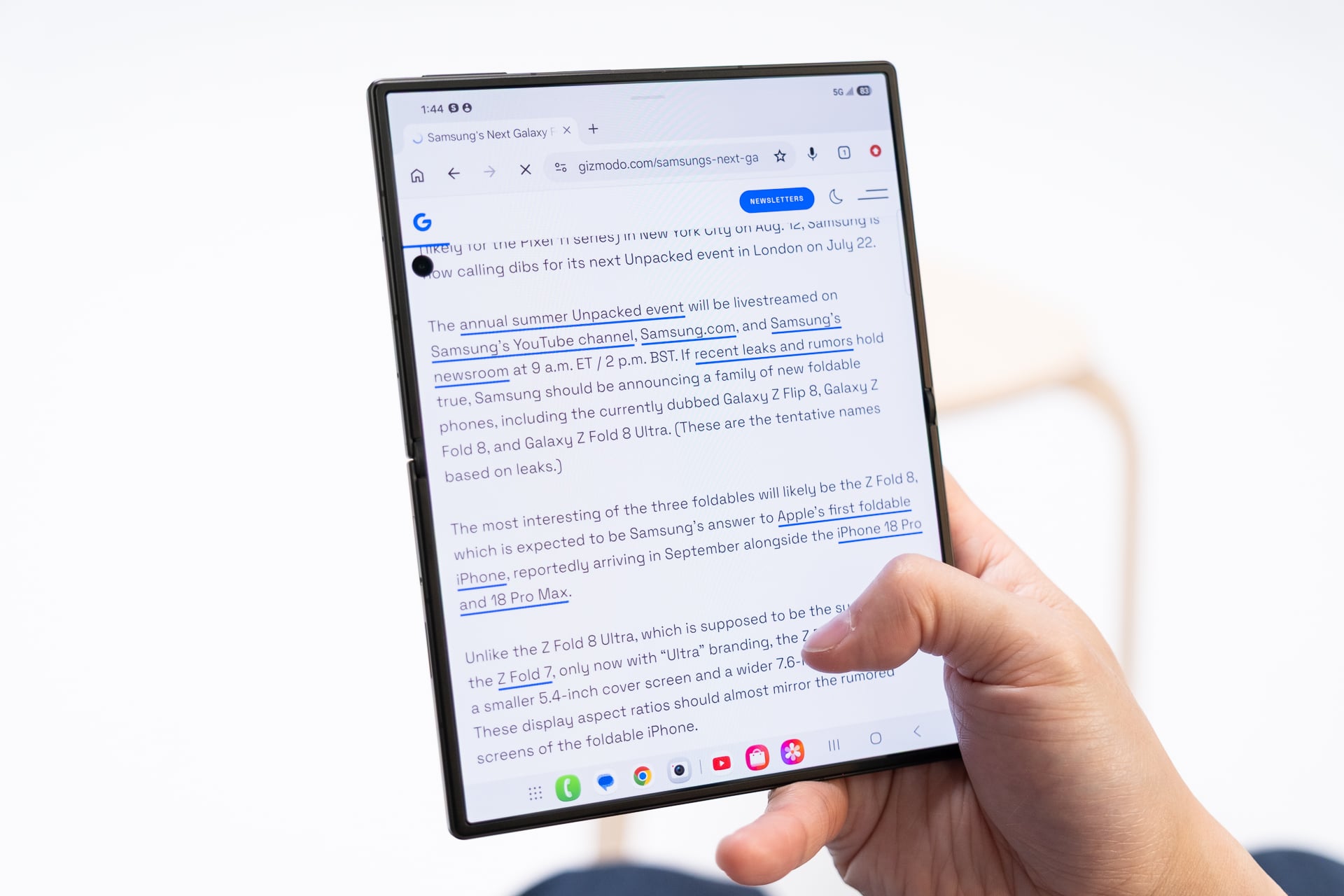
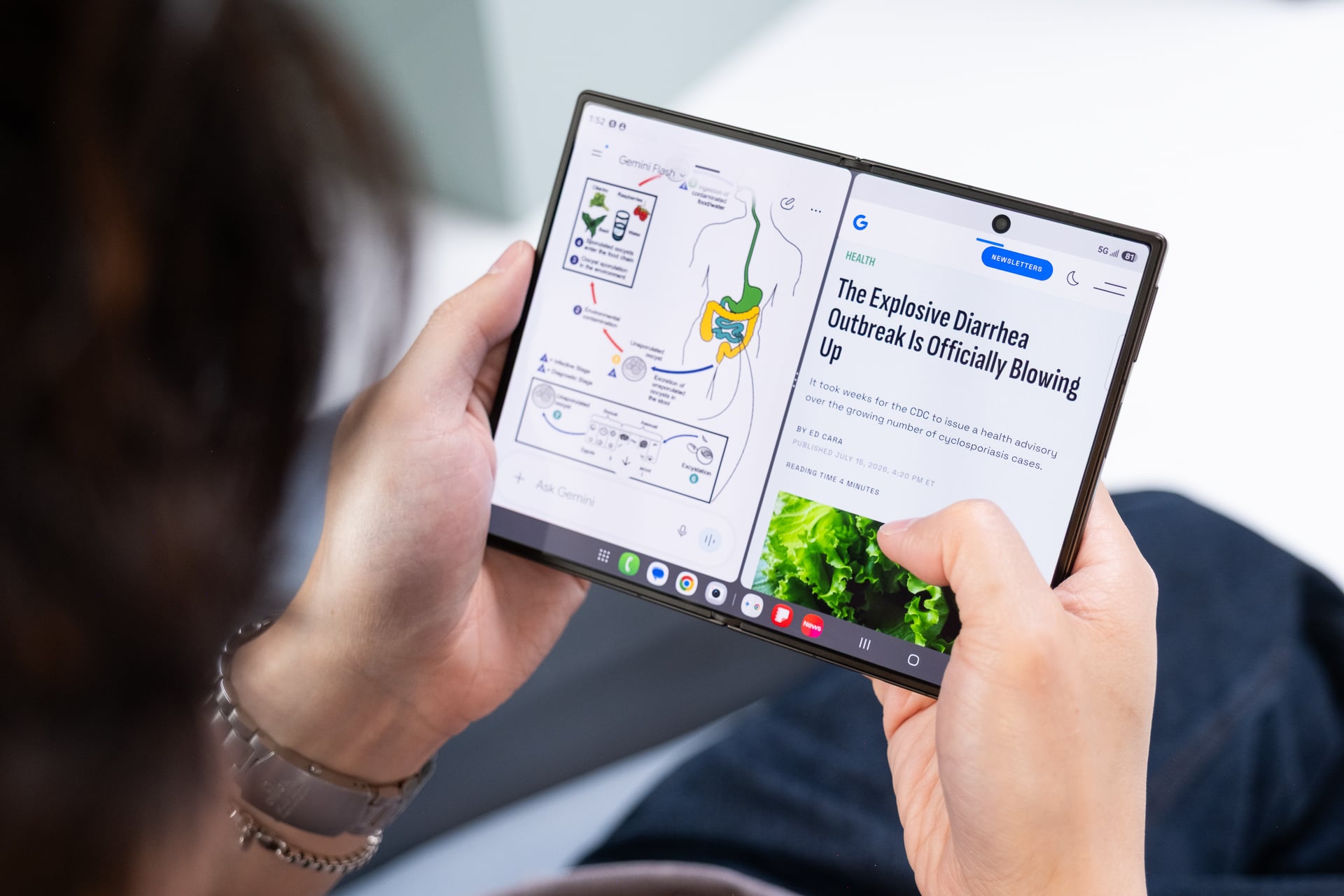
Other types of content really shine on the Z Fold 8, too. I could see larger areas in Google Maps without having to zoom in as much as on a regular slab phone. Reading articles feels more enjoyable in portrait orientation with less scrolling needed. Typing with both thumbs is more comfortable because each key is larger, allowing me to make fewer typos. Even editing photos and videos, especially with some of Samsung’s new editing tools like “Photo Assist,” which lets you describe the edit you want with text and generative AI will perform the action for you, and “My FanCam,” which uses AI to track a moving subject in a video and then allows you to crop it for a variety of aspect ratios for sharing, feels less cramped thanks to the larger screen.
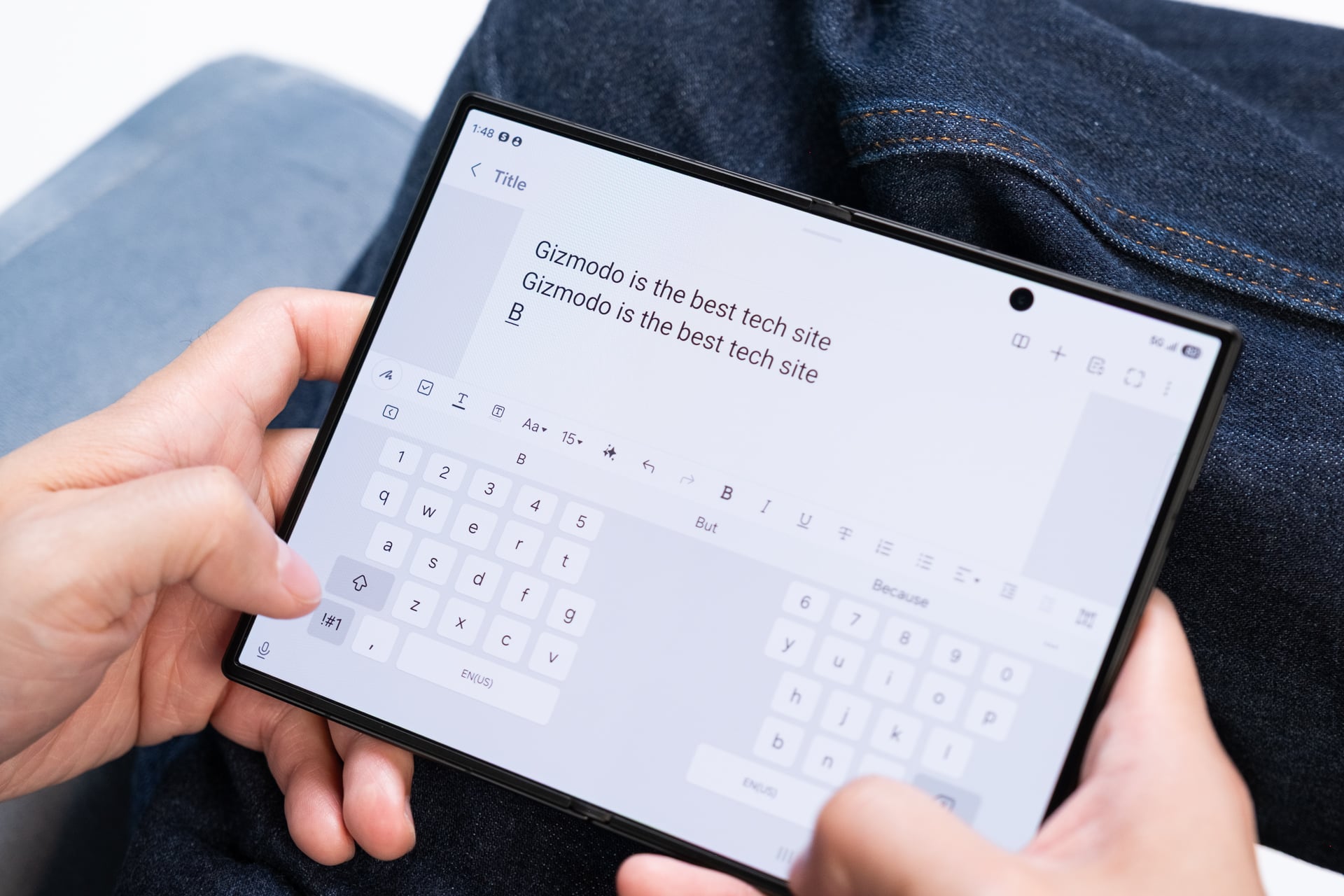
You can still open several apps at once like you could before on past Z Folds, but now they feel less awkward to manage because of the 4:3 aspect ratio.
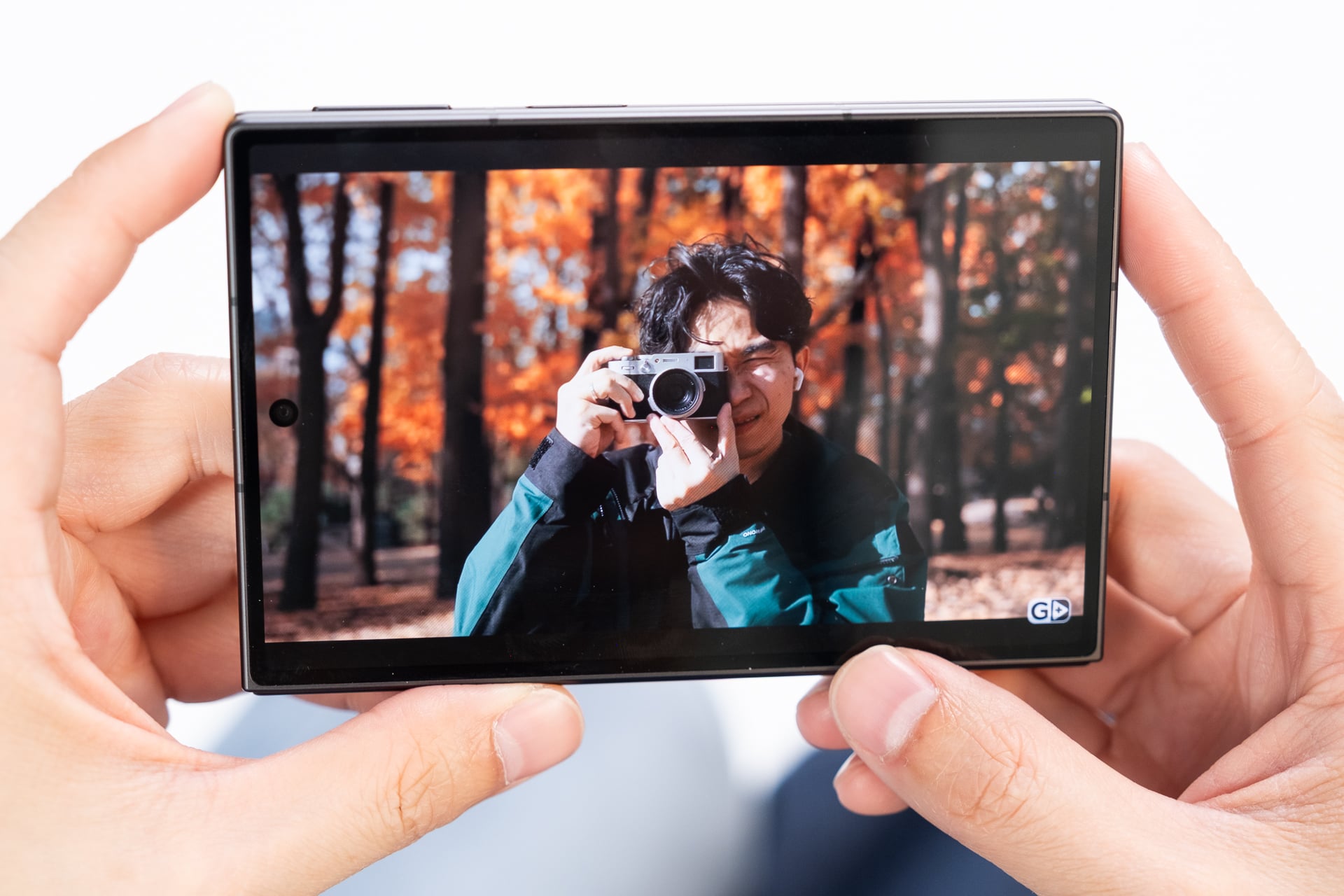
And because I’m sure you’re dying to know, the crease is nearly invisible. Samsung really worked its magic and greatly reduced the visibility of the crease on the Z Fold 8 thanks to its Flex Titanium technology, which adds a titanium-alloy plate underneath the screen. I’m very impressed that Samsung has seemingly solved what may have been the last remaining compromise of foldables. Time will tell if the crease on the Z Fold deepens with more folds, but I folded one demo unit 50 times, and I couldn’t see any visible bend in the middle. The metal component also strengthens the durability of the device’s hinge when it’s repeatedly folded and unfolded, according to Samsung. I can confirm the hinge feels sturdy, though there is one folding mode missing from the Z Fold 8 that’s still present on the Z Fold Ultra: Flex mode, which lets you angle the screen like a tiny laptop on a surface.
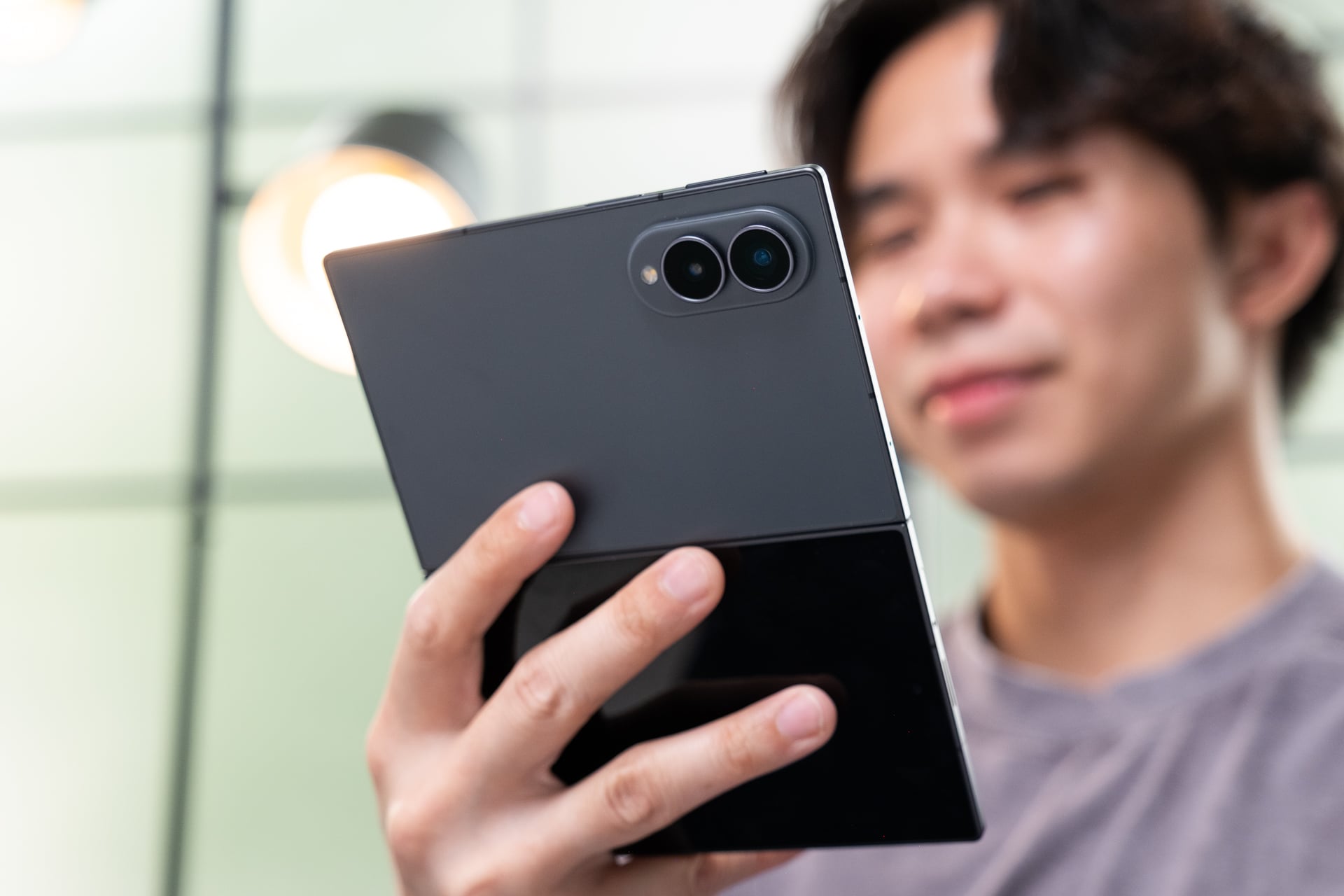
You may have noticed that I haven’t even rattled off tech specs. That’s because I barely thought about them while playing with the Z Fold 8. But specs do matter to many consumers, and, thankfully, Samsung delivers. Android runs fast and smooth with the Qualcomm Snapdragon 8 Elite Gen 5 for Galaxy chip. You can get 256GB or 512GB storage options with 12GB of RAM or a 1TB model with 16GB of RAM. The 4,800mAh battery is larger than the one in the Z Fold 7, but not nearly what you get in the Z Fold 8 Ultra. The device supports 45W fast wired charging and 20W fast wireless charging. Unfortunately, there’s still no built-in magnet, which means it’s not compatible with MagSafe and Qi2 magnetic chargers and accessories. Samsung says it didn’t want to make the Z Fold 8 thicker; it’ll happily sell you its own cases with a built-in magnetic ring, though. The cameras look pretty solid on paper, with 50-megapixel main and ultrawide shooters on the rear and 10-megapixel hole-punch cameras on the cover and inner screens.
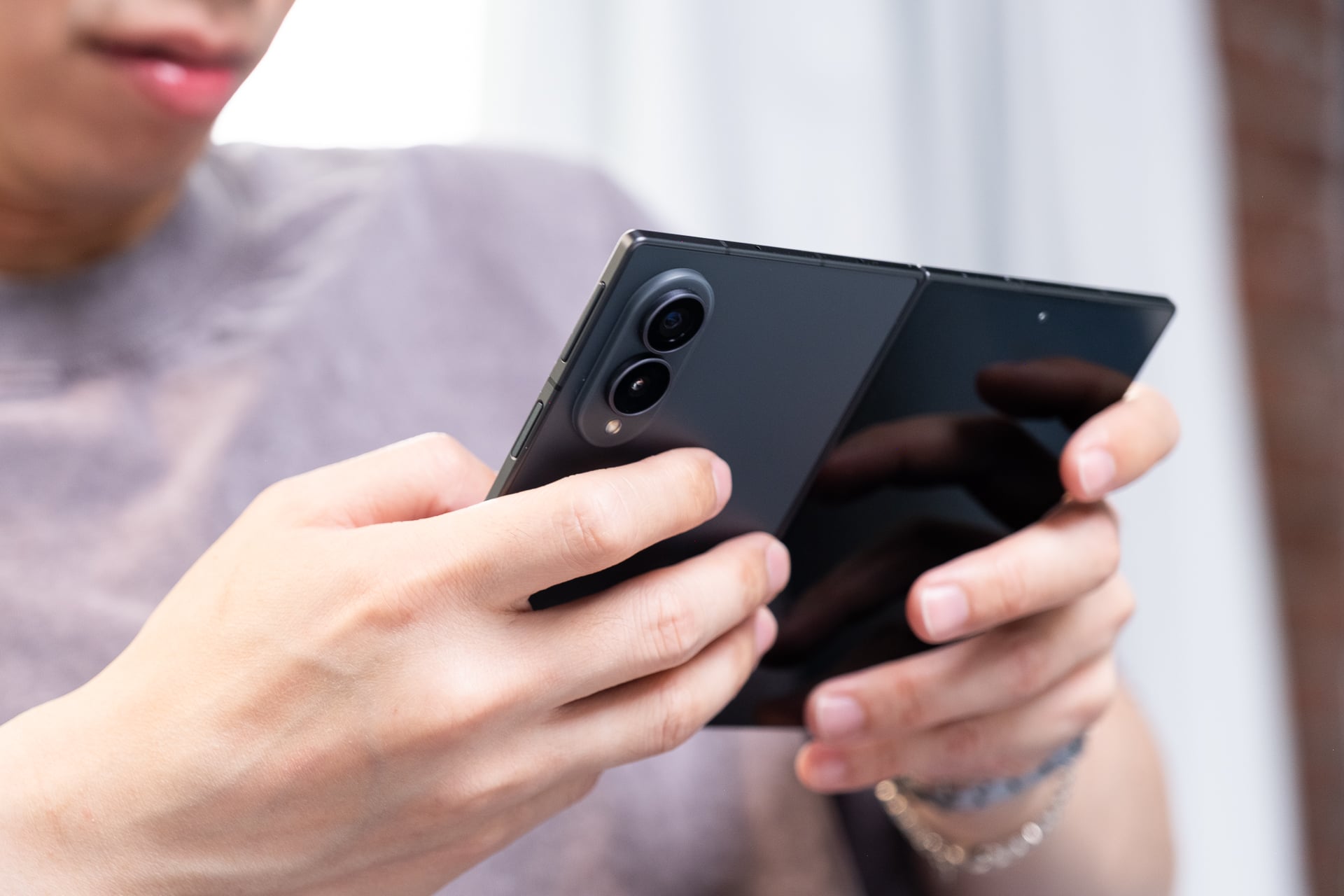
While I’m already smitten with the Z Fold 8 and the four colors it comes in (Cream, Lavender, Graphite, and Pistachio, which is a Samsung.com exclusive), the $1,899.99 price is by no means affordable for most people. Even spread out over monthly payments in a contract, it’s a lot of money to spend on a phone. Sadly, I don’t see the prices on these premium, book-style foldables coming down anytime soon. The original Galaxy Fold retailed for $1,980, and Samsung’s still asking for nearly $2,000 seven years later. I’m sure I’ll get roasted for this, but the current state of consumer electronics is so dire as a result of the ongoing RAMaggedon that we’re lucky that Samsung isn’t charging even more than $1,900.
Galaxy Z Fold 8 Ultra
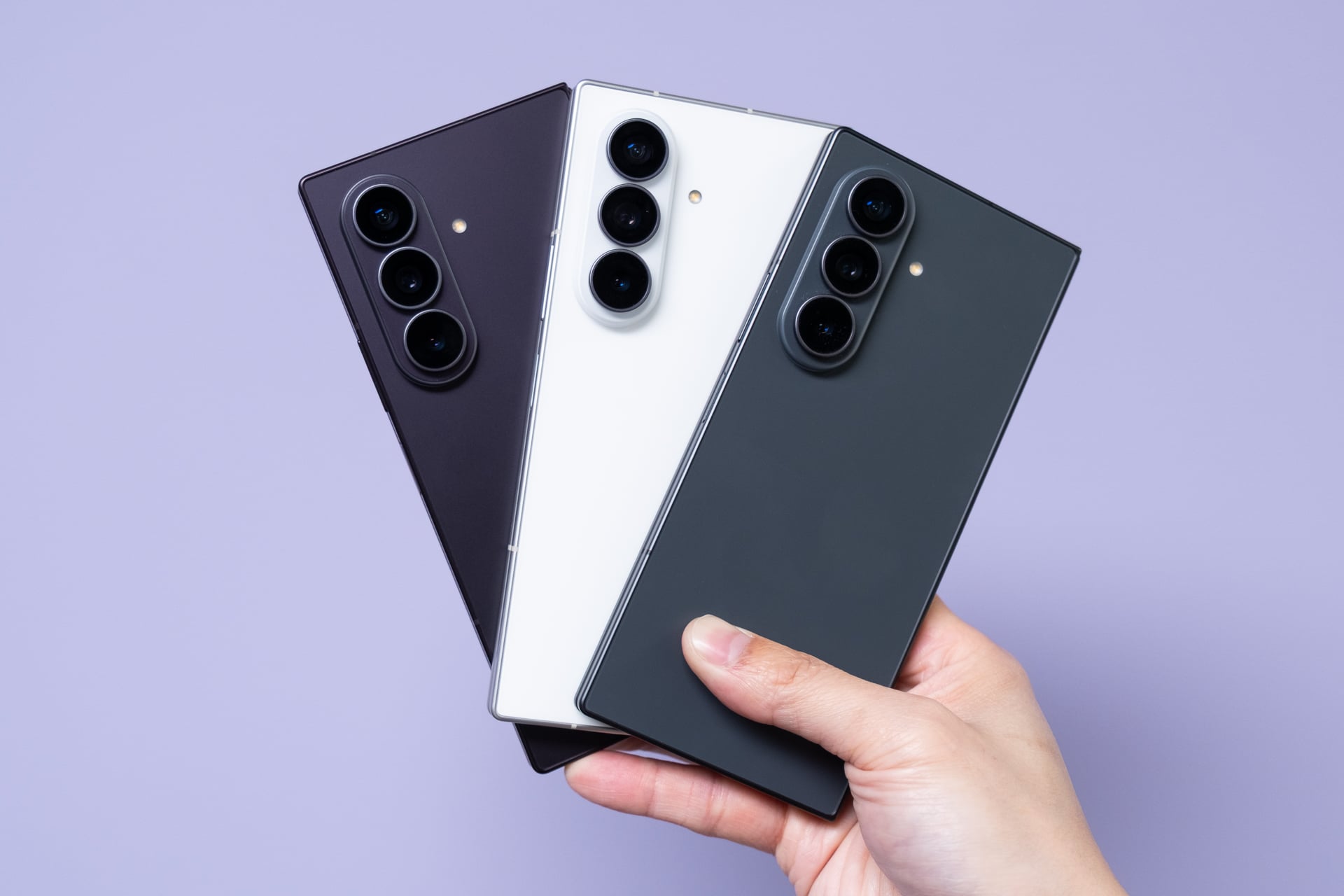
If the Z Fold 8’s size doesn’t appeal to you, Samsung’s also selling the Z Fold 8 Ultra. This is the real follow-up to the Z Fold 7, now with “Ultra” branding. Other than shaving off one millimeter in thickness, the Z Fold 8 Ultra footprint is exactly the same as its predecessor. I also immediately noticed that it’s a little heavier than the Z Fold 7 because of the addition of the Flex Titanium material. These small differences aside, Samsung is positioning the Z Fold 8 Ultra as the very best foldable for productivity with the best tech specs.
That’s why the Z Fold 8 Ultra upgrades the ultrawide camera to 50 megapixels from the 12 megapixels on the Z Fold 7. Combined with the improved 200-megapixel main shooter and 10-megapixel 3x telephoto, the Z Fold 8 has the more versatile camera system compared to the Z Fold 8.
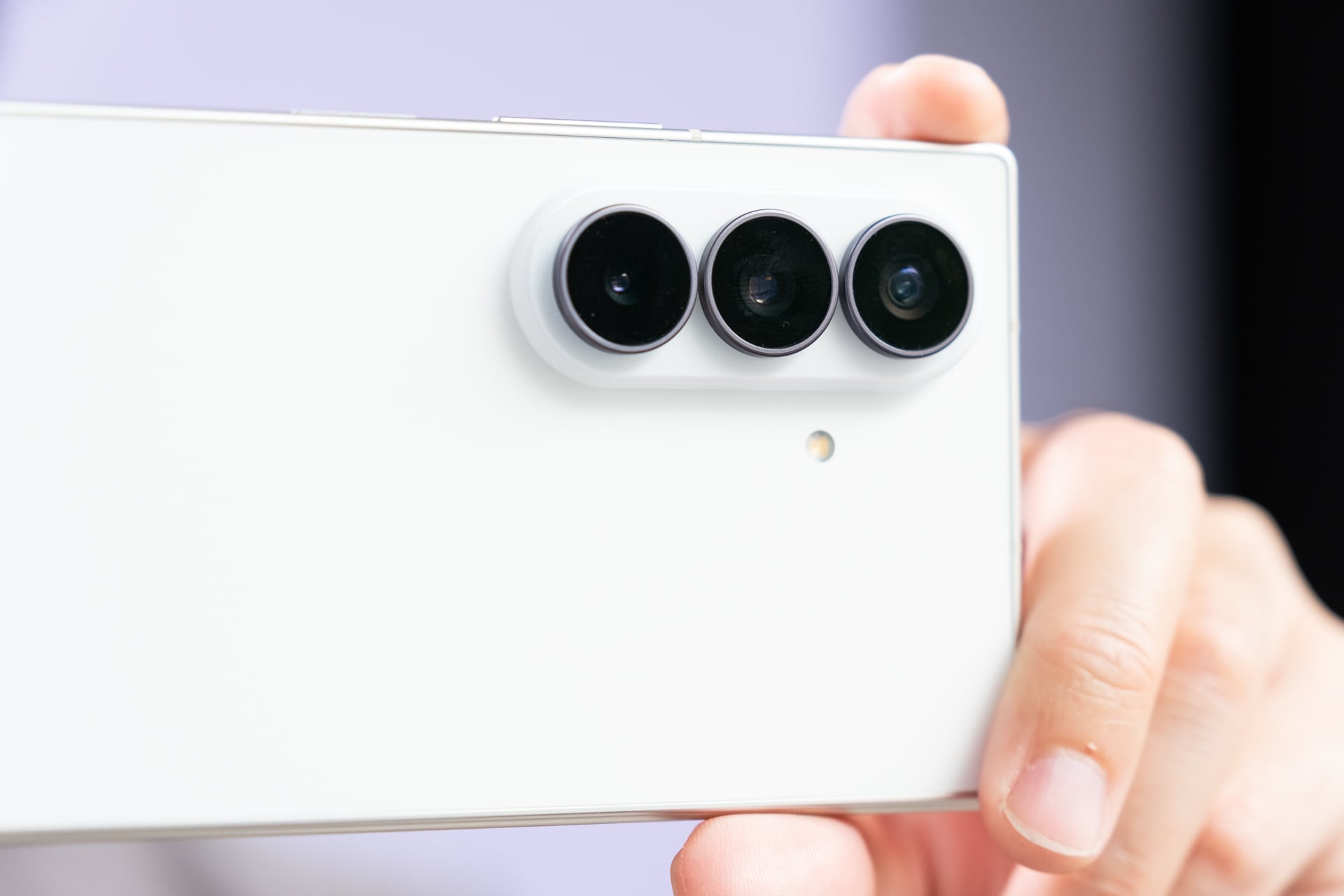
The Z Fold 8 Ultra also has more built-in video post-production support that the Z Fold 8 doesn’t, like Cine LUT, which offers four preset color grading styles, and editing in 8K resolution.
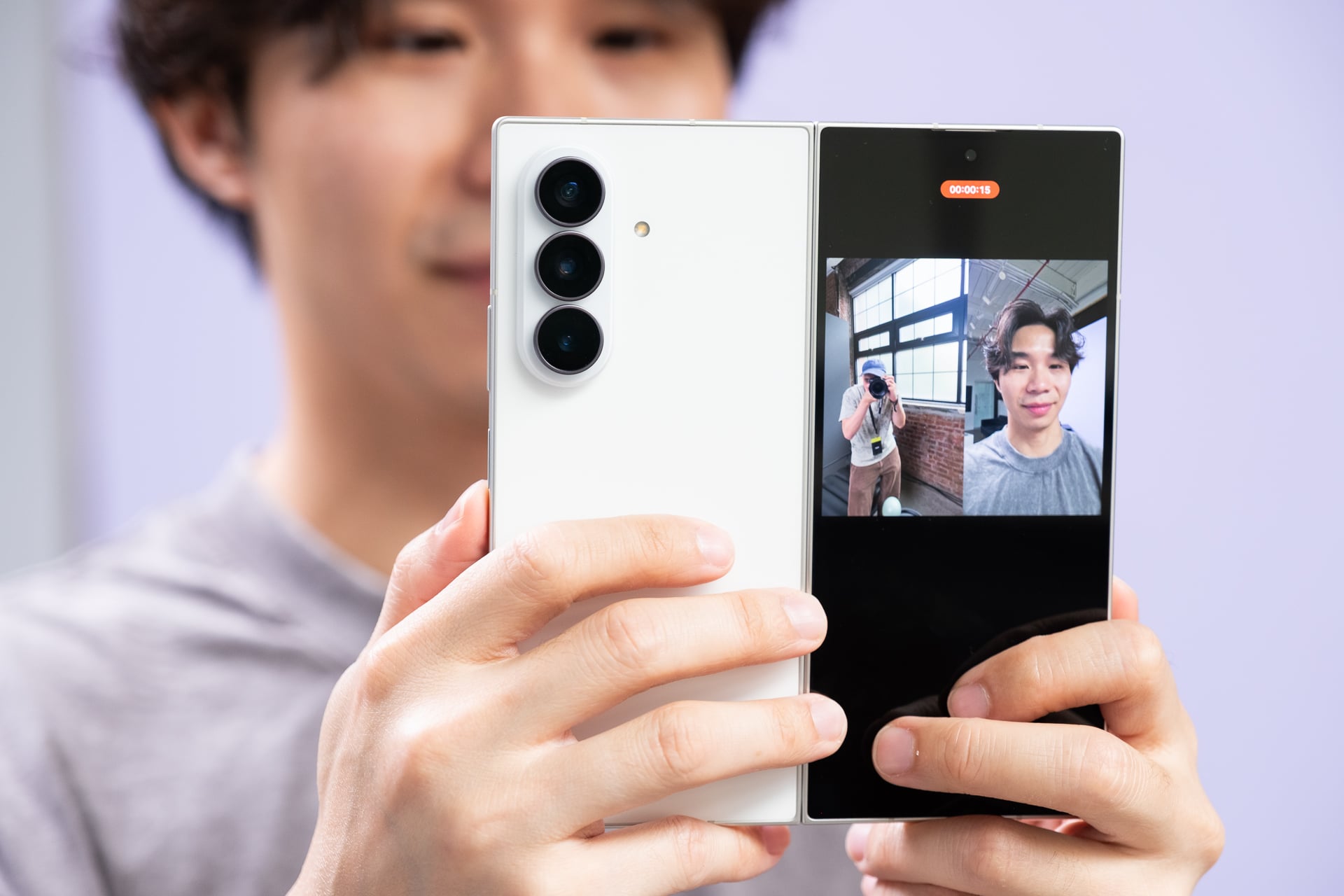
The 6.5-inch AMOLED cover screen and an 8-inch inner AMOLED display have minor upgrades. There’s the same anti-reflective coating and 3,000 nits of brightness (up from 2,600 nits) found on the Z Fold 8.
Living up to the “Ultra” name, Samsung’s top-of-the-line foldable also has a larger 5,000mAh battery. This corrects one of the key complaints about the Z Fold 7, which is that its 4,400mAh battery is not enough for many power users.
Beyond these incremental improvements, the Z Fold 8 Ultra has many of the same specs as the Z Fold 8. Same chip, same storage options and RAM configurations, and same fast wired and fast wireless charging speeds (and lack of magnetic ring).
The leap to Ultra does also mean Ultra pricing. Samsung’s hiked this particular form factor to start at $2,099.99, which is a $100 increase over the Z Fold 7. If you can stomach the price, you can choose from four colors: Violet Shadow, Cream, Graphite, and Green Shadow (a Samsung.com exclusive).
See Galaxy Z Fold 8 at Samsung
See Galaxy Z Fold 8 Ultra at Samsung
See Galaxy Z Fold 8 Ultra at Amazon
Correction: A previous version of this article stated the Galaxy Z Fold 8 Ultra’s telephoto was 12 megapixels. It’s actually 10 megapixels.