Blue Origin's lawsuit comes after NASA awarded a key contract to SpaceX for its Artemis mission, in which astronauts are due to land on the Moon in 2024.
The half-ton aerial vehicle will search for signs of life on the enigmatic moon in the mid-2030s.
Russian state media is rehashing an old theory to explain how a tiny drill hole formed on a Soyuz spacecraft docked to the International Space Station.
Saturn may have a "fuzzy" core, according to new research.
The second uncrewed test of Boeing’s CST-100 Starliner won’t happen for at least several months—if not longer.
The ESA translated acceleration data from BepiColombo's Venus visit this week into a spooky audio clip.
The high-tech spacesuit needed for the Artemis missions won’t be ready until at least 2025, according to an auditor's report.
The EOS-03 Earth observation satellite, now destroyed, was supposed to track cyclones and other environmental threats from space.
NASA's Perseverance rover ended up in the frame when the Ingenuity helicopter was snapping pics during flight.
NASA briefly celebrated when it seemed the Perseverance rover had grabbed its first sample, but they soon realized the tube was empty.
The 1,640-foot-wide object could collide with Earth in 161 years, but the odds remain exceptionally low.
The European-Japanese mission BepiColombo was one of two spacecraft to pass by the hot, toxic planet this week.
The second uncrewed test of Starliner was scrubbed after 13 valves in its propulsion system failed to open.
James Oberg writes in a new op-ed that NASA hasn’t had to deal with a major incident in years—and that’s the problem.
SpaceX is teaming up with Geometric Energy Corporation to launch a digital billboard into orbit.
The unofficial Space Olympics featured four events: “lack-of-floor routine,” “no-handball,” “synchronized space swimming,” and “weightless sharpshooting.”
The impressive system could perform an orbital test flight later this year.
The Martian samples may eventually be brought to Earth, which would make them the most distant objects ever retrieved by humankind.
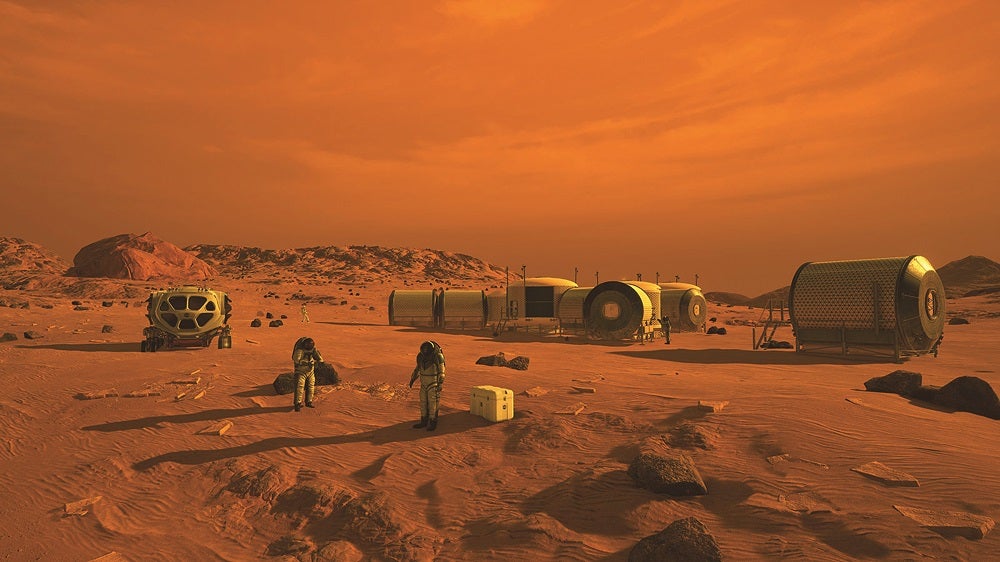
NASA is recruiting participants to live and work in an isolated, 1,700-square-foot habitat known as Mars Dune Alpha.
Producers are still seeking funding for the ambitious project, which is set to film aboard the ISS in October.