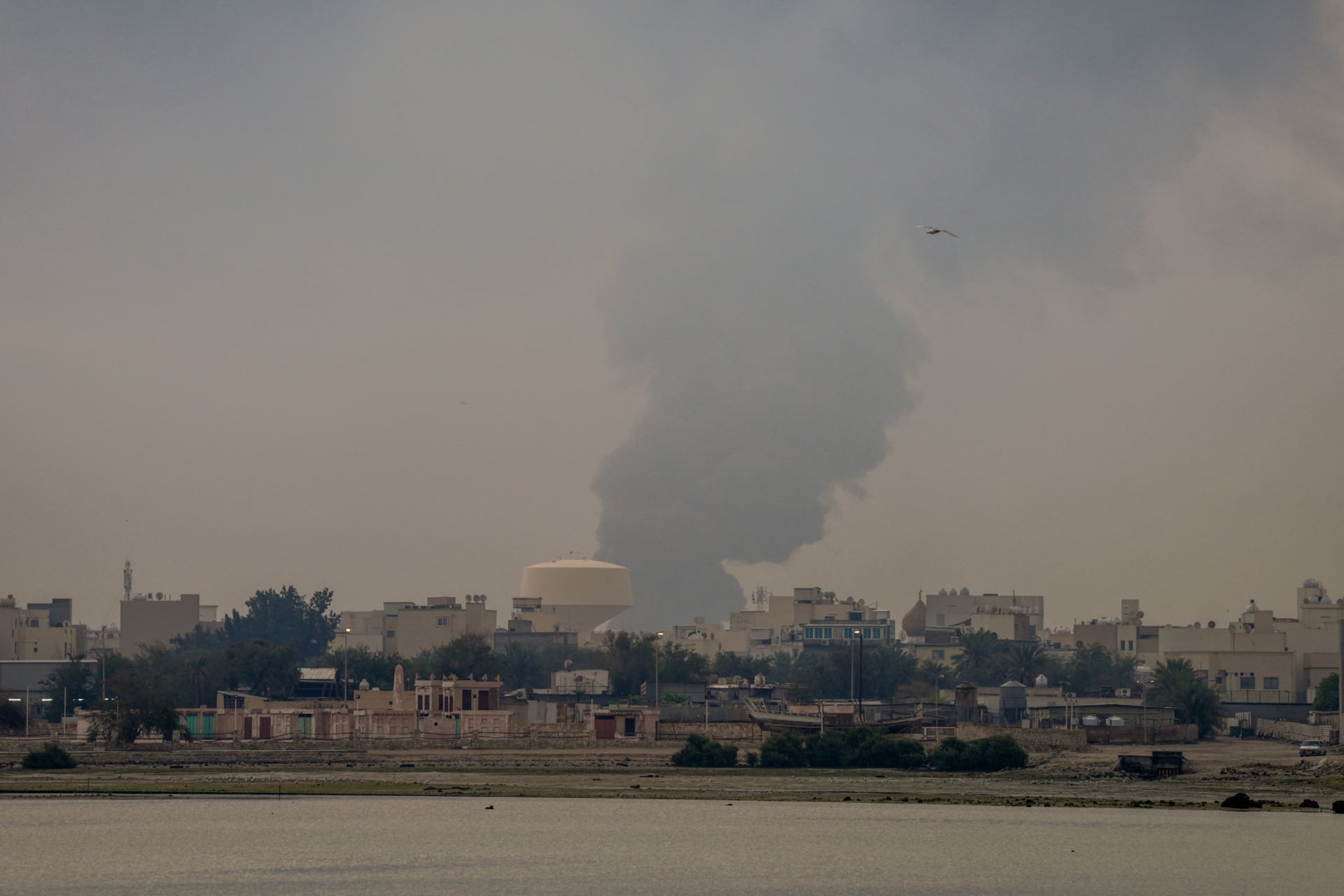
Amazon’s cloud business in Bahrain was damaged yet again on Wednesday due to an Iranian strike, the Financial Times reported, citing a person familiar with the matter. The strike comes only a day after Iran threatened to target American tech companies that it claimed were assisting “US-Israeli terror operations,” with strikes to start on April 1.
Amazon wasn’t named in the initial list of major tech companies whose Middle Eastern offices Iran had its eye on, which instead included Apple, Google, Meta, Microsoft, HP, Tesla, Nvidia, Oracle, Boeing, IBM, and Cisco.
The threat, according to Iran’s Press TV, also included the strikes starting at 8 p.m. Iran time. The Bahrain strike’s timing was not specified in the FT report, but it could have taken place before the threatened start time. Bahrain’s Ministry of Interior said early Wednesday morning local time that the country’s civil defense force was “extinguishing a fire in a facility of a company as a result of the Iranian aggression,” without specifying which company it was.
Amazon declined to comment on the purported strike and instead directed Gizmodo to comments issued following previous strikes.
State-aligned media has periodically published Iranian military threats to strike American companies operating in the region for roughly three weeks now. Within that rough timeframe, the Middle Eastern facilities of Amazon’s cloud services business, AWS, have suffered from Iranian strikes on at least four separate occasions, with three of those strikes landing in Bahrain. The attacks marked the first time the data centers of an American tech giant were targeted in military action.
American and Israeli forces struck Iran on Feb. 28, kickstarting a war that has lasted for well over a month now and claimed the lives of 1,937 Iranians ranging in age from eight months to 88 years old, per Al Jazeera. Increasingly, vital civilian infrastructure in the region, such as desalination plants and even some Iranian universities, have become the target of military strikes.
President Trump has said that American forces will be leaving the region “very soon,” with an estimated timeframe of within two to three weeks. He also said on Wednesday that Iran had asked him for a ceasefire that he would only consider if Tehran opens free ship flow through the important oil chokepoint of the Strait of Hormuz. Iranian officials have since denied that claim.
Iran has woven a careful narrative in its retaliation against the United States and Israel, positioning itself as a morally superior power. Iran’s many seemingly AI-generated propaganda ads that have proliferated the internet since the beginning of the war depict Iran striking American forces in the region on behalf of all past victims of American imperialism, from the Native Americans to Gazans and even children trafficked by sex offender Jeffrey Epstein.
Iran’s targeting of American military bases and the facilities of companies with lucrative Israeli and American military deals has also been framed within that context, with comparisons to American and Israeli strikes that have killed Iranian civilians, including the strike on an Iranian elementary school that killed 175 people, most of them children. But Iranian strikes have killed civilians in the broader region, including a Bangladeshi national in the UAE earlier on Wednesday.
In a letter addressed to the American people on Wednesday, Iranian President Masoud Pezeshkian said that American attacks on Iran “directly” targeted the Iranian people and failed to serve “the American people’s interests,” while arguing that the Iranian response was “legitimate self-defense” and “no means an initiation of war or aggression.”
“The Iranian people harbor no enmity toward other nations, including the people of America, Europe, or neighboring countries,” Pezeshkian said.
Trump is set to address the nation later tonight with an update on the war. But as rumors of a potential ceasefire swirl, the broader region gears up for further escalation. Also on Wednesday, the British embassy in Saudi Arabia warned its nationals to avoid U.S.-linked businesses, organisations, and facilities in the nation, per the FT.