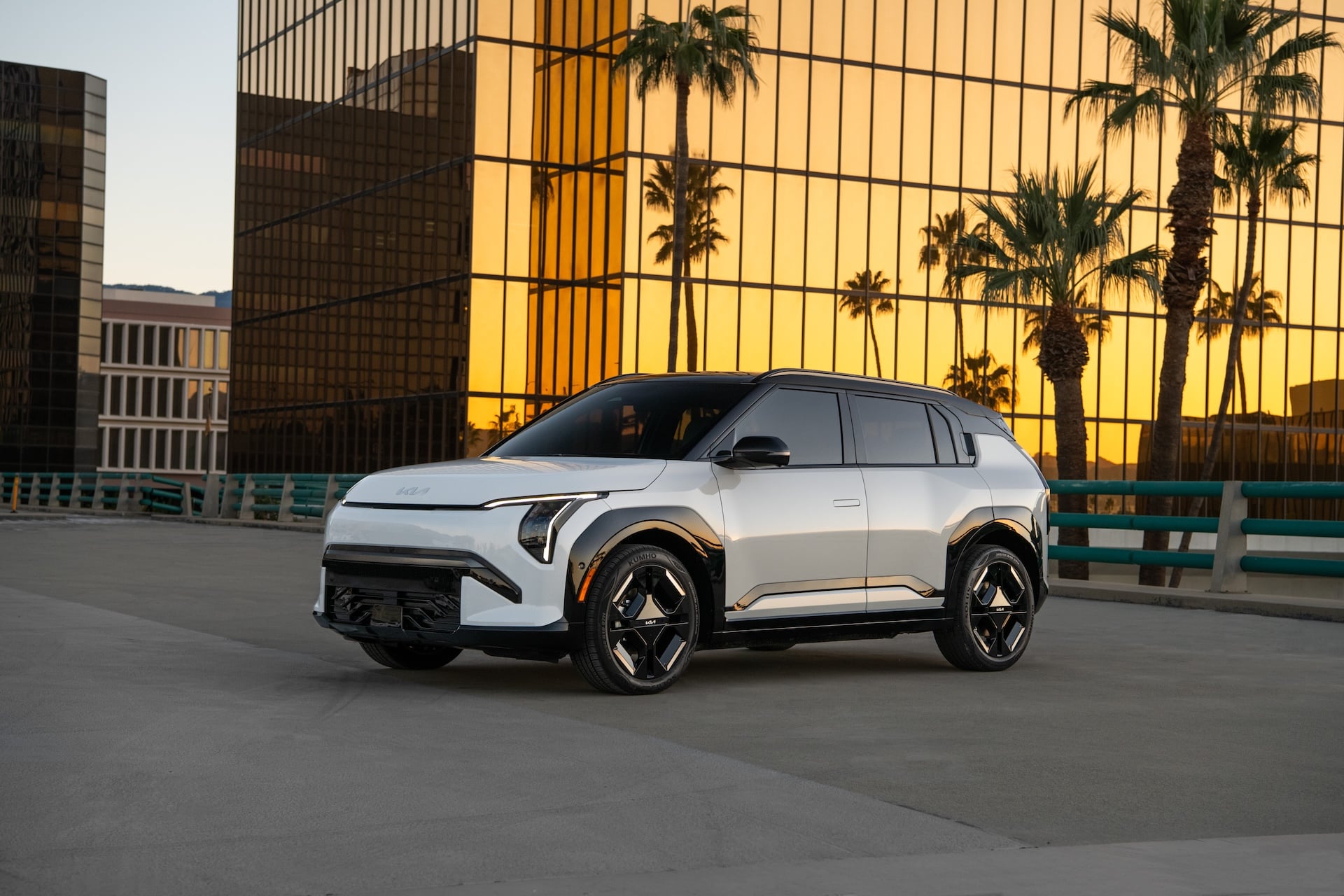
The Kia EV3, another small electric vehicle, is finally making its way to the U.S. this year amid economic and energy cost uncertainties, featuring two battery options, a performance-oriented model, and vehicle-to-home capability.
A rival to the Chevrolet Bolt and Nissan Leaf, Kia confirmed the EV3 would go on sale by the end of 2026 at the New York Auto Show on Wednesday. The announcement came more than a year later than planned following the changes and the eventual elimination of the $7,500 federal tax credit, which was previously key in entry-level EV purchases. The EV3 will compete with a relatively short list of small electric cars, as well as the thousands of used models predicted to flood dealer lots this year as consumers battle ever-escalating gas prices.
Already a hit in many countries outside the U.S., the EV3 will come with a standard-range 58.3 kWh battery on the base Light model and a long-range 81.4 kWh version on all other models, including the 288 horsepower, dual-motor EV3 GT performance model. The most efficient big-battery versions will target a 320-mile rating from the EPA when they’re tested, while the small one will aim for roughly 220 miles. All EV3s will have a native NACS charge port.

Kia’s also promoting the EV3’s vehicle-to-load (V2L) and vehicle-to-home (V2H) capabilities, which it claims can power not only laptops and small accessories outdoors, but also your home when the electricity is out. Even though it lacks the larger 800-volt electrical architecture of the EV6 and EV9, Kia says the EV3 can fast-charge from 10% to 80% in about 30 minutes.
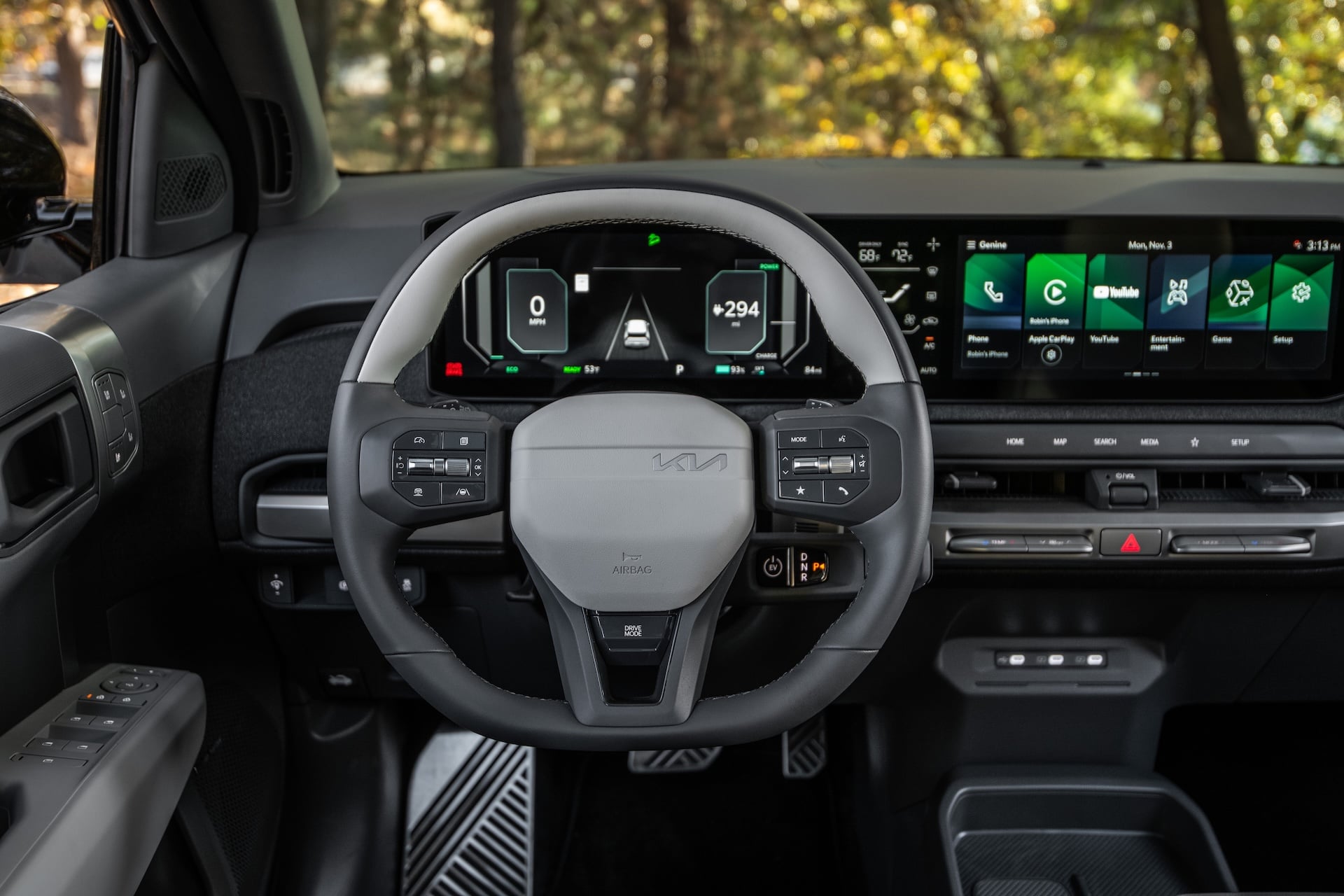
All models get two 12.3-inch displays for driver information and the infotainment system. In addition, the Kia Connect app store now supports Netflix and YouTube, just in case you need something to do for that 30 minutes the car is fast-charging.
Pricing wasn’t announced on Wednesday. However, as InsideEVs points out, estimates for the EV3 hovered at $35,000 back when the model was announced in Korea in 2024. At that time, some predicted that the EV3 would go on sale in the U.S. some time in 2025. Since then, the also-imported and redesigned Nissan Leaf has gone on sale starting at about $31,500 with an EPA-estimated 303 miles of range. General Motors also revived the Chevy Bolt after a two-year hiatus (for a limited time) beginning at $29,000, which gets you a new battery, the optional SuperCruise advanced driver assistance system, and a 262-mile EPA estimate.
While even at $35,000 the least-expensive EV3 would offer decreased range and power compared to the Leaf and Bolt, it’ll likely still an interesting option for many buyers. For instance, the EV3 will have more cargo space behind the rear seats, offer all-wheel drive versions, and a broader range of models and options that could attract people looking at larger EVs, not because they need the extra space or bulk, but because they want more than entry-level features.
The elimination of the federal tax credit last year, combined with fluctuating tariff rules, supply chain hiccups, and inflation has caused automakers to make quick U-turns on many EV plans. While some high-profile, high-cost EVs were cut, it’s been particularly hard on lower-cost, smaller models.
The $40,000 Volvo EX30 was recently cut from the company’s U.S. lineup, though it remains available in Canada, Mexico, and elsewhere. Kia also decided to indefinitely postpone the EV4 sedan, which is related to the EV3. Honda, meanwhile, pulled the plug last month on four EV models that were supposed to go on sale later this year and took a steep write-down on its electric programs to refocus on hybrids.