A lot has changed since electric vehicle startup Slate Auto unveiled the prototype of its first vehicle just over a year ago. But despite volatile gas prices and the rising cost of new cars, the Slate Truck is now official—and it has landed within the company’s targeted price range.
As much attention as Jeff Bezos’s backing of Slate Auto has received, the truck’s electric powertrain and value proposition may be what really resonated with potential buyers. Slate says more than 180,000 people have decided that the promise of an affordable, reliable, and customizable vehicle was worth a $50 reservation.
“Slate gives customers the freedom to buy only what they need today and personalize their vehicle as their needs change tomorrow,” Slate CEO Peter Faricy said in today’s announcement.
Now the Slate Truck is available for preorder, with the first Indiana-built vehicles expected to reach customers by the end of the year. New buyers can secure a spot with a $300 deposit and wait for an invitation to configure their truck, while existing reservation holders can preorder for an additional $250.
As the initial reactions to the new EV settle, its specifications offer a clearer picture of where it fits into the broader new-car market.
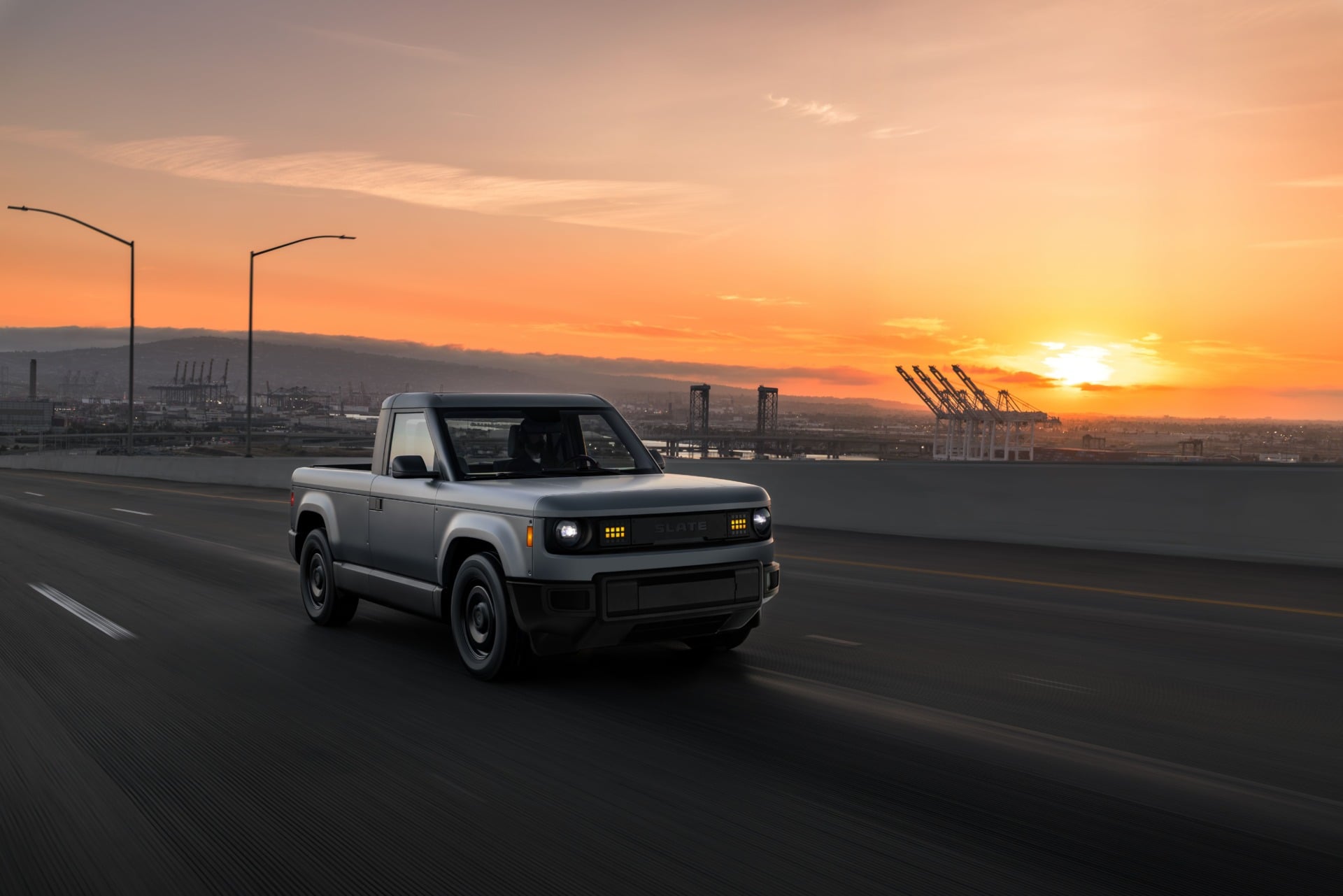
The Slate Truck is small by pickup standards, but it’s also compact compared with what passes for a compact car in the U.S. in 2026. At roughly 14.5 feet long, it’s about six inches shorter than a Honda Civic hatchback and 9.5 inches shorter than the sedan. Compared with another pickup, the difference is even more striking: the Slate is more than two feet shorter than the Ford Maverick.
Part of that size difference comes down to the doors: both the Civic and Maverick have four, while the Slate has only two—even in SUV form. That may appeal to buyers nostalgic for two-door models like the Chevy Blazer, but it comes with a significant practical cost. Carrying more than one passenger or loading a child into a car seat becomes considerably more cumbersome. There’s a reason four doors became standard not only on pickups, but across the SUV market.
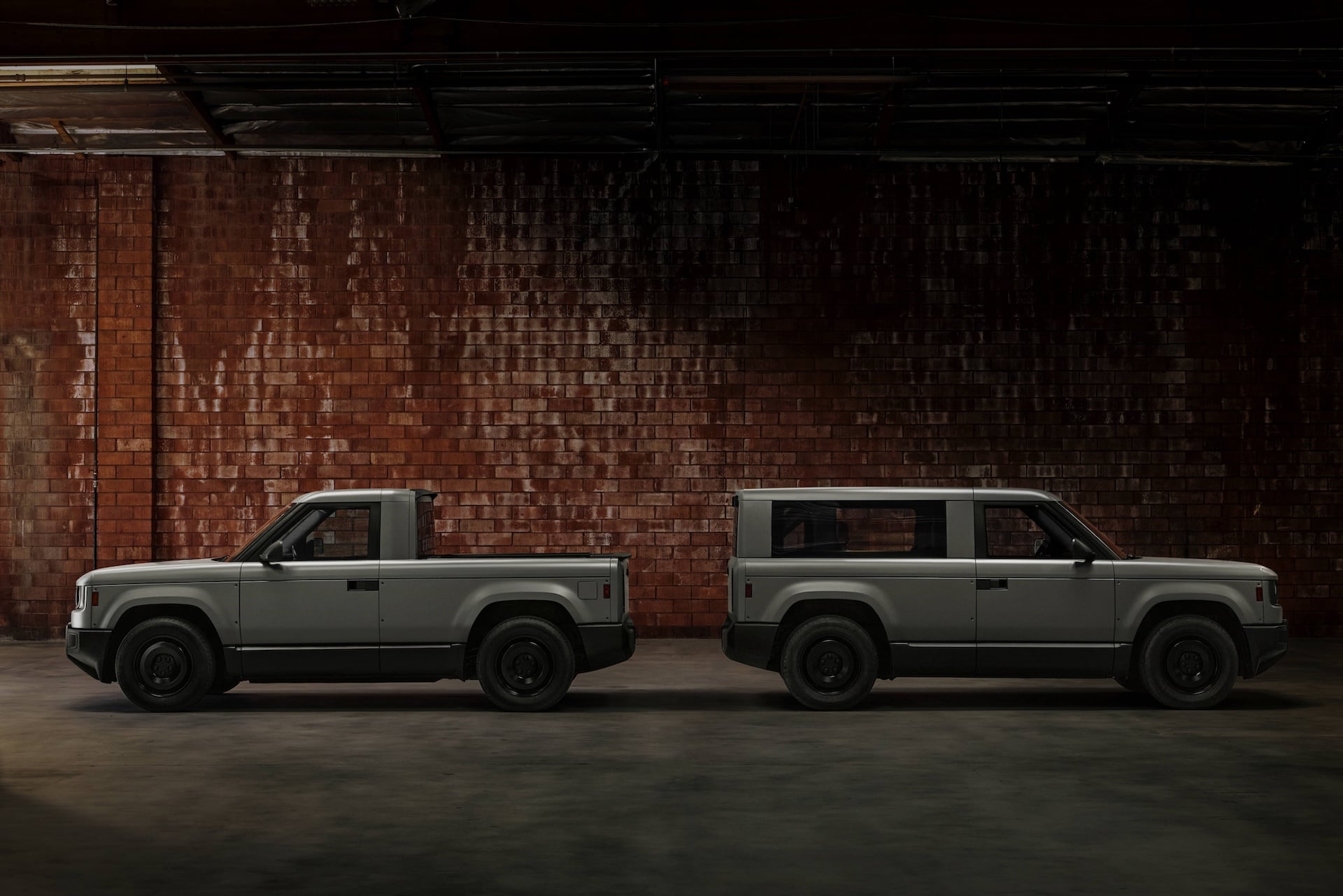
The $24,950 Truck has differed little since the prototype was shown in April 2025. It is what it is, and it looks diminutive even in photos. The $29,950 SUV package, which includes rear seats, will be offered in a fastback with sloping rear glass, and the squareback in photos that makes it look a little like a Jeep Wrangler or a Ford Bronco. Or an old postal truck, but in a good way, because of its size.
The Slate still isn’t much of an off-roader. Its ground clearance is closer to a Honda CR-V’s than a Bronco’s or Wrangler’s, and rear-wheel drive is the only option. Still, it offers a bed measuring just under five feet—more than the soon-to-be-discontinued Hyundai Santa Cruz managed—along with up to 34 cubic feet of cargo space behind the rear seats in SUV configurations and another 7 cubic feet in the frunk. Maximum towing capacity is 2,000 pounds, though hauling that much would presumably put considerable strain on its estimated eight-second sprint to 60 mph.
One notable change from prototype to production is a reported 37% increase in the Slate Truck’s manufacturer-estimated range, from a distinctly 2010s-like 150 miles to a far more useful 205. The vehicle has yet to receive an EPA rating, but that figure looks reasonable for the price. Much larger EVs—including the standard-range Ford Mustang Mach-E and the new Jeep Recon—still hover around 240 miles, while the Slate’s 65-kWh lithium iron phosphate battery and projected range are comparable to those of the 2027 Chevy Bolt, which costs several thousand dollars more.
Charging is handled by an 11-kW onboard charger and a NACS port. Slate estimates that a Level 2 charger can take the battery from 20% to 100% in four hours, while DC fast charging can bring it from 20% to 80% in 30 minutes. Even a standard household outlet should be able to recharge it in less than a full day.
Rather than building an extensive mobile and brick-and-mortar service network like Rivian, Slate will rely on RepairPal’s network of independent shops for minor work, along with what it says are 100 locations equipped to handle high-voltage EV repairs. The company also expects owners to perform many repairs themselves and will provide instructions for doing so—a decidedly old-school approach.
Slate’s embrace of customization has also attracted plenty of attention since the truck’s debut—or, put another way, nearly everything beyond the windows, seats, and powertrain is optional. The company says its Slate Marketplace will offer more than 200 accessories, at least 80% of which will cost less than $500. Those range from seat covers, roof racks, and a stereo to supplement your smartphone to full-vehicle wraps, which may prove popular given that the only factory color is, appropriately enough, slate.
Slate Auto is entering the market at an opportune moment, offering an inexpensive EV just as the end of federal tax credits has upended the industry and forced automakers to reconsider their plans. General Motors, Nissan, Hyundai, and Kia have responded to the shortage of sub-$40,000 EVs by cutting prices, though some of those reductions amount to temporary adjustments rather than fundamental cost savings. The real test will begin when EVs designed from the outset to be affordable start arriving, beginning with Ford’s compact electric pickup next year.
The larger question is how many buyers are willing to give up modern comforts for a DIY-minded vehicle with hand-crank windows and a Joe Friday, “Just the facts, ma’am” philosophy. Slate’s reservation numbers suggest it could enjoy a strong launch, but whether that demand proves sustainable is another matter. Fleet operators looking to reduce emissions and operating costs must also decide whether to take a chance on a startup or wait for something like Ford’s electric pickup, backed by an established dealer and service network.
Still, even after the mandatory destination charge pushes the Slate Truck past $25,000, it will remain one of the least expensive new vehicles in the U.S., regardless of powertrain. For buyers who simply need something cheap, new, and easy to maintain, two doors, four tires, and a few windows may be exactly enough.