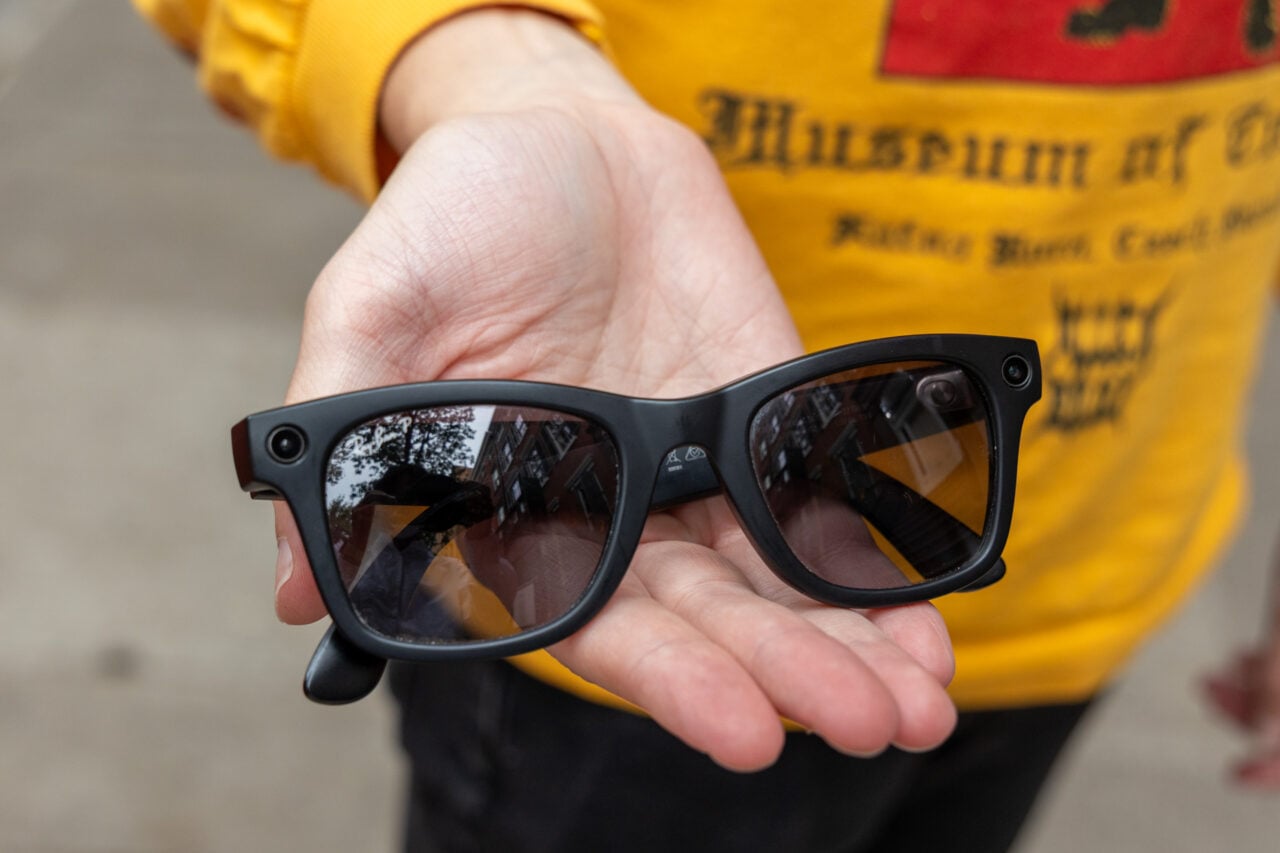
Smart glasses are giving all sorts of people the ick: courts, teachers, restaurants, celebrities, and women in general, just to name a few. That’s a lot of people/categories, to be sure, but apparently we’re not done with the laundry list quite yet. You can now add “stores that literally sell glasses for a living” to the anti-smart glasses constituency.
According to Reuters, major European glasses retailer Hans Anders will no longer sell smart glasses at its stores in Belgium and the Netherlands due to (you guessed it) privacy concerns. Here’s what a representative for Hans Anders says:
“This decision follows the ongoing public and political debate surrounding smart glasses and the questions being raised about the conditions under which this technology can be used.”
The move from Hans Anders comes amid scrutiny worldwide of smart glasses, especially in Europe. In Germany, Hamburg’s parliament adopted a resolution that would ban wearing smart glasses in some public spaces, including transit and public pools, over fears of people using them to record others discreetly. Meanwhile, in the U.K., popular pub chain Wetherspoons banned recording with smart glasses in its more than 800 owned pubs across England and Ireland for similar reasons.
The temperature is clearly rising, and not just abroad. While regulation and outright bans in the U.S. have been less forthcoming, there has been some movement on that front. New York State banned smart glasses in courtrooms across the state, and American companies like Royal Caribbean have restricted their use across its many cruise liners.
While nothing has taken root at the federal level, U.S. lawmakers have started to sniff around companies like Meta in search of answers on whether it plans to introduce controversial technology like facial recognition on its smart glasses. Reports from Wired suggest that Meta is most definitely interested in doing so.
That’s all to say there are a lot of feelings on smart glasses and when and where they should be used—if ever—and a lot of them are well-founded. There have been cases of extortion and harassment using smart glasses, and women are more often targeted than men. From a technological perspective, it might be the best time to own a pair of smart glasses, but from a societal one, things are more fraught than ever.