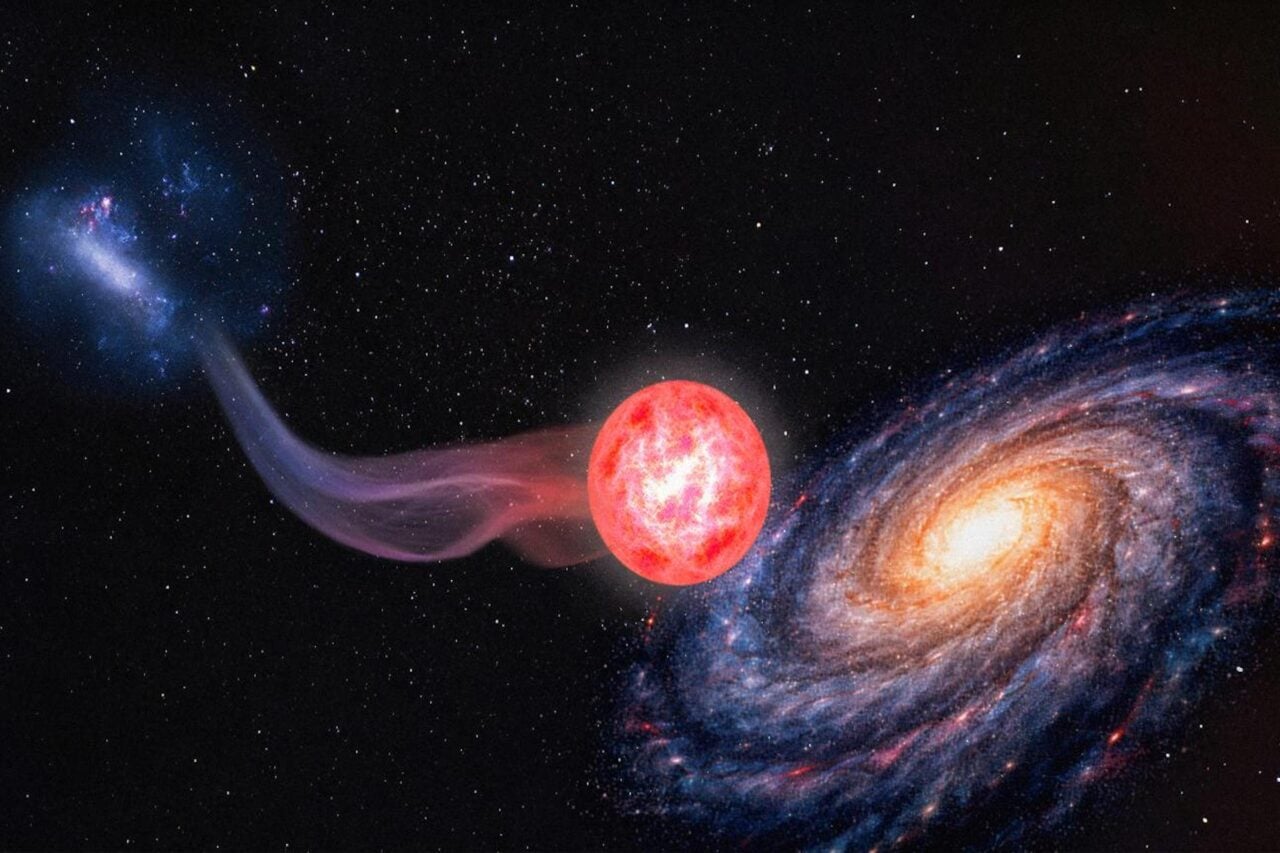
The pristine star formed outside the Milky Way and later drifted into our galaxy.
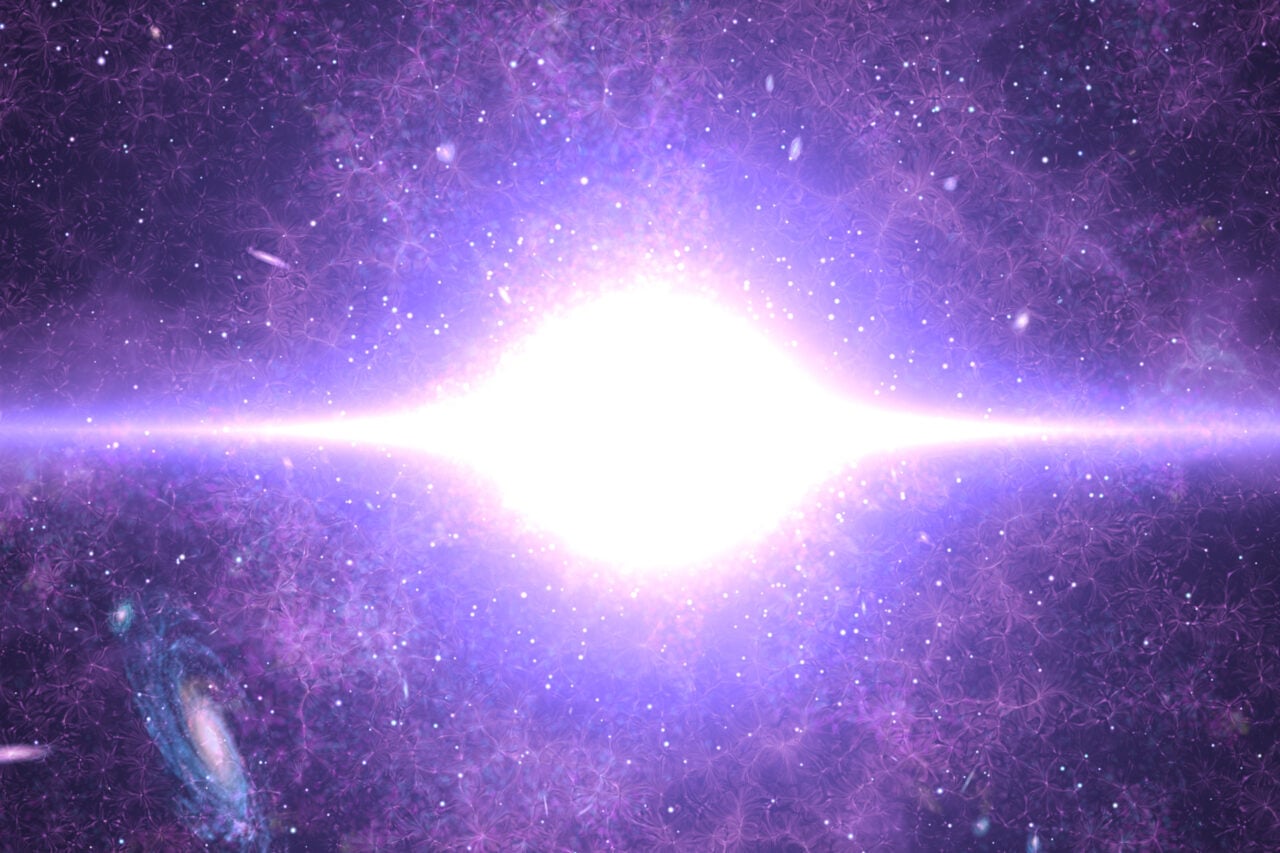
The lens of quantum physics offers a much simpler view of the Big Bang, research suggests.
The light from MoM-z14 galaxy has been traveling through space for about 13.5 billion years.
A new theory promises to simplify our approach to the universe's earliest moments, but some cosmologists say further mathematical scrutiny is warranted.
The record-breaking galaxy is revealing secrets about the first stars and their unexpected chemical fingerprints.
New data suggests the unknown, unobservable force responsible for the universe's expansion may be weakening.
Water was present just a couple hundred million years after the Big Bang, according to a new study, shaking up the timeline of planetary evolution.
The research team says it’s time to “think outside the box” since nothing else is working.
Astronomers believe the earliest galaxies continuously drew in gas from the vast intergalactic medium.
The newer space observatory found that the rate of the universe’s expansion is still not adding up.
New helium measurements in distant galaxies could provide solutions to a long-standing cosmology problem, potentially explaining why the universe isn't empty.
Dark matter and dark energy are the focus of this cutting edge space telescope. Here's our primer on this historic mission.
Light from the earliest galaxies zapped their surrounding gas, lifting the curtain on the cosmos, according to new research.
Researchers can "clearly see features of this invisible world that are hundreds of millions of light-years across."
Two scientists think a double-Big-Bang scenario could explain dark matter and why we haven’t been able to detect it.
Six distant dots spotted by Webb are actually massive 13-billion-year-old galaxies.
The universe’s stuff is less clumpy than previously thought, according to new research.
A deeper look through a massive cluster has turned up two galaxies that formed just after the cosmic dawn.
Lensing of the cosmic microwave background indicates 12-billion-year-old galaxies had dark matter.
Upwards of 10 to 20 percent of the earliest galaxies are hidden by thick blankets of cosmic dust, new research suggests.