LIGO dropped a ton of new data, and astronomers are having a field day.
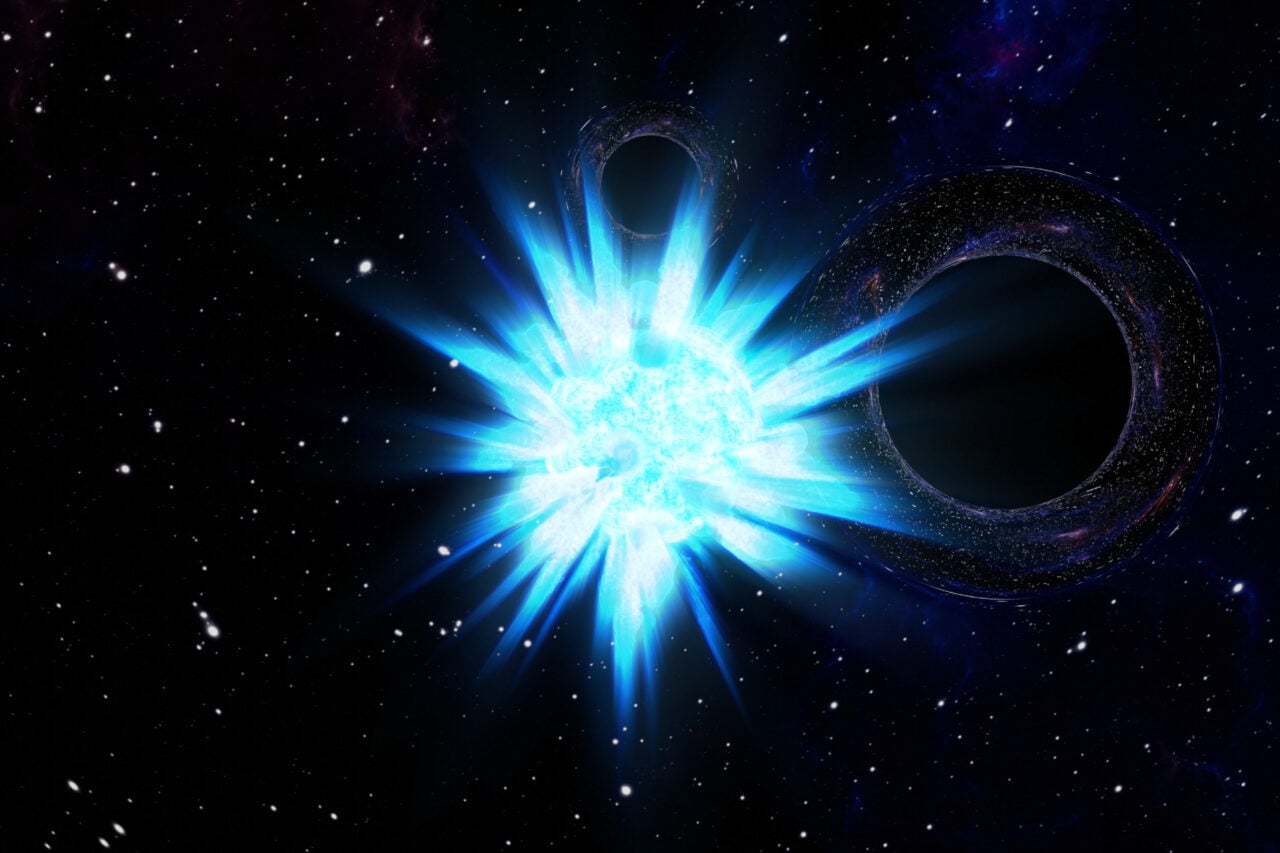
In a strange turn of events, a supernova birthed twin baby neutron stars that merged to make a powerful kilonova.
The black hole was bigger than expected, and while the answer was hiding in plain sight, it still rewrites what we thought was possible.
And it’s not clear if anything can be done about the problem.
Ten years after LIGO’s historical detection of gravitational waves, the project is cracking black hole mysteries at an astounding pace.
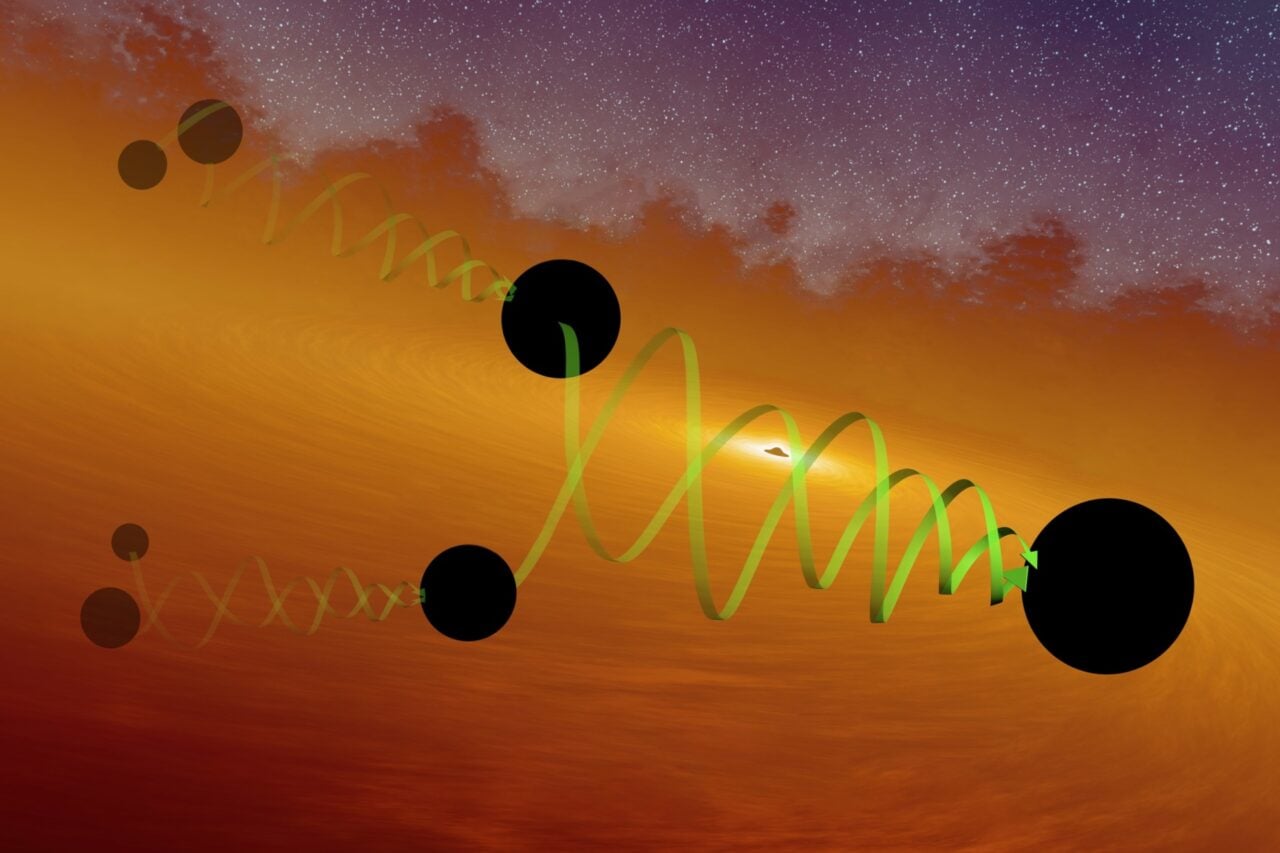
The powerful merger, designated GW231123, produced an extremely large black hole about 225 times the mass of our Sun.
The tripartite observatory will be as big as the Sun and detect ripples in spacetime itself.
The team added new limits to how dark matter could interact with the LIGO detector, boosting hopes for future runs.
If an extraterrestrial warp drive collapses, we might be able to sense the resulting gravitational waves from Earth.
The event, which occurred when the universe was 740 million years young, gives scientists a clue about the number of light black holes in the universe.
The black hole lurks just 2,000 light-years away in the constellation Aquila.
A neutron star merged with something unknown. Physicists think it might be a mini black hole.
Imagine LIGO, but flying through space. That’s LISA.
A visualization of simulated data shows how ripples of spacetime might populate the Milky Way.
Cocoons of debris surrounding collapsing stars may generate gravitational waves detectable by LIGO.
The LIGO-Virgo-KAGRA Collaboration will restart with renewed sensitivity this week following a three-year hiatus.
The planned LISA mission would involve three spacecraft flying in formation over a million miles apart.
A quartz acoustic wave resonator in Australia has made its first intriguing detections.
The massive collisions occurred a billion years ago, sending out ripples in spacetime that eventually reached Earth.
Physicists shooting lasers underground were able to make an object nearly completely still.