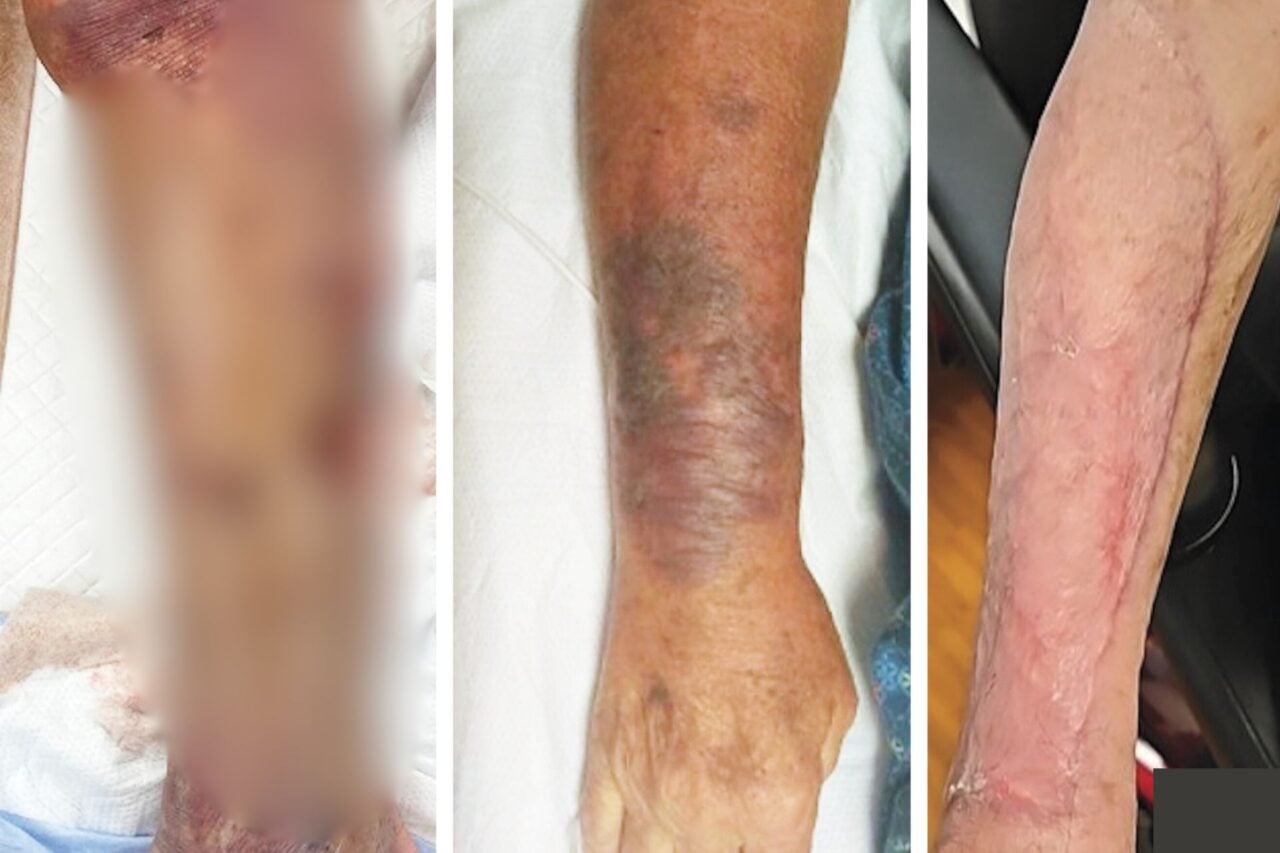
A Florida teenager’s summer swim turned into a life-or-death struggle after he contracted a dangerous “flesh-eating” bacterial infection.
17-year-old Joziah Thompson caught a case of Vibrio vulnificus following a visit to a local park, his family told news outlets earlier this month. Thompson spent a week in the hospital and is still recovering at home. The family is calling for greater awareness of these infections as well as more proactive surveillance of the threat.
“That’s why I’m pushing for a system put in place to know the bacteria levels in local waters. I don’t want this to happen to any other children,” Tirzah Thompson, Joziah’s mother, told Fox10 News. “My son is 5-foot-11 and 225 pounds. What if this was a 5-year-old who doesn’t have the strength to fight something off like this?”
A life-threatening swim
According to Tirzah, Thompson seemingly caught the infection while swimming with his siblings at Lion’s Park in Niceville. Following the visit, a minor scrape on his leg quickly turned into something much more serious.
“Two days later and his entire leg was red, he was moaning and hot to the touch and in a lot of pain,” Tirzah said. “As soon as I looked at his leg I said, ‘Oh, we need to go now.’”
Thompson was rushed to the hospital, where doctors performed multiple surgeries to remove infected tissue. He was discharged on June 10, but he remains on an aggressive course of antibiotics, and he’s still at risk of severe complications like secondary infections, his mother said.
“As parents, watching your child suffer is heartbreaking. Sitting beside his hospital bed, listening to monitors, watching him endure pain, surgeries, and fear, is something no mother is ever prepared for,” Tirzah wrote on a GoFundMe set to help cover Thompson’s medical bills.
A rare but growing threat
V. vulnificus is related to the bacteria responsible for cholera. Though it can similarly trigger gastrointestinal illness, it’s more well-known as a potential cause of necrotizing fasciitis. This condition is a rapidly destructive infection of the skin and underlying tissue, which includes the fascia (though this might look like half-eaten flesh, the bacteria themselves aren’t feeding off it).
“Flesh-eating” infections of V. vulnificus can happen when the bacteria enters an open wound, usually by swimming in the warm salt or brackish waters where they naturally reside. People can also contract these infections from handling raw seafood contaminated with the bacteria (eating tainted seafood is more likely to cause foodborne illness).
Though V. vulnificus infections are rare in the U.S., with only about 150 to 200 cases reported annually to the Centers for Disease Control and Prevention, it is becoming more of a threat over time. Cases are increasing in range along the eastern seaboard, for instance, while extreme weather events like heat waves and hurricanes have driven recent surges of these infections.
These conditions will almost certainly worsen with climate change. So unfortunately, tragic cases like Thompson’s are likely to become more common.