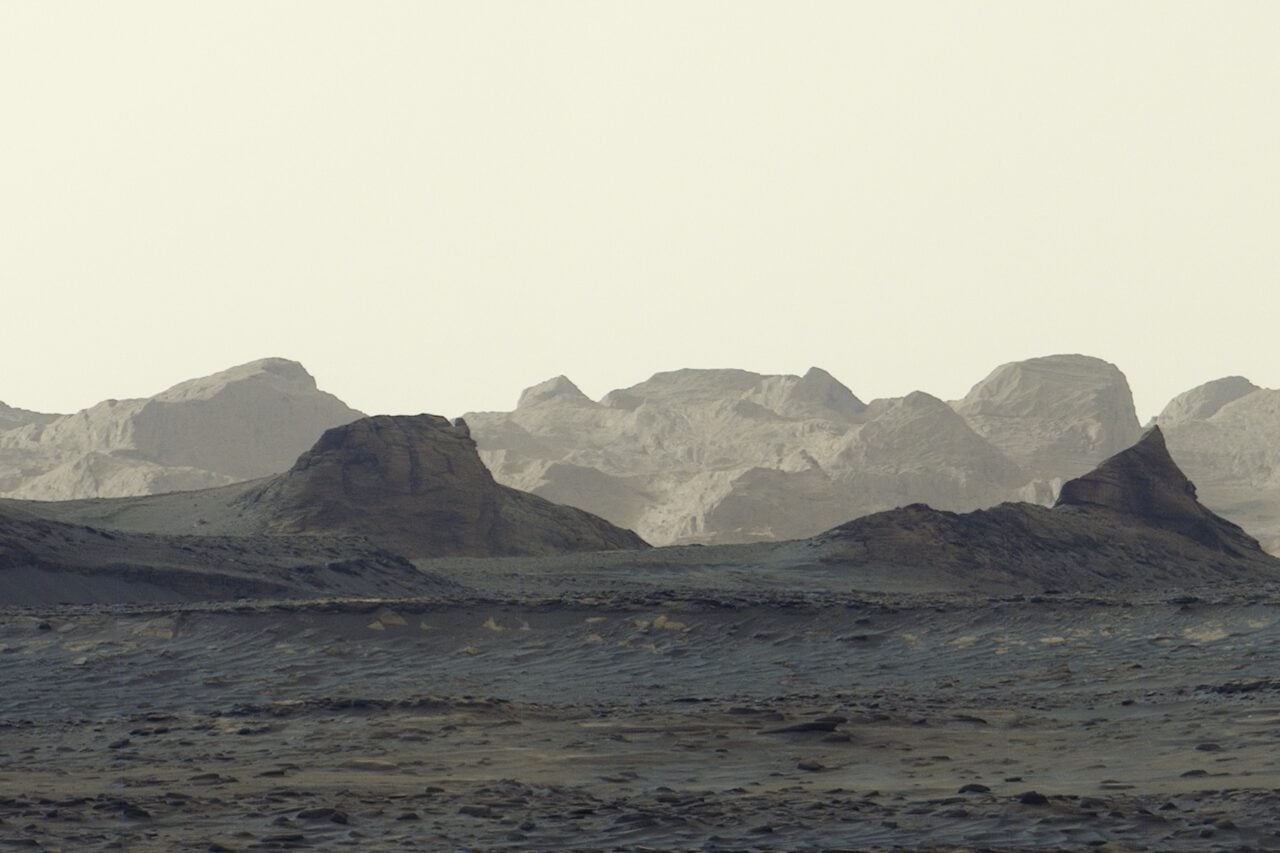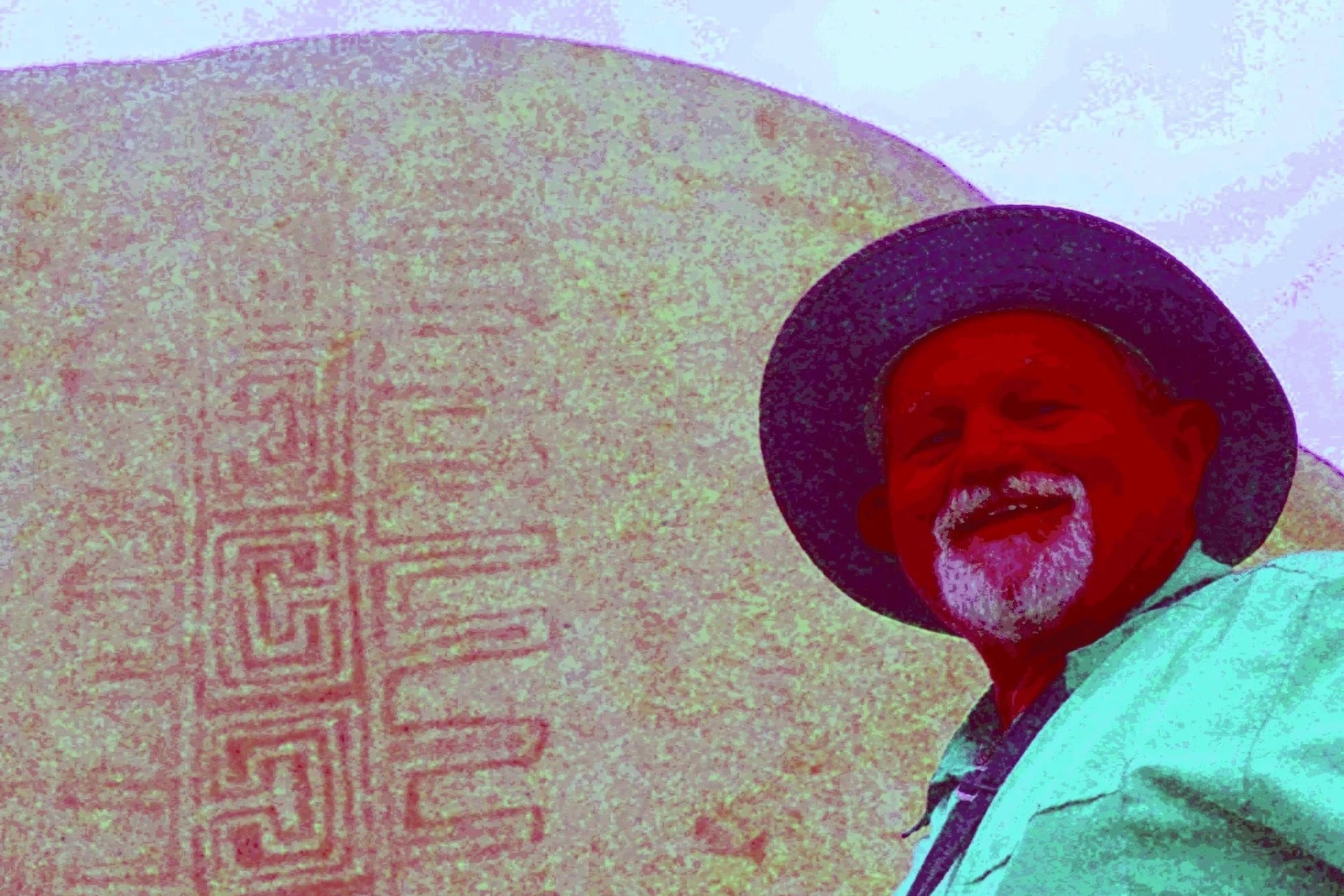
In 2005, archaeologist Jon Harman was attending a conference on rock art when he came across an unexpected source of inspiration: images of Mars. One showed the planet’s familiar rusty-red surface; another, created using a method developed at NASA, transformed the Martian landscape into a striking mosaic of red, green, and yellow, revealing remarkable detail. Harman immediately saw how the technique could help researchers study some of the world’s oldest paintings.
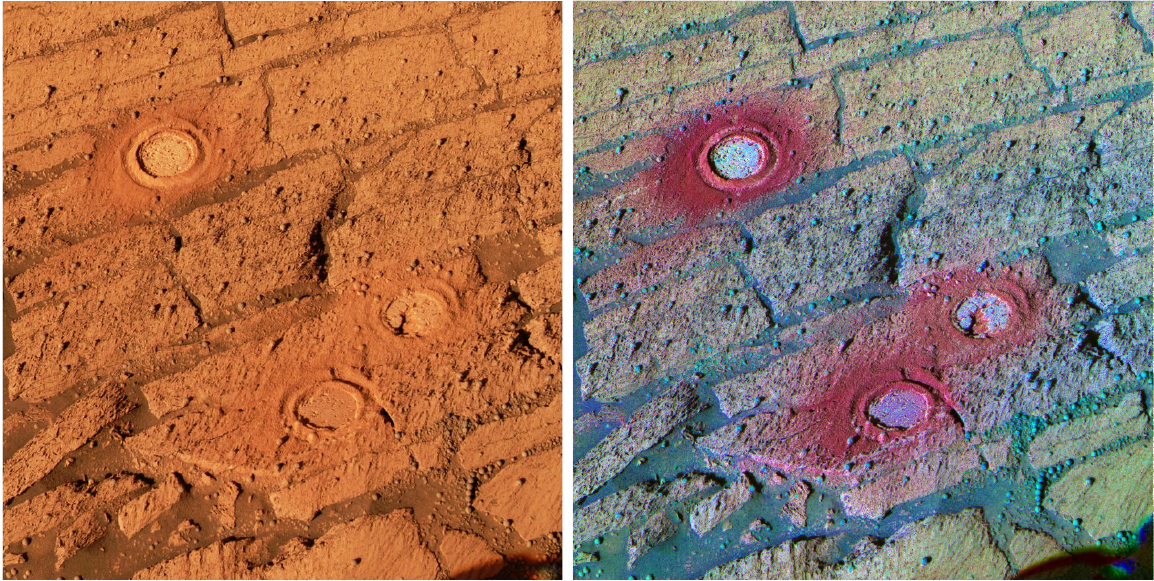
The technique, known as decorrelation stretch, is used to enhance contrasts in digital imagery. It was first developed by researchers at NASA’s Jet Propulsion Laboratory (JPL) in 1978 to improve the interpretation of high-correlation remote sensing and satellite imagery.
“I Googled it and found a NASA paper that explained how to do the algorithm,” Harman said in a statement. The archeologist first applied it to photos he had taken of rock art in Baja California, Mexico, revealing a new yellow figure in one image that seemed to appear out of nowhere. “That convinced me of the usefulness,” he said.
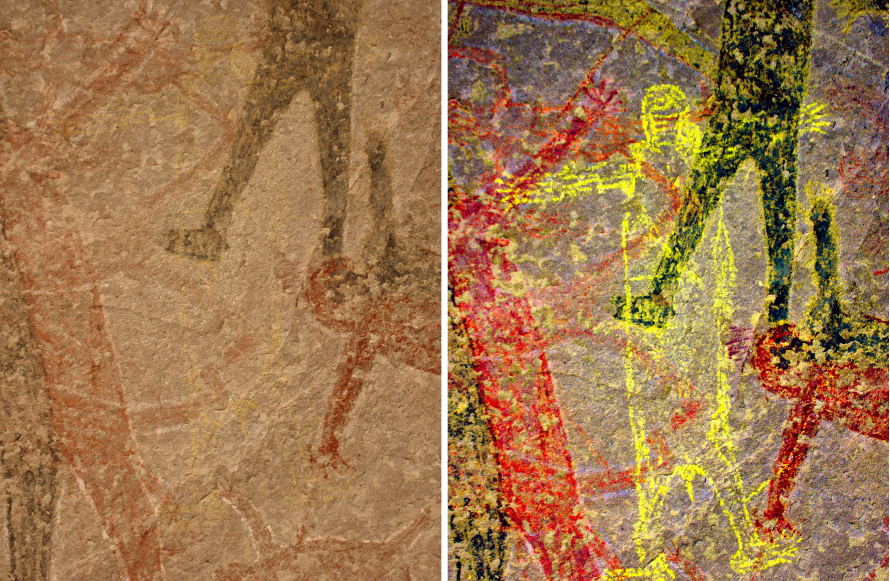
Since then, Harman has used a software plug-in to enhance hundreds of images of ancient rock art.
Space technology on Earth
Rather than simply raising the contrast between colors, decorrelation stretch maps the original colors to a different, expanded range of colors. The technique is based on the Karhunen–Loève Transform, a theorem used in statistical analysis to maximize energy compaction (i.e., concentrating most of a signal’s information into fewer components).
In 1978, a supervisor of a digital image processing group at JPL, Jim Soha, proposed applying the Karhunen–Loève Transform to digital imagery for color enhancement.
Later in 1996, Ronald Alley, who was a member of Soha’s group at JPL, refined the process to make it faster and more accurate. It was Alley’s paper that Harman stumbled upon when he first began his own journey in adopting the technique to study rock art. “Someone had to write up a description of this thing so users would know what we were talking about,” Alley said in a statement.
Harman, who is now retired in Pacifica, California, has experience in medical imaging, in addition to a PhD in math from Berkeley, which gave him confidence he could figure it out. Using Alley’s paper, Harman created the Dstretch software plug-in to enhance digital imagery.
Uncovering the past
The archeologist was able to tailor the decorrelation stretch method to rock art. “I started playing around and found that by changing the color space I was working in, I could get good results in different images,” he said.
A color space is a range of numerically represented colors, such as the RGB color space (red-green-blue) commonly used on screen devices. The Dstretch plug-in includes custom color spaces that have proven useful with Harman’s images of rock art.
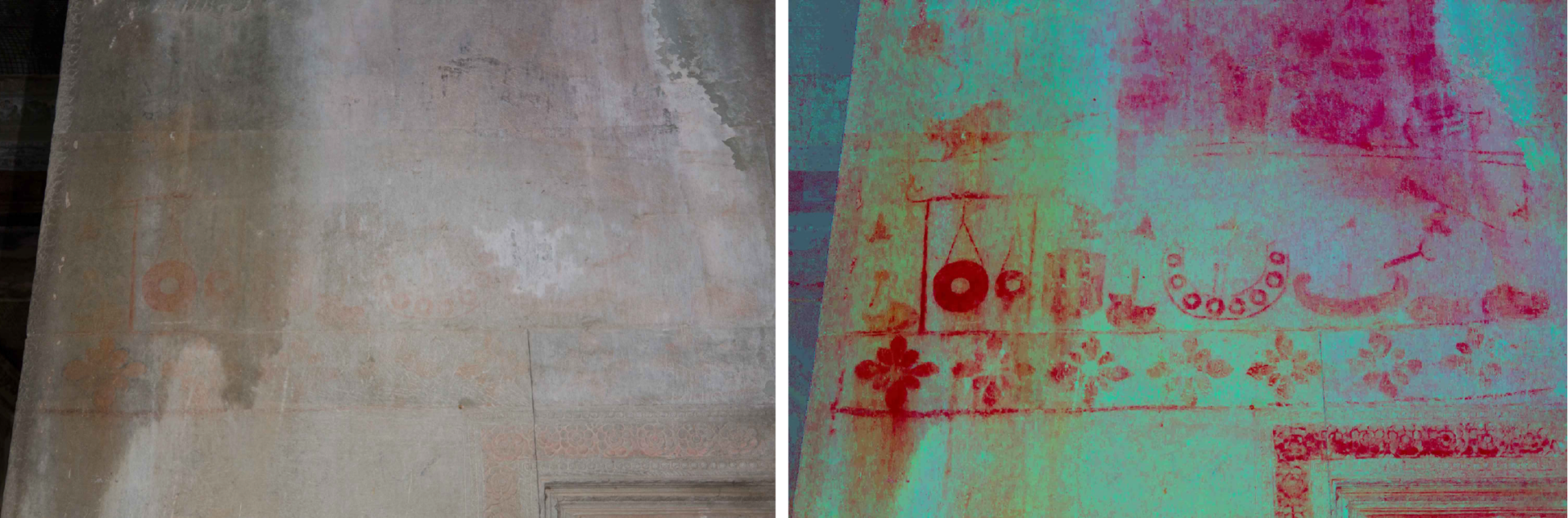
Archaeologists have used Dstretch to discover images of bats and pigs in the ancient Egyptian cemetery of Beni Hassan, revealing animals rarely depicted in ancient Egyptian art. In Alberta, Canada’s Writing-on-Stone Provincial Park, Dstretch revealed what could be considered an early form of graffiti tagging: a pictograph of a horse and rider that is believed to serve as a calling card from a Crow warrior, taunting his Blackfoot enemies.
The plug-in software also uncovered about 15 previously undocumented figures and revealed new details in 28 others at the Årsand 1 site in western Norway. “No one really knows why people made the rock art they made, at least in many cases,” Harman said of his fascination with the ancient paintings. “And the symbols are quite strange.”