Power Shift is Ellyn Lapointe’s ongoing Gizmodo series that explores advancements in green technology, with a focus on renewable energy, grid modernization, and emissions reduction.
Plastic recycling and energy decarbonization represent two of the most pressing sustainability challenges of our time. A new study offers a solution that could address both these issues simultaneously: transforming plastic trash into clean hydrogen.
While the concept isn’t new, the approach—outlined in a paper published in Proceedings of the National Academy of Sciences earlier this month—improves upon conventional methods significantly. Called “ATT,” short for alkaline thermal treatment, the reaction produces high-purity hydrogen at much lower temperatures without requiring extensive waste sorting. Plus, it doesn’t directly generate greenhouse gas emissions.
Two problems, one solution
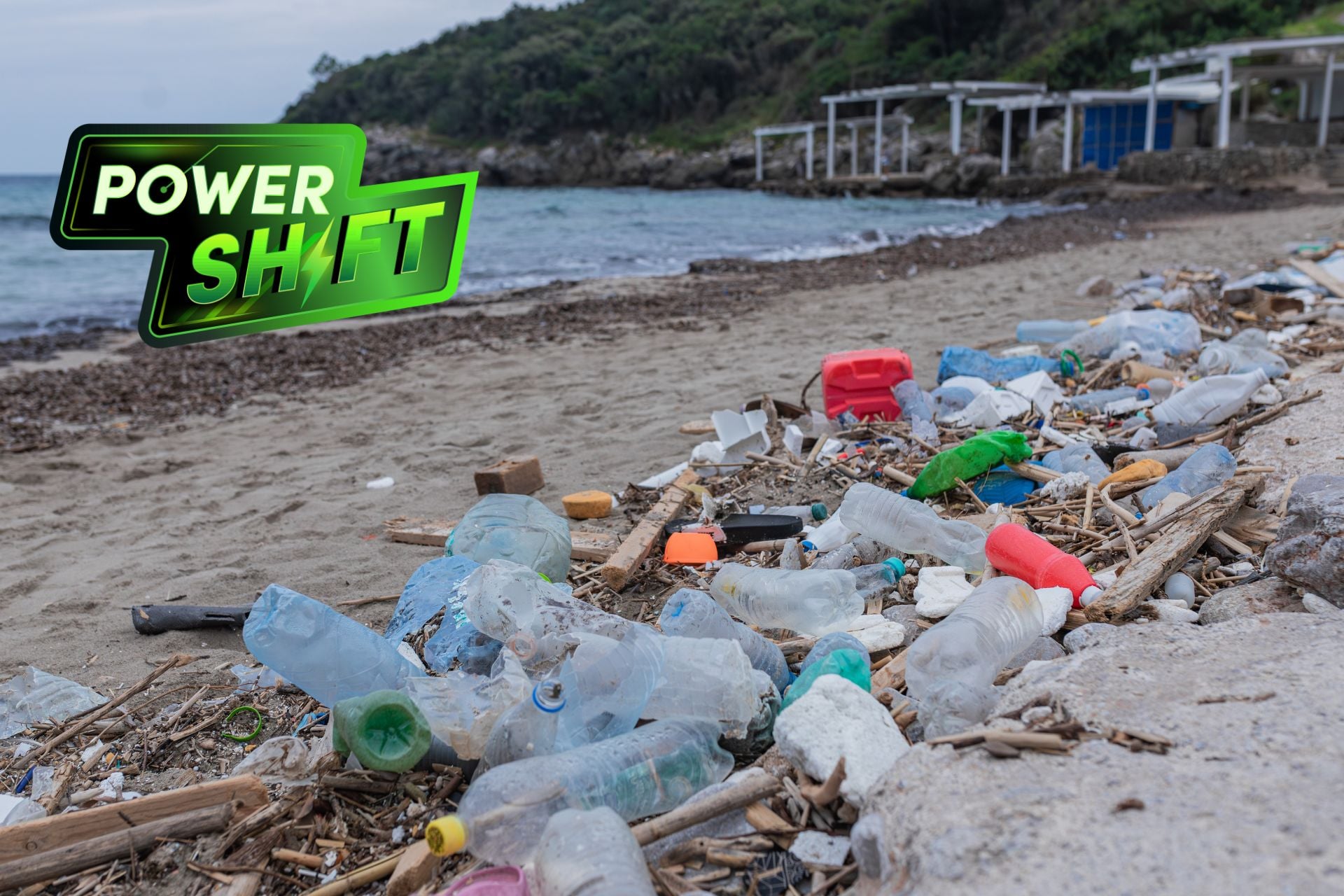
Because plastic recycling requires expensive sorting and processing, only a small fraction of the world’s discarded plastic is actually recycled.
“In practice, discarded plastics are often mixed, contaminated with food, adhesives, labels, dyes and other additives, or combined in multilayer packaging,” co-author Woo Jae Kim, a professor of chemical engineering and materials science at Ewha Womans University in South Korea, told Gizmodo in an email. “Sorting and cleaning them can therefore be technically difficult and more expensive than producing new plastic from fossil resources.”
Previous research showed that in 2022, the global recycling rate remained stagnant at just 9%, while 40% ended up in landfills and 34% was incinerated. Meanwhile, plastic use is expected to keep growing, increasing from 464 megatons in 2020 to 884 megatons by 2050, according to one projection.
At the same time, the world is in urgent need of clean energy sources. Hydrogen is often touted as a promising fuel because it can be burned like oil or gas, but it does not release planet-warming carbon dioxide (CO2). The trouble is, there are no easily extractable sources of pure hydrogen available on Earth. If we want to use it, we need to make it.
To solve both of these problems, chemical engineers are exploring various ways of transforming plastic waste into clean hydrogen. Two methods that have gained significant attention in recent years are pyrolysis and gasification.
Pyrolysis heats plastics in an oxygen-free environment, breaking them down into oil, char, and gases (including hydrogen). The process produces relatively low carbon emissions, but it only works well with certain types of plastic and therefore requires extensive sorting and refining.
Gasification works differently, partially oxidizing plastics at much higher temperatures to produce a mixture of hydrogen, carbon monoxide, and hydrocarbons. Because gasification can handle mixed plastics without extensive sorting, it’s generally considered a more cost-effective approach, but the high pressures and extreme temperatures it requires make it highly energy-intensive, resulting in substantial CO2 emissions.
To eliminate these drawbacks, this new study proposes using alkaline thermal treatment to recycle mixed plastic waste instead. The authors adapted their ATT process from a method that Kim had developed with Ah-Hyung “Alissa” Park, a chemical and biomolecular engineering professor at the University of California, Los Angeles. They designed the original process to convert biomass such as seaweed into hydrogen in a carbon-neutral way but wondered if a similar approach could prove useful for mixed plastic recycling as well.
A cleaner conversion
In the lab, Kim, Park, and their colleagues used the modified ATT to convert the three most common plastics—polyethylene terephthalate (PET), polyethylene (PE), and polypropylene (PP)—into high-purity hydrogen. ATT breaks down plastic by mixing it with sodium hydroxide (NaOH) and heating it. Thanks to the alkaline conditions provided by NaOH, it doesn’t require nearly as much heat as gasification.
At first, the process yielded significantly more hydrogen from PET than PE or PP. Those two plastics consist entirely of carbon-hydrogen bonds, so they are chemically inert under alkaline conditions. To solve that problem, the researchers briefly exposed PE and PP to mild heat and oxygen before the main reaction. This pre-treatment allowed all three plastics to decompose efficiently.
With this approach, the researchers produced hydrogen yields of 43.7, 51.9, and 30.2 millimoles of hydrogen gas per gram of PET, PE, and PP, respectively—yields that are comparable to those achieved by pyrolysis and gasification. What’s more, their post-reaction analysis showed that the reaction’s carbon emissions were negligible.
Julie Zimmerman, an endowed professor of chemical and environmental engineering and vice provost for planetary solutions at Yale University, said the study presents an “interesting and potentially important reaction concept,” but it’s too soon to say that it’s already a scalable, sustainable route for mixed-plastic conversion to clean hydrogen.
The researchers agree that optimizing the process and evaluating its economic viability will require further research. While the reaction produced negligible direct CO2 emissions, they will need to run a full life-cycle analysis to understand its overall carbon footprint, Kim said. The team also needs to develop an efficient way to recycle the sodium hydroxide reagent and test whether the method works with plastic waste that contains food residues, moisture, additives, and other contaminants.
While there is still much work to be done, the study marks an important step toward a more efficient and potentially cleaner way to convert plastic into hydrogen. As both trash and carbon emissions continue to accumulate, finding innovative solutions to these problems will only become more important.