We hear a lot of rhetoric about strong border protection these days, but not much has been said about preserving the sanctity of the boundaries protecting America’s public parks. That’s a real shame, given new research that has mapped an alarming proximity between toxic waste sites across the U.S. and our nation’s otherwise scenic and beautiful public parks.
Researchers with the University of Michigan (U-M) cross-referenced a dataset of 151,366 public parks—including everything from national and state parks to local hiking trails and dual-use school playgrounds—with two categories of pollution sites catalogued by the EPA. The results were stark: Nearly 18% of America’s public parks—26,886 of these recreational areas to be precise—are located within two miles of an EPA-designated Superfund Site. And over 2,000 of these parks physically overlap with a Superfund Site, according to the team’s new study, released as a pre-print Thursday by the Nature journal Scientific Reports.
But the scope of the problem is even worse when viewed in the context of the EPA’s broader category of Toxics Release Inventory (TRI) sites. Over half of all U.S. parks, researchers found, are positioned within 2 miles (3.2 kilometers) of a TRI site. And at least 63 of these parks currently share property with one of these toxic sites.
“[Our] results highlight that neighborhood features cannot be fully understood in isolation from each other,” the team, which is composed of epidemiologists, biologists, and data scientists, wrote in its new study.
“Research that considers parks as a monolithic public health benefit fails to consider the significant overlap between green space and polluting sites in the U.S. and the implications for communities that utilize these parks,” the team wrote in the new study.
Parks and dreck
The EPA has labelled over 21,000 industrial and federal facilities as TRI sites as of 2022, a designation requiring the sites’ owners to track and report activities involving any of over 800 chemicals that the EPA regulates as potential threats to the environment and human health. The general goal is exactly projects like U-M’s research, which utilized EPA databases on these facilities.
Epidemiologist Grace Noppert at U-M’s Institute for Social Research and her coauthors noted that some of these sites, particularly near America’s largest state and national parks, have long been a well-known problem.
“National parks in the Mountain West are often near mining sites,” Noppert and her colleagues wrote, citing research dating back to the early 1980s.
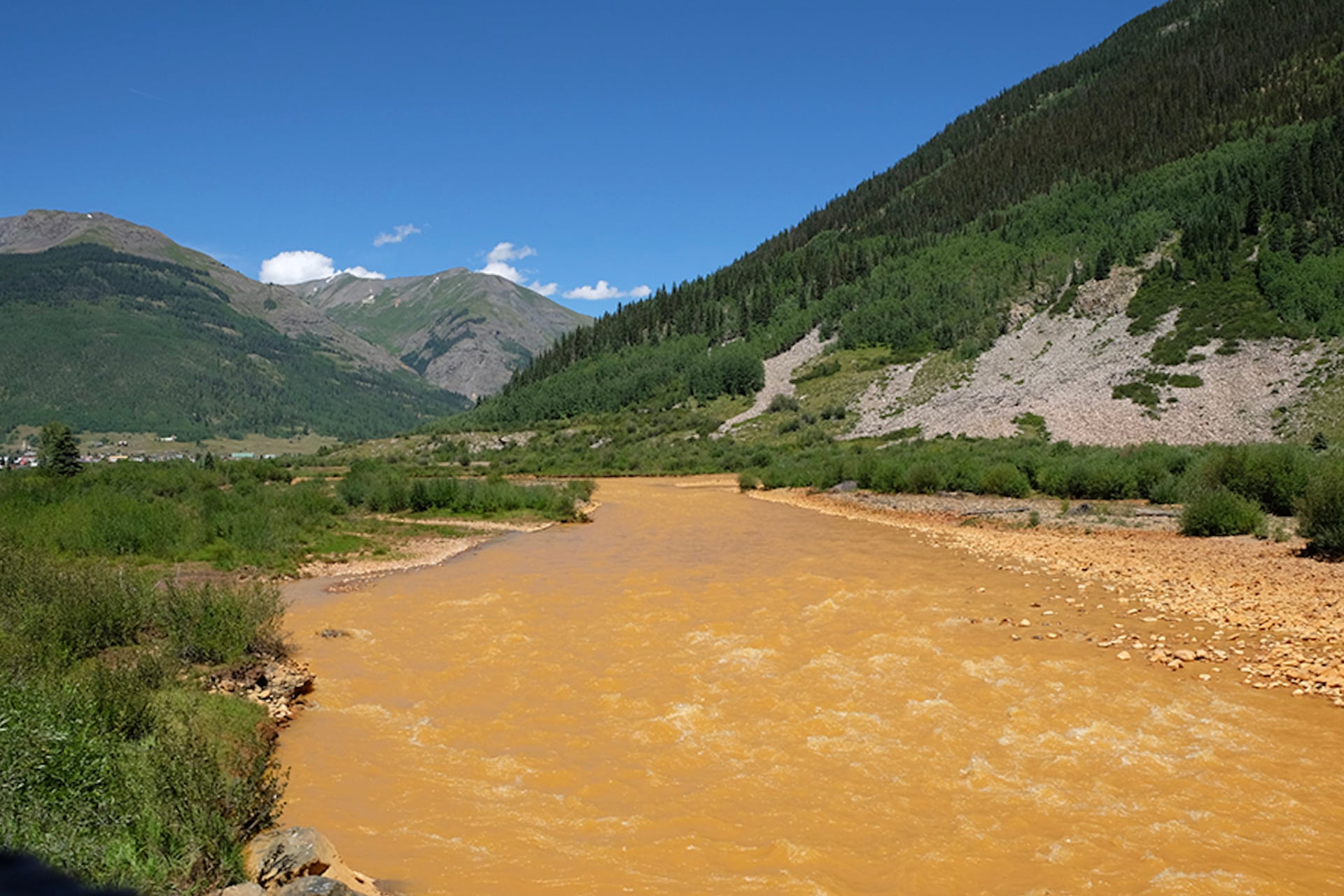
“Colorado had the largest amount of total park area that overlapped with SFS [Superfund Sites],” they noted, roughly 430,610 square miles (over 1.1 million square kilometers). This would include the infamous orange-brown, toxic mine water that crossed state lines into Utah’s Glen Canyon national recreation area in 2015.
But their data, sourced from the nonprofit Trust for Public Land’s 2024 ParkServe dataset, helped map more granular consequences for these myriad smaller parks that dot heavily polluted areas across the U.S., from major cities to rustbelt coal towns.
“[The] greening of post-industrial landscapes, and the creation of recreational areas across time results in the layering of different types of space at a given location,” Noppert’s team wrote.
“There were only five states that had no park land that overlapped with any SFS (Arkansas, Maine, Mississippi, North Dakota, and Wyoming),” the researchers stated.
Parallel park things
Noppert and her colleagues noted that there were some significant omissions within their current analysis. For one thing, they have not yet broken down the data by the specific pollutants present within these parks, much less how local details like wind patterns or topography might hasten or hinder any given pollutant’s spread.
They expressed hope that future research will not only incorporate these factors but also data that could help map all the other neighborhood amenities and local health risks that should be considered in parallel to separate benefits and risks that cancel each other out.
“These places require localized attention, analysis, and advocacy to support both human and environmental health,” Noppert’s team said.