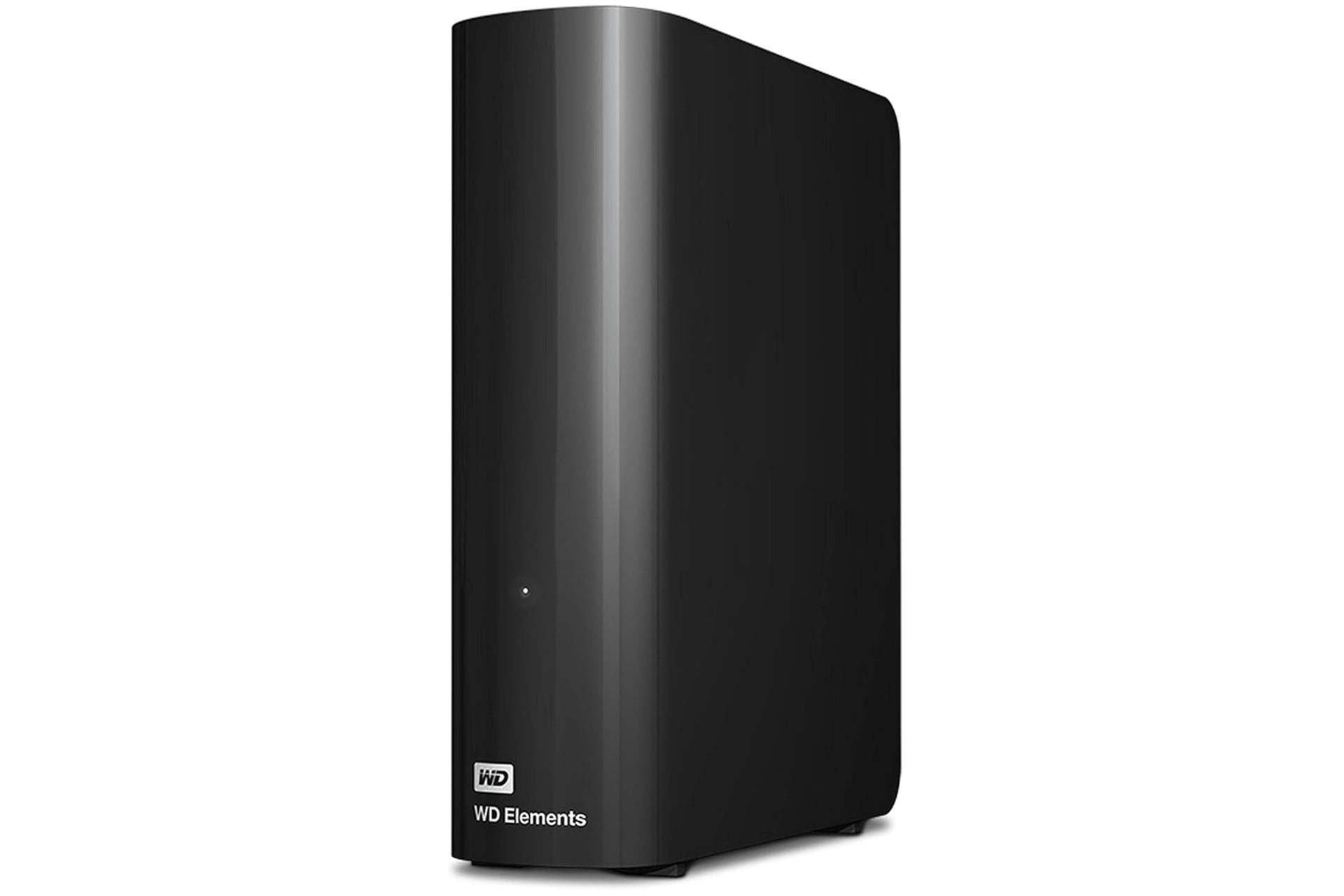
AI infrastructure demand has consumed NAND and HDD supply at a scale that has pushed storage prices upward across the board throughout 2025. Against that backdrop, the WD Elements 20TB desktop external hard drive at $599, down from its $814 standard price, works out to roughly $0.03 per gigabyte for 20 terabytes of plug-and-play storage. That’s still pennies per gigabyte in a market where those pennies have been getting more expensive, and it’s considerably cheaper than what cloud storage costs at this scale over any meaningful time horizon.
$0.03 per GB when AI companies have been driving that number up
The mechanism behind the storage price pressure is straightforward: AI model training and inference require enormous amounts of fast storage, and the companies building data centers are competing for the same NAND flash and HDD platters that consumer drives use. Western Digital and Seagate supply both markets, and when enterprise demand accelerates faster than manufacturing capacity, consumer pricing follows upward. The WD Elements 20TB at $599 reflects that pressure: this drive was cheaper a year ago, and it may be more expensive a year from now depending on how AI infrastructure buildout continues.
At $0.03 per gigabyte, the 20TB Elements remains one of the most cost-efficient ways to store large volumes of data that exists in consumer hardware. A 4K video library, a photography archive spanning decades, a full backup of multiple computers, a media server with a complete film and TV collection: 20 terabytes covers all of those simultaneously with room to spare. The USB 3.0 connection handles fast data transfers for moving large files without the bottleneck that older USB 2.0 connections impose, and plug-and-play compatibility with Windows 10 and above means the drive is recognized immediately without driver installation. Mac users will need to reformat the drive before use.
WD is one of the two dominant HDD manufacturers globally alongside Seagate, which means the mechanical drive inside the Elements desktop enclosure is manufactured by the same company that supplies enterprise data centers. The WD quality standard that applies to commercial storage applies here, which is a meaningful distinction from third-party enclosures using drives from smaller manufacturers with shorter track records on reliability at this capacity.
Cheaper than the cloud at this scale, by a significant margin
Google One storage at 2TB costs $9.99 per month, which is $119 per year for a tenth of what this drive holds. Scaling that to 20TB on Google One requires the highest enterprise tier, which runs considerably more annually. iCloud’s 12TB maximum tier costs $59.99 per month, or $719 per year, for less than the 20TB this drive provides. The WD Elements at $599 is a one-time purchase that costs less than a year of cloud storage at comparable or lower capacity, with no ongoing subscription, no internet dependency for access, and no monthly bill that compounds indefinitely.
The trade-offs are real: a physical drive can fail, can be stolen, and doesn’t provide the geographic redundancy that cloud storage does by default. For anyone using this as primary backup alongside an existing cloud solution, or as a local archive for data that doesn’t require constant cloud accessibility, the cost-per-gigabyte advantage over cloud storage at 20TB scale is substantial enough to make the hybrid approach the rational one.