How people develop long-lasting taste aversions has
intrigued scientists for decades. Surprisingly, research now shows this
phenomenon doesn’t occur in the brain area involved in taste perception, as
previously believed — this discovery could not only help us better
understand our taste system, but also why
people eat the foods they do.
In recent years, scientists have used a variety of
techniques to reveal the roles that different brain regions play in managing
our senses. But the taste cortex, or gustatory cortex, of the brain has remained
a bit of a mystery, said Alan Spector, a neuroscientist who studies the
gustatory system at Florida State University. “Though, there have been
some theories about what it’s involved in,” he told io9. In particular,
research has suggested the gustatory cortex, which is known to mediate our taste
perception, also plays a strong role in conditioned taste aversion.
This ubiquitous phenomenon occurs when people (or animals)
eat or drink something new, and get sick shortly after (within 12 hours). From then on, they will have a powerful,
long-lasting aversion to the food item, a reaction that is a kind of natural
survival mechanism. And unlike other forms of conditioning,
taste aversion doesn’t require repeated trials — you only need to get sick
from something just once in order to become averse to it. This can also happen
with food you’re familiar with, but the aversion won’t last as long, Spector
said.
A number of studies in the past have shown that damaging an
animal’s gustatory cortex causes it to lose its learned taste aversion. This
suggests that the taste cortex encodes conditioned taste aversion. Recently,
Spector and his colleague Koji Hashimoto decided to use this “lesion
approach” to see if the gustatory cortex also encodes other functions of
taste, such as taste sensitivity and taste discrimination. They began by trying
to reproduce those past studies on taste aversion — they couldn’t. In their
experiments, they found that even extensive damage to rats’ taste cortexes
didn’t mess with their conditioned taste aversion.
The researchers thought that maybe they did something
differently. “We thought that maybe our lesions were in a slightly
different place or not as big,” Spector said. So Spector and his
colleagues — Lindsey Schiera and Koji Hashimoto, especially — redid the
experiments with a more comprehensive approach.
Taste Aversions and Brain Lesions
The researchers began by inducing a conditioned taste
aversion in rats. They first placed the rodents on a “restricted water
access schedule,” where they only gave the rats water at certain times of
the day. The rodents functioned just fine on the schedule, but they were
thirsty when drinking-time came around.
Next, the team replaced the water with a sodium chloride (salt) solution. After the rats drank the solution, the team injected them with
a bit of lithium chloride, which causes nausea for an hour or so. They pulled
this trick again a few days later — and force fed the rats that already developed an aversion to the solution after getting sick the first time — to solidify the conditioning. They then left
out two bottles of liquid — one contained normal water and the other contained
the salt solution — for over a month, and found that the rats only
drank the pure water, showing that the conditioning lasts for a long time.
https://gizmodo.com/the-best-solution-to-world-thirst-may-be-desalination-5827869
The researchers made all kinds of different surgical lesions
across the rats’ gustatory cortexes and adjacent areas, and then tested their
taste aversion. When they looked at the group of rats with the most extensive
gustatory cortex damage, they found that these rats were still averse to the
salt solution.
They then conducted another set of experiments where they
tested if the rats could form a conditioned taste aversion to delicious sucrose
after they developed lesions. Again, as
a group, the rats with the most extensive damage showed no taste aversion
impairments — that is, the rats were still able to develop a taste
aversion to sucrose despite having damaged gustatory cortexes.
“Basically, we weren’t finding many effects,”
Spector said. “We were perplexed.”
A Symphony of Signals
When the team took a closer look at individual rats,
however, they saw that some of them did indeed show a disruption in their
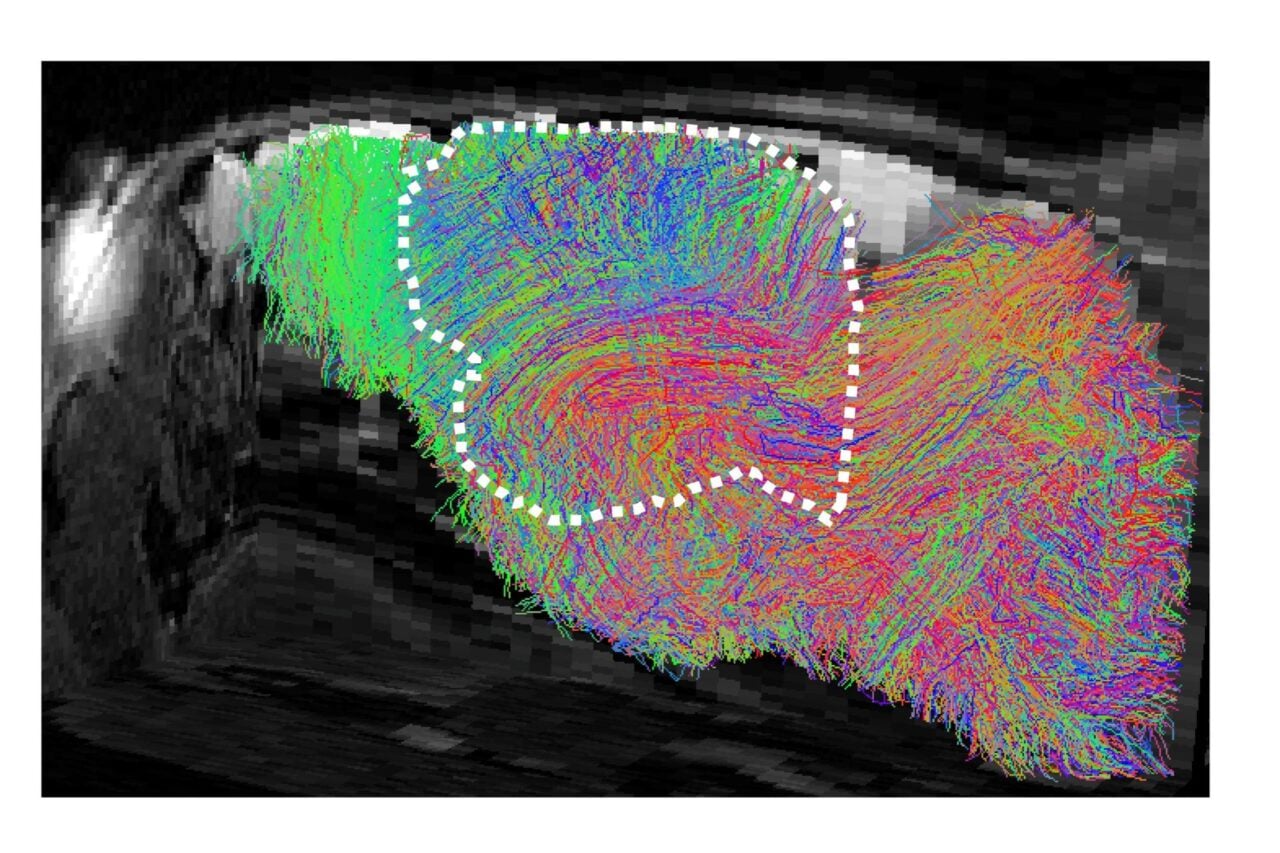
conditioned taste aversion. Using a high-resolution lesion mapping program they
developed, they were able to overlay the lesions of the unimpaired rats with
the impaired rats, which allowed them to find lesion “hot spots”
associated with taste aversion disruption.
To their surprise, the lesions of the impaired rats were
outside of the gustatory cortex, as it’s conventionally defined by
electrophysiological recordings (a technique in which scientists measure the
activity of neurons), Spector said.
Deficits in taste aversion were instead associated with the
most posterior end of the gustatory complex, as well as an adjacent brain area
called the visceral cortex, which processes information from the organ systems,
including the gut. The researchers took a look at some of those previous
studies on taste aversion impairments, and found that while those studies
showed lesions in the main gustatory cortex, they also showed lesions in the visceral cortex. “Most people very naturally
contributed [the effect] to the gustatory cortex,” Spector said.
The results suggest that the gustatory system works with
the visceral sensory system when it comes to learned taste aversion, as well as
eating, drinking and satiation, Spector said. “All of these things involve a symphony
between the signals coming from the mouth and the signals coming from the gut
and other organ systems that help guide ingestive behavior,” he explained, adding that further work on the interplay between these systems
could elucidate why people eat what they do, and even why some people overeat.
The research also has clinical applications. For example, cancer patients receiving chemotherapy sometimes develop
eating disorders, which may in part be due to the therapy inducing taste
aversions. “Learning more about this would help guide the type of
therapeutic regimes that physicians suggest,” Spector said.
For now, Spector is planning on returning to his original
research goal: Using the lesion approach to understand the role the taste
cortex plays in taste sensitivity and taste discrimination. “We really
don’t know a lot about what the gustatory complex does,” he said. “What
has initially been attributed to gustatory complex probably involves other
areas of the brain.”
Check out the full
study over in the journal PNAS.
Top image via Levranii/Shutterstock.