Land Sinks
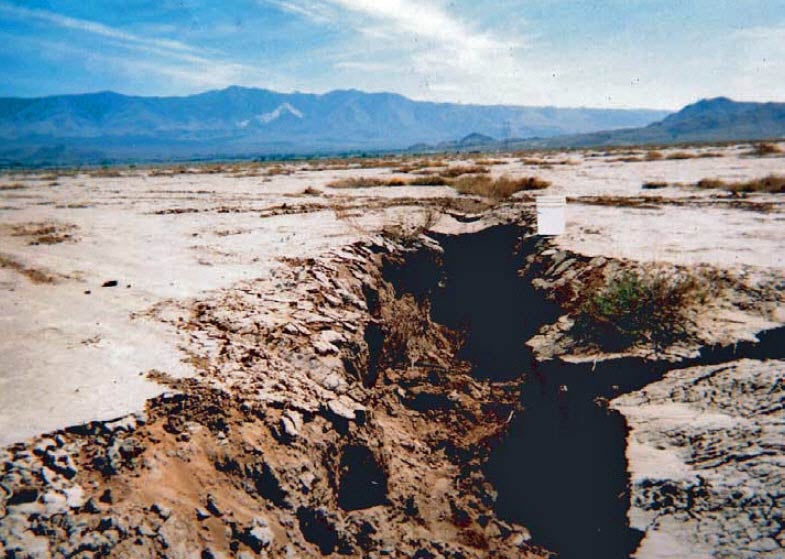
As drought reduces surface water reserves, people and farms are forced to shift over to groundwater to meet their needs. And as more water is pumped out of the ground, the land itself starts to sink, in a process known as land subsidence. More than 80% of land subsidence in the U.S. is the result of water over-pumping, according to the USGS.
In California, satellite data revealed that some towns in the Central Valley sunk almost a foot in just a single year (2020-2021), according to a report from the San Francisco Chronicle. The USGS tracks land subsidence, and wide swathes of the state are experiencing it. It’s also happening in other states, like Texas and across the Southwest.
As the ground beneath our feet gets lower, human infrastructure is often damaged. Buildings can weaken and even collapse. Sewage, power, and rail lines are busted. And if land sinks enough, future flood risk is amplified.