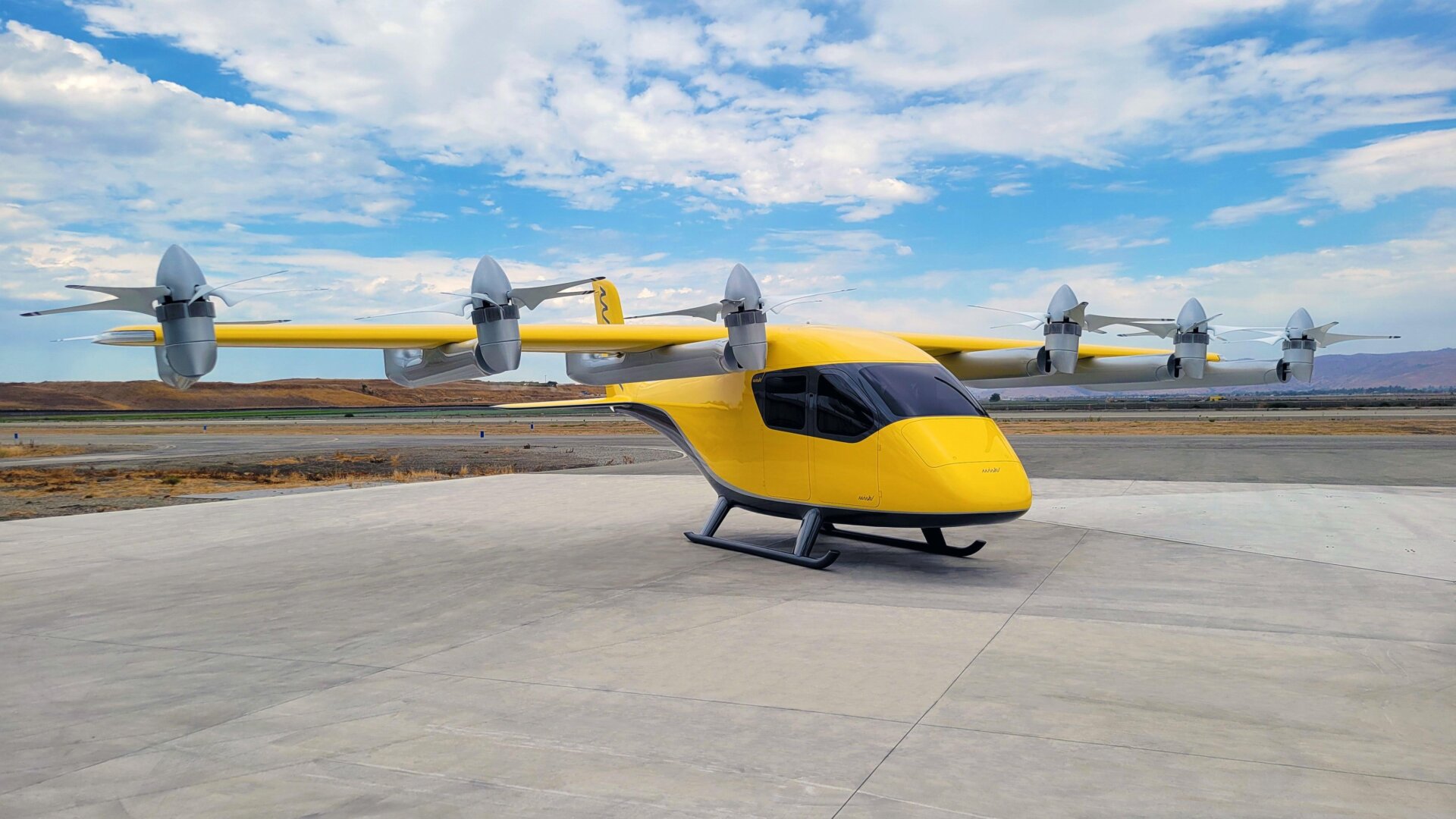
The famed Kittyhawk air taxi company is no more, but one of the initiatives spawned from its failed attempts to create quiet, fast, and cheap air taxis—Wisk Aero—has a new autonomous aircraft design that the company claims may be the best chance yet to see big yellow school buses buzzing overhead.
On Monday, air taxi company Wisk showed off the first details for its 6th generation remote-piloted air taxi designs. It’s the latest iteration to come from yet another company promising it will be the first to truly push short-range commercial flight into clustered metropolitan settings, but it still remains to be seen whether any company can make such rides cheap and safe enough so as to be viable both in the eyes of federal regulators and the general public.
Wisk promises this four-seater aircraft can cruise between 110 and 120 knots (138 miles per hour) at an altitude of around 2,500 to 4,000 feet. It’s got a wingspan just under 50 feet, and the company claims its batteries allow for a range of 90 miles before tapping into reserves. The company said charging time should be 15 minutes or less using “fast chargers” already seen with the electric vehicle industry.
Like most modern attempts at creating the first commercially viable air taxi, Wisk’s 6th gen design is a vertical take-off and landing (VTOL) aircraft, though its latest version relies on 12 propellers on top of the wings with propulsion in the rear. The big yellow air taxi also claims tickets will be just $3 per passenger per mile once the company receives federal certification (a big “if”).
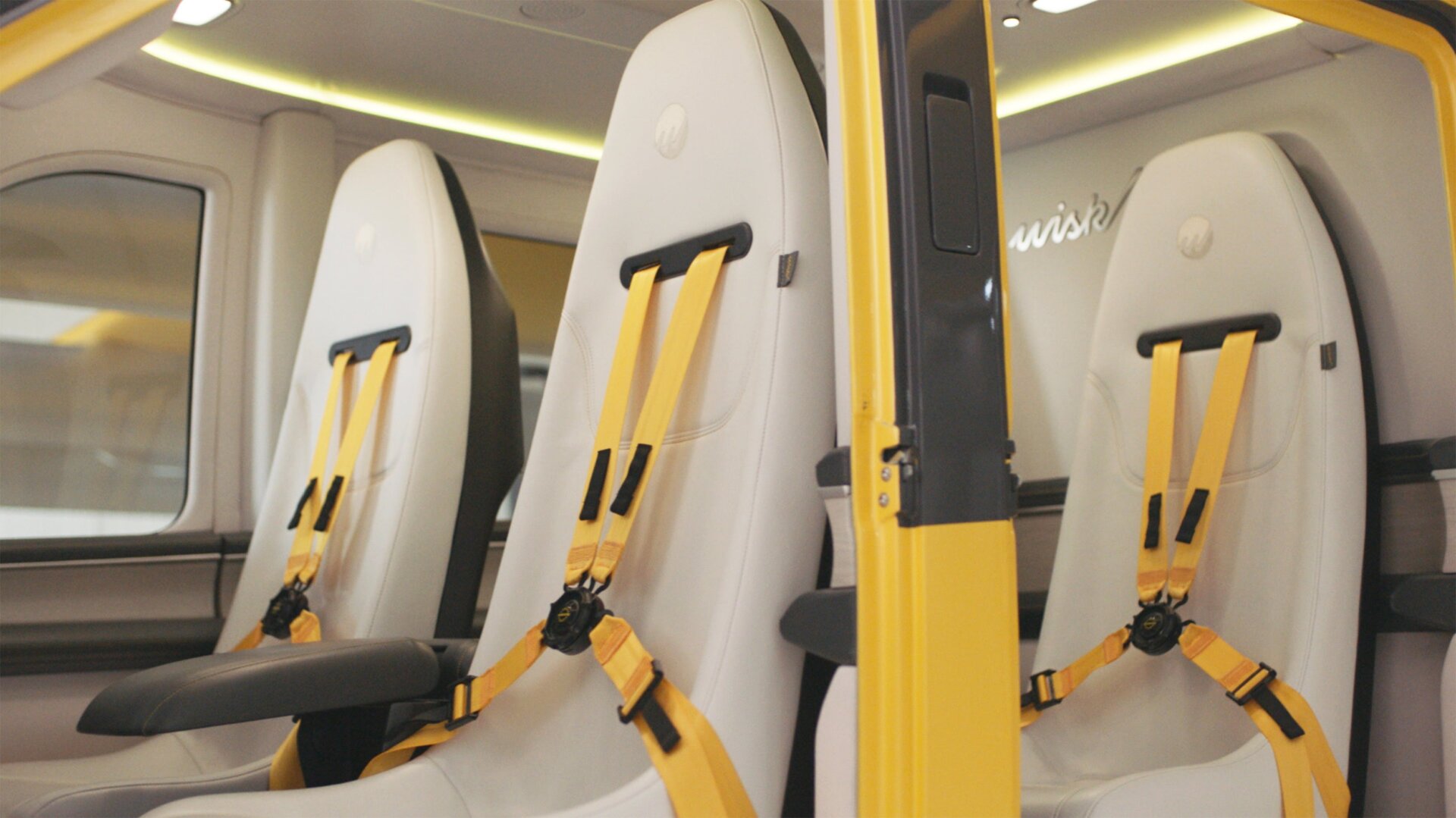
Promotional videos show passengers strap in using x-shaped seatbelts and use touchscreens to go through the first safety check before takeoff. It’s unclear how customers would set up appointments and flight destinations.
What also remains unclear is the production cost for Wisk’s latest model and just how loud it will be, two elements that have made wide-scale adoption of air taxi technology a hard sell. Wisk said this latest design is supposed to meet and beat safety expectations, boasting there’s a “one-in-a-billion chance of an accident.” The company has not revealed just what redundancies its introducing to fully make that claim.
On their face, the stats of this latest air taxi design are similar to Joby Aviation’s latest offering. Last year, that air taxi company was boughtfrom Uber by a special purpose acquisition company headed by LinkedIn co-founder Reed Hoffman and Zynga founder Mark Pincus. The latest designs of Joby’s aircraft showed its a five-seater—including one pilot—with a top speed of 220 MPH and a range of 150 miles.
But what Wisk especially wants to help differentiate it from competition is the focus on its self-flying technology (because you haven’t heard enough talk about wheeled vehicles companies extolling similar technology). Wisk notes in its release they believe autonomous flying is the “key” for air mobility companies. The company said this new aircraft should have improved sensors to detect and avoid obstructions it may encounter in the air. At the same time, there are “multi-vehicle supervisors that provide human oversight of every flight” who can also take over when needed.
As much as some users might be concerned of an autonomous aircraft falling from the sky, Jon Lovegren, the company’s head of autonomy, said he expects passengers to grow more safe and secure with more flights and further promotion of their safety technology.
Wisk said this latest version of their electric is its best shot at getting full certification from the Federal Aviation Administration. The thing is, certification can take five to nine years to complete, according to the agency’sfacts page. The company said they were looking to certify FAA 21.17 (b), and CEO Gary Gysin said during a press call they have been working with the FAA for three years but expects certification should take “years.”
Joby, which received FAA authorization for its air taxi services in May this year, still needs certification for it’s actual aircraft. Joby also boasted they have a timetable to get their plane commercially available by 2023.
Wisk has a long and somewhat complicated connection to Kittyhawk, one of the big original air taxi companies, which last month announced it was closing its doors. Kittyhawk had merged with fellow low-profile electric aircraft company Zee Aero and after partneringwith the aeronautics behemoth Boeing to work on a 5th generation VTOL aircraft known as Cora. Kittyhawk, which was spawned by ex-Google engineers who worked on the tech giant’s self-driving car designs, also was working towards self-driving air taxis.