Garlic Mustard
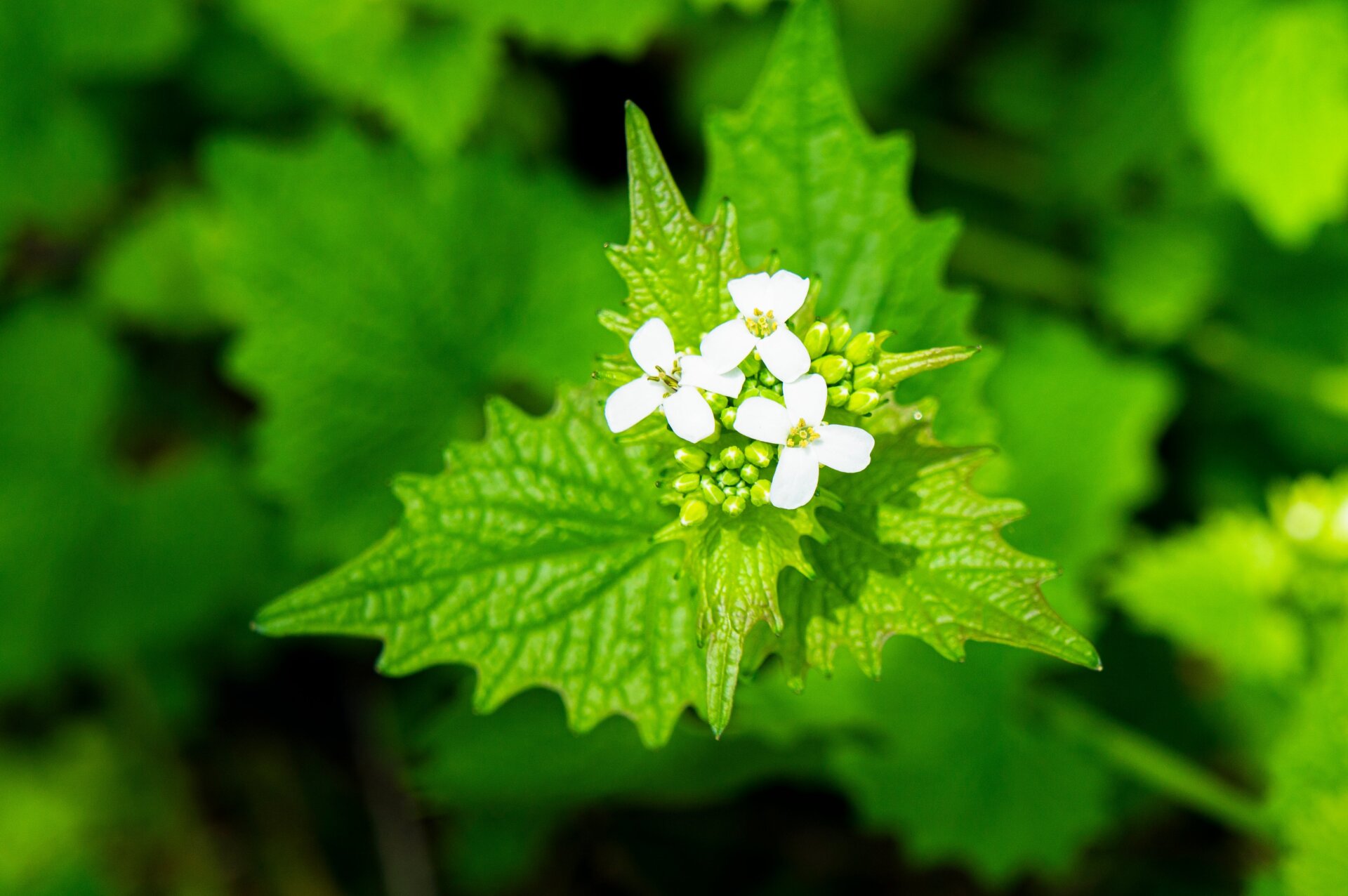
This delicately flowering plant is originally from Europe and was brought over to the U.S. in the 1800s. Its seeds quickly spread in the wind, and the plant emerges earlier in the springtime compared to many native species, according to the Nature Conservancy. This means that its leaves block out the sun for species native to North America, and it drinks up a lot of the soil moisture before other plants have a chance to do so.
Notice some garlic mustard near you? Rip it out of the ground, roots and all to ensure that it won’t grow back. And then make a meal. There are online recipes for garlic mustard pesto, which can be used in sandwiches or pasta. The shoots of the young plant can be roasted and eaten too, almost like you’d eat broccoli or asparagus. Toss them in some melted butter or olive oil and sprinkle a little sea salt for an easy-to-prepare side dish.