Asian Longhorned Ticks
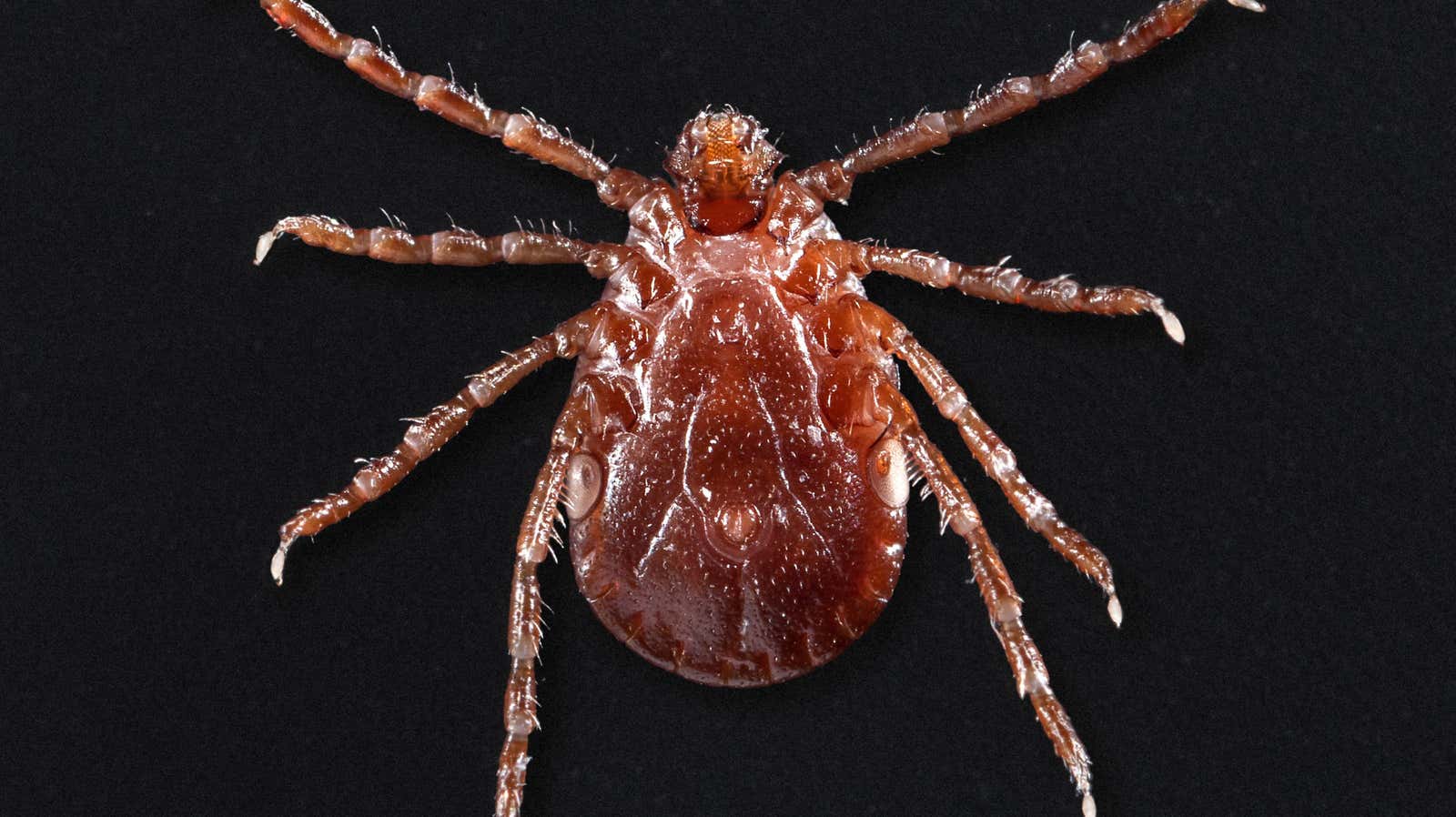
Ticks native to the U.S. are already a major public health menace, due to the many germs they can carry like those responsible for Lyme disease. So it was hardly good news when researchers in New Jersey announced that they had discovered a new bad tick in our backyard in 2017, the Asian longhorned tick (Haemaphysalis longicornis). The tick may have arrived on the backs of pets or other animals that traveled to the U.S. Since then, the tick has been spotted in 17 states, including New York, Georgia, and Tennessee.
The Asian longhorned tick is a threat to livestock, since it can quickly reproduce asexually and swarm the animals they feed off of in search of blood. But its level of harm to Americans is less clear for now. In its native areas, the ticks can cause and pass on germs that cause human illness, but early research has suggested that they won’t be a major cause of Lyme disease, and that they may not have that high a hankering for human skin. Still, their range is projected to eventually extend across half the U.S., and there’s other evidence indicating that they could spread at least some tickborne illnesses like Rocky Mountain spotted fever.