Zebra Mussels
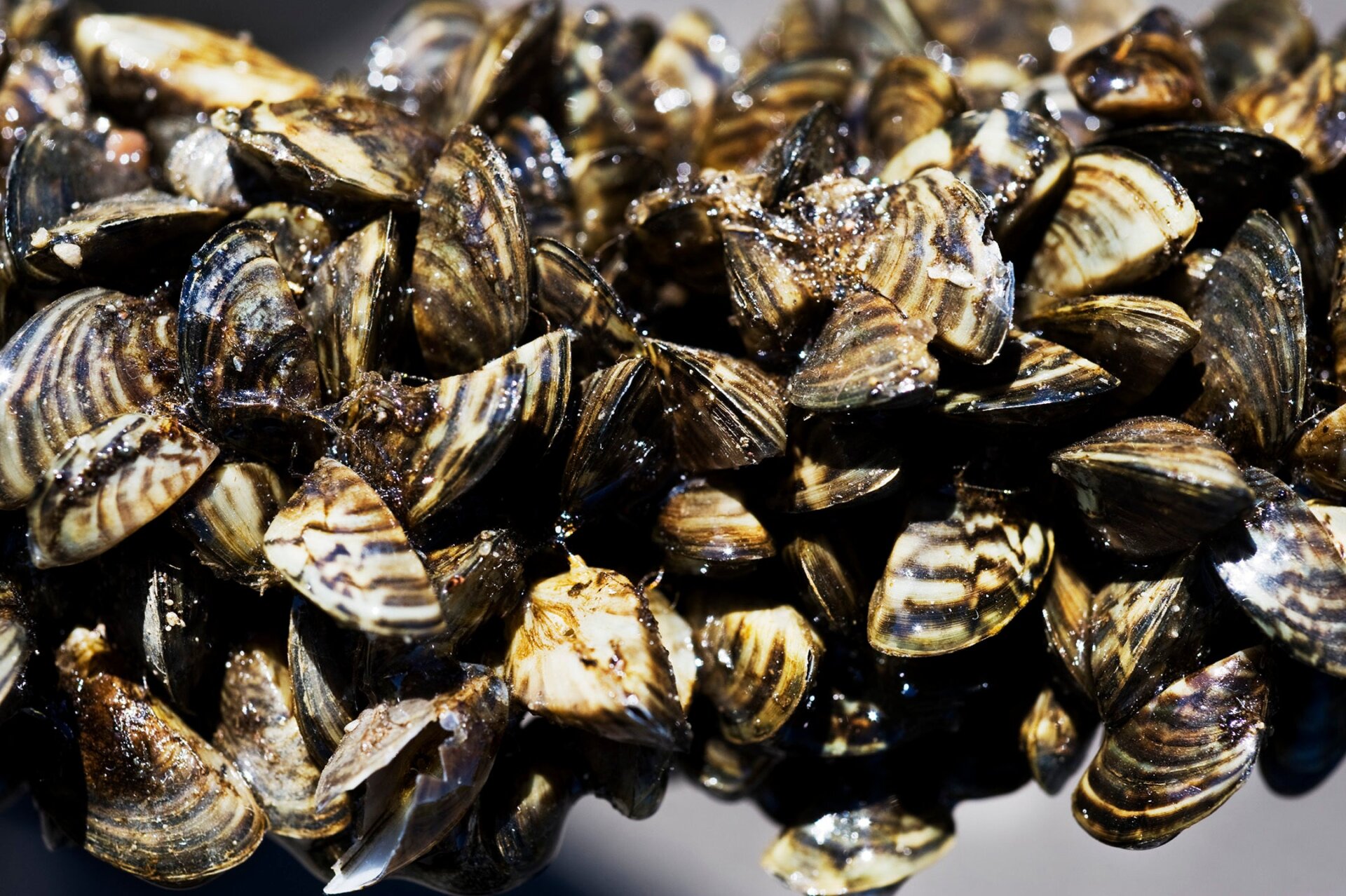
Zebra mussels (Dreissena polymorpha), named for the distinctive black stripes on their shells, were first discovered in the Great Lakes during the late 1980s, likely having arrived from the Caspian Sea region of Asia in the ballast water released by large ships. Scientists have desperately been trying to contain them ever since. These mussels can rapidly crowd out and devastate local populations of other mussel species once they reach a new source of freshwater. And they can grow so plentiful that they clog up intake pipes in water treatment and power plants.
So far, they’ve been limited to the eastern half of the U.S. But last year, wildlife officials made the alarming discovery that these mussels had managed to contaminate moss balls commonly sold and used in home aquariums across 21 states. The discovery prompted multiple agencies and the pet supply industry to urge customers who find these mussels in their moss balls to report their sightings and to safely dispose of them.