Feral Hogs
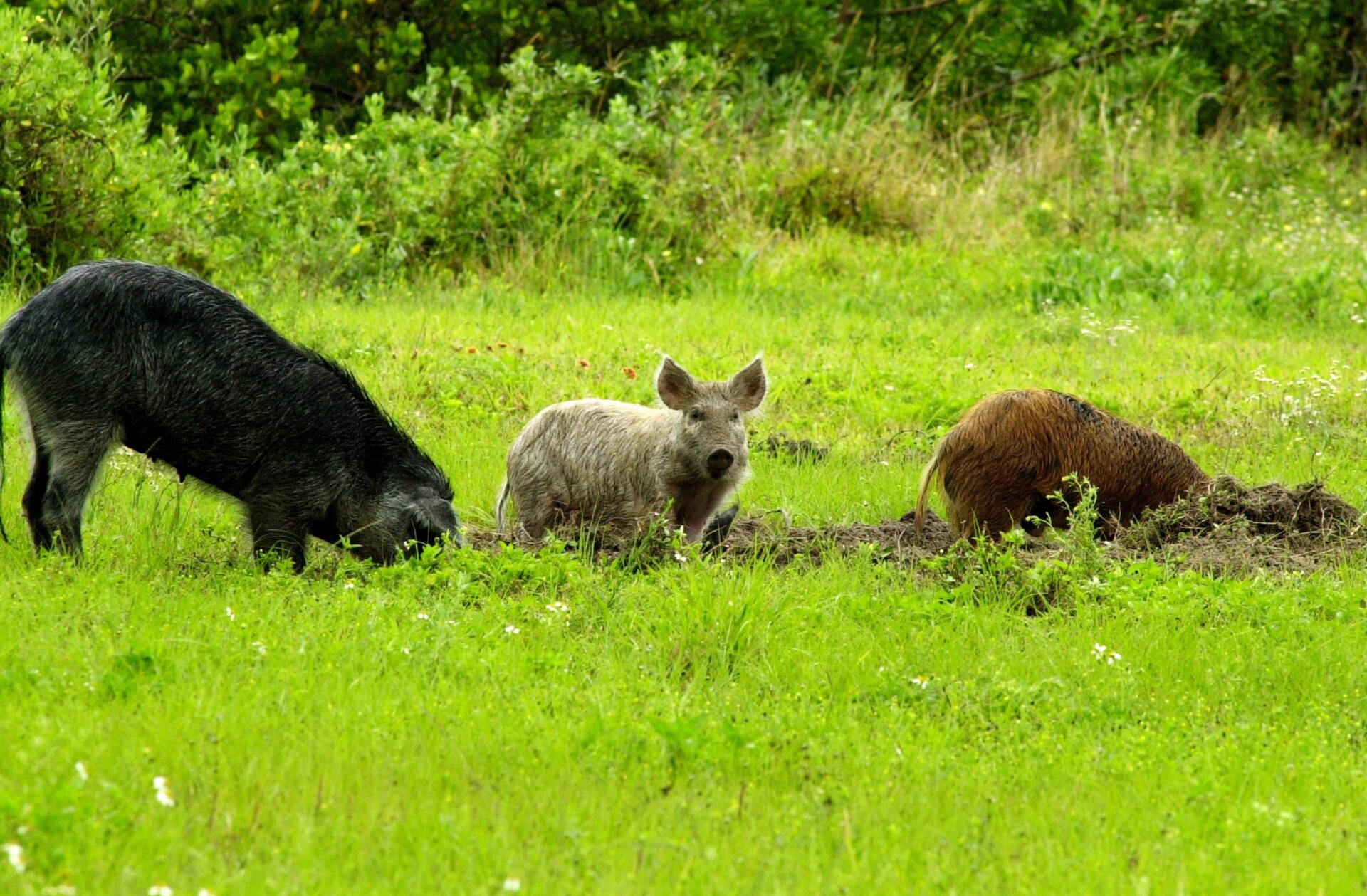
Feral hogs (Sus scrofa) were brought to the U.S. by humans during two major migrations in the 1500s and 1900s, first as a source of food and later as hunting stock. But while their fondness for backyards have become the stuff of memes, they’ve really become a serious threat to ecosystems across the country. In the U.S., they’re wreaking havoc on the Southeast’s salt marshes, due to their ravenous hunger for mussels in the area. Worldwide, they’re a surprisingly large contributor to greenhouse gas emissions, since they disturb soil, an act that releases carbon dioxide into the atmosphere. Rarely, they can even spread dangerous brain infections to the hunters who feed on them.
Feral hogs may be the internet’s favorite animals outside of cats and dogs, but their real-life presence is anything but.