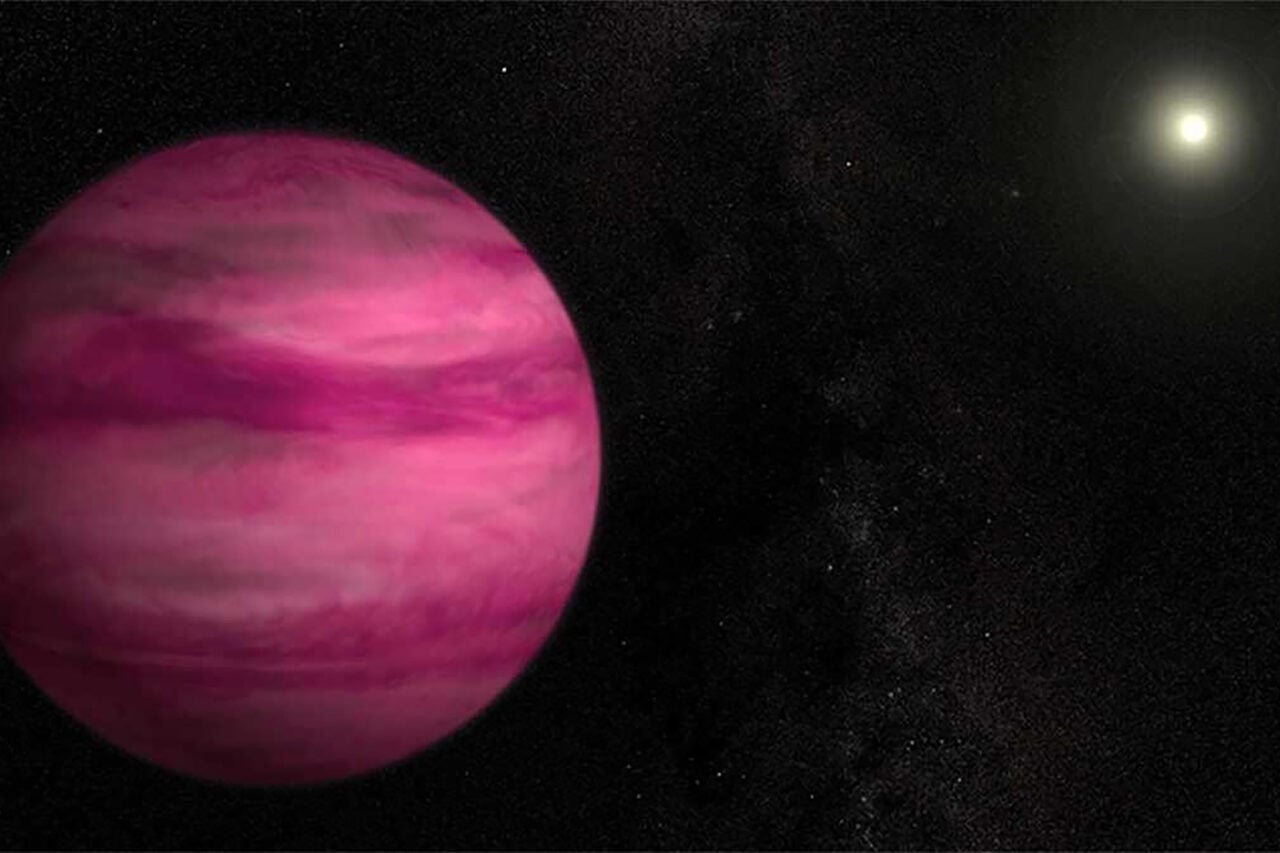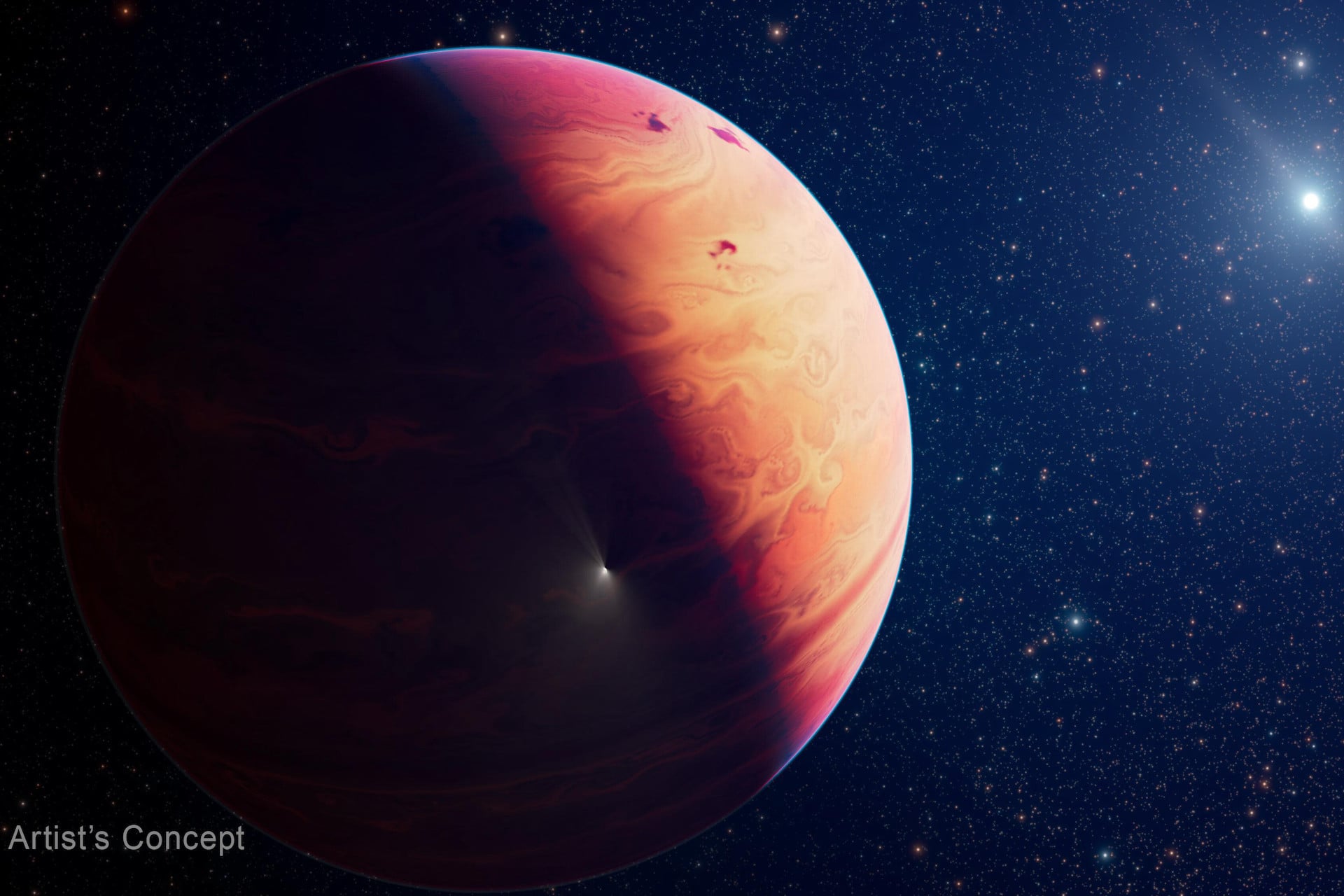
29 Cygni b is a massive object weighing around 15 times as much as Jupiter and with 150 times the heavy elements of Earth. So, is it a planet or a star? Astronomers used the James Webb Space Telescope to probe the object, gathering clues on whether it grew larger over time like a planet or fragmented into smaller bits like a star.
Stars are born from large clouds of gas and dust which break apart into smaller pieces. Each piece then collapses under its own gravity, getting smaller and more dense. On the other hand, planet formation involves a bottom-up process from the leftover gas and dust surrounding a young star in a protoplanetary disc. Smaller bits of rock and ice clump together, coalescing with one another to grow bigger and bigger.
The object 29 Cygni b sits right on the dividing line between these two processes, which sparked the curiosity of a team of researchers who set out to explore its origin story. The findings are detailed in a new study published in the Astrophysical Journal Letters.
“In computer models, it’s very easy for fragmentation in a disk to run away to much higher masses than 29 Cygni b. This is the lowest mass you could plausibly get,” William Balmer, an observational astronomer at Johns Hopkins University and lead author of the study, said in a statement. “But at the same time, it’s about the highest mass you could get from accretion.”
Caught in the middle
The research team used Webb’s Near-Infrared Camera (NIRCam) to directly image 29 Cygni b. It’s the first of four objects targeted by the team, all of which weigh between 1 and 15 times as much as Jupiter.
The objects also had to orbit within about 9 billion miles (15 billion kilometers) of their stars. 29 Cygni b orbits its star at an average distance of 1.5 billion miles (2.4 billion kilometers), about the same distance as Uranus in our solar system.
The researchers looked for signs of light being absorbed by carbon dioxide (CO2) and carbon monoxide (CO) to determine how much of those heavier chemical elements, or metals, the object possessed. They found that 29 Cygni b is enriched in metals relative to its host star. The amount of heavy elements suggests that the object accreted large amounts of metal-enriched solids from a protoplanetary disc.
The team also used ground-based observations from the CHARA (Center for High Angular Resolution Astronomy) telescope array to determine if the object’s orbit is aligned with the spin of its star.
Final answer
By putting together the data on 29 Cygni b, the team of researchers was able to determine that it is indeed a planet and not a star.
“We were able to update the planet’s orbit, and also observed the host star to determine its orientation with respect to that orbit,” Ash Messier, a graduate student at Johns Hopkins University and co-author of the study, said in a statement. “We showed that the inclination of the planet is well-aligned with the spin axis of the star, which is similar to what we see for the planets of our solar system.”
The researchers concluded that the object likely grew larger over time, following the same formation process as a planet and not a star. “Put together, this evidence strongly suggests that 29 Cygni b formed within a protoplanetary disk through rapid accretion of metal-rich material, rather than through gas fragmentation,” Balmer said. “In other words, it formed like a planet and not like a star.”
As the team goes on to explore their three remaining targets, the researchers will look for differences in composition between lower-mass and higher-mass planets to gather more clues on their formation processes.