The original health tracker was, in a way, destined to fail.
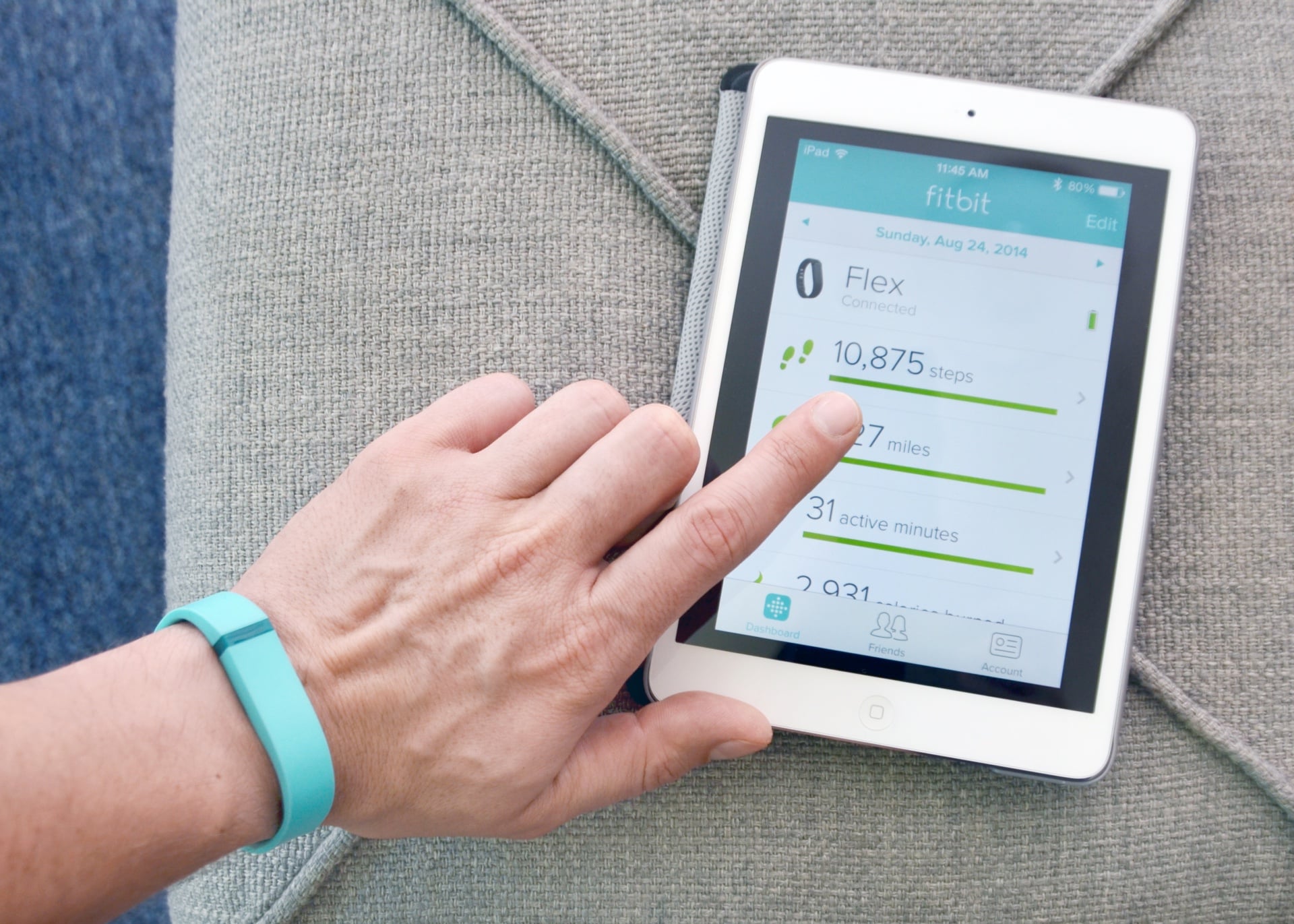
When Fitbit released its first wearable health tracker in 2009, new users were typically prompted to set their daily step target to 10,000 steps. That number wasn’t arbitrary. While Fitbit might have been the first mass-market health tracker in the United States, it was far from the original.
In 1965, a Japanese clock-making company called Yamasa Tokei Keiki debuted the first consumer pedometer. The device was named the Manpo-kei, which translates to “10,000 steps meter” in Japanese. How the company settled on 10,000 steps has never been entirely clear, but it likely came as a culmination of two factors. For one, the Manpo-kei came out just a year after the 1964 Tokyo Summer Olympic Games, when there was a nationwide emphasis on fitness. A team of researchers at Kyushu University led by Yoshiro Hatano had tracked the daily walking habits of active Japanese men and found that they took anywhere from 9,500 to 12,000 steps per day. And second, the Japanese character for 10,000 just so happens to resemble a person running, or at least one in motion.
There were no actual scientific studies that showed a certain number of steps per day directly led to improved health, but 10,000 steps was catchy and easy to remember. Quickly, the number became a common metric for health not just in Japan but around the world, which is likely how it landed itself in America’s first health wearable, and became our first nonsensical health obsession. Suddenly, a certain percentage of Americans with health trackers couldn’t go to bed without reaching their 10,000 step goal, regardless of the fact that it was clear, even then, that health doesn’t suddenly start or stop at that number.
What the original Manpo-kei and later the Fitbit actually did was gamify health. In other words, it took something that a significant percentage of the population hates—exercise—and turned it into something you could “win” at.
I-Min Lee is an epidemiologist at Harvard University School of Public Health whose research helped debunk the idea that 10,000 steps was a golden ticket to vitality. She told me and others back in 2020 that a key motivation for identifying the origin of 10,000 steps was because people were so obsessed with the number and the quest to achieve it, despite the fact that “there is limited information on how many daily steps are needed for health, particularly as related to clinical end points and mortality,” she and co-authors wrote in their 2019 study in JAMA Internal Medicine.
The Fitbit took a daily activity that up until this point had been more or less inconspicuous to the average person and made it extremely visible: When you looked down at your wrist, you could see precisely how many steps you’d taken that day, for better or worse. When it came to health, ignorance was no longer bliss.
Subsequent studies revealed just that; the Fitbit was effective not because it simply tracked movement, but because it made behavior visible in a way that encouraged change. An oft-cited meta-analysis, which conducted a systematic review and analysis of 37 Fitbit-based trials, found that, among all participants who used the tracker, there was an average increase of about 950 steps per day as well as a statistically significant increase in moderate-to-vigorous physical activity.
Another randomized-controlled trial (not funded by Fitbit) studied a group of 51 inactive postmenopausal women and split them up into two groups: one that received a standard pedometer and the other a Fitbit (along with some additional instruction and a follow-up call). The group that received the Fitbit and instruction, on average, walked 789 more steps per day than the comparison group.
These studies revealed a key lesson: Tracking has the potential to make you healthier simply and precisely because you are more aware of it.
10,000 steps to nowhere

But, when looked at more deeply, some studies on the use of step counters for health showed less encouraging news. Overall, people did indeed increase the number of steps they took per day. However, the bulk of that increase was strongest early on with the device and often declined over time. So while studies consistently show that Fitbit use leads to increased physical activity, many also note that these gains can plateau or decline over time, as the initial motivation driven by constant feedback (or because people know they are in a trial) gradually fades.
This effect is not unique to Fitbit nor to step counting. By the mid-2010s, wearables had evolved beyond pedometers and into more sophisticated and holistic health monitoring capable of tracking heart rate, sleep, and other niche health metrics like blood oxygen levels and heart rhythm irregularities. The launch of the Apple Watch in 2015 marked a turning point, integrating health tracking into a broader ecosystem of apps, notifications, and daily digital life for users.
At some point, though, wearable tech finally reached a limit: People were simply getting too much data and, as it turned out, that could be actively unhelpful. Take sleep tracking. Early devices mainly inferred sleep from movement and heart rate, but as optical sensors and algorithms improved, approximating sleep stages, such as REM and deep sleep, became far more reliable. Newer wearables like the Apple Watch and Oura Ring (and later versions of Fitbit as well) could combine cardiovascular and respiratory changes, along with these advanced algorithms, to tell users not only how much sleep they got, but also how long they spent in each cycle.

With all this data, companies started gamifying sleep tracking as a way to keep users engaged. For example, Samsung introduced features like sleep scores, badges, and even a “Sleep Animal” system that assigns users a symbolic animal (like a lion or hedgehog) based on their sleep patterns into its Galaxy Watch. But the problem was that people started to become obsessed with obtaining a “perfect sleep score.” Soon, sleep medicine doctors began reporting on cases where people had become anxious about their sleep scores and stage breakdowns, even when their actual sleep was clearly within the range of normal and healthy. In fact, sleep specialists encountered this issue so frequently that in 2017, they coined a term for it in the Journal of Clinical Sleep Medicine: orthosomnia, described as an obsessive preoccupation with achieving “perfect” sleep data from trackers.
When people are constantly exposed to quantified feedback, they may start optimizing for numbers rather than well-being. In other words, wearable users may feel compelled to close rings, hit targets, or maintain streaks, even when rest or recovery might be more appropriate.
A digital twin that knows you better than you do

Does this mean that all this data is simply too much for us to handle? Maybe not.
Bombarding users with too much data can be a problem. But over the past several years, devices such as the Oura Ring and the Whoop band have shifted the focus away from raw data and toward simplified, interpretive outputs like readiness, strain, and recovery, which combine multiple physiological signals into a single daily guidance. This reduces the cognitive load health tracking can induce and focuses more on trends than individual numbers.
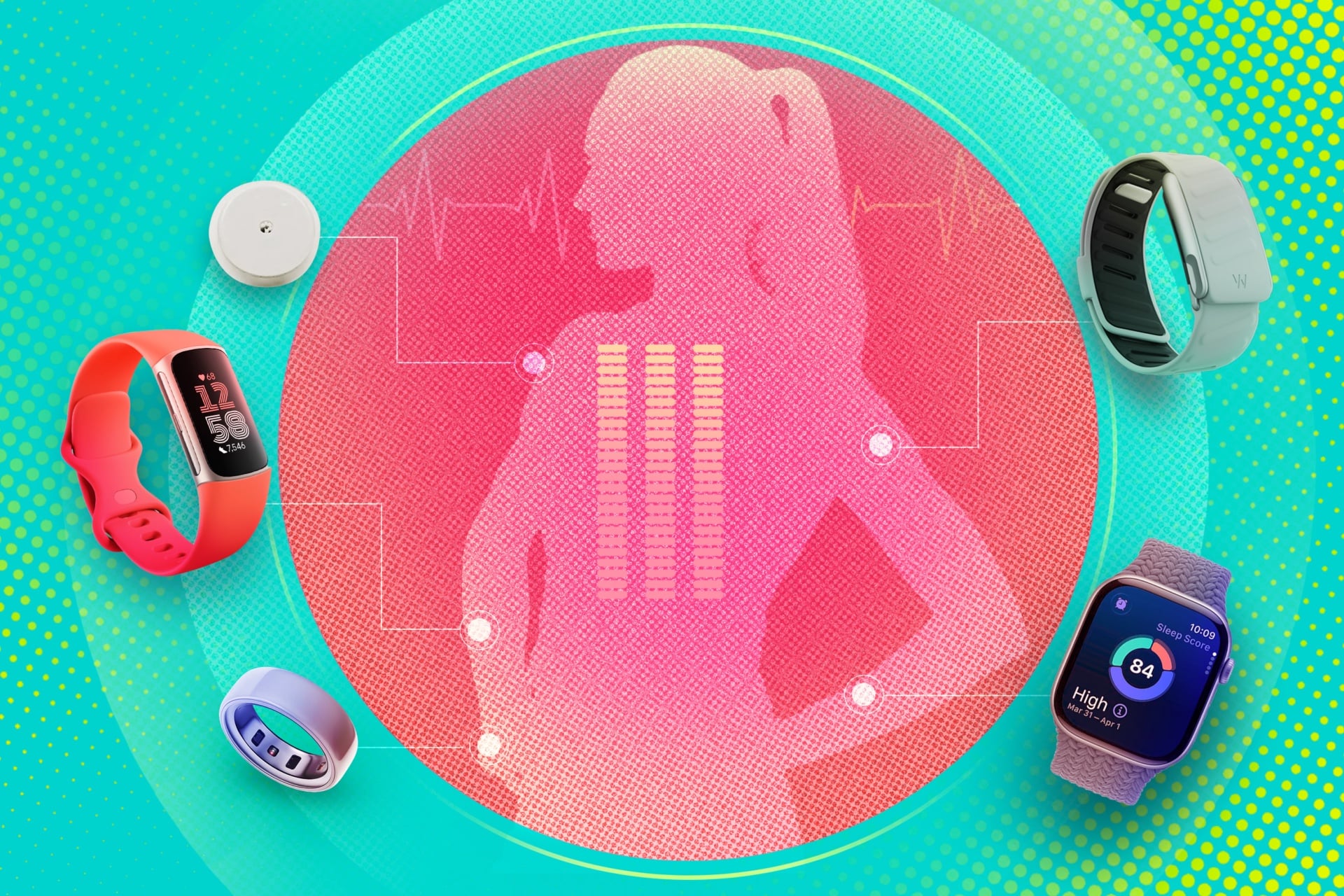
Others are taking it a step further. Many researchers argue that the next frontier in health tracking is the concept of the digital twin: Continuous monitoring of as many physiological processes as possible to create a real-time virtual representation of a user’s physiological state.
A review article on digital twins in medicine, published in 2024 in the journal Digital Medicine, points out: “The [digital twin] concept was first adopted by the NASA space program in the 1960s to simulate a spacecraft and be able to debug flight issues in real-time as they arose. This concept was successfully utilized during the Apollo 13 mission when the spacecraft suffered a malfunction and the NASA team had to simulate conditions aboard Apollo 13 to bring back the spacecraft and astronauts safely to Earth.”
In theory, it would ingest data from wearable devices like the Oura Ring or systems such as Whoop, along with other inputs like continuous glucose monitors, and, theoretically, lab results or even provided personal medical history. This data would then feed into a personalized model that learns your baseline patterns, such as how your heart rate behaves at rest, how you recover from stress, how sleep deficit affects performance, and how your body typically reacts to exercise or illness.
For example, it could estimate how going to bed two hours later might affect your recovery tomorrow or how a high-intensity workout today might influence your readiness over the next three days.
The key is that the quality and usefulness of a digital twin depends heavily on the breadth, consistency, and granularity of the data it is built on, and researchers are still in the very early stages of studying how well that works in concept. And while we are still a long way from this technology taking form, it makes a case for, well, tracking everything.
So what happens when you know just a little bit about nearly every organ system in your body? To paraphrase Alexander Pope, it can be a dangerous thing. But knowing everything? That’s when the real benefits may come.