Precision chemical analysis tools used by both archaeologists and high-tech materials engineers have teased out evidence of surprisingly sophisticated glassmaking across the ancient world. Blown glass fritted with metallic additives like cobalt, creating vivid blue hues, spanned cultural sites along the entire Silk Road, dating as far back as the 2nd millennium BCE. And Late Bronze Age glass from Egypt and Mesopotamia has been found laced with copper, creating shimmering emerald greens for trade with Mycenaean Greece.
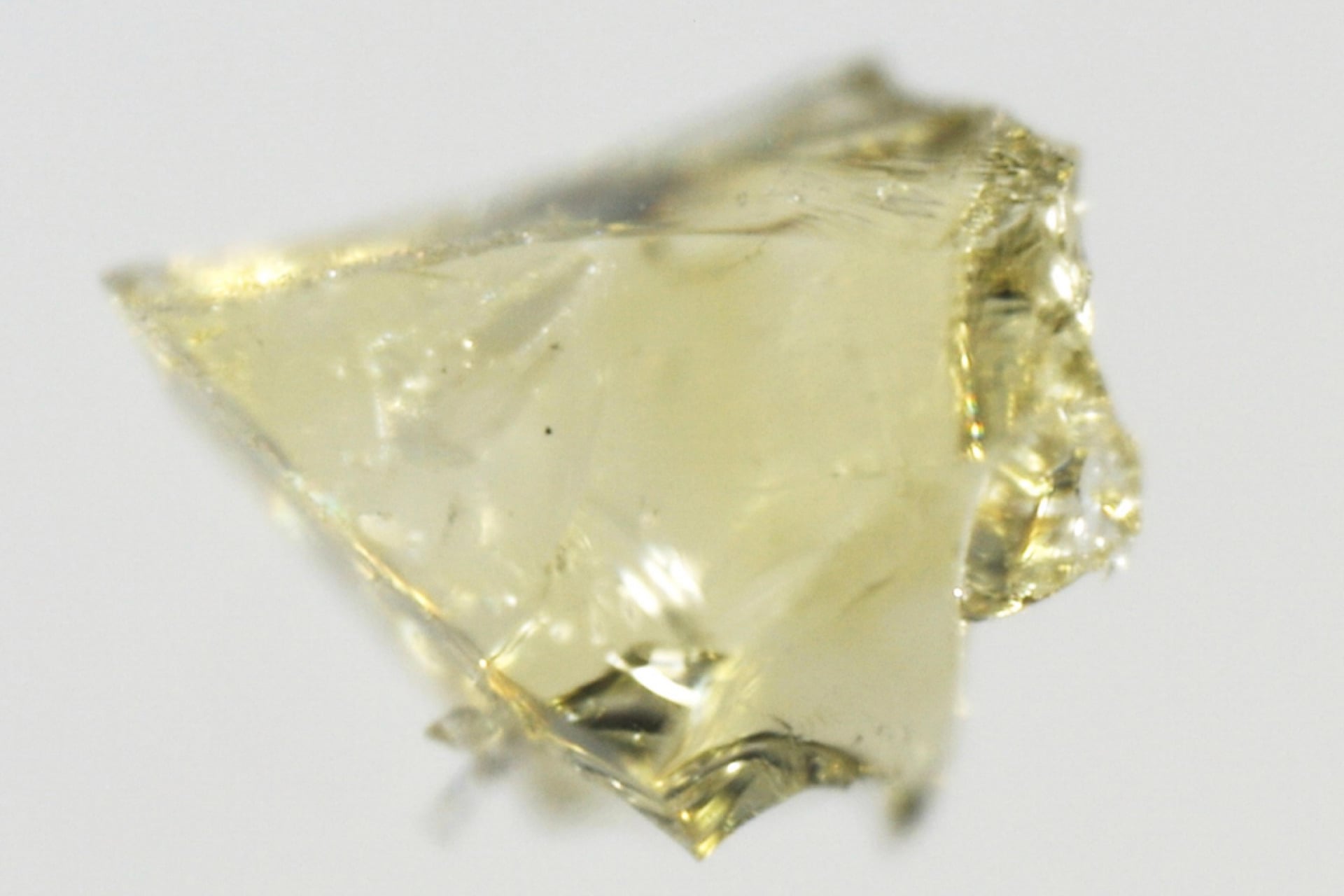
Now scientists in Germany and the U.K. have adapted some old tricks from this traditional glassmaking chemistry to help advance a genuinely 21st-century achievement : zeolitic imidazolate framework (ZIF) glass made for sensors, electronics, catalysts, and carbon capture. ZIF glasses mix metal atoms and organic carbon-based molecules, creating an entirely new category of glass—one without silicon but filled with complex crystalline structures and microscopic pores ready to trap greenhouse gases for carbon storage or photons of light for fiber optics.
But, sadly, ZIF glass and its fellow metal–organic framework (MOF) glasses haven’t been that easy to mass produce or fine tune. Fortunately, these researchers have found a literally age-old hack in the form of benzimidazolate compounds, which have long seen use as additives in traditional glassmaking.
“Glass has been part of human civilisation for millennia,” University of Birmingham chemist Dominik Kubicki, a coauthor on the new study, said in a statement. “From ancient Mesopotamia to modern fibre-optic cables, small amounts of chemical modifiers make it easier to process glass and change its functional properties,” Kubicki explained.
Little rooms in glass houses
Ultimately, Kubicki and his colleagues wanted to discern if they could reproduce some of the same bespoke manufacturing methods used for silica glass on ZIF.
“Our approach is inspired by how conventional silicate glasses have been modified: disrupting the network structure to tune melting behaviour and mechanical properties,” Sebastian Henke, Kubicki’s collaborator and a chemist at the TU Dortmund University in Germany, explained in a statement.
“Our study shows the same principle can be transferred to hybrid metal-organic glasses,” Henke said.
Henke and Kubicki’s team employed additives sodium benzimidazolate and lithium benzimidazolate in their glassmaking experiments, testing how it adjusted the properties of a form of ZIF glass known as ZIF-62. Laced with zinc, this metal–organic glass has proven adept at selectively separating carbon dioxide from nitrogen-rich gas mixtures (like the air we breathe) by a ratio of 34.5 to one.
Sodium benzimidazolate proved capable of helping craft ZIF-62 glass that could absorb carbon dioxide at adjustable rates, revealing a roughly 26% increase in the total volume of the special gaps or pores needed for this process.
Both additives also showed promise in bringing down ZIF-62’s glass transition temperature, the heat at which a glass becomes bendy and pliable. But sodium benzimidazolate, in particular, dropped this key threshold down from 561 degrees Fahrenheit (294 degrees Celsius) to 322 degrees F (161 degrees C).
Kubicki noted that MOF glasses like ZIF-62 usually “soften only at high temperatures” around 300 degrees C (572 degrees F), which is perilously “close to their degradation temperature, making manufacturing challenging and limiting broader use.”
“This discovery unlocks new possibilities for future high-performance materials,” he said.
Glass menageries
The researchers’ glass tailoring tests provide a “transferable framework” across ZIF and MOF glass types, as they wrote in their new study published this month in the journal Nature Chemistry. That success opens up the chance to try out a host of old-school glassmaking modifiers on these novel materials in the near future.
Aspects of their pore-size tuning tests, the team also noted, “parallels the well-established Vycor process,” developed in the 1930s by chemist Martin Nordberg at glassware giant Corning. Vycor glass, in addition to its porous membrane variants, proved wildly resistant to both heat and acids, making them ideal for use in spacecraft windows, like those used on NASA’s Gemini missions.
According to the University of Birmingham, Henke, Kubicki, and their team anticipate that the next phase of this project will require making the materials more stable and testing “how useful they are in real‑world technologies.”
“This advance brings MOF glasses a step closer to real-world manufacturing,” Henke said.