The poop emoji accurately captures the typical poop shape in nature formed by the downward pull of gravity. According to a new study, exceptions to this rule—antigravitational poop—suggest that physics may play a greater role in waste disposal than we realized.
While strolling along a beach in France, physicist Daniel Bonn noticed “beautifully coiled heaps of sand” on the ground. These turned out to be piles of lugworm poop. But their exquisite form stuck out to Bonn, an expert in soft matter physics at the University of Amsterdam in the Netherlands. Naturally, he decided to sample and investigate their mechanical properties, as they appeared to demonstrate a “new type of anti-gravitational coiling,” he told Gizmodo. The findings, published recently in Nature Communications, establish universal mechanics for the shape of poop, while at the same time highlighting the underappreciated role of physics in biology.
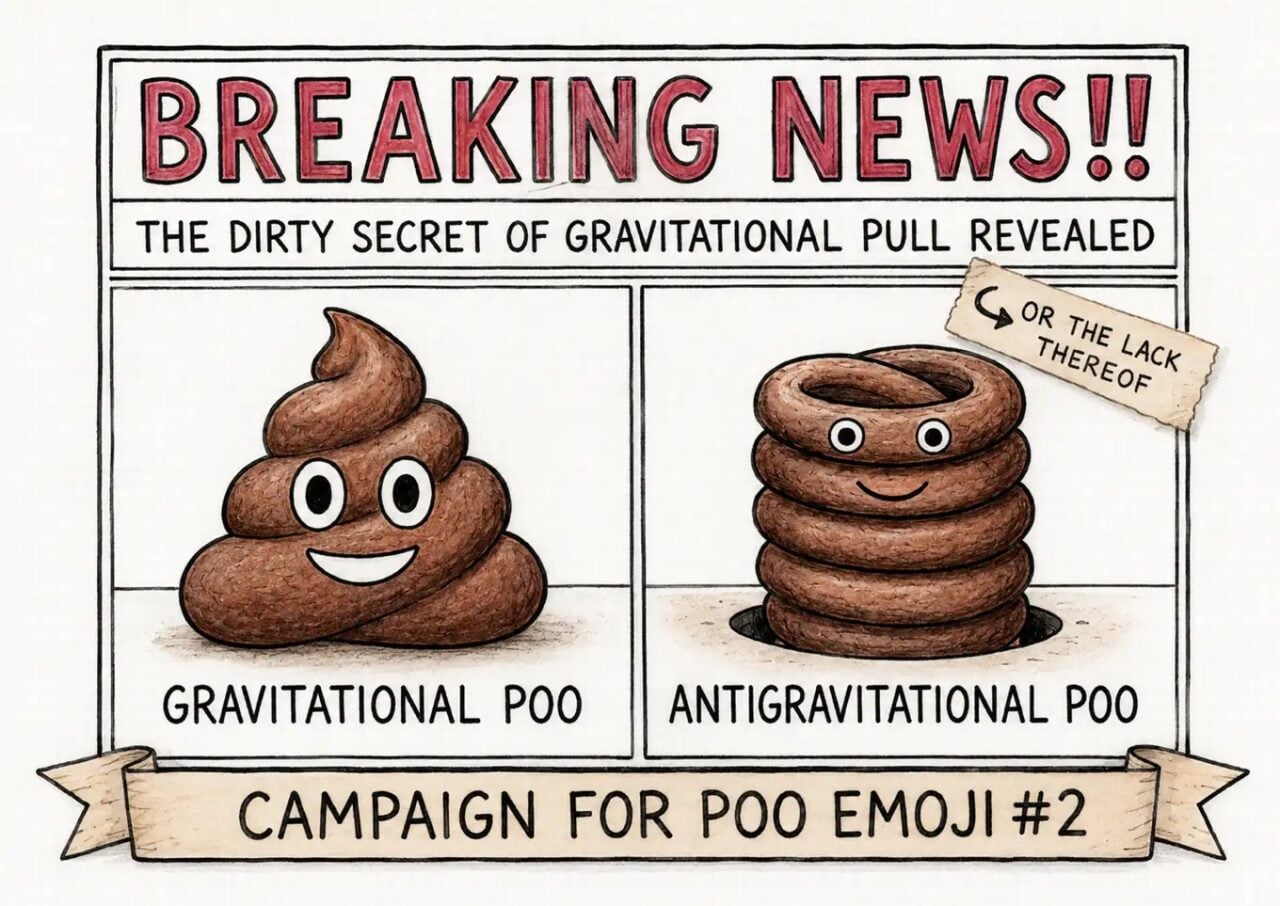
“Most animals defecate downward,” explained Bonn. “As their feces coil, the pile grows higher and the fall height decreases, making each successive coil smaller. This creates the characteristic pointy mound—precisely the shape of the poo emoji. Lugworms, however, defy gravity by extruding their feces upward.”
The thing about poop
To be clear, scientists had long been aware of the odd shape of worm poop. Most famously, Charles Darwin’s 1881 publication, “The Formation of Vegetable Mould Through the Action of Worms, with Observations on Their Habits,” provided detailed illustrations of tower-like feces from worms. (The entire manuscript is actually a comprehensive overview of worm “castings,” a.k.a. poop.)
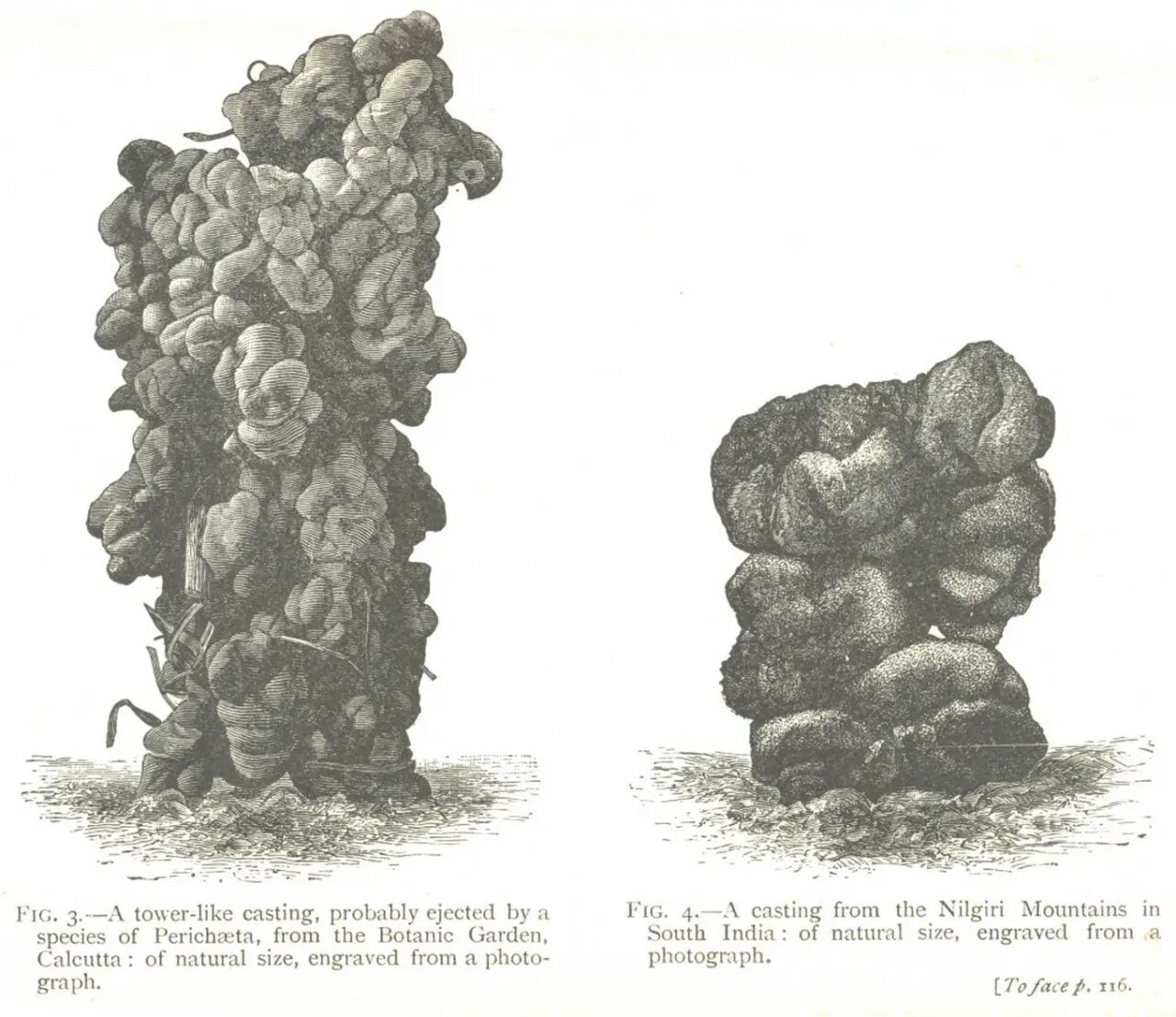
Notably, Darwin reported that worms defecated “either upwards or downwards with respect to the slope” of their respective burrows. However, the precise mechanism behind the odd shapes was generally “poorly understood,” according to the paper. In that sense, lugworms, which live in U-shaped burrows and poop upward, were perfect targets for a “unique natural experiment,” the team added in the study.
An overarching law
For the study, Bonn and colleagues examined lugworm poop samples to determine some key mechanical properties. Then, the team tried reconstructing the poop shape using extruded pea dough. In addition to the direction of defecation, the experiments tested how factors such as fall height, extrusion rate, radius of the coil, and more affected the final shape.
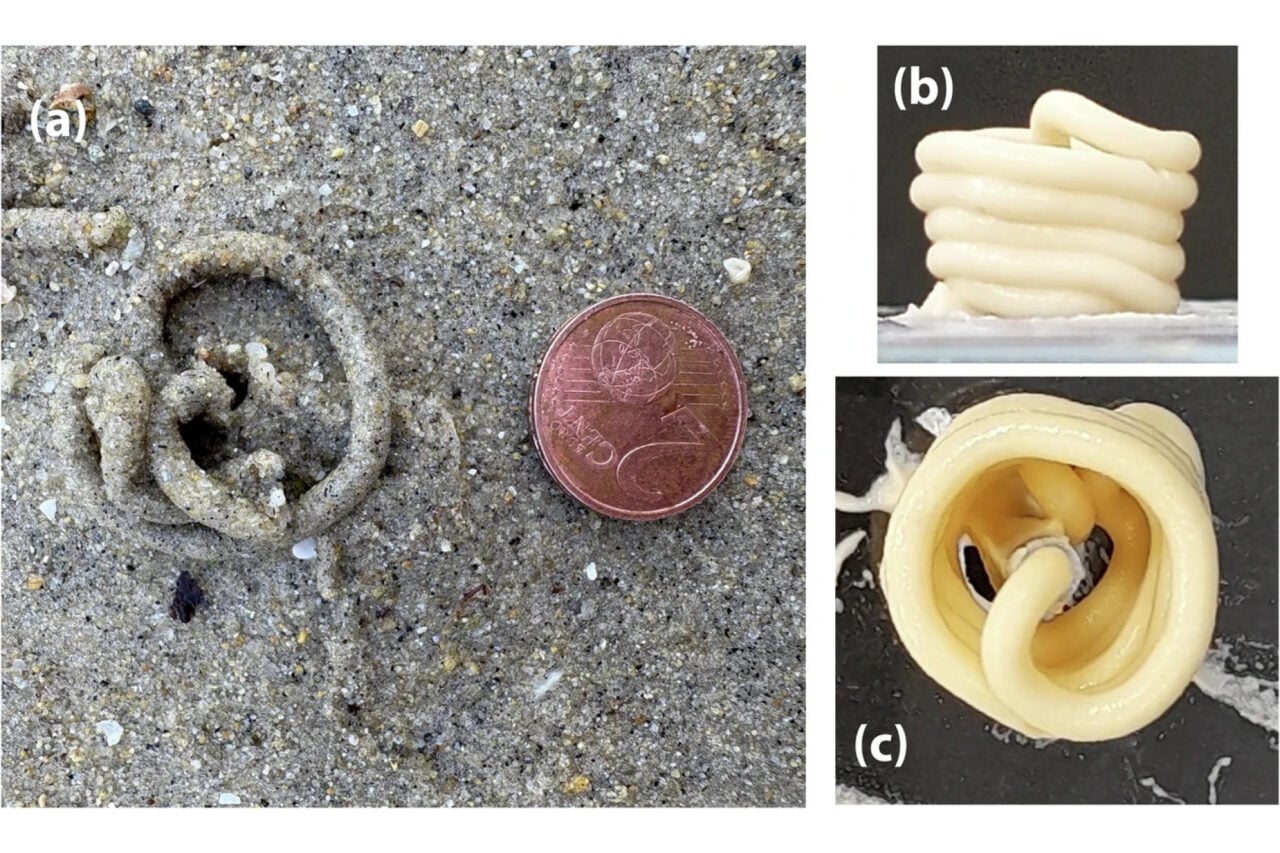
As a result, the team found that poop—released downward or upward—obeyed the laws of elastic rope-coiling theory, a mathematical framework describing how ropes and other materials coil. Surprisingly, the lugworms’ muscular control and extrusion rate didn’t have as much impact as expected, the study noted. The characteristic cone-shaped morphology of the poop emoji is, scientifically speaking, a “direct consequence of the physics governing elastic coiling in gravitational fields,” according to the paper.
Just how it is
The team added in the study that the findings highlight how biological systems “exploit mechanical principles without external control parameters.” That is, there may not necessarily be evolutionary reasons for things like the shape of poop. That’s just how things ended up, given the various physical phenomena present on Earth.
“There is a lot of beauty around us, and very often beautiful structures form due to physics,” Bonn said. “This is an example, but if one looks carefully, there are many more…”